
Wellbeing Support for Carers in Bradford: A Local Guide
Finding the right support shouldn’t mean spending precious time piecing together a confusing list of services. If you’re looking for wellbeing support for carers Bradford residents can access, it helps to understand how practical information, peer connection and community activities can meet different needs.
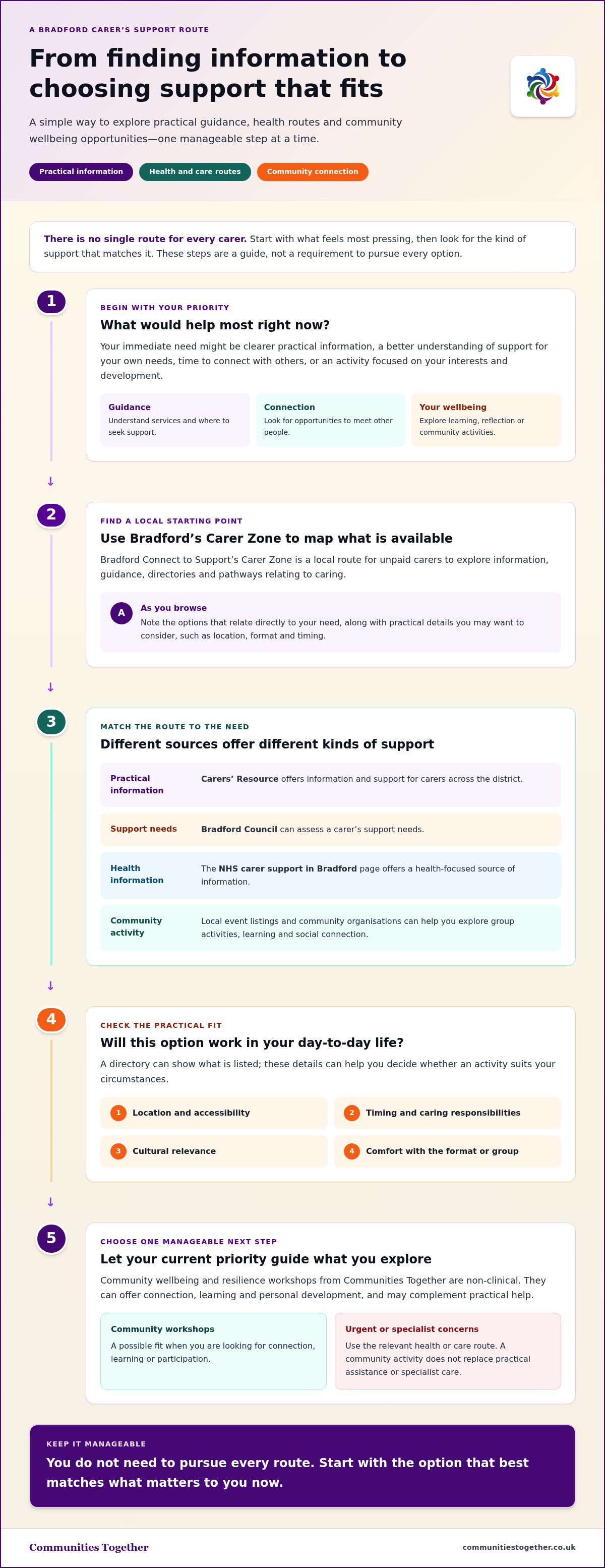
It’s understandable to feel unsure where to begin, particularly when caring already takes much of your time and energy. Carers’ Resource offers information and support for carers across the district, while Bradford Council can assess a carer’s support needs. Community groups and activities offer another way to find connection and make time for your own wellbeing.
This guide explains how these options differ, where to find local routes and how to decide which might fit your circumstances, including your cultural and community needs. It also looks at how non-clinical wellbeing and resilience workshops, such as those delivered by Communities Together, can complement practical help. You’ll come away with a clearer picture and a manageable next step.
Table of Contents
Wellbeing support for carers in Bradford: what kinds of help can make a difference?
Bradford carer support routes: where to find information, connection and guidance
Comparing carer wellbeing support: practical help, peer connection or community workshops?
Choosing a useful next step for your wellbeing as a Bradford carer
How community wellbeing programmes can complement carer support in Bradford
Wellbeing support for carers in Bradford: what kinds of help can make a difference?
Unpaid caring can take many forms. It may mean helping a family member, friend or neighbour with day-to-day tasks, offering regular emotional support, or coordinating aspects of their care without being paid. Each caring arrangement is different, so the right support depends on what feels most pressing and manageable for you.
Wellbeing support can include practical information, opportunities to connect with others, learning and participation in community activities. For a Bradford carer, these routes can work alongside one another: local information can help clarify options, while a community activity may offer space for reflection, connection or personal development. For national background on the role of Carers UK in supporting and campaigning for unpaid carers, see its organisational history.
This short film offers one perspective on supporting carers’ wellbeing:
What can wellbeing support offer an unpaid carer?
Support doesn’t have to wait until caring feels unmanageable. It may be useful at different points, whether you need clearer information, a chance to speak with people who understand caring, or an activity that gives attention to your own interests and development. These opportunities can create room for connection and reflection and may help build confidence, though the experience will differ from person to person.
Your priorities may change with your responsibilities, relationship to the person you support, culture, health, work and family circumstances. There’s no single route that suits everyone. Choosing a small, relevant step can be more realistic than trying to address everything at once.
When might practical, community or specialist support be relevant?
Practical information and signposting can help you understand services and where to seek guidance. Community wellbeing activities, including non-clinical workshops, offer a different kind of support through connection, learning and participation. They don’t replace practical assistance or specialist care, and people may use several forms of support at the same time.
Communities Together provides non-clinical wellbeing and resilience workshops, alongside learning and personal development activities. These can complement other appropriate support. If your concern is urgent or requires specialist help, use the relevant health or care route rather than relying on a community activity alone. This distinction is a useful starting point when considering wellbeing support for carers Bradford offers.
Bradford carer support routes: where to find information, connection and guidance
It can be easier to find a useful starting point when you separate information and signposting from activities that offer connection or personal development. Bradford Connect to Support’s Carer Zone is a local route for unpaid carers to explore information and support. Use it to build an initial picture of what may be relevant, then focus on the route that best matches your circumstances.
Using Bradford Connect to Support’s Carer Zone
Use the Carer Zone to look for guidance, local directories and pathways relating to caring. General information can explain what kinds of support exist, while a directory can help you identify organisations or activities to explore. As you browse, note the options that relate directly to your need and any practical details you’ll want to consider, such as location, format and timing.
Be clear about what you’re trying to resolve: perhaps you need practical guidance, want to understand possible support for your own needs, or are looking for opportunities to meet others. If your concern relates to health or care, the NHS carer support in Bradford page offers a health-focused source of information. Keeping these routes distinct can help you decide whether you need signposting, tailored guidance or another form of support.
Finding community activities and wellbeing opportunities in Bradford
Local event listings and community organisations can help you find group activities, learning opportunities and spaces for social connection. When weighing up an option, look beyond its title and consider its practical fit: location and accessibility, cultural relevance, and whether you’d feel comfortable in a group, a community activity or another format.
A directory can show what is listed, but you’ll still need to decide whether an activity fits your day-to-day responsibilities. For example, you might compare an information resource with a group event intended to encourage connection, then choose the one that addresses your current priority. Where wider participation and partnership are relevant, Communities Together’s guide, Strategic Community Engagement Programmes in the UK, provides further context. Its Collaborative Wellbeing and Resilience Workshops: A Complete Guide for UK Communities also explores the role community activities can play.
For wellbeing support for carers Bradford offers, use local information to map the options rather than feeling you need to pursue every route. Community workshops can complement practical and specialist support, not replace it. To explore this community-based approach, take a look at wellbeing and resilience workshops from Communities Together.
Comparing carer wellbeing support: practical help, peer connection or community workshops?
Different types of support address different needs, so the most useful option depends on what you’re looking for now. Practical information can help you understand services and pathways. Peer connection and community activities offer opportunities to participate and meet others. Specialist support is a separate route for concerns that need relevant health, care or advice services. These options can complement one another rather than compete.
Practical information and specialist support
Local information routes are useful for building an overview, but general signposting isn’t the same as guidance tailored to your circumstances. If you have a specific health, care or advice concern, the appropriate specialist service may be better placed to respond. Use information resources to identify possible routes, then focus on the one that most closely relates to your need.
Peer connection and community wellbeing workshops
Peer and social settings provide a chance to participate alongside others, although the experience and focus vary between activities. Communities Together delivers non-clinical wellbeing and resilience workshops, as well as learning and personal development activities. These activities complement carer support through opportunities for connection, reflection and learning, while remaining distinct from clinical treatment and specialist care.
Some carers have more than one priority, such as needing practical guidance while also wanting more social connection. In that case, using more than one route may make sense: information can help clarify options, a community activity can support participation, and specialist services can address concerns that require their expertise. When considering wellbeing support for carers Bradford residents can access, compare options by purpose and format, then choose what feels relevant and manageable.
Choosing a useful next step for your wellbeing as a Bradford carer
Choosing support doesn’t have to mean making a large plan or committing to several activities. Start with what would make the biggest difference to you at the moment, then look for one manageable action. Your needs may change, so this first choice doesn’t have to determine what you do later.
Match the support format to what would help now
If you need clarity about services or support pathways, begin with practical information. If you’re hoping for connection, learning or time to focus on your own interests, a community activity may be more relevant. You might prefer to explore information independently, join a group or combine these routes. There’s no single correct format.
Try this simple sequence:
Identify your immediate need: name one thing you’d like help with, such as finding guidance or having more opportunities for connection.
Choose a format: consider individual information, a group activity or a combination.
Explore local information: use Bradford support resources and community listings to find a relevant next step.
Take one action: save a useful listing, read more about an option or decide whether an activity feels suitable.
Make participation more manageable and inclusive
Before choosing an activity, consider how it fits around caring responsibilities, travel, timing and accessibility. Cultural relevance and the kind of environment you feel comfortable in matter too. A welcoming activity should let you participate in a way that feels right for you. Joining a group doesn’t mean you have to share personal information.
Community participation can be one way to feel more connected, particularly when an activity reflects interests or cultural experiences that matter to you. For another perspective on how culture can foster connection, explore Reducing Social Isolation in Halifax Through Culture. The aim is not to add another obligation, but to consider whether a suitable opportunity could fit into your life.
For wellbeing support for carers Bradford offers, the most helpful first step may be a small one: identify your priority, find one relevant route and decide whether it feels manageable. If circumstances shift, review your choice and consider a different form of support. Community wellbeing and resilience activities can sit alongside practical information and other appropriate support, rather than replace them.
How community wellbeing programmes can complement carer support in Bradford
Community wellbeing programmes offer a different kind of support from practical information or specialist care. They create structured opportunities to participate, learn and connect with others, while local carer resources can help with information and guidance. These routes can sit alongside one another: a workshop may support personal development and community connection, but it doesn’t replace practical help, specialist advice or clinical support where those are needed.
What community-based wellbeing work can contribute
Taking part in a community activity can offer time to reflect, develop skills or explore interests in a shared setting. Wellbeing and resilience work can also contribute to personal development and wider community capacity by supporting participation and connection. These are possibilities, not guaranteed outcomes, and each person will find different aspects useful.
For carers, a community programme can provide an activity beyond caring responsibilities or a chance to share space with people from the wider community. It can complement carer support through learning and connection. Practical information helps people understand available routes, while community participation provides another setting for development. If a concern calls for specialist help, a workshop isn’t a substitute for the appropriate health or care service.
Explore Communities Together’s local wellbeing work
Communities Together delivers non-clinical wellbeing and resilience workshops, learning activities and community engagement programmes in Bradford, Huddersfield, Halifax, Leeds and Wakefield. Its work supports personal development, connection and community resilience, with inclusive participation and partnership as important parts of its approach. These programmes complement practical carer information and other appropriate support, while remaining distinct from clinical treatment.
If you’re considering wellbeing support for carers Bradford, explore community activities alongside the information and support routes that fit your circumstances. There’s no need to take on everything at once. An activity that connects with your interests, culture and preferred way of participating can be a manageable place to begin, alongside practical or specialist routes for other needs.
Take a look at Communities Together’s community programmes to explore its wellbeing, resilience and learning work.
Choose a next step that feels right for you
This guide to wellbeing support for carers Bradford has explored how practical information, peer connection, community activities and specialist support each serve a different purpose. You don’t need to choose every route. Start with the need that feels most pressing, then consider an option that fits your time, circumstances and preferences.
Community wellbeing programmes can sit alongside practical help, offering opportunities for participation, learning and personal development without replacing specialist care. Communities Together delivers non-clinical wellbeing and resilience workshops and learning activities in Bradford, Huddersfield, Halifax, Leeds and Wakefield. These activities offer a community-based route to connection and development, while each person’s needs and experience will differ.
To explore a community-based option, find out more about Communities Together’s work:
One considered step is enough to begin. Choose what feels manageable today, knowing you can review your needs and explore other support routes as circumstances change.
Frequently Asked Questions
What wellbeing support is available for carers in Bradford?
Carers in Bradford can explore practical information and signposting, peer or social activities, community wellbeing workshops and relevant specialist support. Bradford Connect to Support’s Carer Zone is one local place to look for information about support pathways. Communities Together delivers non-clinical wellbeing and resilience workshops, learning activities and community programmes in Bradford, Huddersfield, Halifax, Leeds and Wakefield. These community activities can complement practical help, but they don’t replace specialist care.
Where can unpaid carers in Bradford find local information?
Bradford Connect to Support’s Carer Zone is a useful starting point for local information and signposting for unpaid carers. Explore its guidance and directories to see what kinds of support and organisations may relate to your circumstances. Carers’ Resource is another local organisation offering information and support to carers. General listings can help you understand possible routes, while tailored advice may be more useful when you need guidance about a specific situation.
Can community wellbeing workshops help carers?
Community wellbeing workshops can offer carers opportunities to participate, learn, reflect and connect with other people. Their focus is non-clinical, and each participant’s experience will differ. Communities Together provides wellbeing and resilience workshops alongside learning, skills and personal development activities. These programmes complement practical information and other appropriate support through community participation and learning.
What is the difference between carer support and wellbeing support?
Carer support often means practical information, guidance or signposting related to caring responsibilities, while wellbeing support may focus on connection, learning, reflection or personal development. The two can overlap, but they serve different purposes. For example, a local information resource may help you explore support pathways, while a community activity may provide a shared setting for participation. You might use both, alongside specialist services when a particular concern calls for them.
Is wellbeing support in Bradford only for carers who are struggling?
No. You can explore wellbeing support before reaching crisis point, whether you’re looking for information, interested in meeting others or hoping to take part in a learning activity. Caring circumstances and personal priorities differ, and it’s reasonable to seek support that feels useful at the time. A small first step, such as reading a local listing or considering a community activity, can help you decide what might suit you without committing to several routes.
How do I choose the right wellbeing activity as a carer?
Start by identifying what you’d value now, such as practical information, social connection or an opportunity to learn. Then consider whether the activity’s format feels comfortable and manageable alongside caring responsibilities. Location, travel, timing, accessibility and cultural relevance can all affect whether participation feels realistic. You don’t have to share personal details to take part, and your first choice doesn’t need to be permanent if your needs change.
Can community workshops replace professional support for carers?
No. Community workshops are non-clinical activities and don’t replace professional health, care or specialist advice. They can sit alongside practical information and other support by offering opportunities for participation, connection and personal development. If you have an urgent concern or need help that requires specialist expertise, follow the appropriate health or care route. Communities Together’s community programmes serve people in Bradford, Huddersfield, Halifax, Leeds and Wakefield.


Comments