
Volunteer Recruitment Strategies Halifax: Plan Roles and Outreach
Recruitment that reaches the right people starts before the first opportunity is advertised. For organisations planning volunteer recruitment strategies in Halifax, a clear approach can connect meaningful roles with appropriate outreach and make it easier for people to take part.
Good intentions matter, but they need to be supported by roles that are purposeful and achievable, practical ways to hear about them, and a straightforward path from expressing interest to getting started. An inclusive approach also considers barriers that may affect who sees an opportunity, feels welcome and can participate.
This article explains why recruitment planning matters and how to shape roles, choose outreach for your organisation and local audiences, and make campaigns more accessible. It also covers how clear communication and a welcoming start can build confidence and connection from the outset.
Table of Contents
1. Why does a volunteer recruitment strategy matter?
A recruitment plan helps organisations match people to event tasks, prepare support and avoid last-minute gaps. For a Halifax community fair, organisers might need welcome-desk helpers, activity assistants and visitor guides. Naming each task helps people understand the role and decide whether they can contribute.
Short-term events need a focused approach because each role has a defined start and finish. Set out the event date, shift pattern, responsibilities and who will provide guidance. Promote roles through channels likely to reach people with relevant interests. A clear sign-up route gives organisers time to respond and arrange an induction before the event.
Community events and fairs also let organisations meet prospective volunteers in person. At a Halifax gala day, a staffed information point could explain the cause, describe a specific task and invite people to leave their details. This gives people a chance to understand the commitment and ask questions before deciding on next steps.
Event promotion works best when the message gives people a reason to attend and a simple action to take. Include the purpose, location, date and what visitors can expect, then share the invitation through community networks, local media, schools and partner organisations. Volunteers’ Week takes place in the first week of June, a timely opportunity to recognise contributions and introduce volunteering roles.
Events can also reach people who have not considered volunteering before. A practical demonstration, short taster activity or conversation with current volunteers shows what taking part involves. New Year can prompt people to seek a fresh start, while summer may bring students with changing schedules. Plan outreach around these moments and make the next step clear.
To review recruitment and retention, record enquiries, completed applications, event attendees who express interest and volunteers who return. Compare these measures with roles filled and work completed, as enquiry volume alone does not show whether a campaign met its purpose. After an event, ask volunteers what helped them feel prepared and valued, then use their feedback to improve the welcome.
For volunteer roles in Halifax, England, screening and reference checks should reflect the responsibilities involved, with time allowed for any required disclosure checks before volunteers begin. Organisations can set out the selection steps clearly and ensure safeguarding arrangements suit each role, without applying procedures intended for another jurisdiction.
Good volunteer management supports retention by welcoming people, explaining what to expect and building confidence from the start. A clear induction, suitable first tasks and opportunities to share feedback can help volunteers feel connected. Review recruitment success alongside how many people remain involved.
2. Planning volunteer roles and recruitment campaigns
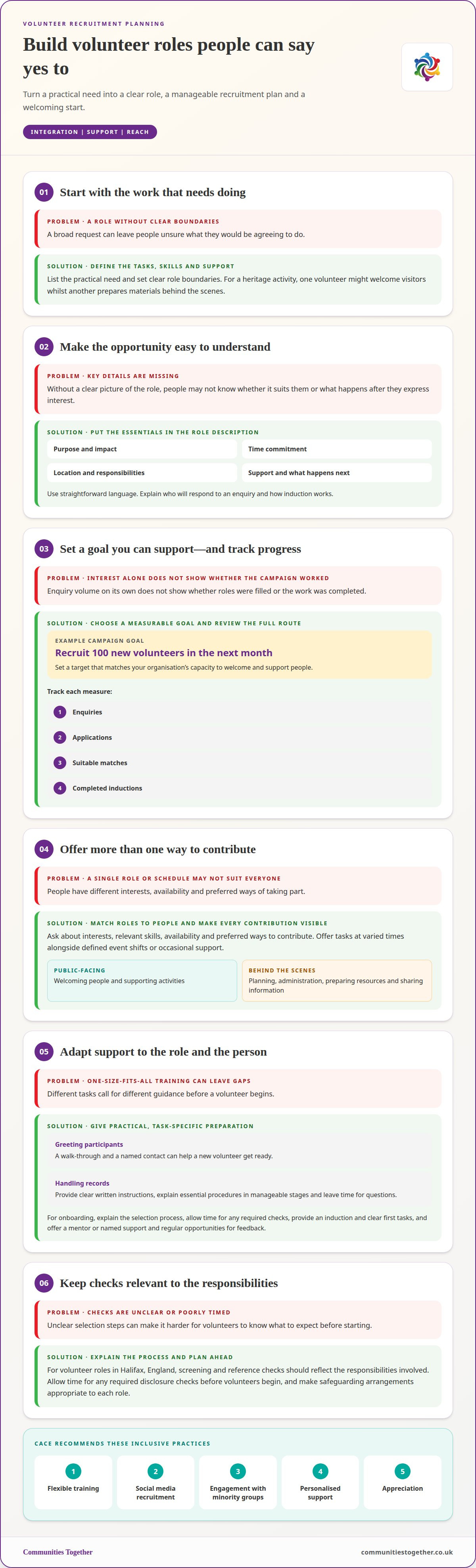
A campaign is more effective when each role meets a practical need. List the tasks to be completed, the skills involved and the support available. For a heritage activity, one volunteer might welcome visitors while another prepares materials behind the scenes. Clear boundaries help people understand what they are agreeing to do.
Describe each role in straightforward language, including its purpose, time commitment, location and main responsibilities. Explain what volunteers contribute and what they may gain, such as experience, connection or a chance to support local heritage. Prospective volunteers should also know what happens after they express interest, including who will respond and how induction works.
Set a measurable campaign goal before choosing outreach channels. Recruiting 100 new volunteers in the next month is one example, but the target should match the organisation’s capacity to welcome and support people. Track enquiries, applications, suitable matches and completed inductions, so campaign action can be adjusted when interest does not lead to active participation.
Flexible roles can attract people with different schedules and confidence levels. Offer tasks that can be done at varied times alongside defined event shifts or occasional support. CACE recommends flexible training, social media recruitment, engagement with minority groups, personalised support and appreciation. These practices can make participation more accessible without weakening a role’s purpose.
Adapt training to the task. A new volunteer greeting participants may need a walk-through and a named contact, while someone handling records may need clear written instructions. Explain essential procedures in manageable stages and give volunteers time to ask questions before they begin. This builds confidence while supporting consistent delivery.
Matching people to suitable roles requires listening as well as assessing organisational needs. Ask about interests, relevant skills, availability and preferred ways to contribute, then explain responsibilities honestly. Someone who enjoys direct contact may suit a welcome role; someone else may prefer preparing resources, organising materials or supporting communications away from the public.
Give behind-the-scenes roles equal visibility in recruitment materials. Planning, administration, setting up resources and sharing information all support community projects. Naming these contributions helps reach people who want to take part but prefer not to work in public-facing roles. It also helps organisers identify the work needed to sustain an activity.
For onboarding and retention in Halifax, respond promptly, explain the selection process and allow time for any required checks before a volunteer starts. Provide an induction, a mentor or named support, clear first tasks and regular opportunities to give feedback. Recognition and meaningful responsibilities help volunteers feel valued and connected to the organisation’s work.
Organisations developing local participation can also explore community engagement programmes as a way to connect people with shared activities and purpose.
3. Choosing recruitment strategies to fit resources and audiences
Start with the roles, the people you hope to reach and the capacity available to welcome them. A neighbourhood project seeking regular helpers needs a different approach from a one-off activity. Identify likely audiences, such as students, families, retired residents or people with relevant experience. Then choose a few channels those groups already use. Volunteer recruitment strategies in Halifax should suit both local audiences and the support available.
Set a recruitment budget by listing the resources each channel requires, including staff time, printing, accessible formats, travel and venue costs. Social media may use existing accounts, while printed leaflets require design, production and distribution. Record these commitments alongside the expected response so the campaign remains manageable for the organisation and its volunteer management team.
In Halifax, use current listings from local volunteer-support services and UK volunteering directories alongside community noticeboards. Choose online platforms that let people search by location, activity and time commitment. Keep the advert consistent across channels, then track where enquiries come from. This helps focus effort on the routes that connect with suitable volunteers.
To reach university, college and school communities, share role descriptions with student volunteering teams, course staff and community partnership contacts. A heritage project, for example, could invite students to prepare learning materials or support a public activity. Explain the task, schedule and learning value clearly, and provide a named contact for enquiries. School outreach should describe age-appropriate roles and support arrangements.
Local grants and other resources can support recruitment through eligible project funding, donated venue space, partner newsletters and community networks. In grant applications, link recruitment costs to the activity’s purpose and explain how volunteers will be supported. Review each fund’s published aims and eligible costs before budgeting, as conditions vary and recruitment expenditure may not fit every scheme.
Match channels to audience habits rather than trying every option. Community groups may respond to trusted introductions and local meetings, while younger audiences may notice social media posts shared through education networks. A community centre can be a useful setting for an information session, especially for people who want to discuss roles before applying. Partners can also share invitations through their established networks.
Review results after each campaign. Compare enquiries, suitable applications, completed inductions and active volunteers by channel, then note the time each route required. Halifax charities can use this evidence to refine their volunteer recruitment strategies. If social media draws attention but few suitable enquiries, adjust the advert or audience targeting. If partner referrals lead to strong matches, maintain those relationships and plan future outreach together.
4. Posters and flyers in community locations
For an organisation in Halifax, a poster can introduce a volunteering opportunity where local people already gather. Give it one clear purpose, such as recruiting helpers for a community activity. Add the role, location, expected commitment and a simple way to express interest. A named contact or scannable sign-up code makes the next step clear.
Design the message for someone who may see it briefly in a library, community centre or local shop. Use a readable heading, short sentences and strong contrast between text and background. Explain the role’s impact, not just its tasks. For example, “Help welcome families to our heritage activity” gives readers more context than “Volunteers wanted”.
Before distributing flyers, identify places connected to the people you hope to reach. A community noticeboard may suit a neighbourhood project, while a school or local group could help reach families. Ask the venue to display the material and agree when it should be removed. Record each location so you can link enquiries to distribution.
A recruitment example from Airdrie shows how printed materials can prompt interest: a local division distributed leaflets around the town and received multiple enquiries. Halifax organisations can use the same approach by describing a specific opportunity, choosing relevant local locations and giving readers a direct way to respond.
Community partnerships can extend that reach. A local group might display a flyer, share it in its newsletter or introduce organisers at a meeting. Make the request specific, such as sharing a role with people interested in heritage or community activities. Explain the opportunity’s purpose in return and keep partners informed about how engagement develops.
Community-led recruitment starts with listening. Ask residents and local groups which activities matter to them, what roles would be useful and where recruitment messages should appear. Their input can shape an invitation’s wording, timing and location. It also helps ensure volunteering is presented as shared work, not a one-way request.
Use each poster or flyer to support a consistent recruitment process. Include the same role details as other campaign materials and make the contact route easy to follow. When enquiries arrive, note how people heard about the opportunity and respond with relevant next steps. This simple record helps identify locations that generate suitable interest.
Printed outreach can also support retention when it reflects the experience volunteers will actually have. Describe the available support and the activity honestly, then welcome new helpers as part of the wider community effort. For example, a flyer for a local heritage project can show how practical tasks contribute to preserving shared history and strengthening community engagement.
5. Inclusive and diverse volunteer recruitment
Inclusive recruitment starts by asking who can access an opportunity and who may face barriers. In Halifax, review the whole journey, from seeing an advert to completing an application and attending an induction. Consider language, confidence, transport, timing, accessibility and familiarity with the organisation. Addressing these practical factors can widen participation and help people contribute in ways that suit them.
Write adverts in clear, welcoming language, and describe essential tasks rather than an idealised volunteer profile. A community project might welcome people with varied skills instead of asking for extensive prior experience. Explain the time commitment, support available and how to express interest so prospective volunteers can judge whether the role fits their circumstances.
Application forms can create unnecessary barriers when they request information that is not needed at the first stage. CACE recommends simplifying forms to reduce obstacles to volunteering. Ask only for details relevant to the role, provide a straightforward way to enquire and explain what happens next. A short initial conversation can help someone understand the opportunity before completing further steps.
Partnerships can help organisations reach people who may not see a standard recruitment message. The Archaeology Scotland and Scottish Refugee Council taster sessions offer an example: they are co-designed with a community group representing marginalised people. For an activity in Halifax, work with trusted local groups to shape the invitation and format, reflecting community perspectives rather than assumptions.
Offer different ways to take part. Flexible training, varied tasks and occasional involvement can make participation more practical for people balancing work, caring responsibilities or study. A heritage activity, for instance, could include welcoming participants, preparing materials or helping with follow-up. Make expectations clear and invite volunteers to share what support would help them participate.
Access should continue after recruitment. Provide a welcoming induction, a named contact and clear guidance for the first task. Invite feedback privately as well as in group settings, since not everyone feels comfortable raising concerns publicly. If an applicant is unsuitable for a particular role, respond respectfully and explain relevant next steps. Timely communication supports trust and future engagement.
Inclusive recruitment is an ongoing practice, not a one-off campaign. Review which communities hear about opportunities, who applies and where people encounter difficulty. Use what you learn to revise adverts, partnerships and application steps. For Halifax organisations, the key is to design volunteering with prospective volunteers, making access, flexibility and meaningful contribution part of the process from the outset.
Communities Together
Communities Together helps organisations strengthen the community relationships that support meaningful participation. When recruitment requires more than advertising roles, its Community Engagement Programmes and partnership and community capacity building help local groups foster collaboration and shared involvement.
This can be a useful next step when shaping activities around community priorities, connecting with prospective volunteers or building a more inclusive approach to participation. The focus is on creating conditions for people and groups to contribute, not promising a particular recruitment outcome.
Contact Communities Together to discuss community engagement and collaborative capacity building.
Build lasting community participation
Volunteer recruitment can start deeper relationships between local people and the organisations serving their communities. For volunteer recruitment strategies in Halifax to support lasting participation, connect opportunities with activities people value and give them meaningful ways to contribute over time.
Communities Together’s work includes Community Engagement Programmes, South Asian Arts and Heritage Activities, and Wellbeing and Resilience Workshops. These activities create settings where people can connect through shared interests, cultural participation and community wellbeing. If you are considering how volunteering could contribute to a wider community initiative, discuss the aims and the people you hope to involve with Communities Together.
Start with a conversation about the community relationships you want to build and the contribution volunteers could make. With a clear purpose and a collaborative approach, recruitment can become part of a stronger foundation for shared activity.
Frequently Asked Questions
Why does a volunteer recruitment strategy matter?
A strategy helps an organisation recruit in a way that matches its purpose and capacity to support people. It also helps track where enquiries come from and whether prospective volunteers move into active roles. For example, a Halifax community group planning a heritage project can identify the tasks needing help, assign someone to manage enquiries and plan a suitable welcome for new volunteers.
What volunteer recruitment channels are most effective in Halifax, Nova Scotia?
In Halifax and across West Yorkshire, organisations can promote roles through community networks, local events, social media, local media and education contacts. The right mix depends on the opportunity and the people it aims to reach. A community activity might be shared through local groups, while a role requiring particular experience could be promoted through relevant networks. Track enquiry sources to see which channels reach suitable volunteers.
What volunteer recruitment strategies work best for Halifax community organisations?
Choose strategies that fit the organisation’s capacity and the people it hopes to involve. A small group could start with a local partner and an online channel, then record enquiries and suitable applications from each. If a neighbourhood activity attracts interest but few people can attend regularly, consider occasional tasks or event-based roles. Review whether these options meet the project’s needs and can be supported well.
How can charities in Halifax reach newcomers, seniors, and underrepresented groups?
Build relationships with trusted local groups and invite their input before advertising roles. A Halifax charity could ask community representatives whether its wording, meeting times and application route feel accessible to newcomers, older residents and underrepresented people. Provide clear information in useful formats, explain available support and offer more than one way to express interest. Follow up respectfully and let people describe what would make participation practical for them.
What are the costs of volunteer recruitment advertising in Halifax?
Advertising costs depend on the channels chosen and the work needed to prepare and share each advert. A budget may include design, printing, paid promotion, accessible formats and staff time. Compare spending with the enquiries and suitable applications each channel generates, rather than judging a campaign by visibility alone. Set spending according to available resources and the capacity to welcome and support prospective volunteers.
How can Halifax organisations write effective volunteer role descriptions and calls to action?
Use a clear title, describe the task and explain how it contributes to the activity or community. Include the location, time commitment, support available and essential requirements. A local heritage group, for example, might invite someone to organise project materials and provide a simple way to register interest. Make the call to action specific, such as completing a form or emailing a named contact, and explain what happens next.


Comments