
South Asian Heritage Projects: A Comprehensive Guide to Cultural Preservation in West Yorkshire
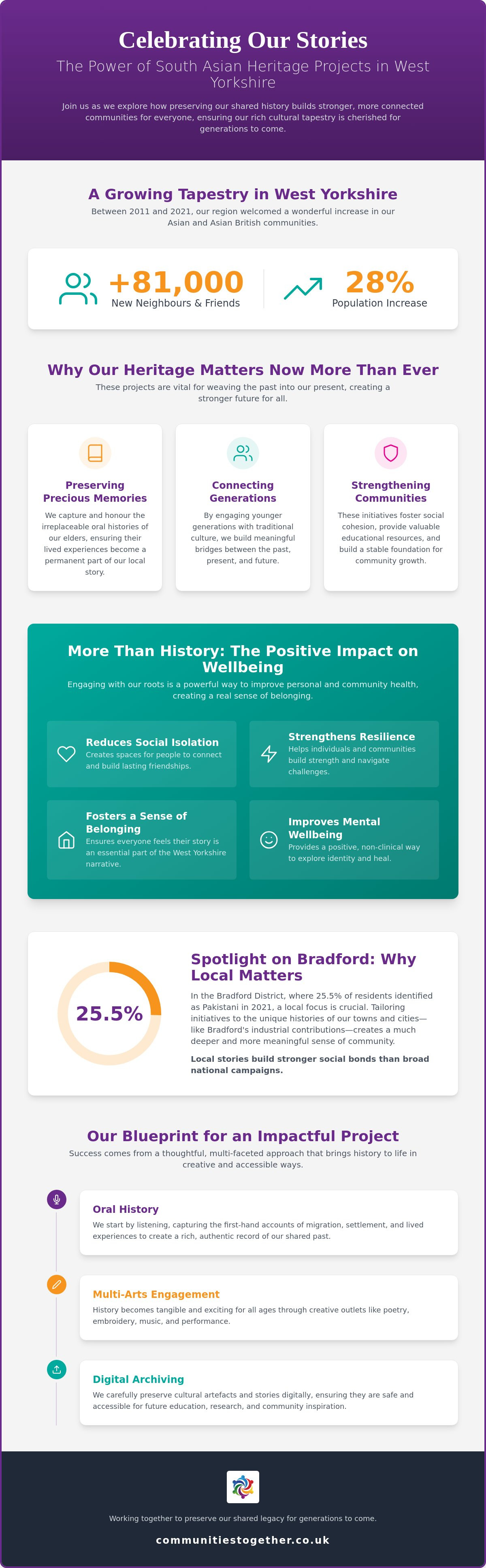
Between the 2011 and 2021 censuses, the population identifying as Asian or Asian British in West Yorkshire increased by more than 81,000 people, representing a 28% rise that highlights the profound importance of our region's diverse cultural fabric. It's often felt that the rapid pace of modern life threatens to obscure the lived experiences of our elders, making the development of South Asian heritage projects a vital necessity for ensuring that these irreplaceable oral histories are documented, respected, and woven into the permanent record of our local towns.
We understand the challenges of engaging younger generations with traditional culture whilst managing a lack of heritage resources in schools, and we're here to show how dedicated initiatives foster social cohesion, preserve vital histories, and provide transformative educational opportunities for all. This guide offers a comprehensive overview of how methodical cultural preservation builds community identity, facilitates intergenerational connection, and provides the practical tools needed to integrate diverse local narratives into our collective heritage. By exploring these pathways, we can work together to build structural strength within our communities and maintain cultural continuity for future generations across West Yorkshire.
Table of Contents
What Defines Impactful South Asian Heritage Projects?
Impactful South Asian heritage projects are collaborative endeavours that go beyond simple collection; they seek to capture, archive, and celebrate the nuanced stories that define our regional identity. By moving beyond outdated stereotypes, these initiatives reveal the authentic diversity of South Asian communities in the UK, fostering a profound sense of belonging whilst ensuring that cultural continuity remains a priority for future generations. In 2026, West Yorkshire stands as a primary focal point for this work, with cities like Bradford, Leeds, and Huddersfield serving as vibrant centres where historical preservation meets modern social resilience.
We believe that successful projects must be rooted in the community, acting as a bridge between the past and the present to build structural strength and collective endurance. In the Bradford District, where 25.5% of the population identified as Pakistani in the 2021 Census, the need for methodical cultural preservation is particularly evident, as it allows us to document the specific industrial contributions and social shifts that have shaped our local landscape. By facilitating these partnerships, we're able to promote harmony, encourage social responsibility, and provide a stable foundation for community growth.
To better understand the personal significance of these narratives, watch this helpful video:
The Core Components of Heritage Preservation
Effective preservation relies on a multi-faceted approach that includes oral history, multi-arts engagement, and digital archiving to ensure that no story is lost to time. We focus on capturing the lived experiences of migration and settlement through first-hand accounts whilst these vital memories are still available, using them to create a robust record of our shared past. By employing multi-arts methods such as poetry, embroidery, and music, we make history tangible for younger generations, whilst digital archiving ensures that cultural artefacts are preserved for future educational access, research, and community inspiration.
Why Cultural Representation Matters in 2026
Representation is a cornerstone of social justice, especially as we work to address the historical underrepresentation of Global Majority groups in traditional heritage sectors. These projects create safe, inclusive spaces to reflect on complex themes of migration, identity, and the lasting impact of colonialism, allowing participants to process shared histories with dignity and care. By strengthening local community infrastructure through heritage work, we're able to improve social cohesion, foster personal resilience, and ensure that every resident feels their story is an essential part of the West Yorkshire narrative.
The Benefits of Heritage Participation for Community Wellbeing
Engaging with one’s roots serves as a powerful catalyst for reducing social isolation in urban environments, especially within the densely populated districts of West Yorkshire where the Asian population has grown by 28% over the last decade. By facilitating South Asian heritage projects, we provide a non-clinical framework for improving mental wellbeing, creating dedicated spaces where individuals can explore their identity, heal intergenerational trauma, and build lasting social bonds. This approach moves beyond traditional social care by using culture as a tool for public health engagement, mirroring successful national initiatives that use heritage to build trust and increase awareness within the community. It's a method that works because it places value on the lived experience, ensuring that every participant feels seen, heard, and respected.
Building Resilience Through Cultural Identity
A robust understanding of one’s history provides a stable foundation for navigating modern social challenges, fostering a sense of collective endurance that is vital for personal resilience. Intergenerational workshops are particularly effective in this regard, as they actively reduce loneliness amongst elders whilst allowing younger people to develop a profound sense of pride in local South Asian contributions to the British social fabric. These sessions create a rhythmic pulse of shared experience, helping to weave together the complex threads of our social fabric through:
Facilitated storytelling that honours the 1947 Partition experiences and provides a platform for healing.
Collaborative arts activities that bridge the gap between traditional South Asian crafts and contemporary life.
Mentorship programmes that empower youth to lead cultural preservation efforts within their own neighbourhoods.
Skills Development and Personal Growth
Participation in these programmes doesn't just benefit emotional health; it also serves as a professional platform for acquiring tangible, transferable skills that enhance community capacity and personal development. Participants often find themselves learning the intricacies of oral history interviewing, digital archiving, and public speaking, which in turn boosts their confidence and employability. By training local facilitators through our community capacity building initiatives, we ensure that the expertise remains within the neighbourhood, fostering a self-sustaining model of cultural continuity. If you're interested in how these programmes can benefit your local group, you might explore our wellbeing and resilience workshops to see the impact first-hand. This link between cultural participation and increased civic engagement is essential for building a society where everyone feels empowered to contribute to the collective good and advocate for their community's future.
Comparing Local vs. National Heritage Initiatives
Whilst national campaigns provide a vital platform for broad visibility, local South Asian heritage projects in West Yorkshire offer a deeper level of social cohesion by anchoring historical narratives within the specific streets, mills, and community centres where they actually unfolded. The geographic specificity of our region is paramount, as the textile-driven history of the Pakistani community in Bradford, where 25.5% of residents identify as Pakistani according to the 2021 Census, requires a different preservation approach than the diverse professional and service-sector narratives found in Leeds or the unique trade histories of Huddersfield. By focusing on grassroots heritage, we're able to capture the granular details of daily life that national institutions might overlook, ensuring that the "lived heritage" of our neighbourhoods is documented with precision, care, and authenticity.
These local initiatives facilitate meaningful partnerships between charities, schools, and community groups, creating a resilient network that supports regional social impact goals whilst building community capacity from the ground up. It's through these neighbourhood-level connections that we can foster a sense of togetherness, maintain cultural continuity, and provide the transformative educational opportunities that residents truly value. By working at this scale, we ensure that heritage is not just something viewed in a distant museum, but a living bridge that strengthens the social fabric of our local towns and cities, providing a stable foundation for collective growth and mutual understanding.
The West Yorkshire Context
Recognising the distinct migration patterns and industrial histories of towns like Huddersfield and Halifax allows us to tailor our facilitation to meet the unique needs of each community. Local projects benefit from using accessible venues such as libraries and community centres, which encourages higher participation rates amongst those who might feel disconnected from larger institutional settings. This approach ensures that cultural preservation is inclusive, supportive, and deeply relevant to the people it serves, ultimately contributing to the long-term stability and harmony of the entire region by celebrating the specific contributions made by South Asian residents to our local heritage.
National Frameworks, Local Delivery
We believe in aligning local initiatives with national frameworks like South Asian Heritage Month, which runs annually from 18 July to 17 August, to amplify our impact and connect West Yorkshire's stories to the wider UK narrative. This synergy allows us to leverage national funding, such as the National Lottery Grants for Heritage which offer between £10,000 and £250,000 with a quick eight-week decision turnaround, to deliver projects that address specific district-level needs. By building a robust network of heritage practitioners across the North of England, we're able to share expertise, facilitate collaborative growth, and ensure that our regional voices are heard at a national level, creating a rhythmic pulse of professional promise and social delivery.
How Schools and Groups Can Organise Heritage Projects
Identifying a core theme such as home, family, migration, or local industrial contributions serves as the essential first step in grounding South Asian heritage projects within a meaningful context that resonates with participants of all ages. By selecting a focused lens, organisers can move beyond broad generalisations to capture the specific, multi-layered stories that define our local identity in West Yorkshire, whilst ensuring that the project remains manageable and impactful. We believe that building partnerships with local arts and heritage organisations is vital for expert facilitation, as these collaborations provide the professional literacy and technical skills needed to transform raw memories into enduring cultural assets. This collaborative process helps to build community capacity, facilitates mutual learning, and ensures that the resulting histories are preserved with the dignity and accuracy they deserve.
Engaging participants through inclusive workshops that cater to different learning styles is a cornerstone of successful heritage work, as it allows for a diverse range of voices to be heard and valued. Whether through visual arts, spoken word, or digital media, providing multiple entry points ensures that every individual can contribute to the collective narrative in a way that feels comfortable and empowering. We always aim for the creation of a final "artefact"—such as a community exhibition, a documentary film, or a local podcast—which serves as a tangible celebration of the project’s achievements and a permanent resource for future educational access. If you're looking for guidance on how to structure these initiatives, you can explore our South Asian arts and heritage activities to find professional support and inspiration for your next community project.
Engagement Strategies for Schools
Integrating local South Asian history into the national curriculum allows students to see their own backgrounds reflected in their formal education, which promotes a deeper sense of identity, belonging, and academic engagement. By organising workshops that focus on "living history" and oral accounts, schools can move beyond textbooks to provide students with a direct connection to the lived experiences of their elders. Using creative arts to explore complex themes like migration and colonialism helps to make these topics accessible and relatable, fostering empathy and social responsibility amongst the younger generation whilst building a more inclusive historical record for the entire school community.
Community Group Participation
Local groups play a vital role in facilitating oral history circles for elders, providing a safe and supportive space for sharing memories whilst ensuring that these vital first-hand accounts are recorded before they are lost. Organising community-led exhibitions in local centres or libraries allows for the celebration of grassroots heritage in the heart of the neighbourhood, making cultural preservation a visible and accessible part of daily life. To ensure these projects are truly inclusive, it's essential to consider accessibility in all its forms, from language support to physical venue access, ensuring that every member of the community feels welcomed to participate in the preservation of our shared West Yorkshire story.
Partnering with Communities Together for Cultural Continuity
We're so proud to share our earnest commitment to preserving South Asian arts and heritage in West Yorkshire, as we believe that cultural continuity is the very heart of a healthy and vibrant society. At Communities Together, we specialise in facilitating collaborative partnerships that don't just celebrate history but actively build community capacity, ensuring that local groups have the structural strength and professional literacy to maintain their own narratives for years to come. Unlike one-off exhibitions that can feel fleeting, our mission is to create a stable foundation for collective growth, providing the reliable support needed to weave the complex threads of our social fabric together into a resilient and inclusive whole.
By integrating wellbeing and resilience workshops into every one of our South Asian heritage projects, we address the holistic needs of our participants, providing a safe space for personal growth whilst fostering a deeper sense of social responsibility and togetherness. This professional, mission-driven approach allows us to support regional social impact goals by improving social cohesion, facilitating intergenerational connection, and promoting a rhythmic pulse of professional promise and social delivery across our local towns. We're here to act as a methodical advocate for the diverse communities that make West Yorkshire so special, ensuring that every resident feels their story is an essential part of our shared future.
Our Approach to Heritage Facilitation
We provide high-quality arts activities that focus on honouring tradition, embracing modern expression, and acting as a methodical advocate for diverse communities across Huddersfield, Leeds, Halifax, and beyond. Our facilitation process is designed to link learning and skills development directly to cultural preservation, allowing participants to acquire the expertise needed to manage their own heritage initiatives with confidence and professional rigour. This approach ensures that cultural participation is not just an activity but a transformative educational opportunity that builds community identity, facilitates mutual respect, and maintains a high degree of professional literacy in social welfare and cultural heritage.
Get Involved in Our 2026 Programmes
As we look towards our 2026 initiatives, we're inviting schools and community groups to join us in our mission to strengthen the local social fabric through inclusive, mission-driven engagement. Whether you're a school looking to integrate local histories into your curriculum or a community group wishing to facilitate oral history circles for elders, we provide the expert support and partnership required to bring your vision to life. We encourage potential partners to consider the upcoming National Lottery Heritage Fund deadlines for 2026, such as the 6 August and 12 November windows, as we work together to secure the resources necessary for these vital initiatives. To start a conversation about how we can support your goals, please enquire about our South Asian heritage projects and workshops and discover the benefits of a collaborative, community-focused partnership.
Building a Resilient Future Through Cultural Preservation
We've explored how methodical archiving and collaborative storytelling serve as a vital bridge between generations, helping to reduce social isolation whilst fostering a profound sense of local identity across our region. By focusing on the unique industrial and migration histories of our West Yorkshire towns, we ensure that every resident's contribution is documented with the dignity it deserves, creating a stable foundation for collective endurance. These South Asian heritage projects represent a powerful commitment to social responsibility, as they transform raw memories into enduring cultural assets that support both personal resilience and regional harmony.
As specialists in West Yorkshire social cohesion, we're dedicated to acting as a methodical advocate for diverse communities through our integrated wellbeing and resilience framework. We are professional community capacity builders who believe in the power of partnership to facilitate mutual learning and maintain cultural continuity for years to come. We invite you to partner with us for your next South Asian heritage project to help weave the complex threads of our social fabric together into a more inclusive whole. We look forward to working alongside you to build a lasting legacy that celebrates our shared history and supports the growth of our vibrant local neighbourhoods.
Frequently Asked Questions
What exactly is a South Asian heritage project?
A South Asian heritage project is a collaborative initiative designed to capture, archive, and celebrate the diverse histories and cultural contributions of people with roots in South Asia. These projects facilitate the preservation of oral histories, traditional arts, and community artefacts to ensure that the multi-layered narratives of migration and settlement are documented for future generations. By building community capacity and fostering cultural continuity, these programmes provide a stable foundation for collective growth and social responsibility.
How do these projects improve social cohesion in West Yorkshire?
These projects improve social cohesion by creating safe, inclusive spaces where residents from different backgrounds can engage in mutual learning, shared storytelling, and collective celebration. By highlighting the specific contributions made by South Asian communities to the local social fabric of towns like Halifax and Wakefield, we foster a sense of togetherness and harmony. This methodical approach to cultural preservation helps to bridge intergenerational gaps, reduce social isolation, and build structural strength within our diverse neighbourhoods.
Can schools in Bradford or Leeds request specific heritage workshops?
Yes, schools across West Yorkshire can request tailored workshops that align with the national curriculum whilst focusing on local South Asian history and "living history" accounts. We facilitate professional learning and skills development through creative arts, oral history sessions, and collaborative exhibitions that help students explore complex themes of identity and belonging. These initiatives are designed to be inclusive and supportive, providing transformative educational opportunities that resonate with the 25.5% of Bradford residents who identify as Pakistani.
What role does oral history play in preserving South Asian culture?
Oral history plays a critical role by capturing the lived experiences and first-hand narratives of migration that might otherwise be lost as older generations pass away. By recording these stories, South Asian heritage projects provide a platform for healing historical trauma and honouring the personal endurance of our elders. This process ensures that authentic voices remain at the heart of our regional archives, facilitating a deeper understanding of the collective journey that has shaped our local towns.
How are wellbeing and resilience linked to cultural heritage?
Wellbeing and resilience are linked to cultural heritage through the development of a strong sense of identity, which provides a stable foundation for navigating modern social challenges. Engaging with one's roots through South Asian heritage projects can measurably reduce social isolation and improve mental health by fostering a feeling of belonging and pride. Our integrated framework ensures that every project facilitates personal growth, builds community resilience, and promotes a rhythmic pulse of social delivery for all participants.
Is there funding available for local South Asian heritage initiatives in 2026?
Yes, significant funding is available in 2026 through the National Lottery Heritage Fund, which offers grants ranging from £10,000 to over £1 million for heritage preservation. For grants up to £250,000, there are no fixed deadlines and decisions are made within eight weeks, whilst larger projects have quarterly deadlines on 6 August and 12 November 2026. We help local groups navigate these opportunities to build community capacity and secure the resources needed for long-term cultural continuity.
How can our community group partner with Communities Together?
Community groups can partner with us by reaching out through our website to discuss potential collaborations that align with our mission of cultural preservation and community engagement. We act as a methodical advocate and wise facilitator, providing the professional support needed to build community capacity, organise inclusive workshops, and create lasting heritage artefacts. Our partnership model is deeply collaborative, ensuring that we work together to maintain harmony and support the collective endurance of our local neighbourhoods.
What are the themes for South Asian Heritage Month in 2026?
The themes for South Asian Heritage Month 2026 focus on "Roots to Routes," highlighting the historical connections between Britain and South Asia and their impact on contemporary society. This annual observance, held from 18 July to 17 August, provides a focal point for celebrating the diverse narratives of the South Asian diaspora. We use these themes to facilitate workshops, exhibitions, and storytelling circles that honour tradition whilst embracing modern expression, ensuring that our regional stories are heard on a national stage.


Comments