
Cultural Workshops for Leeds Schools: 2026 Buying Guide
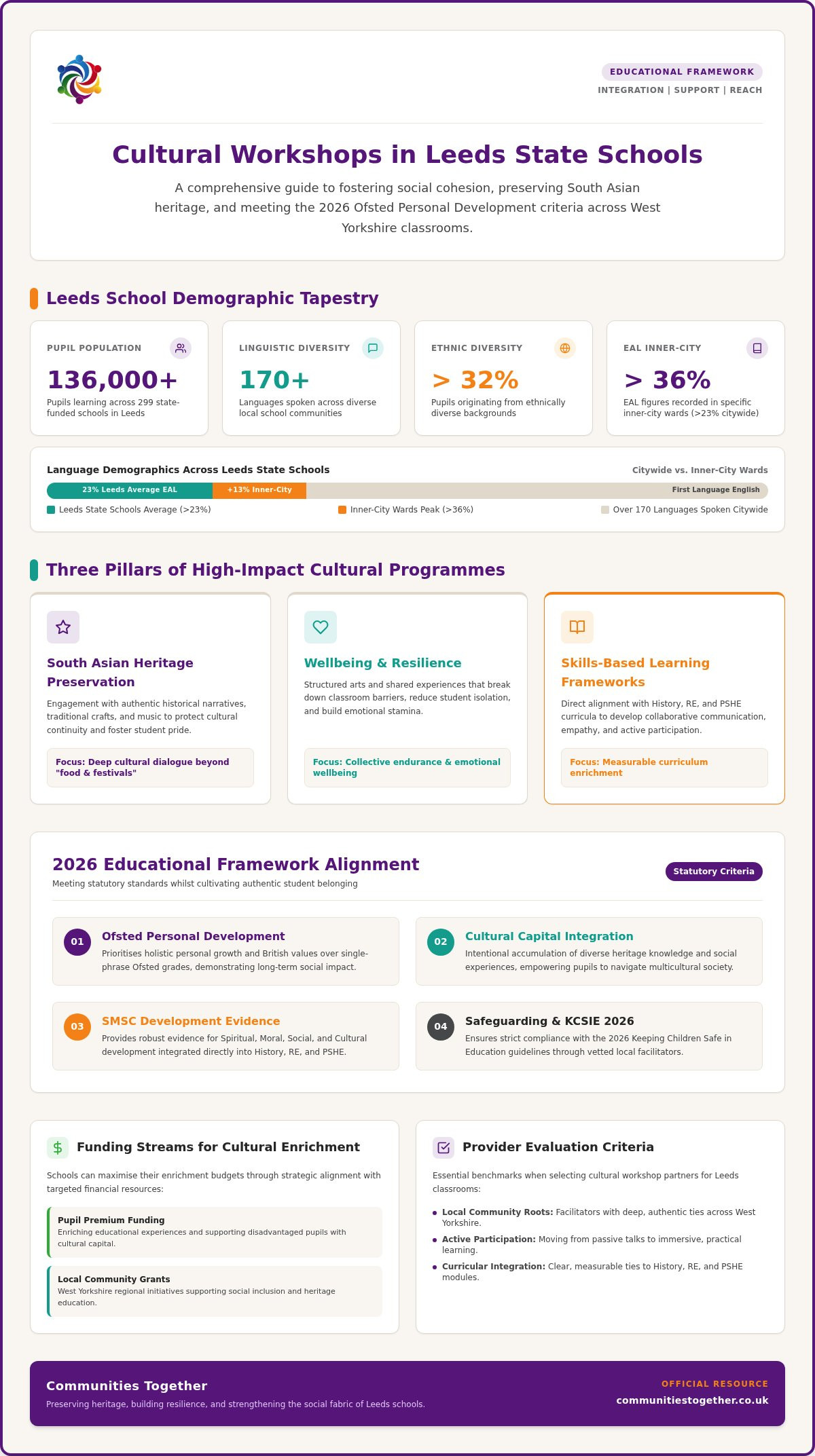
With over 170 languages spoken across our local communities and more than 23% of pupils in Leeds state schools speaking a first language other than English, authentic representation in the classroom is vital. You're likely aware that finding high-quality cultural workshops for schools in Leeds requires a strategic partnership that enriches the curriculum, supports disadvantaged pupils, and builds a lasting sense of belonging. We recognise that school leaders often struggle to find specialist heritage knowledge to meet the 2026 Ofsted Personal Development criteria, especially when trying to measure the long-term social impact of these sessions on student wellbeing and resilience.
This guide provides a comprehensive framework to help you select high-impact workshops that foster social cohesion, preserve cultural heritage, and satisfy statutory requirements. We'll examine how to align these experiences with Pupil Premium funding, ensure compliance with the 2026 Keeping Children Safe in Education standards, and create meaningful evidence for your school's cultural capital. By focusing on methodical advocacy and community-grounded learning, you can transform a single day of activity into a foundation for collective growth and structural strength across your entire school community.
Table of Contents
The Strategic Importance of Cultural Workshops in Leeds Schools
Leeds is a city defined by its vibrant diversity, where the cultural heritage of Leeds serves as a living backdrop for over 136,000 pupils across 299 state-funded schools. Within this rich demographic tapestry, cultural workshops for schools in Leeds act as a vital bridge between the classroom and the wider community, moving beyond one-off activities to provide structured learning that preserves heritage whilst building emotional resilience. By facilitating these deep connections, we help students understand their own identities whilst fostering a sense of collective endurance that's essential for a harmonious learning environment.
To better understand how immersive arts programmes can inspire students in local primary settings, watch this example of cultural enrichment in action:
High-impact cultural workshops for schools in Leeds serve as a catalyst for reducing social isolation, especially in inner-city wards where English as an Additional Language (EAL) figures often exceed 36%. By using South Asian arts and heritage activities as a common language, schools can bridge the gaps between diverse student backgrounds and create a shared space for meaningful dialogue. Partnering with a mission-driven organisation like Communities Together allows schools to access professional facilitators who understand the complex threads of our local social fabric, ensuring that every session contributes to long-term community stability.
Fostering Social Cohesion in the Classroom
Effective workshops move beyond surface-level "food and festivals" to encourage deep cultural participation that strengthens the social fabric of the classroom from the earliest stages of education. By engaging with authentic historical narratives and traditional crafts, students develop a sophisticated understanding of their peers' backgrounds, which directly reduces prejudice and promotes togetherness. These inclusive community programmes aren't just about learning facts; they're about building the structural strength of the school community through shared experience and mutual respect.
Aligning with the 2026 Educational Framework
The 2026 educational landscape prioritises Personal Development over single-phrase Ofsted grades, making it essential to link heritage projects directly to History, RE, and PSHE. These workshops provide a professional framework for building student wellbeing and resilience, ensuring that every child has the opportunity to develop the skills needed for long-term success. By integrating South Asian heritage preservation into the core curriculum, schools can provide robust evidence for Spiritual, Moral, Social and Cultural (SMSC) development. Within the 2026 Leeds educational context, Cultural Capital is defined as the intentional accumulation of diverse heritage knowledge and social experiences that empowers every student to navigate and contribute to a multicultural society with confidence and empathy.
Types of Cultural and Heritage Programmes Available
When selecting cultural workshops for schools in Leeds, it's essential to move beyond generic multicultural presentations and instead focus on programmes that offer deep, authentic engagement with our city's specific heritage. High-quality sessions are designed to act as a professional conduit for collective growth, facilitating a transition from passive observation to active participation. These programmes typically fall into three primary categories: South Asian heritage preservation, wellbeing and resilience initiatives, and skills-based learning frameworks that encourage collaborative development whilst strengthening the school's social fabric.
South Asian Arts and Heritage Preservation
In a city where over 32% of pupils come from ethnically diverse backgrounds, the preservation of cultural continuity is a vital component of a stable educational environment. These workshops focus on traditional South Asian art forms and historical narratives, providing students with the tools to understand, document, and protect their shared history. By engaging in South Asian arts heritage education, schools can help students build a robust sense of identity that values tradition and progress in equal measure. These sessions often involve hands-on heritage preservation projects where pupils learn to protect local stories, ensuring that the diverse threads of West Yorkshire's history remain vibrant for future generations.
Resilience and Wellbeing Through Culture
Cultural exploration serves as a powerful non-clinical intervention for students facing social isolation or emotional challenges. By using culture to support mental health, these workshops help children develop individual and collective resilience through the study of heritage and community endurance. These programmes are often eligible for support under the latest Pupil Premium funding guidance, which encourages the use of enrichment activities to improve the personal development of disadvantaged pupils. This approach ensures that cultural education isn't just a separate subject but a methodical advocate for student welfare, facilitating a sense of togetherness that supports every child's personal growth and academic journey.
Beyond the emotional benefits, cultural workshops for schools in Leeds also provide a structured environment for developing practical personal attributes. Students participate in collaborative tasks that require communication, problem-solving, and critical thinking, which are the building blocks of community capacity building. These skills-based programmes transform cultural learning into a tangible asset, allowing students to build the confidence needed to navigate a complex, multicultural world. If you're looking to implement these transformative experiences, exploring our range of South Asian arts and heritage activities can help you find a programme that aligns perfectly with your school's unique social and educational goals.
How to Evaluate a Cultural Workshop Provider
Selecting the right facilitator for your school requires a framework that moves beyond simple price comparisons to focus on the depth of social impact and professional accountability. As you look for cultural workshops for schools in Leeds, it's vital to distinguish between commercial agencies that offer generic entertainment and mission-driven organisations that act as authoritative bridge-builders within the community. A high-quality provider should possess a profound understanding of the West Yorkshire context, ensuring that every session is tailored to the specific demographic needs of our local wards whilst maintaining a steady focus on long-term social benefits. By choosing a partner that prioritises purpose over profit, you can facilitate a learning environment that values cultural continuity, collective endurance, and structural strength.
Professional standards and safeguarding remain paramount when commissioning external visitors to work with your pupils. In accordance with the statutory Keeping Children Safe in Education (KCSIE) 2026 standards, schools must ensure that every facilitator has undergone rigorous due diligence, including identity verification and valid Enhanced DBS checks for those engaging in regulated activity. Beyond these mandatory requirements, you should seek providers who align their delivery with government guidance on cultural education, demonstrating a clear commitment to providing a broad and balanced curriculum that supports every child's personal development. Measuring the success of these programmes shouldn't just rely on immediate student excitement but rather on the measurable evidence of improved social cohesion and student wellbeing over time.
Expertise in Heritage and Social Cohesion
A provider's track record in community capacity building is a reliable indicator of their ability to deliver meaningful engagement. You should evaluate the depth of their South Asian cultural knowledge, ensuring they can offer authentic historical narratives rather than surface-level summaries. These principled experts understand the complex threads of our social fabric, allowing them to facilitate workshops that bridge gaps between diverse groups and promote a sense of togetherness. By partnering with a specialist like Communities Together, your school gains access to facilitators who are deeply rooted in the Leeds and Bradford areas, providing a stable foundation for students to explore their heritage with confidence and pride.
Logistics and Curriculum Integration
Flexibility in delivery is essential for schools managing tight schedules and diverse classroom needs. Whether you require a single half-day session to spark interest or a multi-week project to build deep resilience, your provider must be able to tailor their content to specific Key Stages from KS1 through to KS4. Effective integration ensures that cultural learning supports existing curriculum goals in History, RE, and PSHE, making the most of your budget and time. For those looking to scale these initiatives, exploring strategic community engagement programmes UK can provide further insights into how collaborative projects build lasting capacity within the education sector.
Planning and Funding Your Cultural Workshop
Securing the necessary resources for high-impact cultural workshops for schools in Leeds involves a strategic blend of internal budget allocation and proactive external grant acquisition. While many institutions rely primarily on their core enrichment funds, a methodical advocate for student development will look toward collaborative opportunities that build long-term capacity and social responsibility. By setting clear learning objectives and social impact Key Performance Indicators (KPIs) before a workshop begins, school leaders can ensure that every session serves as a professional conduit for collective growth, cultural continuity, and structural strength within the student body. We value this collaborative approach.
Planning for school-wide heritage months or cultural weeks requires a deliberate timeline that allows for deep curriculum integration rather than surface-level observation. Success is often found when schools move away from viewing these events as isolated dates, choosing instead to facilitate a steady narrative of interconnectedness that spans the entire academic year. This approach allows for the accumulation of cultural capital whilst providing a stable foundation for students to explore their identities, understand their peers, and develop the resilience needed to thrive in a diverse society. It's a professional promise of social delivery.
Accessing Grants for Heritage and Wellbeing
External funding streams offer a vital route for schools looking to implement large-scale heritage and wellbeing projects without exhausting their primary budgets. The National Lottery Heritage Fund and various Leeds City Council community cohesion grants provide specific opportunities for schools that partner with mission-driven non-profits to deliver authentic cultural experiences. These partnerships are particularly effective because they demonstrate a commitment to community capacity building UK, which is a key factor that many grant-awarding bodies look for during the application process. By working with an established facilitator, schools can unlock specialised funding that supports South Asian heritage preservation, reduces student isolation, and strengthens the overall social fabric of the West Yorkshire region.
Maximising the Impact of the Visit
To ensure that cultural workshops for schools in Leeds deliver lasting value, educators should focus on both pre-workshop preparation and post-workshop follow-up. Engaging students with the topic beforehand creates a sense of anticipation and purpose, while embedding the learning into the termly curriculum ensures that the session's impact isn't lost once the facilitator leaves the building. It's essential to gather concrete evidence for social cohesion and wellbeing reports, as this data serves as a professional promise of delivery to governing bodies and Ofsted inspectors alike. We recommend using student feedback, creative outputs, and teacher observations to build a comprehensive narrative of cause and effect that highlights the workshop's role in promoting togetherness and social responsibility.
Communities Together: Your Partner for Cultural Excellence in Leeds
At Communities Together, we stand as an earnest partner dedicated to South Asian heritage preservation and community resilience across the West Yorkshire region. Our professional facilitators possess deep roots in Leeds, Bradford, and Huddersfield, allowing us to act as a stable foundation for institutions seeking to enrich their curriculum with authentic cultural experiences. By providing customisable cultural workshops for schools in Leeds, we bridge the gap between academic education and social cohesion, ensuring that every session is tailored to meet the specific needs of your student population whilst fostering a sense of collective endurance. We're committed to this work.
By operating as a non-profit organisation, we guarantee that every pound invested in our programmes directly supports local community growth, facilitates heritage continuity, and maintains the structural strength of our shared social fabric. This mission-driven approach ensures that our focus remains entirely on the long-term social benefits for your pupils, rather than short-term commercial gains. We believe that high-quality cultural workshops for schools in Leeds should be accessible, professional, and deeply rooted in the local context to truly resonate with students and staff alike.
A Methodical Approach to Social Impact
We adopt a methodical approach to social impact, prioritising partnership building and collaborative growth to ensure our interventions are both sustainable and deeply resonant. Our wellbeing and resilience workshops are designed to reduce student isolation by providing high-quality arts and heritage activities that encourage togetherness, mutual respect, and personal development. We believe that by facilitating these meaningful connections, we can help schools create an inclusive environment where every child feels valued, understood, and empowered to contribute to their community's future. Our earnest, mission-driven delivery ensures that we act as a principled expert in your school environment, providing a professional conduit for student growth.
Get Started with Communities Together
Taking the first step toward enhancing your school's cultural capital is a straightforward process designed to be both absorptive and reassuring for busy educators. You can enquire about our South Asian arts and heritage programmes to discover how we can align our expertise with your specific curriculum goals, whether you're looking for a one-off event or a sustained partnership. We invite you to request a bespoke proposal for your school’s wellbeing needs, allowing us to demonstrate our commitment as an authoritative bridge-builder and a methodical advocate for your students' success. We're here to help you build a stronger, more connected school community.
Strengthening Your School’s Social Fabric for 2026 and Beyond
Selecting high-impact cultural workshops for schools in Leeds is a transformative step toward building a resilient, inclusive environment that prioritises long-term social benefits, fosters cultural continuity, and strengthens the overall social fabric of your institution. By choosing facilitators who are specialists in South Asian heritage preservation and deeply rooted in West Yorkshire community engagement, you're facilitating a steady narrative of interconnectedness that moves beyond surface-level diversity to achieve meaningful social cohesion, improved student wellbeing, and robust evidence for Ofsted’s personal development criteria.
Our earnest, professional facilitators are dedicated to acting as a stable foundation for your school, providing the methodical advocacy and specialist knowledge required to reduce student isolation whilst building the collective endurance of your diverse community. We're committed to ensuring that every partnership serves as a professional conduit for collective growth, cultural preservation, and the structural strength of our local society.
We look forward to collaborating with you to maintain the vibrant heritage of our city whilst supporting the personal development of every young learner in your care.
Frequently Asked Questions
What are the benefits of cultural workshops for Leeds schools?
Cultural workshops for schools in Leeds provide students with the opportunity to engage deeply with our city's diverse social fabric whilst fostering a sense of togetherness and mutual respect. These programmes facilitate the preservation of local heritage and help reduce social isolation by creating shared spaces for meaningful dialogue. By participating in structured learning, pupils develop the resilience and skills needed to navigate a multicultural society, ensuring that the school community remains a stable foundation for collective growth.
How do these workshops align with the national curriculum?
Our workshops are designed to integrate seamlessly with core subjects such as History, Religious Education, and PSHE by providing authentic, first-hand accounts of cultural traditions. These sessions support the national curriculum's focus on personal development and British values by encouraging students to explore diverse identities and historical narratives. By linking heritage projects to specific learning objectives, we help schools maintain a broad and balanced curriculum that values both academic progress and social responsibility.
Can cultural workshops help with Ofsted’s "Cultural Capital" requirements?
High-quality cultural workshops for schools in Leeds act as a professional conduit for building "Cultural Capital" as defined by the 2026 Ofsted framework. These programmes provide essential evidence for the Personal Development and Spiritual, Moral, Social and Cultural (SMSC) criteria by expanding students' cultural horizons and promoting inclusive values. By engaging in authentic heritage preservation, pupils accumulate the diverse knowledge and social experiences necessary to contribute confidently to a multicultural society, which is a key priority for modern inspectors.
What age groups are these heritage programmes suitable for?
We offer customisable heritage and arts programmes that are suitable for students across all Key Stages, from primary through to secondary education. Our professional facilitators possess the expertise to tailor the complexity of the content to match the developmental needs of pupils in KS1, KS2, KS3, and KS4. Whether your school requires a sensory introduction to South Asian crafts or a deep historical analysis of immigrant narratives, we ensure every session is age-appropriate, impactful, and encouraging for all learners involved.
How much do cultural workshops for schools in Leeds typically cost?
The cost of cultural workshops for schools in Leeds varies depending on the duration of the visit, the number of rotating class groups, and the specific materials required for heritage activities. Schools often choose between half-day sessions and full-day immersive experiences to maximise their per-pupil value within their enrichment budgets. Many institutions successfully fund these programmes through Pupil Premium allocations or by partnering with us to access external community grants specifically designed for heritage preservation and social cohesion.
Are these workshops available in Bradford, Wakefield, and Huddersfield too?
Our mission-driven delivery extends across the entire West Yorkshire region, including Bradford, Wakefield, Huddersfield, and Halifax. We pride ourselves on our local expertise and deep roots within these diverse communities, allowing us to act as an authoritative bridge-builder for schools throughout the county. Whether your institution is based in the heart of Leeds or in a surrounding town, we're dedicated to providing the same professional standards and earnest commitment to social impact for every student.
How do you measure the success of a social cohesion programme in schools?
We measure the success of social cohesion programmes through a combination of social impact KPIs, student feedback, and teacher observations of inclusive behaviour. A successful programme is characterised by increased cultural participation, a measurable reduction in social isolation, and an improved understanding of diverse heritage amongst the student body. By documenting these outcomes, schools can provide tangible evidence of their commitment to building community capacity and fostering a harmonious learning environment for all their pupils.
Do you provide specific South Asian heritage workshops for schools?
We specialise in delivering authentic South Asian arts and heritage activities that focus on cultural preservation and historical continuity. These specific workshops engage students in traditional crafts, storytelling, and heritage projects that reflect the rich demographic tapestry of West Yorkshire. By providing high-quality, mission-driven sessions, we help schools move beyond surface-level diversity to achieve deep cultural participation that honours tradition whilst supporting the personal growth and resilience of every student in a friendly, professional manner.


Comments