
Intercultural Understanding: A Guide to Building Cohesive Communities in 2026
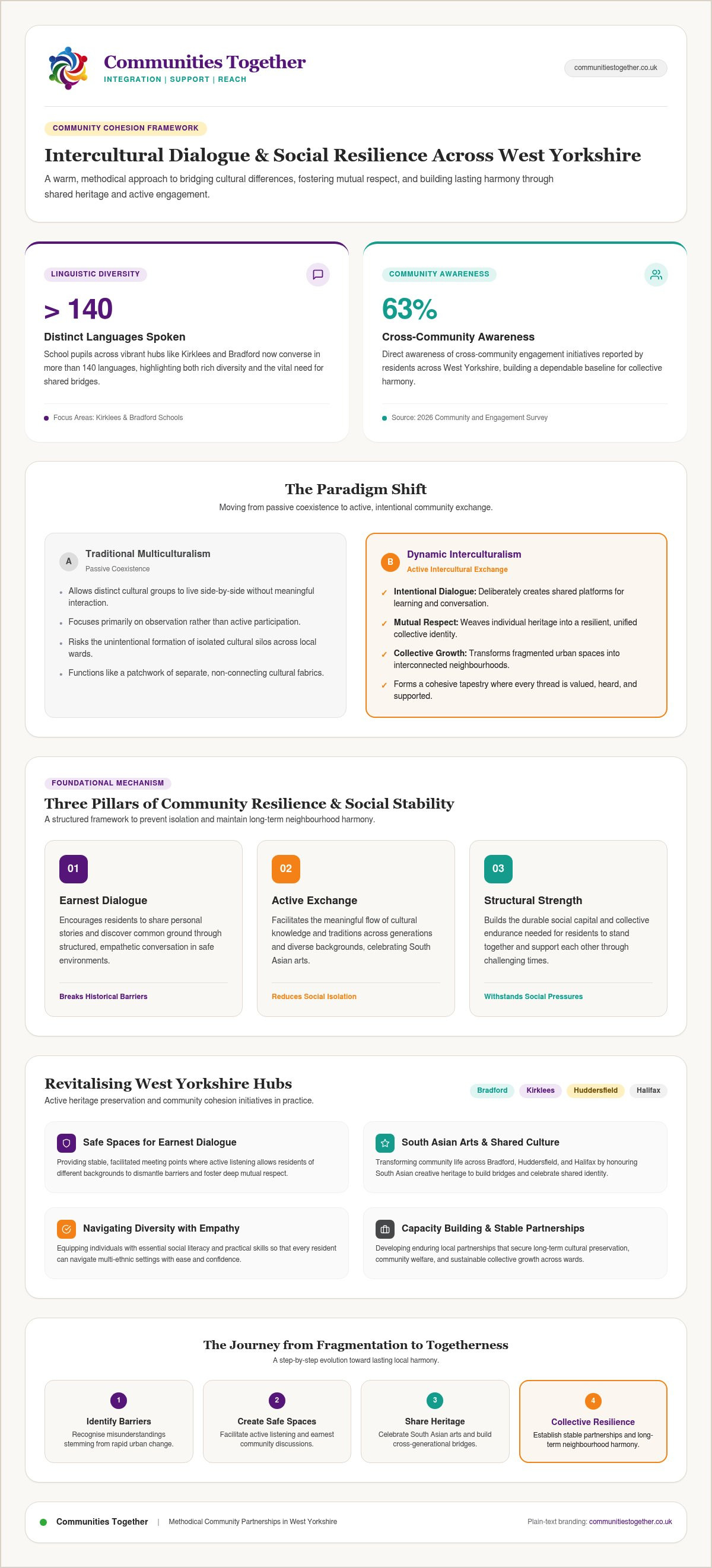
Did you know that school pupils across West Yorkshire, particularly in vibrant hubs like Kirklees and Bradford, now communicate in more than 140 distinct languages? It's completely understandable if you feel that the rapid pace of change in our urban areas makes it harder to engage diverse groups or resolve the misunderstandings that often arise from cultural differences, especially whilst you're trying to bridge gaps in social cohesion. We're here to help. This guide explores how deliberate intercultural dialogue and shared heritage projects can strengthen our social fabric, foster collective resilience, and build lasting harmony across our local neighbourhoods. You'll find practical tools to facilitate meaningful conversations, strategies for reducing social isolation through the celebration of South Asian arts, and a clear path toward improved community wellbeing. We'll explore how these methodical, partnership-driven approaches to togetherness can transform fragmented spaces into inclusive environments where every resident feels valued, heard, and connected amongst their neighbours.
Table of Contents
Understanding Interculturalism: A Framework for Modern Community Cohesion
In our rapidly evolving urban landscapes, achieving true social cohesion requires us to move beyond the simple presence of diverse groups toward a more dynamic model of active engagement. Whilst multiculturalism has historically focused on the peaceful coexistence of different backgrounds, the framework of interculturalism prioritises the intentional exchange of ideas, values, and traditions to create a more resilient social fabric. By facilitating these deep connections, we can ensure that our communities possess the structural strength and cultural continuity necessary to reduce social isolation in 2026. We believe that when people truly interact, they build a foundation of trust that supports collective growth.
To better understand this concept, watch this helpful video:
The Evolution from Multiculturalism to Interculturalism
Traditional multiculturalism often recognises difference by allowing various groups to live side-by-side without requiring meaningful interaction. In contrast, interculturalism actively builds bridges between these differences to encourage collaborative growth, shared learning, and mutual understanding. This shift is reflected in current UK social policy, where the focus has moved toward creating shared spaces that invite participation rather than just observation. As wise facilitators, we understand that managing these complex social threads requires a methodical approach that respects individual heritage whilst weaving a unified collective identity. It's about moving from a patchwork of cultures to a tapestry where every thread is interconnected and valued.
Why Intercultural Dialogue Matters for Social Stability
Active dialogue is the primary tool used to prevent the formation of isolated cultural silos within our local wards. When residents engage in earnest conversation, they develop the empathy needed to navigate cultural differences and maintain long-term community resilience. We've seen that when people share their heritage, it reduces fear and builds a reliable foundation for togetherness. Interculturalism is a proactive method for fostering social harmony and collective endurance. By prioritising these interactions, we help build a foundation for togetherness that can withstand social pressures and improve individual wellbeing. This is especially relevant in West Yorkshire, where 63% of residents now report direct awareness of cross-community engagement initiatives, according to the 2026 Community and Engagement Survey.
Earnest Dialogue: Encourages residents to share stories and find common ground through structured conversation.
Active Exchange: Facilitates the flow of cultural knowledge between different generations and backgrounds.
Structural Strength: Builds the social capital needed to support one another during challenging times.
By focusing on these proactive strategies, we can ensure that our towns and cities remain vibrant places of opportunity. It's not just about living together; it's about growing together through shared experiences and mutual support.
The Core Principles of Intercultural Dialogue and Mutual Respect
Establishing safe spaces for earnest community engagement is the cornerstone of our mission to build stronger neighbourhoods. We believe that by providing a stable foundation for interaction, we can break down historical barriers and foster a deep sense of shared belonging amongst diverse residents. This process relies heavily on empathy and active listening, which act as the essential tools for navigating complex social threads whilst maintaining professional literacy in social welfare. By prioritising these core principles, we help communities move from simple coexistence toward a more meaningful and enduring togetherness.
Creating Inclusive Environments for Engagement
To organise workshops that feel truly welcoming, facilitators must prioritise accessibility, cultural sensitivity, and intentional invitation. It's vital to ensure every participant feels they're a valued part of the collective growth, which we achieve by using professional standards similar to those outlined in the Council of Europe's Intercultural Cities Programme. By building the capacity of local groups to lead their own intercultural initiatives, we empower them to maintain social harmony independently whilst ensuring that the progress made is sustainable and deeply rooted in the local community. This professional approach ensures that community engagement isn't just a one-off event but a continuous process of building trust, facilitating dialogue, and maintaining collective endurance.
Practical steps for facilitation include:
Selecting neutral venues that don't carry historical baggage for specific groups to ensure everyone feels safe and respected.
Providing materials in multiple languages to honour the 140+ languages spoken across West Yorkshire schools and communities.
Using inclusive learning methods that focus on shared goals rather than highlighting differences to encourage collaborative growth.
The Power of Shared Heritage in Building Bridges
Cultural heritage often serves as a neutral ground where conversations between different groups can begin without the pressure of immediate political or social conflict. By preserving South Asian arts and traditions, we don't just protect the past; we expand educational access for the wider community and build a more resilient social fabric that benefits every resident in West Yorkshire. This methodical approach to heritage preservation helps to reduce social isolation by inviting people from all walks of life to participate in the storytelling and cultural continuity of their local area. This approach turns intercultural interaction into a shared journey of discovery that strengthens the community's collective identity. For those looking to start their own journey, our guide on community-led heritage projects UK provides a comprehensive roadmap for protecting our collective history.
If you're interested in developing these skills further, our Wellbeing and Resilience Workshops offer a friendly space to grow together and build your community's capacity for dialogue.
Interculturalism: Transforming West Yorkshire Communities
Whilst many global strategies focus on broad concepts, our work in Huddersfield and Halifax demonstrates the power of street-level community engagement programmes in building genuine trust and social connectivity. We've seen that by facilitating methodical, partnership-driven initiatives, we can help residents overcome fragmentation, reduce social isolation, and build a more resilient social fabric that serves the entire region. Our progress is measured not just by participation numbers but by the tangible improvement in how neighbours support one another, ensuring that our efforts remain accountable to the diverse people of West Yorkshire. By prioritising earnest dialogue and inclusive activities, we're helping to create a reliable foundation for togetherness that can withstand the challenges of modern urban life.
South Asian Arts as a Catalyst for Cohesion
In Bradford, the impact of South Asian arts has been particularly profound, acting as a professional conduit for intercultural harmony and cultural continuity. High-quality South Asian heritage projects are effective tools for engagement because they offer a neutral, inviting space for residents to explore tradition whilst participating in modern community life. By facilitating these artistic exchanges, we aim to preserve vital traditions, invite wider community participation, and foster a deep sense of personal development amongst our residents. These activities foster resilience by providing a stable environment where people can share stories, acquire new skills, and build lasting friendships. We believe that by following the rigorous standards suggested by the Council of Europe's Intercultural Cities Programme, we can ensure that cultural heritage remains a living, breathing part of our social landscape.
Strengthening Local Infrastructure in Leeds and Bradford
Capacity building is essential for helping local groups in Leeds and Bradford evolve into self-sustaining hubs of intercultural exchange that can support their neighbours for years to come. By enhancing the overall resilience of the region through collaborative growth, we provide the methodical support necessary for local organisations to thrive independently and maintain their own social infrastructure. Our comprehensive guide to community capacity building UK details how these structural improvements lead to a more stable, harmonious, and supportive environment for all. In Wakefield, for example, local partnerships have successfully empowered individuals to take ownership of their neighbourhood's resilience, creating a ripple effect of positive change that strengthens the entire West Yorkshire area. It's about building a foundation that lasts, facilitating togetherness, and maintaining the unique cultural threads that make our cities so vibrant.
According to the 2026 Community and Engagement Survey, 63% of West Yorkshire residents now report direct awareness of cross-community engagement initiatives, which is a heartening sign of our collective progress. This data highlights the importance of our mission-driven approach in fostering social responsibility and ensuring that every resident feels a sense of pride and place in their community.
Practical Strategies for Developing Intercultural Competence and Resilience
Acquiring the skills necessary to navigate diverse social environments with confidence is a vital component of modern civic life in 2026. By developing intercultural competence, individuals can effectively bridge divides, foster mutual respect, and maintain social harmony in their local wards. This personal growth isn't merely a social benefit; it's a fundamental driver of individual wellbeing and collective endurance. When residents feel equipped to engage with different perspectives, they contribute to a more stable and supportive environment for everyone. We're here to support you as you build these essential connections and strengthen the social fabric of West Yorkshire through methodical, partnership-driven engagement that prioritises long-term social responsibility.
Building Personal Resilience Through Cultural Engagement
Understanding different perspectives reduces personal anxiety by replacing fear of the unknown with genuine empathy. Our collaborative wellbeing workshops UK demonstrate how non-clinical community health improves when residents feel connected to a broader social purpose. These sessions provide a safe space for community members to develop the emotional strength needed to cope with social change and build lasting friendships. It's about building a robust internal framework that allows individuals to remain grounded whilst embracing the diversity of their neighbours. We've found that this proactive approach to mental health fosters a more inclusive and resilient community culture.
Learning and Skills for a More Connected Society
Local leaders require specific "engagement skills" to facilitate intercultural growth, including active listening and conflict resolution, which aligns with the standards monitored by the Intercultural Cities Index. Structured learning opportunities, such as those detailed in our guide to skills and personal development UK, can measurably reduce social isolation by providing a clear pathway for personal growth. By participating in these programmes, residents acquire the tools to lead their own initiatives and support their neighbours. This methodical approach ensures that every individual has the opportunity to thrive whilst contributing to the structural strength of their local area.
How Communities Together Facilitates Intercultural Growth
At Communities Together, we operate as an authoritative bridge-builder by implementing a methodical approach to partnership and community capacity building across the West Yorkshire region. Our mission is to provide a principled foundation for South Asian arts and heritage preservation, ensuring that these vital cultural threads are woven into the broader social fabric to support long-term stability, harmony, and social responsibility. By facilitating professional community engagement programmes, we translate abstract social concepts into measurable social delivery, which helps reduce isolation and builds the structural strength necessary for collective growth. We're dedicated to maintaining a reliable foundation for togetherness, whilst providing the expertise needed to navigate the complexities of modern urban life in 2026.
A Professional Conduit for Collective Growth
We see ourselves as a wise facilitator that understands the complex threads of our social fabric and possesses the expertise to weave them together through earnest, mission-driven workshops in Huddersfield, Leeds, and Bradford. Our services act as a stable foundation for local organisations to build upon, facilitating intercultural dialogue that leads to improved community resilience, enhanced wellbeing, and sustained collective endurance. By prioritising stability and harmony over short-term excitement, we ensure that our engagement programmes provide a thorough and inclusive environment where every resident feels valued, heard, and supported amongst their neighbours. This methodical process involves:
Building Capacity: Empowering local groups with the professional literacy in social welfare needed to lead their own sustainable initiatives.
Facilitating Dialogue: Creating safe, professional spaces where residents can engage in earnest conversation and break down historical barriers.
Maintaining Heritage: Preserving South Asian arts and traditions to ensure cultural continuity and expand educational access for all.
Join Our Mission for a More Cohesive West Yorkshire
We invite local stakeholders, governing bodies, and community leaders to engage with our strategic community programmes to foster a region of learning and creativity that benefits every resident. Whether you're interested in South Asian heritage projects for schools or wellbeing workshops for local groups, our friendly, professional support is designed to help you navigate cultural differences with confidence and empathy. By collaborating with us, you contribute to the intercultural interaction that makes West Yorkshire a vibrant and resilient place to live, work, and grow together. We're here to help you organise activities, facilitate conversations, and preserve traditions that strengthen our collective identity and ensure a harmonious future for the next generation. Our commitment to accountability ensures that every partnership leads to tangible social benefits and a more unified community.
Advancing Social Cohesion through Collective Action and Heritage
Transitioning from passive coexistence to active intercultural interaction allows us to weave a more resilient social fabric by prioritising the preservation of South Asian arts, the facilitation of earnest dialogue, and the delivery of methodical wellbeing workshops. As specialists in South Asian heritage across West Yorkshire, we're dedicated to providing a professional foundation that empowers local groups to lead their own initiatives, reduce social isolation, and foster a deep sense of collective endurance amongst their neighbours. By embracing these structured strategies for engagement, we can ensure that our communities remain stable, inclusive, and capable of navigating the complex social threads of 2026 with confidence.
We're here to support your journey toward building a more harmonious and supportive environment where every resident feels a genuine sense of pride and place.
We look forward to collaborating with you as we continue our mission to build capacity and facilitate meaningful growth throughout our vibrant region.
Frequently Asked Questions
What is the primary difference between multicultural and intercultural approaches?
Multiculturalism focuses on the peaceful coexistence of distinct groups within a shared space, whilst the intercultural approach prioritises active dialogue, reciprocal exchange, and the intentional building of bridges between those groups. It's a proactive methodology that ensures diversity isn't just observed but is actively engaged with to foster mutual understanding, social harmony, and collective growth. We've found that moving from side-by-side living to a more integrated, collaborative community life supports long-term social responsibility for everyone involved.
How can interculturalism help reduce social isolation in local neighbourhoods?
Interculturalism reduces social isolation by creating structured opportunities for residents to engage in shared activities that transcend cultural boundaries and foster genuine friendships. By facilitating these meaningful interactions, we help individuals build trust, expand their social networks, and maintain a reliable foundation for togetherness. It's a methodical approach that's particularly effective in urban areas where fragmentation can lead to loneliness, as it encourages people to step out of their cultural silos and participate in a more inclusive local life.
What role do arts and heritage play in fostering social cohesion?
Arts and heritage act as a neutral ground where diverse residents can explore shared stories, celebrate unique traditions, and build a more resilient social fabric through collective participation. High-quality South Asian heritage projects invite people from all backgrounds to engage in cultural exchange, which helps preserve vital traditions whilst expanding educational access for the wider community. These activities foster social cohesion by highlighting common values and providing a professional conduit for building lasting connections and mutual respect.
Can intercultural programmes improve individual wellbeing and resilience?
Yes, participating in structured intercultural programmes can measurably improve individual wellbeing by reducing personal anxiety and fostering a sense of shared belonging. Our resilience workshops provide the skills needed to navigate diverse social environments with confidence, helping residents cope with social challenges and build their emotional strength. By encouraging personal development through cultural participation, we support the long-term non-clinical wellbeing of the community and enhance the overall endurance of our local neighbourhoods in West Yorkshire.
How can local groups in West Yorkshire build capacity for intercultural dialogue?
Local groups in Huddersfield, Halifax, and Wakefield can build capacity by engaging in methodical partnership-driven programmes that focus on professional literacy in social welfare and community development. We're here to provide the expertise needed to help organisations become self-sustaining hubs of exchange, facilitating the acquisition of new skills and strengthening local infrastructure. This collaborative growth ensures that community leaders are empowered to lead their own initiatives and maintain a stable foundation for long-term social stability.
Is interculturalism only for diverse urban areas like Leeds and Bradford?
Whilst urban centres like Leeds and Bradford often face complex social challenges, interculturalism is equally vital for smaller towns and rural areas where demographic changes are occurring. Building bridges between different backgrounds is a universal need that fosters harmony and resilience in every corner of West Yorkshire. Our programmes are designed to be adaptable, ensuring that every neighbourhood, regardless of its size or location, can benefit from the structural strength and togetherness that active dialogue provides.
What are the first steps in organising an intercultural community project?
The first steps involve identifying a shared goal, establishing a safe and professional space for dialogue, and inviting diverse stakeholders to collaborate from the very beginning. It's essential to listen to the needs of the community, facilitate earnest conversation, and build a partnership-driven framework that ensures everyone feels like a valued part of the collective growth. By starting with a clear mission and a commitment to inclusivity, you can create a project that's both impactful and sustainable.
How does Communities Together support local heritage preservation?
We provide a principled foundation for South Asian arts and heritage preservation by organising high-quality activities that preserve cultural continuity and foster social cohesion. We're specialists in building community capacity, facilitating dialogue, and maintaining the traditions that make our local area unique. Our mission-driven approach ensures that heritage is used as a professional tool for engagement, helping to reduce isolation and build a more resilient social fabric for residents in Huddersfield, Halifax, and Bradford.


Comments