
Preserving South Asian Culture in the UK: A Guide to Heritage and Community Strength
Imagine a quiet afternoon in a Bradford community centre where an elder shares the delicate nuances of traditional embroidery with a group of local teenagers, effectively bridging the generational divide whilst ensuring that the rich tapestry of their shared history remains vibrant for the year 2026. It's completely natural to feel a sense of concern regarding the potential dilution of heritage amongst younger generations, yet we've observed that preserving South Asian culture in the UK is most successful when we facilitate meaningful dialogues, provide accessible resources, and celebrate the diverse identities that define our local neighbourhoods. You'll discover how local initiatives in West Yorkshire are leveraging the power of storytelling, communal arts, and structured intergenerational projects to facilitate cultural continuity, strengthen local bonds, and build a resilient foundation for future growth. We'll explore practical methods for documenting your unique family history to increase social cohesion in Leeds and Bradford, ultimately fostering a profound sense of pride and belonging for South Asian youth whilst honouring the wisdom of our elders who hold the community’s history.
Table of Contents
What Does Preserving South Asian Culture in the UK Mean in 2026?
In 2026, preserving South Asian culture in the UK represents much more than maintaining a static archive of the past; it's about facilitating a vibrant, living dialogue that informs our collective future. We've moved beyond simply recording dates and names to a model where heritage is an active process of doing, sharing, and creating. This year is particularly pivotal as we observe South Asian Heritage Month throughout July under the theme "Unity in Diversity", which encourages us to celebrate how the South Asian population in the UK has fundamentally woven its values into the fabric of modern British identity. It's a critical moment for capturing the oral histories of our first-generation migrants, ensuring their lived experiences aren't lost whilst fostering a sense of cultural continuity that directly supports the mental resilience and wellbeing of diaspora communities.
The Evolution of South Asian Identity in West Yorkshire
The cultural landscapes of Huddersfield, Bradford, and Leeds offer a unique perspective on how traditions adapt without losing their core essence. Local communities in these areas have been incredibly successful at maintaining their favourite customs whilst embracing the specific "place-based" heritage of the North. Whether it's through local melas that draw thousands or smaller community gatherings in Wakefield, these traditions aren't just being remembered; they're being reimagined. This evolution helps younger people feel a deep sense of belonging, as they see their dual identity reflected in the streets they walk every day. It's about building a foundation where youth can feel proud of their roots whilst contributing to the future of their hometowns.
Why Cultural Preservation is Essential for Social Cohesion
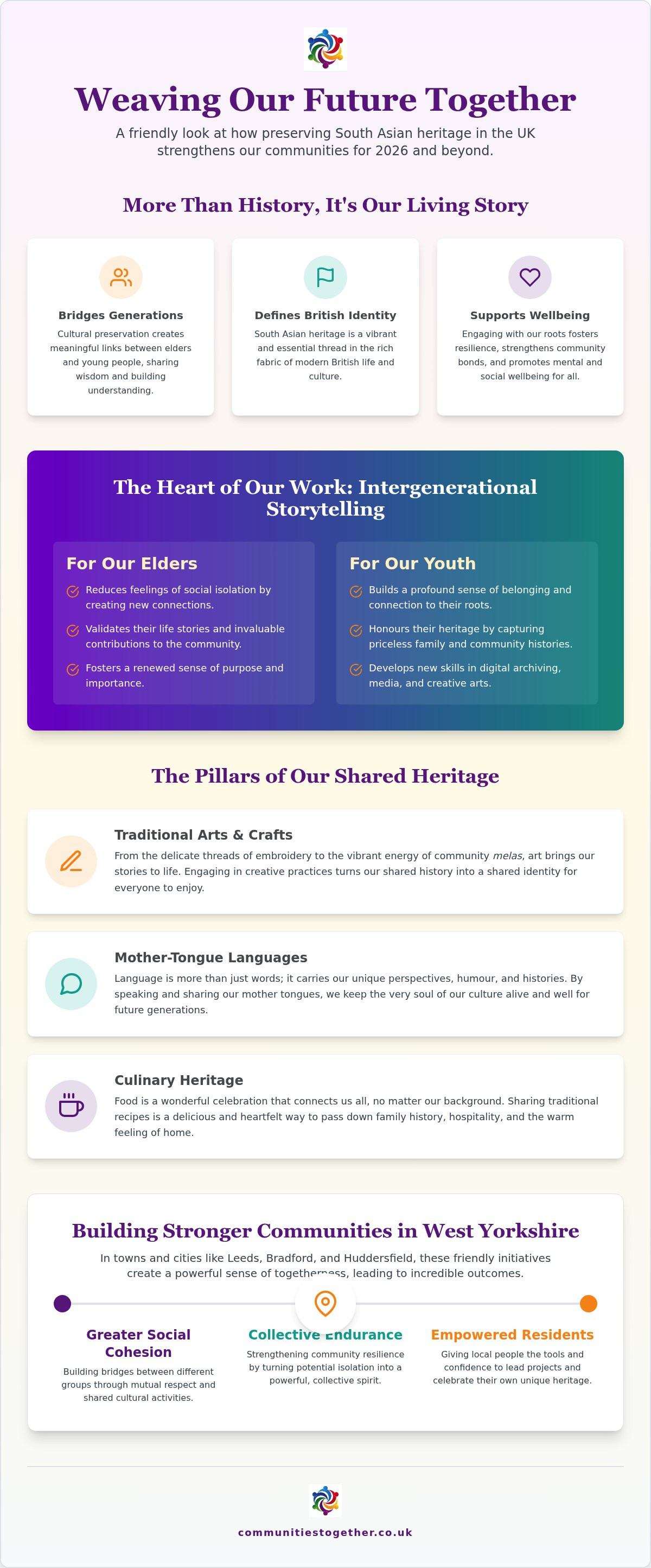
Shared heritage projects are powerful tools for reducing friction and building bridges between diverse groups within our urban centres. When we participate in cultural activities together, we naturally reduce social isolation amongst elders who might otherwise feel disconnected from the fast-paced modern world. Social cohesion is the structural strength of a community built on mutual respect and shared history. By facilitating heritage initiatives, we're doing more than just teaching history; we're creating a sense of togetherness, strengthening community bonds, and ensuring that the vital work of preserving South Asian culture in the UK remains a priority for local councils and community leaders alike. These projects turn potential isolation into collective endurance, proving that our shared history is our greatest asset for a harmonious future.
Intergenerational Storytelling: Bridging the Gap Between Elders and Youth
The act of capturing oral histories is a fundamental component of preserving South Asian culture in the UK, ensuring that the nuanced lived experiences of our elders are documented for future generations to cherish. We recognise that these narratives are not merely historical records; they are living testaments to the resilience, adaptability, and strength of the diaspora communities in West Yorkshire. By facilitating these storytelling sessions, we provide a vital non-clinical intervention that supports the wellbeing of older residents by validating their contributions, reducing social isolation, and fostering a renewed sense of purpose. Simultaneously, we engage younger people through digital archiving, creative media, and podcasting, allowing them to use modern tools to honour their heritage whilst developing new skills that contribute to their personal growth.
Steps to Organise a Local Oral History Project
To build a successful heritage archive in areas like Huddersfield or Halifax, it's essential to follow a methodical approach that respects the dignity of the participants whilst ensuring the quality of the output. We recommend identifying the "story-holders" within your community who are willing to share their journeys, deciding on a format like video interviews or podcasts that best suits your resources, and prioritising ethical considerations by obtaining informed community consent. If you're looking for guidance on how to facilitate these connections, our community engagement programmes offer a stable foundation for local groups to begin their heritage journey.
The Role of "Talking Circles" and Community Cafes
Creating "safe spaces" for dialogue is often best achieved through informal settings where hospitality and warmth are the primary focus. We've found that "Talking Circles" or community cafes, often themed around "Chat, Chai, and Samosas," act as incredible catalysts for deeper cultural exchange by using the familiar comforts of food and drink to lower social barriers. These sessions allow for the natural sharing of traditions, recipes, and life lessons, turning a simple afternoon tea into a powerful workshop for building personal resilience. By facilitating these environments, we help different age groups find common ground, share their unique perspectives, and weave together a stronger social fabric that benefits everyone in the local area. This methodical approach to togetherness ensures that heritage remains a living, breathing part of our daily lives rather than something confined to history books.
The Pillars of South Asian Heritage: Arts, Language, and Food
The foundation of any vibrant community lies in its shared cultural pillars, and for those focused on preserving South Asian culture in the UK, these pillars are most clearly seen through the lenses of arts, language, and food. We've seen how these elements work in harmony to sustain a community's soul, acting as both a bridge to the past and a compass for the future. In 2026, the contemporary South Asian arts scene in West Yorkshire is flourishing, providing an exciting platform for young creators to explore their dual identities whilst presenting a more nuanced view of the diaspora to the wider public. These artistic expressions aren't just for display; they serve as powerful mediums for education and social change by challenging outdated stereotypes and fostering a deeper understanding of our shared British history.
Culinary heritage is another vital pillar that offers much more than just a collection of favourite recipes. We view these traditions as a tangible map of migration and history, where every spice blend and cooking technique tells a story of the journey from South Asia to the UK. Sharing a meal becomes an act of cultural continuity, allowing families to pass down stories of their ancestors whilst creating new memories around a communal table. This practice turns the kitchen into a classroom where history is tasted and traditions are kept alive through the simple, beautiful act of feeding one another. It's a wonderful way to maintain a connection to our roots whilst building a resilient and flavourful future for our neighbourhoods.
Arts and Heritage as a Tool for Education
Integrating South Asian heritage projects into local schools in Bradford and Wakefield is a fantastic way to engage younger participants in a meaningful way. We've found that creative workshops focusing on traditional crafts, such as intricate embroidery or block printing, can significantly improve learning, skills, and personal development by teaching the virtues of patience and precision. By facilitating these programmes, we're helping students to understand their history, develop new creative outlets, and build a stronger sense of self within a supportive environment. These educational initiatives ensure that the vital work of preserving South Asian culture in the UK starts early, fostering a lifelong appreciation for the diverse traditions that make our local areas so special.
Maintaining Linguistic Roots in the Diaspora
Maintaining linguistic roots within the diaspora presents unique challenges, especially in a predominantly English-speaking environment where the nuances of mother-tongue languages can easily be lost over time. We believe that bilingualism is a precious gift that allows for a deeper cultural understanding and a more authentic connection to one's heritage. Community-led language initiatives play a vital role in identity building, helping individuals to navigate their world with confidence whilst keeping their cultural nuances intact. For those interested in exploring this topic further, you can find more information in our guide on Cultural Heritage Preservation in the UK, which explores the various ways we can protect our shared history together.
Practical Strategies for Community-Led Heritage Projects
Building the internal capacity of grassroots organisations is a fundamental step in preserving South Asian culture in the UK, as it empowers local residents to take ownership of their narratives whilst ensuring that heritage initiatives remain sustainable for future generations. We believe that moving from a one-off event to a comprehensive, long-term cultural programme requires a methodical approach that combines strategic planning, community-led leadership, and a clear vision for social impact. To achieve this, it's essential to measure the success of your projects not just by the volume of participants, but by how effectively they have reduced social isolation, strengthened local bonds, and fostered a renewed sense of collective identity amongst diverse groups in West Yorkshire.
Navigating the complex landscape of heritage funding and local partnerships in Yorkshire involves identifying specific opportunities for 2026, building relationships with regional stakeholders, and demonstrating a commitment to long-term social benefits. By facilitating these connections, we help community groups secure the resources needed to maintain their traditions whilst building a resilient infrastructure that supports ongoing growth and development. This methodical approach ensures that the vital work of cultural preservation is grounded in professional accountability and a deep understanding of the local social fabric, ultimately creating a legacy that resonates far beyond a single calendar month.
Effective Community Partnership Building
Collaborating with local councils, libraries, and museums in Leeds and Wakefield is a vital strategy for expanding the reach and educational access of your heritage projects. These partnerships provide the essential infrastructure, professional expertise, and public visibility required to transform a local initiative into a regional success story. By working together with established institutions, community groups can access a wider audience, share specialised resources, and create a more inclusive environment for cultural participation. For those looking to strengthen their local infrastructure, we recommend exploring our guide on Community Capacity Building in the UK.
Inclusive Engagement for Diverse Groups
Ensuring that heritage projects are truly accessible to all residents, regardless of their socio-economic background, is a cornerstone of our mission to facilitate social cohesion and togetherness. We employ proactive strategies to reach isolated community members, such as elders who may face mobility challenges or families living in underserved urban areas, by bringing cultural activities directly into the heart of local neighbourhoods. By providing supportive, welcoming, and non-clinical environments, we encourage individuals to share their stories and participate in the creative process without fear of exclusion. Inclusive community programmes foster a collective sense of endurance and growth.
How Communities Together Supports South Asian Heritage in West Yorkshire
At Communities Together, we're dedicated to the vital mission of preserving South Asian culture in the UK by facilitating meaningful engagement, maintaining historical continuity, and fostering a deep sense of togetherness across our local neighbourhoods. We work extensively throughout Huddersfield, Halifax, Leeds, Bradford, and Wakefield to provide a stable foundation for cultural expression, ensuring that the rich traditions of the diaspora are not only remembered but actively integrated into the social fabric of West Yorkshire. By implementing our South Asian Arts and Heritage Activities, we create inclusive spaces where residents can celebrate their identity, share their unique stories, and build lasting connections that strengthen the structural integrity of our community. We're particularly proud of our Wellbeing and Resilience Workshops, which use cultural participation as a non-clinical tool to reduce social isolation, improve mental fortitude, and empower individuals to navigate the complexities of modern life with confidence.
These sessions are designed to be warm and welcoming, providing a supportive environment where participants can explore their heritage whilst developing the personal skills needed to thrive in a changing world. Our approach is grounded in a commitment to collaborative growth, ensuring that every project we facilitate is built upon a foundation of mutual respect, professional accountability, and a shared vision for long-term social benefit. We believe that by providing the right resources and expertise, we can help local groups to protect their traditions, celebrate their diverse histories, and build a resilient future that honours the contributions of every generation.
Our Heritage and Cultural Preservation Projects
Our structured programmes for Heritage and Cultural Preservation are meticulously designed to facilitate learning, skills, and personal development by engaging participants in hands-on activities that honour the past whilst looking toward the future. We're delighted to invite local residents to join our upcoming workshops and initiatives, where you can learn traditional crafts, document oral histories, and contribute to a living legacy that will inspire generations to come. Through these initiatives, we provide the tools and resources necessary for local groups to maintain their traditions, build their internal capacity, and ensure that their cultural voice remains a vibrant part of the UK's diverse landscape. This methodical focus on skill-building ensures that our heritage remains a dynamic and evolving force within our local communities.
Working Together for a Resilient Future
As a methodical advocate and authoritative bridge-builder, we're committed to facilitating collaborative growth by working closely with local councils, public sector bodies, and community partners to ensure that South Asian heritage is recognised as a fundamental pillar of our shared society. We believe that by building community capacity and fostering a culture of mutual respect, we can create a more resilient future where every individual feels a profound sense of pride and belonging. Our Partnership and Community Capacity Building efforts are focused on providing the expertise and support needed to weave together the complex threads of our social fabric into a stronger, more harmonious whole, ensuring that our collective endurance is built on a foundation of shared history and mutual understanding.
Building a Vibrant Legacy for Future Generations
We've explored how cultural continuity is maintained by facilitating intergenerational storytelling, celebrating artistic pillars, and implementing community-led projects to achieve greater social cohesion, increased community resilience, and a lasting cultural legacy. By prioritising these collaborative efforts, we ensure that the rich traditions of the diaspora remain a dynamic and influential force within West Yorkshire, whilst simultaneously strengthening our local social fabric and fostering a deep sense of togetherness. Our collective commitment to preserving South Asian culture in the UK is grounded in the belief that a shared history provides the structural strength and mutual respect needed for long-term social harmony and collective endurance.
As a dedicated facilitator of West Yorkshire social cohesion, we invite you to experience our specialist South Asian heritage activities and benefit from our expertise in community capacity building. We're here to support your journey in building a resilient, inclusive future where every voice is heard and every tradition is cherished.
Frequently Asked Questions
How can I start a South Asian heritage project in my local area?
You can begin by identifying a specific cultural theme or oral history that resonates with your neighbourhood and building a small steering group of local residents to ensure the project remains community-led. We suggest reaching out to local partners like libraries or community centres in Huddersfield or Halifax to secure a supportive space for your initial meetings and planning sessions.
Why is intergenerational storytelling important for cultural preservation?
Storytelling serves as a vital bridge between different age groups by allowing elders to pass down their lived experiences whilst providing younger people with a profound sense of identity and belonging. This dialogue is essential for preserving South Asian culture in the UK because it ensures that the nuances of migration journeys and traditional values are documented and cherished by future generations.
What are the benefits of cultural participation for elderly wellbeing?
Engaging in cultural activities provides a non-clinical intervention that reduces social isolation, validates personal history, and fosters a renewed sense of purpose amongst our community's elders. These workshops offer a warm and inclusive environment where participants can share their wisdom, which directly contributes to their mental resilience and helps them feel more connected to the younger generation.
How can schools in West Yorkshire get involved in South Asian heritage education?
Schools can integrate heritage projects into their curriculum by collaborating with specialist organisations to deliver structured creative workshops that focus on history, arts, and traditions. These programmes help students in areas like Bradford and Wakefield develop new creative skills whilst gaining a deeper, more nuanced understanding of the diverse cultural landscapes that define their local towns and cities.
What role does the South Asian arts scene play in social cohesion?
The arts scene acts as a powerful bridge-builder by providing a platform for shared expression that challenges stereotypes, promotes mutual respect, and celebrates our intertwined histories. By facilitating these creative dialogues, we help to weave a stronger social fabric where diverse groups can find common ground and build lasting relationships through the transformative power of music, dance, and traditional crafts.
Can cultural preservation help reduce social isolation in urban communities?
Cultural preservation initiatives create inclusive spaces that encourage regular social interaction and foster a sense of togetherness amongst residents who might otherwise feel disconnected. These projects are particularly effective in urban centres as they transform potential isolation into a collective experience of shared heritage, providing a stable foundation for community strength and mutual support in our local neighbourhoods.
How does Communities Together support local heritage initiatives?
We support local initiatives by providing specialist expertise in heritage preservation, facilitating wellbeing workshops, and building the capacity of community groups to lead their own programmes. Our methodical approach helps organisations across West Yorkshire secure the necessary resources and partnerships to sustain their cultural work, ensuring that preserving South Asian culture in the UK remains a vibrant and community-led priority.
Is there funding available for community-led cultural projects in Yorkshire?
There are several funding streams available for 2026, including grants from local councils and national bodies like the National Lottery Heritage Fund, which often support grassroots cultural activities. For example, some community grants offer between £500 and £2,000 for heritage-based events, so we recommend checking with your local authority in Leeds or Bradford to explore the specific regional opportunities currently available.


Comments