
Interfaith Community Projects UK: A Strategic Guide to Building Social Cohesion in 2026
The most resilient social bonds are rarely forged through theological debate alone, but rather through the shared act of preserving our collective history and celebrating our diverse cultural expressions. Whilst the recent dissolution of national bodies has left many local groups feeling unsupported, the rise of grassroots interfaith community projects UK wide demonstrates a profound shift towards self-sustaining, heritage-led initiatives. You likely recognise that the traditional models of engagement are changing, particularly as we strive to involve younger generations who seek tangible impact and a deeper connection to their local roots.
We understand the challenges of securing consistent funding for projects that prioritise community wellbeing and cultural continuity over clinical outcomes, yet we believe that through strategic partnership and capacity building, these obstacles can be overcome. This guide provides a comprehensive framework for designing, funding, and sustaining impactful multi-faith partnerships that celebrate our shared South Asian arts and heritage. We will explore practical strategies for building social resilience in Leeds, Bradford, and Huddersfield, offering a clear roadmap for groups dedicated to weaving a stronger, more inclusive social fabric for the future.
Table of Contents
The Evolving Landscape of Interfaith Community Projects in the UK
Designing Inclusive Interfaith Programmes for Diverse Urban Areas
The Role of Arts and South Asian Heritage in Strengthening Multi-Faith Bonds
Practical Steps for Launching and Sustaining Local Interfaith Initiatives
Partnering with Communities Together for Strategic Social Cohesion
The Evolving Landscape of Interfaith Community Projects in the UK
Interfaith community projects UK wide are defined by their collaborative nature, where diverse religious groups unite to address shared social challenges through collective action and mutual support. In 2026, these initiatives have become essential pillars of local stability, particularly as they pivot towards "Social Action" models that serve the wider public regardless of their personal beliefs or backgrounds. By focusing on tangible outcomes like food security, digital literacy, or environmental stewardship, these projects help to dismantle disinformation and cultivate safer, more cohesive neighbourhoods during times of social uncertainty. This purposeful work ensures that the local social fabric remains strong, resilient, and capable of weathering external pressures.
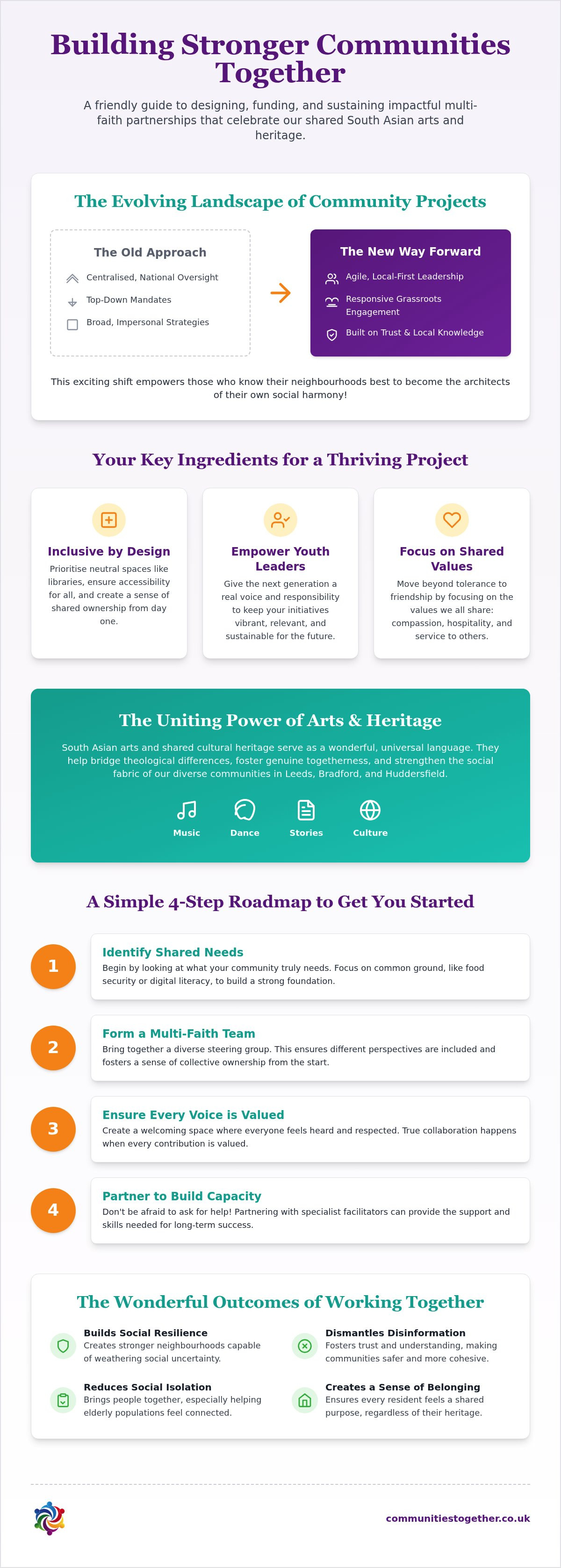
The current environment reflects a significant transition from the centralised oversight once provided by The Inter Faith Network for the United Kingdom towards a more agile, locally-driven framework. This evolution ensures that community work remains responsive to the unique cultural and social dynamics of specific areas, rather than relying on broad, top-down mandates that may not translate effectively to the street level. It's about empowering those who know their streets best to lead the way in building togetherness.
The Shift Towards Local-First Leadership
As national structures have evolved, local councils and dedicated non-profits have stepped forward to fill the coordination vacuum, ensuring that the momentum of interfaith community projects UK isn't lost. In West Yorkshire, regional hubs now facilitate dialogue by providing the necessary infrastructure for groups to share resources, organise joint events, and coordinate crisis responses. Organisations like Communities Together act as vital facilitators in this new landscape, helping to build the capacity of local groups in Huddersfield and Halifax through tailored support. We've found that grassroots engagement is consistently more effective because it builds on existing relationships and local knowledge, creating a foundation of trust that institutional mandates simply can't replicate. This approach turns local residents into active architects of their own social harmony.
Recognising the Values that We Share
Effective interfaith work moves beyond mere "tolerance," which can often feel passive or distant, and instead fosters a culture of active mutual respect and genuine friendship through shared service. We see common threads of compassion, hospitality, and selfless service running through every major faith tradition, providing a sturdy bridge for collaborative work that benefits everyone. By focusing on these shared values, projects in urban centres like Leeds and Bradford are successfully reducing social isolation amongst elderly populations and building long-term resilience for all. These efforts ensure that cultural continuity is maintained whilst creating a welcoming environment where every resident, regardless of their heritage, feels a sense of belonging and shared purpose.
Designing Inclusive Interfaith Programmes for Diverse Urban Areas
Designing inclusive interfaith community projects UK wide requires a deliberate focus on accessibility, the use of neutral spaces, and the cultivation of shared ownership amongst all participants. It's not just about getting people in a room; it's about ensuring everyone feels they have a stake in the project's success from the very beginning. Neutral ground, such as local libraries or civic community centres, often proves more welcoming for first-time engagement than specific places of worship, as these venues provide a level playing field where no single group feels like a guest. By prioritising accessibility in every sense, we create an environment where participation is a joy rather than a hurdle.
We must also prioritise youth leadership to ensure the longevity of these initiatives, giving younger voices the platform to shape the future of their neighbourhoods. This helps in "bursting the bubble," reaching individuals who might not typically engage with traditional religious structures but care deeply about their local area's social health. When difficult conversations arise, we facilitate them within a supportive environment that values honesty whilst maintaining a friendly, respectful tone. This approach ensures that disagreements don't lead to division but instead become opportunities for deeper understanding and collective growth.
Strategic Engagement in West Yorkshire
In urban centres like Huddersfield, Halifax, and Wakefield, programmes must be tailored to reflect the specific demographic nuances and cultural histories of each locality. Inclusive community programmes are strategically vital for diverse groups because they provide the structural support needed to bridge social divides and foster a genuine sense of shared identity. By hosting initial sessions in familiar community hubs, we lower the barrier to entry and build the trust necessary for deeper, long-term collaboration. If you're looking to start a local initiative, our team at Communities Together can help you identify the best engagement strategies for your specific area.
Building Capacity and Infrastructure
Long-term sustainability relies on robust community capacity building UK wide, which involves equipping local leaders with the skills needed for effective engagement and cultural competency. This infrastructure is particularly vital during annual events like Inter Faith Week, where the sudden influx of public interest needs to be channelled into meaningful, year-round action. By training volunteers and leaders to navigate complex social dynamics, we ensure projects remain resilient against fluctuating funding or changes in personnel. This methodical approach transforms temporary enthusiasm into a stable foundation for enduring social cohesion and mutual support across our towns.
The Role of Arts and South Asian Heritage in Strengthening Multi-Faith Bonds
Arts and heritage offer a unique, neutral ground for engagement, serving as a universal language that effectively bypasses complex theological differences. In urban centres with vibrant, diverse populations like Bradford, South Asian arts provide a powerful medium for bringing people together to celebrate shared history and creativity. These interfaith community projects UK wide transform cultural participation into a form of collective social action; they move beyond passive observation to active, shared creation. By focusing on what we build together, we naturally strengthen the bonds of friendship and mutual respect that underly a cohesive society.
South Asian Heritage Month, which runs from 1st July to 31st July, serves as a poignant reminder of the value found in exploring our shared stories. It's an opportunity for people from all backgrounds to engage with the history and contributions of South Asian communities, fostering a deeper sense of belonging. When we participate in these cultural moments, we're not just learning about the past; we're actively weaving a more inclusive future where every tradition is recognised and valued as part of the British tapestry.
South Asian Heritage as a Bridge
Workshops focused on traditional crafts, music, and storytelling provide an accessible entry point for individuals from all faith backgrounds to explore and appreciate the rich tapestry of our local history. These community-led heritage projects UK based groups lead are essential for preserving our collective past whilst simultaneously building new, lasting friendships. We've seen first-hand how educational heritage workshops for local schools and youth groups can inspire a sense of pride and belonging amongst the next generation. Given that approximately 5% of the UK population has South Asian heritage, according to PREACH Inclusion®, these initiatives offer a significant opportunity for inclusive growth and cultural continuity across West Yorkshire.
Wellbeing Through Cultural Participation
Engaging in creative activities has been shown to improve mental resilience and foster personal development, making cultural participation a vital component of community wellbeing. By prioritising non-clinical interventions, we can address social isolation in a way that feels natural and supportive rather than institutional. Shared creative experiences, whether through a communal textile project or a traditional music session, break down barriers more effectively than formal debate ever could. These interfaith community projects UK organisations facilitate provide a safe space for people to connect on a human level, building the emotional strength needed to navigate the challenges of modern life together.
Practical Steps for Launching and Sustaining Local Interfaith Initiatives
Successfully launching interfaith community projects UK wide begins with the identification of a pressing social need that transcends religious boundaries and affects the entire local population. Whether the focus is on alleviating food poverty, addressing environmental concerns, or improving digital literacy, starting with a shared challenge ensures that the project remains grounded in practical service. By forming a multi-faith steering group at the very outset, you ensure that decision-making is representative and inclusive, which helps in building a foundation of transparency and mutual trust. This collaborative approach is essential for securing diverse funding streams, such as local council grants or the resources provided through the "Faith New Deal" pilot funds, which are designed to support faith-based organisations in delivering vital community services.
Whilst "Inter Faith Week" provides an excellent focal point for raising awareness and celebrating togetherness, sustainable social cohesion requires activity that continues throughout the entire year. We recommend using these high-profile weeks as a springboard to launch long-term initiatives that maintain momentum and deepen relationships over time. This methodical planning ensures that the impact of your project isn't temporary but rather contributes to a permanent strengthening of the local social fabric through consistent, reliable engagement.
Forging Collaborative Partnerships
Approaching local faith leaders and community influencers in Leeds and Huddersfield requires a sensitive and earnest approach that prioritises relationship-building over immediate results. Establishing a formal "Memorandum of Understanding" (MoU) is often a helpful step to manage expectations, define shared goals, and address potential sensitivities before the project begins. Utilising established community engagement programmes UK organisations offer can provide your group with a proven framework for these initial conversations, ensuring that all partners feel valued and respected. This structured start prevents misunderstandings and provides a clear roadmap for your collective efforts.
Monitoring and Evaluating Social Impact
To ensure the long-term viability of your project, it's vital to use qualitative feedback to measure improvements in social cohesion and personal wellbeing amongst participants. Tracking participation rates across different faith and non-faith demographics provides the data needed to demonstrate inclusivity and effectiveness to stakeholders. Sharing these success stories through local reports or community meetings helps to build trust with future funders and encourages wider participation from the public. By documenting the tangible benefits of your work, you create a persuasive case for continued support and investment in the local community.
Partnering with Communities Together for Strategic Social Cohesion
Communities Together serves as a dedicated regional facilitator, specialising in community engagement and the preservation of South Asian heritage across the vibrant towns of West Yorkshire, including Huddersfield, Halifax, Leeds, Bradford, and Wakefield. We adopt a methodical approach to building capacity within local groups, ensuring that every partnership is built upon a foundation of mutual trust and professional accountability. By empowering local organisers to lead interfaith community projects UK wide, we facilitate a transition from temporary activities to enduring social infrastructure that benefits the whole community. Our work is grounded in the belief that when local groups are equipped with the right skills and resources, they can maintain their own social harmony and cultural continuity with confidence and long-term success.
Our Approach to Heritage and Resilience
We combine our professional expertise in social welfare with a delivery style that is inherently friendly and inclusive, making complex heritage projects accessible to everyone. Our focus remains steadfastly on the long-term social benefits of cultural participation, ensuring that the diverse threads of our regional identity are preserved for future generations whilst reducing social isolation. As a principled expert in the field, we prioritise stability and harmony, acting as a reliable conduit for collective growth across the Yorkshire region. We don't just facilitate workshops; we build the structural frameworks that allow togetherness to flourish in even the most complex urban environments, ensuring that every participant feels valued and heard.
Get Involved with Our 2026 Programmes
We invite local organisations and faith groups to join our network as we expand our 2026 programmes across West Yorkshire. Our collaborative wellbeing workshops UK are specifically designed for multi-faith settings, providing participants with the tools to build personal resilience whilst fostering a sense of shared purpose. Through our learning, skills, and personal development sessions, your group can access the specialised expertise needed to design and sustain impactful heritage initiatives. We're here to help you weave the local social fabric into something stronger and more resilient than ever before, focusing on the collective endurance of our shared cultural heritage.
Strengthening Our Shared Social Fabric for the Future
The journey towards deeper social cohesion relies on our collective ability to transition from temporary dialogue to sustained, heritage-led action. By prioritising neutral engagement spaces and embracing the universal language of the arts, we can ensure that interfaith community projects UK wide remain responsive to the needs of our diverse urban neighbourhoods. It's about more than just cooperation; it's about building a foundation of mutual respect that celebrates our cultural continuity whilst fostering long-term resilience across West Yorkshire. We've seen how these initiatives transform local towns by turning shared challenges into opportunities for togetherness and growth.
We remain committed to supporting your organisation through our specialised expertise in South Asian arts and heritage preservation. Our friendly and professional team is here to help you facilitate capacity building and deliver workshops that reduce isolation and promote wellbeing. Together, we can maintain the structural strength of our communities and ensure that every resident feels a genuine sense of belonging and shared purpose. We look forward to building a more united and harmonious future alongside you.
Frequently Asked Questions About Interfaith Projects
What are some examples of successful interfaith community projects in the UK?
Successful initiatives often focus on shared social action, such as the communal gardening projects in Leeds or the textile heritage workshops held in Bradford during South Asian Heritage Month. These efforts demonstrate how collaborative work on local issues can foster genuine togetherness. In 2025, Inter Faith Week saw over 430 activities nationwide, highlighting the growing impact of grassroots interfaith community projects UK wide in building stronger local bonds through practical, everyday cooperation.
How can interfaith projects help to reduce social isolation in urban areas?
These projects reduce isolation by providing welcoming, neutral spaces where individuals can engage in shared creative activities and wellbeing workshops. By focusing on cultural participation rather than theological differences, residents in urban centres like Huddersfield find new ways to connect with their neighbours. This methodical approach to building social resilience helps individuals feel valued and included, effectively weaving them back into the local social fabric through consistent, friendly engagement that prioritises human connection.
Where can I find funding for local interfaith initiatives in 2026?
In 2026, funding can be secured through various streams, including the Hibbert Trust, which offers grants up to £5,000, and the Community Impact Grants Programme, which remains open until 31st December 2026. Local councils in West Yorkshire also provide microgrants for initiatives that promote social cohesion. Diversifying your funding sources ensures that your project remains resilient and capable of maintaining its long-term social benefits for the whole community whilst avoiding reliance on a single donor.
What is the "Faith New Deal" pilot fund and who can apply?
The Faith New Deal Pilot Fund is a government initiative designed to support faith-based organisations in delivering innovative social services that address local needs like debt advice or food insecurity. Applications are typically open to partnerships between faith groups and local authorities or non-profits. This fund emphasises the role of religious communities as vital partners in building a more cohesive and resilient society through practical, mission-driven social action that reaches the most vulnerable members of our towns.
How do we ensure our interfaith project is inclusive of those with no religious faith?
Ensuring inclusivity involves focusing on universal values like compassion and service, whilst hosting activities in neutral community venues like libraries or civic centres. By framing projects around shared social goals or local heritage, you create a welcoming environment for those of all faiths and none. This approach ensures that interfaith community projects UK groups facilitate remain truly inclusive, prioritising collective wellbeing and togetherness over religious affiliation or complex theological debate that might feel exclusionary.
Can arts and heritage projects really improve social cohesion?
Arts and heritage serve as a universal language that bypasses complex differences, fostering a deep sense of belonging and mutual respect through shared creation. These projects provide a safe space for cultural participation, which has been shown to improve mental resilience and personal development. By celebrating our shared history, we build the emotional and social strength needed to maintain harmony and cultural continuity across our diverse urban neighbourhoods, effectively turning history into a bridge for future friendships.
How do I start an interfaith project in my local West Yorkshire neighbourhood?
You can begin by identifying a specific social need in your neighbourhood, such as food poverty or environmental care, and forming a multi-faith steering group to lead the initiative. Partnering with a specialist facilitator like Communities Together can provide the necessary capacity building and strategic framework to ensure your project's success. We offer guidance on engagement strategies in Leeds and Halifax, helping you build a stable foundation for enduring social cohesion through methodical planning and inclusive leadership.
What role do schools play in interfaith community engagement?
Schools act as vital hubs for interfaith engagement by hosting educational heritage workshops and encouraging youth participation in community projects. These settings provide a safe environment for younger generations to explore diverse traditions and develop the skills needed for active citizenship. By involving schools, we ensure the longevity of our cohesion efforts, as children bring the values of mutual respect and togetherness back into their own family circles, fostering a wider culture of understanding across the region.


Comments