
How to Partner with Community Development Organisations: A UK 2026 Strategic Guide
What if the most resilient infrastructure for your next social initiative isn't constructed from steel or stone, but is instead woven from the invisible threads of trust, shared heritage, and mutual respect that sustain a local neighbourhood? Understanding how to partner with community development organisations is essential for any leader who feels a sense of disconnect when attempting to engage with diverse groups, especially within our South Asian communities where standard outreach often misses the nuances of cultural identity. You likely recognise that building true social cohesion is a delicate process of facilitating dialogue, honouring traditions, and maintaining long-term accountability, yet the path to measuring such qualitative impact can often feel uncertain and fragmented in an evolving landscape.
This strategic guide provides a definitive framework to ensure your projects contribute to structural strength, cultural continuity, and collective endurance throughout 2026. By reading on, you'll discover how to forge impactful partnerships that prioritise wellbeing and heritage, whilst gaining specific, practical steps for implementing successful community-led initiatives within the unique landscape of West Yorkshire. We will explore how to bridge the gap between institutional goals and local needs, creating a foundation for prosperity that is both inclusive and enduring for every member of the community.
Table of Contents
What defines a Community Development Organisation in the UK?
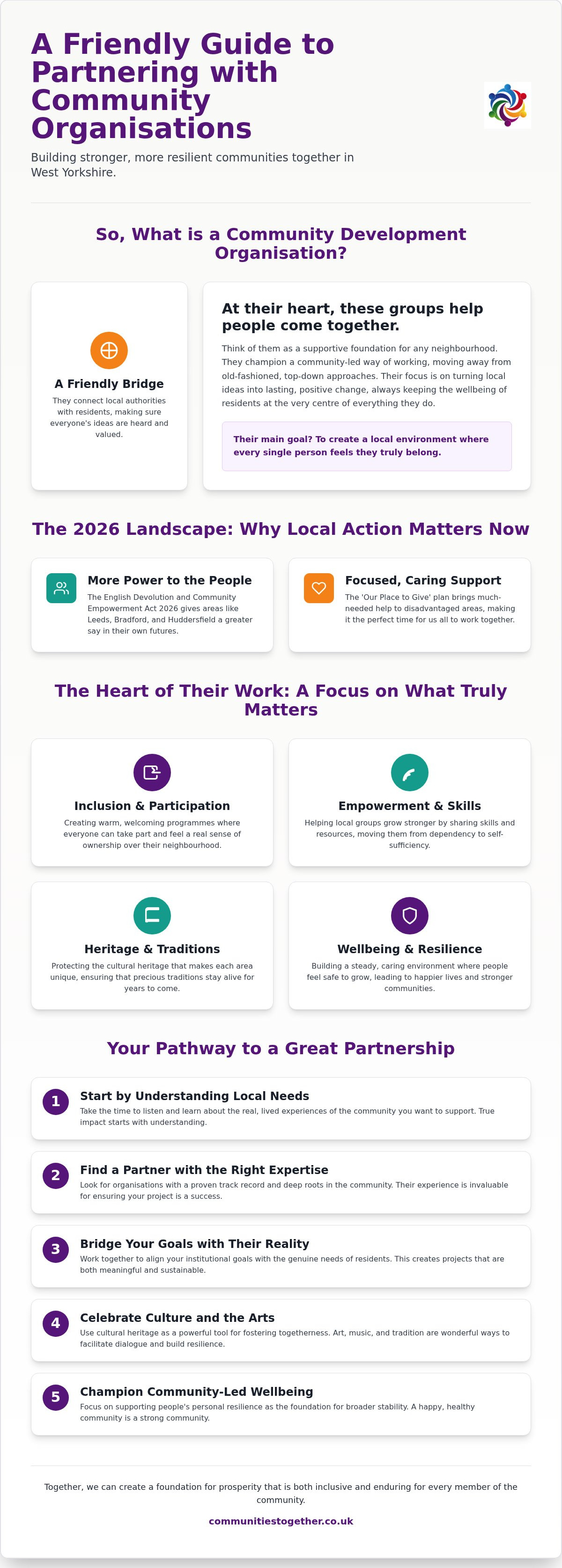
At its very heart, community development is all about people coming together to support one another, share their unique strengths, and create a local environment where everyone truly feels they belong. In the UK, these organisations act as a friendly and reliable bridge between local authorities and our diverse residents, ensuring that the voices of every neighbour are heard, valued, and woven into the decisions that shape our shared lives. As we move through 2026, the sector has grown into something quite special, moving away from old-fashioned, top-down management to embrace a way of working that's led by the community itself. When you are looking at how to partner with community development organisations, it's helpful to see them as a supportive foundation that helps turn local ideas into lasting, positive change, whilst always keeping the wellbeing of residents at the centre of everything they do.
The Core Objectives of Modern Development Groups
Modern development groups are here to walk alongside residents, focusing on making sure everyone is included, helping local groups grow stronger through shared skills, and reaching out to those who might be feeling a bit lonely. By creating warm and welcoming programmes where everyone can take part, these organisations help people feel a real sense of ownership over their neighbourhoods, which leads to stronger communities, happier lives, and traditions that stay alive for years to come. It's about so much more than just tick-box exercises; it's about building a steady, caring environment where people feel safe to grow, learn from one another, and protect the cultural heritage that makes their area so unique. This thoughtful approach ensures that any progress made is something the whole community can be proud of and sustain together for a long time.
The 2026 Landscape: Why Local Action Matters Now
With the English Devolution and Community Empowerment Act 2026 now in place, there's a wonderful opportunity for our local areas in Leeds, Bradford, and Huddersfield to have more of a say in their own futures. In a world that can sometimes feel a bit disconnected, local action provides a friendly anchor that brings us back together, fostering a spirit of togetherness and shared responsibility. The government's 'Our Place to Give' plan is also helping to bring much-needed support to our most disadvantaged areas, making it a perfect time to think about how we can all work together more effectively. If you're wondering how to partner with community development organisations to make a real difference, looking for a partner like Communities Together is a great place to start. We focus on the unique cultural fabric of our towns, ensuring that every project is a deeply personal and rewarding journey that strengthens the bonds of friendship and collective endurance across West Yorkshire.
Building Community Capacity: Strengthening Local Infrastructure
Strengthening the internal resilience of local groups ensures that social initiatives don't just launch, but truly endure through periods of change and uncertainty. When organisations explore how to partner with community development organisations, they often discover that the primary objective is to move beyond temporary fixes towards building long-term structural integrity. This process involves enhancing the skills, resources, and influence of local groups so they can better address the specific challenges facing their neighbourhoods, whilst maintaining a sense of cultural identity and social cohesion. By focusing on these core competencies, we facilitate a transition from dependency to self-sufficiency, creating a stable foundation for collective growth, structural strength, and community-led innovation. True social endurance is achieved when local groups possess the internal strength to navigate shifting political climates without losing sight of their mission. This involves training leaders not only in administrative tasks, but in the art of facilitating earnest, inclusive dialogue that bridges divides between different generations and backgrounds.
Strategic Partnership Building in Yorkshire
In areas like Huddersfield and Halifax, identifying and aligning with local stakeholders is a critical step in scaling social impact and reaching those who might otherwise feel disconnected. Cross-sector collaboration allows for a pooling of funding, expertise, and community reach that no single entity could achieve alone, fostering a spirit of togetherness and shared responsibility. Official guidance, such as the Partnerships for People and Place framework, highlights how place-based policymaking can be strengthened through these earnest, professional connections. When you're determining how to partner with community development organisations, it's helpful to seek out facilitators who understand the specific socio-economic landscape of West Yorkshire and can navigate local grant opportunities. For example, the Community Development Grant - Micro - Call 2 (2026/27) provides £1,000 in funding to eligible local, not-for-profit community organisations, offering a small but vital boost to grassroots infrastructure.
Empowering Individuals Through Skill Sharing
In Wakefield, bridging the skills gap amongst community volunteers is essential for maintaining the momentum of local initiatives and ensuring that everyone feels empowered to contribute. By providing personal development opportunities, such as our workshops on Community Capacity Building in the UK, we ensure that individual growth directly translates into broader group success. Capacity building is the scaffolding of social progress. This approach allows residents to gain the confidence needed to lead their own projects, whilst fostering a sense of shared responsibility and mutual support. If you're looking to strengthen your local infrastructure, our partnership and community capacity building programmes offer a methodical and friendly way to achieve these meaningful goals together.
The Role of Cultural Heritage in Driving Social Cohesion
When we talk about heritage, we're really talking about the shared stories, traditions, and memories that help us feel a warm sense of home in our local areas. In West Yorkshire, our vibrant South Asian arts and history aren't just things to look at in a museum; they're a living part of our daily lives that help us feel a deep sense of belonging and togetherness. By keeping these traditions alive whilst finding new ways to bring people together, we create a friendly environment where everyone feels they have a place. If you're looking into how to partner with community development organisations, it's so important to find a partner that sees the natural way our cultural roots help us stay strong and connected. This thoughtful approach ensures that heritage projects don't just look at the past, but actually help us build a more harmonious and supportive future for everyone in our neighbourhoods.
South Asian Arts as a Tool for Engagement
Getting involved in high-quality arts activities is such a wonderful way for people in Bradford and Leeds to share their unique cultures whilst feeling part of the wider community. These heritage workshops are designed to be inclusive and welcoming, giving everyone a chance to feel a sense of collective pride in where they come from. It's about creating moments of joy and connection that help to mend the gaps in our social fabric. For those who'd like to dive a bit deeper into this topic, our guide on Cultural Heritage Preservation in the UK offers a friendly look at how we can all help protect our shared history. This kind of participation isn't just a one-off event; it's a way of building a reliable foundation where we can all grow together in a spirit of mutual respect and friendship.
Heritage Education and Inclusive Learning
Creating friendly workshops where younger generations can learn about their cultural roots is a lovely way to make sure our communities stay healthy and connected for years to come. These sessions provide "brave spaces" where neighbours can chat openly, share their family stories, and learn to understand one another better. The UK Government Community Development Handbook is a great resource that highlights how important these kinds of learning groups are for bringing people together. By making heritage a part of how we learn and grow, we aren't just looking at history books; we're helping people feel more confident and resilient in their daily lives. When you're thinking about how to partner with community development organisations like Communities Together, you'll find that our focus is always on making education feel inclusive, warm, and genuinely helpful for everyone involved.
Wellbeing and Resilience: The Human Side of Development
We all know that true wellbeing involves so much more than just a visit to the doctor; it's really about feeling connected, valued, and supported by the people and places around us. Moving toward gentle, community-led support allows us to look after our mental health in a way that feels natural and friendly, rather than feeling like another medical appointment. The Community and Engagement Survey 2025/26 recently highlighted how many of our neighbours across England still struggle with feelings of loneliness, which is why creating these warm, welcoming spaces is so important for our collective future. When local groups look at how to partner with community development organisations, they're often seeking ways to reach those who feel a bit isolated, ensuring that everyone in our community has a chance to feel stronger, more resilient, and genuinely cared for in their daily lives.
Non-Clinical Interventions for Social Isolation
Social prescribing is a lovely way to help people feel better by connecting them with local arts and heritage projects that spark joy, encourage conversation, and build new friendships. These workshops are all about building empathy and a sense of "we're in this together," helping us all feel a bit more capable of handling life's little ups and downs with a smile. In West Yorkshire, we've seen how a friendly arts session or a shared storytelling project can do wonders for someone's confidence whilst bringing the whole neighbourhood closer together. Our guide on Collaborative Wellbeing and Resilience Workshops explains how these gentle activities help us build a more caring and supportive community where everyone feels they truly belong.
Skills for Personal and Community Growth
There's a wonderful link between learning something new and feeling a bit more comfortable and relaxed in social situations, as the sense of achievement we feel helps to quieten those little voices of social anxiety. When we pick up a new skill or hobby, we don't just help ourselves; we actually make our whole neighbourhood a bit stronger, more vibrant, and better prepared for the future. Understanding how to partner with community development organisations means seeing that every person's individual growth is a brilliant win for the whole group, as it creates a more confident and capable community. Our focus on Skills and Personal Development UK is all about giving residents in places like Wakefield and Leeds the tools they need to feel ready for whatever 2026 brings, ensuring that our local empowerment is built on a foundation of friendship and shared talent.
How to Partner with a Community Development Organisation
Initiating a successful partnership requires a deliberate move from identifying abstract social goals to understanding the granular, lived needs of residents across West Yorkshire. When organisations explore how to partner with community development organisations, they must prioritise the collaborative process of co-designing engagement programmes, ensuring that every initiative is rooted in mutual respect, cultural sensitivity, and a shared vision for local prosperity. Evaluating the expertise of potential development partners is a critical step; you'll need to ensure they possess the professional literacy required to navigate local cultural sensitivities whilst maintaining accountability to stakeholders. This methodical approach allows for the creation of shared social initiatives that don't merely address symptoms of fragmentation but instead build the structural strength required for communities to thrive independently. Measuring the long-term impact of these partnerships is equally vital, as it involves tracking qualitative shifts in social cohesion, togetherness, and collective endurance alongside more traditional metrics of participation and skill acquisition.
Steps to Effective Collaboration
The journey toward impactful partnership begins with a deliberate sequence of professional engagements designed to build trust and clarity. It's a steady, thorough process that balances professional accountability with a warm intent to serve the collective good.
Initial consultation: We define shared goals for Huddersfield or Halifax, ensuring every stakeholder is aligned in their mission to facilitate positive change.
Capacity assessment: This stage allows each partner to determine the specific resources, expertise, and networks they can provide to ensure the project's stability and reach.
Implementation: We launch inclusive community programmes with a friendly, welcoming approach that encourages participation from every resident, ensuring that activities aren't just delivered to a community, but are built alongside them.
Why Choose a Local Specialist like Communities Together?
Selecting a partner with deep local knowledge in Leeds, Bradford, and Wakefield ensures that your social initiatives are delivered with an authoritative understanding of the unique cultural threads that define West Yorkshire. Our organisation offers a specialised focus on South Asian heritage and non-clinical wellbeing, acting as a reliable bridge-builder between institutional bodies and diverse local groups. We employ a methodical "Z-A" approach to community resilience, which begins by fostering individual wellbeing and works upward to strengthen the entire social infrastructure. Understanding how to partner with community development organisations effectively means choosing a facilitator that values tradition and progress in equal measure, providing a stable foundation upon which residents can build their own resilience and growth. By choosing a methodical advocate for community empowerment, you ensure that your investment results in measurable, enduring benefits for the entire region.
Building a Resilient and Inclusive Future Together
Forging a resilient future for our regions requires a deliberate shift toward collaborative co-design and a deep respect for the unique cultural fabric of our local neighbourhoods. We have explored how strengthening local infrastructure and prioritising non-clinical wellbeing support can effectively reduce social isolation whilst fostering a sense of collective endurance and structural strength. Understanding how to partner with community development organisations is the essential first step toward building a stable foundation for prosperity that is both inclusive and enduring for all residents across West Yorkshire. By prioritising these earnest, professional connections, we ensure that every initiative contributes to long-term social benefits, harmony, and social responsibility.
By working together, we can ensure that every initiative honours our shared traditions whilst preparing for the social changes brought about by the English Devolution and Community Empowerment Act 2026. Our mission-driven non-profit approach is backed by a proven track record of delivering impactful programmes across Huddersfield, Halifax, Leeds, Bradford, and Wakefield. As specialist facilitators in South Asian heritage and community capacity building, we're ready to help you weave these complex threads of social fabric into a stronger, more harmonious whole that benefits every member of our community. We look forward to facilitating these vital connections and building a future where everyone feels they truly belong.
Frequently Asked Questions
What is the main role of a community development organisation?
The primary role of a community development organisation is to act as a methodical bridge-builder between local authorities and residents, facilitating a collaborative process of collective empowerment that strengthens the social fabric of our neighbourhoods. These entities focus on building structural resilience, maintaining cultural continuity, and ensuring that grassroots voices are integrated into broader civic decision-making processes to achieve long-term social benefits, stability, and harmony for everyone involved.
How do these organisations support social cohesion in the UK?
These organisations support social cohesion by creating inclusive spaces for dialogue, honouring diverse traditions, and fostering a sense of shared responsibility amongst residents from different backgrounds. By understanding how to partner with community development organisations, stakeholders can implement programmes that build trust and togetherness, creating a stable foundation for long-term social harmony, collective growth, and structural strength across the entire region whilst ensuring that no group feels marginalised or unheard.
Can community development help reduce social isolation in urban areas?
Community development directly addresses social isolation in urban centres by providing structured, participatory programmes that encourage residents to form meaningful connections within their local environment. These initiatives move beyond temporary fixes to create a reliable foundation for togetherness, helping individuals overcome barriers to engagement and fostering a renewed sense of belonging, mutual support, and collective endurance that's essential for maintaining the health of our city centres.
What types of workshops are available for community wellbeing?
Workshops for community wellbeing focus on building personal resilience, facilitating empathy, and encouraging the acquisition of new skills that reduce social anxiety and foster a sense of individual agency. These non-clinical interventions often use arts and heritage as a medium for engagement, helping participants develop the confidence needed to contribute to the broader stability and endurance of their neighbourhood whilst building a supportive network of peers.
How does cultural heritage preservation benefit modern communities?
Cultural heritage preservation benefits modern communities by providing a psychological anchor that links individual identity to a broader narrative of collective endurance and shared history. By protecting traditions whilst encouraging modern integration, these projects foster collective pride and ensure that the unique threads of a community's social fabric are maintained, facilitating a living process of togetherness that prepares residents for social change and future growth.
Is there support for South Asian arts and heritage in West Yorkshire?
Specialist support for South Asian arts and heritage is readily available across West Yorkshire, with organisations like Communities Together facilitating activities in Bradford, Leeds, and Huddersfield. These programmes focus on cultural preservation and inclusive learning, ensuring that the region's diverse heritage remains a central pillar of its social identity, fostering collective pride and building the resilience necessary for residents to thrive in a multi-cultural society.
How can local groups build better community capacity in 2026?
Local groups can enhance their community capacity by forming strategic partnerships, training leaders in inclusive dialogue, and accessing available funding such as the Community Development Grant - Micro - Call 2 (2026/27). Learning how to partner with community development organisations allows smaller groups to scale their social impact, share vital resources, and build the scaffolding necessary for sustained social progress, ensuring they're prepared for the shifts brought by devolution.
Who is eligible to participate in community engagement programmes?
Participation in community engagement programmes is open to all residents, with a particular focus on inclusive engagement across diverse socio-economic backgrounds and isolated groups seeking to strengthen their local social fabric. These programmes are designed to be welcoming and supportive, providing a stable foundation for anyone wishing to contribute to the collective growth, structural strength, and harmony of their local area through shared learning and personal development.


Comments