
Guide to the UK Community Resilience Framework 2026
True resilience is not merely forged in the heat of a sudden crisis but is instead quietly and methodically woven into the intricate fabric of our daily interactions, cultural traditions, and shared local histories. We understand that many dedicated organisers across the country often feel the weight of managing siloed community projects that lack a cohesive, long-term strategic structure, making it difficult to engage diverse groups in a manner that is both meaningful and enduring. By adopting a robust community resilience framework UK, you can move beyond reactive emergency planning to foster a culture of togetherness, structural strength, and collective endurance within your neighbourhood.
In this guide, we promise to provide you with a clear roadmap for implementing a community-led resilience framework that strengthens social cohesion, preserves vital cultural heritage, and empowers local groups to thrive independently. We'll examine the significant 2026 updates to national standards, including the new Civil Society Resilience Infrastructure Fund and the shift towards a "whole of society" approach, whilst offering practical strategies for facilitating sustainable local infrastructure, building professional capacity, and maintaining harmony amongst all residents.
Table of Contents
Understanding the Community Resilience Framework in the UK Context
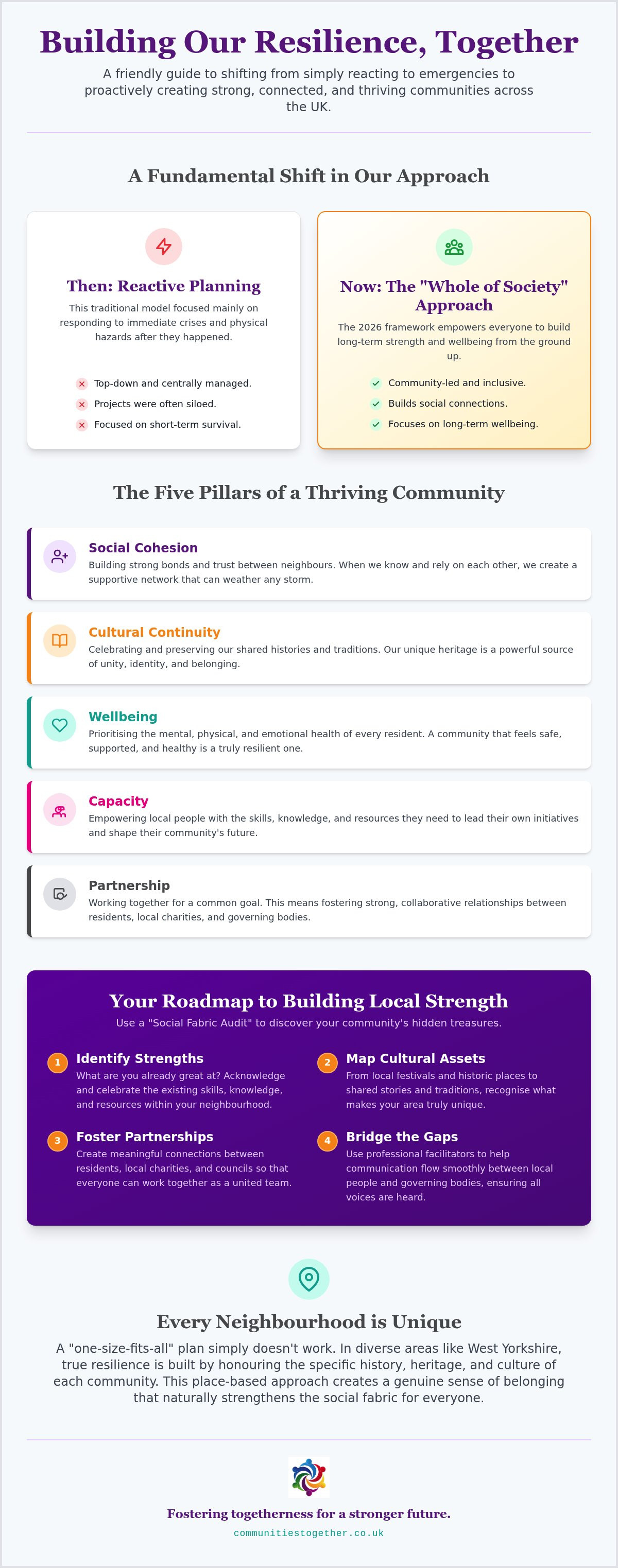
The Community Resilience Development Framework (CRDF) in 2026 represents a sophisticated evolution in how we safeguard our shared future, moving beyond simple disaster management to a more holistic understanding of collective strength. We believe that a truly effective community resilience framework UK should act as a living blueprint, one that empowers local residents to facilitate their own safety and wellbeing whilst maintaining a strong sense of accountability to one another. This new standard reflects a fundamental shift from reactive, top-down emergency planning toward a proactive, "whole of society" model where every individual, business, and voluntary group plays a vital role in our national endurance.
Whilst the Cabinet Office provides the strategic oversight and the refreshed Lead Government Department expectations, it's the local authorities and grassroots organisations that breathe life into these standards by tailoring them to the unique needs of their neighbourhoods. At its heart, this approach recognises that social cohesion is the indispensable bedrock of resilience; without a foundation of trust and togetherness, even the most advanced technical systems will struggle to protect us during times of uncertainty. By building these bonds now, we ensure that our communities remain stable, harmonious, and ready to face any challenge with confidence.
To better understand this concept, watch this helpful video:
The Evolution of Resilience: From 2016 to 2026
The journey towards our current standards began in earnest with the 2018 Civil Society Strategy, which highlighted the necessity of building social capital to support long-term stability and growth. We've seen a clear transition from the traditional "emergency response" model, which focused almost exclusively on immediate physical hazards, to a contemporary "social capital" model that prioritises the health of our relationships and the strength of our local networks. Community resilience is now understood as a dynamic process of adaptation and growth rather than just a passive state of survival. The 2026 resilience standard is defined as a seamless blend of resilient physical infrastructure and a deeply rooted sense of shared cultural identity.
Why Local Context Matters for West Yorkshire Communities
In diverse urban environments like Leeds and Bradford, resilience cannot be a one-size-fits-all solution; instead, it requires a bespoke, place-based approach that honours the specific dynamics of each street and ward. We've found that when resilience strategies are grounded in local context, they become more than just policy documents. They become a way for residents to celebrate their unique history. By recognising local heritage as a unifying force, communities across West Yorkshire can build a sense of belonging that naturally discourages isolation and fosters a more robust, interconnected social fabric.
The Core Pillars of a Socially-Driven Resilience Strategy
Building a truly robust community resilience framework UK requires us to look beyond the immediate logistics of crisis management. We must focus instead on the underlying social structures that support us every day. We've identified five essential pillars that serve as the foundation for this work: Social Cohesion, Cultural Continuity, Wellbeing, Capacity, and Partnership. These elements work in harmony to transform the abstract concept of resilience into a tangible reality for local people. By prioritising these pillars, we align ourselves with the "prevention rather than cure" principle outlined in the official Community Resilience Development Framework. This approach ensures we aren't just reacting to emergencies. We're actively cultivating a structural strength that can withstand external shocks, protect vulnerable residents, and maintain social order before difficulties escalate into full-scale crises.
Inclusive engagement sits at the heart of this strategy. It's vital that no community is left behind, particularly those that have historically been sidelined in strategic planning. When we invite diverse voices to the table, we don't just tick a box; we build a more accurate map of our collective vulnerabilities and strengths. This inclusive behaviour fosters a sense of ownership amongst residents. It encourages them to take proactive steps in safeguarding their own futures. Our commitment to this mission-driven approach ensures that every project we facilitate contributes to a more stable and harmonious society.
Social Cohesion and Cultural Continuity
Cultural continuity acts as the persistent thread that binds a community together, even whilst the world around it undergoes rapid or unsettling change. It's about maintaining a connection to our shared roots to ensure we don't lose our sense of self during difficult times. Shared heritage plays a profound role here. It reduces social isolation, builds a level of trust, and provides a familiar foundation for mutual support. Engaging in community-led heritage projects UK allows residents to reclaim their stories. This process facilitates a deeper bond amongst neighbours, creating a resilient identity that thrives on togetherness and respect.
Wellbeing and Individual Resilience
The collective ability of a neighbourhood to recover from a crisis is inextricably linked to the personal wellbeing of its individual members. We believe that when people feel supported, healthy, and connected, they're far better equipped to contribute to the recovery of the group. Non-clinical interventions provide immense value in building long-term community endurance. Activities such as creative arts or local gardening groups help to manage stress and foster a positive outlook. Participating in collaborative wellbeing workshops UK helps individuals develop the emotional tools needed to navigate life's challenges. Our team at Communities Together is always here to help you organise these vital sessions to support your local area.
Overcoming Structural Barriers to Local Empowerment
We often hear from dedicated local organisers in areas like Huddersfield and Halifax that the community resilience framework UK feels overwhelmingly complex, creating a significant barrier to entry for groups that are already stretched thin. This perception of administrative density, combined with a history of "engagement fatigue" where communities feel their voices are heard but not acted upon, can lead to a withdrawal from formal planning processes. When this is compounded by the corrosive effects of social isolation, the very foundation of local empowerment begins to erode, making it nearly impossible for residents to organise effectively, share vital resources, or support one another during times of stress. We believe that methodical capacity building is the only sustainable solution to these structural inequalities, providing the necessary training, resources, and confidence to transform local groups into authoritative leaders of their own resilience journeys.
Bridging the Gap Between Policy and Practice
Top-down mandates frequently fail to resonate with the lived experiences of those on the ground because they lack the nuance of local history and the warmth of personal connection. To bridge this divide, we act as "wise facilitators" who translate the technical requirements of the UK Government's Community Resilience Development Framework into actionable, community-led projects that feel relevant, achievable, and supportive. This role requires a high degree of professional accountability, ensuring that every initiative is backed by rigorous social impact reporting to demonstrate long-term benefits to stakeholders, partners, and the residents themselves. By providing this stable foundation, we help local groups move from being passive recipients of policy to active participants in their own collective growth.
Reducing Isolation Through Inclusive Arts and Heritage
We've found that cultural participation is a fundamental prerequisite for resilience rather than a luxury that can be set aside during difficult times. By facilitating South Asian arts and heritage activities, we create a vital bridge between generations, allowing elders to share their wisdom whilst younger residents find new ways to connect with their identity and their neighbours. To engage groups that are often labelled as "hard-to-reach", we focus on building trust through consistent presence, inclusive language, and a genuine respect for the traditions that already provide strength to these diverse communities. These programmes don't just teach skills; they weave a tighter social fabric that reduces isolation and fosters a spirit of togetherness. If you're looking to strengthen these bonds in your own area, our team at Communities Together is ready to support your next project with expertise and care.
Practical Implementation: Building Capacity within Diverse Communities
Moving from the strategic pillars discussed previously to actual ground-level action requires a methodical approach that respects the unique nuances of each neighbourhood. To implement a community resilience framework UK effectively, we've developed a structured pathway that prioritises local assets whilst building the professional capacity of residents to lead their own initiatives. We believe that every community possesses untapped potential that can be unlocked through a deliberate implementation process that balances immediate needs with long-term social stability.
Step 1: Conduct a Local 'Social Fabric Audit' to identify existing strengths and map out the cultural assets that already provide support, ensuring we recognise the foundations already in place.
Step 2: Establish Collaborative Partnerships between local government, charities, and residents to create a unified front that shares resources, knowledge, and accountability.
Step 3: Deliver Structured Learning and Skills Development to empower community leaders with the professional literacy required to manage local projects independently and confidently.
Step 4: Integrate Cultural Preservation Projects to foster a shared sense of identity and ensure that heritage remains a core source of collective strength during times of change.
Step 5: Create a Measurable Social Impact Framework to track growth and ensure that every action leads to a tangible, sustainable improvement in local wellbeing and infrastructure.
Effective Community Partnership Building
Creating 'resilience hubs' is a vital way to bring together diverse stakeholders in a space that encourages transparency and shared understanding. These hubs act as a central point for coordination, ensuring that local government and charities are working in lockstep with the residents they serve to avoid the siloed projects that often hinder progress. We've seen that the most successful partnerships are built on a foundation of mutual respect and clear communication. By investing in community capacity building UK, we can facilitate the creation of these hubs, providing a stable platform for long-term social stability and collective growth across West Yorkshire.
Skills and Personal Development for Resilience
Empowering community leaders requires more than just goodwill; it demands a commitment to structured skills and personal development UK. We focus on identifying and fostering key competencies such as leadership, clear communication, and proactive risk assessment through our dedicated workshops. These sessions provide a safe and supportive environment for individuals to grow, whilst ensuring they have the practical tools needed to navigate complex social challenges. This methodical approach to learning builds the confidence required to lead diverse groups, ensuring that the community's endurance is built on a foundation of professional literacy and shared expertise.
Facilitating Growth: How Communities Together Supports Local Resilience
We see ourselves as a professional conduit for collective growth across West Yorkshire, acting as a steady bridge between the strategic requirements of the community resilience framework UK and the lived experiences of our neighbours. Our organisation is driven by an earnest commitment to fostering inclusive engagement, ensuring that every voice in Leeds, Bradford, and Wakefield is not only heard but woven into a stronger, more vibrant social fabric. By facilitating South Asian Arts and Heritage Activities, we provide a unique tool for cohesion that transcends simple emergency planning, creating a persistent thread of shared identity that supports long-term social stability, cultural endurance, and mutual trust amongst all residents.
Our work is rooted in the belief that true resilience is built through the everyday preservation of cultural heritage and the proactive cultivation of social bonds. We don't just offer temporary solutions; we provide the absorptive and reassuring support that communities need to thrive independently. Through our methodical approach, we help local groups move from a state of vulnerability to one of structural strength, ensuring that the foundations of togetherness are solid enough to withstand any future uncertainty.
Our Approach to Community Engagement and Capacity Building
In our role as a methodical advocate in Huddersfield and across the region, we focus on building local infrastructure through collaborative growth and principled partnership. We facilitate a process where local groups gain the professional literacy and confidence needed to maintain their own resilience, moving beyond siloed projects toward a more integrated, long-term strategy. This approach yields significant social benefits, including the strengthening of local leadership, the reduction of structural inequality, and the creation of sustainable networks that empower residents to lead their own journeys of development and recovery.
Wellbeing and Resilience Workshops: A Methodical Path to Strength
Our Wellbeing and Resilience Workshops offer a structured environment where individuals can develop the essential skills and personal development opportunities necessary for collective endurance. These sessions are designed to reduce social isolation by bringing people together in a space of mutual support, whilst teaching practical competencies such as leadership, clear communication, and proactive risk assessment. This methodical path to strength ensures that every participant feels valued and prepared. We invite you to partner with Communities Together to build a more resilient future for your neighbourhood, ensuring that we move forward together with confidence, harmony, and a shared sense of purpose.
Building a Legacy of Togetherness and Strength
Developing a robust future for our neighbourhoods is a journey of steady progress and shared responsibility, one that transforms the strategic goals of the community resilience framework UK into a lived reality of safety, harmony, and mutual support. We've explored how a proactive focus on social cohesion, the preservation of cultural heritage, and the methodical building of local capacity can create a structural strength that protects every resident during times of uncertainty. By prioritising inclusive engagement and professional skills development, we ensure that our communities aren't just surviving but are actively thriving through a renewed sense of collective identity and purpose.
Our team of expert facilitators across West Yorkshire is deeply committed to supporting your mission with specialist knowledge in South Asian arts and heritage and a proven track record in inclusive community capacity building. We act as your reliable bridge-builders. By weaving together the complex threads of your local social fabric, we create a stable foundation that values tradition and progress in equal measure.
We look forward to facilitating this vital growth with you. Together, we can build a future where every community feels empowered, connected, and truly ready for whatever lies ahead.
Frequently Asked Questions
What is the Community Resilience Development Framework (CRDF)?
The Community Resilience Development Framework is a strategic guide that enables local groups to prepare for, respond to, and recover from significant disruptions by building structural strength. It encourages a methodical approach to identifying risks whilst facilitating the partnerships needed to maintain social stability, collective wellbeing, and long-term community endurance.
How does the 2026 UK Government Resilience Framework differ from previous versions?
The 2026 community resilience framework UK differs by moving away from a traditional top-down emergency response model toward a preventative, "whole of society" endeavour. This evolution is marked by the publication of new National Occupational Standards in July 2026 and a significant focus on strengthening Local Resilience Forums through improved leadership, accountability, and the integration of local governance.
Why is social cohesion important for community resilience?
Social cohesion serves as the indispensable bedrock of any resilience strategy because it creates the bonds of trust and mutual respect that allow a neighbourhood to function effectively during a crisis. When togetherness is prioritised, residents are far more likely to organise resources, support vulnerable neighbours, and maintain a stable social fabric that can withstand external shocks without fracturing.
How can local organisations in Leeds and Bradford implement this framework?
Local groups in Leeds and Bradford can implement these standards by facilitating "Social Fabric Audits" that map out local strengths, identify gaps in connectivity, and honour the specific cultural dynamics of their wards. By building collaborative partnerships with stakeholders across West Yorkshire, organisations ensure that resilience planning is inclusive, methodical, and deeply rooted in the lived experiences of the residents they serve.
What role does cultural heritage play in a resilience strategy?
Cultural heritage acts as a unifying force that provides a sense of continuity and identity, helping residents to feel grounded and reassured even whilst facing rapid external challenges. By preserving South Asian arts and heritage, we foster a shared history that reduces isolation, encourages intergenerational trust, and maintains the structural strength of the community through a persistent thread of cultural endurance.
Can wellbeing workshops really improve a community's ability to handle crises?
Yes, wellbeing workshops provide a methodical path to resilience by equipping individuals with the emotional tools, leadership skills, and communication strategies required to navigate and recover from significant stress. These sessions foster a culture of mutual support that enhances collective endurance, ensuring that residents can maintain harmony and stability during difficult periods of transition or crisis.
How can we measure the success of community resilience initiatives?
We measure success by using professional social impact reporting to track improvements in community togetherness, social capital, and active participation in local resilience activities. By employing data-driven tools such as the Risk Vulnerability Tool, we can provide a comprehensive overview of how specific programmes are strengthening local infrastructure, reducing isolation, and improving long-term social outcomes for all residents.
Is there funding available for community resilience projects in the UK?
Significant funding is available, including up to £2.5 million through the Civil Society Resilience Infrastructure Fund, which is scheduled for delivery in England between October 2026 and March 2029. Additionally, the Stronger LRF Trailblazer programme has received a further £3.5 million for the 2026/27 period to support the strengthening of local resilience leadership, integration, and community capacity building.


Comments