
Developing an Effective Social Cohesion Strategy in the UK: A Framework for 2026
What if the most enduring way to protect our neighbourhoods is not through top-down mandates, but by weaving the unique threads of cultural heritage and personal wellbeing into the very fabric of our local streets? It's a sentiment many of us share, yet as we look towards 2026, the challenge of implementing a robust social cohesion strategy UK feels increasingly urgent amidst rising social isolation in our urban centres and the lingering echoes of recent unrest. You likely recognise that fragmented local services often struggle to build long-term resilience, leaving diverse groups feeling unheard and disconnected from the places they call home.
In this guide, you'll discover how to build stronger, more resilient communities by integrating cultural heritage, personal wellbeing, and collaborative partnerships into a local social cohesion strategy. We'll explore the core pillars of the 2026 "Protecting What Matters" framework, providing practical ways to use arts and heritage for social good whilst fostering deeper connections across Leeds, Bradford, and Huddersfield. By the end of this article, you'll have a clear roadmap for facilitating meaningful engagement that empowers every resident to contribute to our collective endurance, social harmony, and shared prosperity.
Table of Contents
What is a Social Cohesion Strategy in the UK Context?
At its heart, a social cohesion strategy UK acts as the essential social glue that binds our diverse neighbourhoods through mutual trust, active participation, and a shared commitment to collective wellbeing. In 2026, our collective focus has shifted towards a resilience-based model, which acknowledges that our communities must be equipped to withstand significant economic strains and social pressures whilst maintaining their structural integrity. By fostering an environment where every resident feels seen and valued, we can prevent the fragmentation that often arises when specific groups feel marginalised or excluded from the local narrative. We've found that this approach ensures togetherness is not a fleeting state but a durable foundation for long-term harmony and mutual respect.
Understanding the historical context of Community Cohesion in the UK helps us appreciate how local identity, particularly in vibrant cities like Leeds and Bradford, provides a unique anchor for social stability. Implementing a durable social cohesion strategy UK requires us to celebrate the specific heritage of our streets, creating a sense of place that transcends simple co-existence and encourages people to invest their time in the common good. It's about building a framework where cultural continuity and progress walk hand in hand, ensuring that no one is left behind as our urban centres evolve and grow.
The Core Components of Community Togetherness
To achieve a truly cohesive environment, we believe we must focus on three fundamental pillars that support every successful local initiative:
A shared sense of belonging that fosters a common vision for the area's future.
The sincere valuing of diverse backgrounds, ensuring that cultural heritage is preserved and celebrated as a collective asset.
The provision of equal opportunities and social rights, which reduces the barriers to participation for all residents.
These elements work in tandem to create a society where interaction is meaningful, barriers are dismantled, and resilience becomes a shared responsibility for everyone involved.
Why West Yorkshire Needs a Localised Approach
National policies often fail to capture the intricate demographic tapestries found in places like Huddersfield and Halifax, where local needs require a more nuanced and sensitive touch. Moving beyond one-size-fits-all mandates allows us to address the specific challenges of our region, such as social isolation in post-industrial centres or the need for better engagement with South Asian communities. Non-profit organisations, like Communities Together, play a pivotal role in this process by acting as trusted facilitators who bridge the gap between institutional goals and the lived experiences of residents. By building local capacity and supporting skills development, we can ensure that the social fabric remains strong, inclusive, and ready for whatever the future holds.
The Core Pillars of Inclusive Community Integration
Building an effective social cohesion strategy UK requires a multifaceted approach that addresses the structural, cultural, and psychological layers of community life. We believe that true integration is achieved when we focus on three core pillars: the preservation of cultural heritage, the cultivation of personal resilience, and the systematic building of local capacity. These pillars don't exist in isolation; rather, they interact to create a protective environment that reduces social isolation amongst vulnerable populations by providing them with the tools, networks, and confidence needed to participate fully in civic life. This holistic framework aligns with the broader objectives outlined in the UK government's 2026 social cohesion strategy, which emphasises the importance of restoring pride in place and empowering local residents to lead their own recovery.
Arts and Heritage as a Catalyst for Connection
Cultural expression serves as a vital bridge-builder, particularly when we utilise South Asian arts to foster a sense of pride and provide educational access for all members of the community. By engaging in collaborative heritage projects, different generations can find common ground, sharing stories and traditions that might otherwise be lost to time whilst building a mutual understanding that transcends age and background. We've observed that cultural heritage preservation UK protects shared history whilst building future trust, ensuring that our collective identity is both respected and resilient. These activities are essential for restoring that vital sense of pride in place that the current national agenda seeks to restore across West Yorkshire.
Building Resilience Through Wellbeing Workshops
There's a profound link between individual mental health and community stability, as residents who feel personally secure and capable are far more likely to take an active role in their local area. Our non-clinical interventions empower individuals to manage stress, build social connections, and develop the emotional strength required for active citizenship, which is a cornerstone of any successful social cohesion strategy UK. By providing proactive community care, we can significantly reduce the long-term burden on public services whilst fostering a culture of mutual support and collective endurance. If you're looking to strengthen your local infrastructure, our partnership and community capacity building programmes offer a methodical way to sustain this growth over the long term. Through these combined efforts, we create a social fabric that is not only inclusive but fundamentally unbreakable.
Evaluating Community-Led vs. Institutional Approaches
When we examine the landscape of community development, we often see a tension between top-down institutional mandates and bottom-up grassroots initiatives. Institutional approaches provide the necessary scale and significant funding required for a national social cohesion strategy UK, yet they can sometimes suffer from a perceived rigidity that fails to win local trust. On the other hand, community-led projects offer undeniable authenticity and the agility to respond to immediate local needs, though they're frequently constrained by limited resources and a smaller reach. In 2026, the most effective results come from a facilitated model that combines these strengths, where organisations like ours act as a professional conduit between local authorities and the residents they serve.
Recent research on Strengthening community cohesion suggests that collaborative partnerships between councils and charities have become the gold standard for achieving sustainable social harmony. By aligning the strategic resources of the public sector with the deep-rooted cultural knowledge of local groups, we can create a unified front against social fragmentation. This collaborative approach ensures that every project is grounded in reality whilst being supported by the structural strength of institutional backing. It's a methodical way to build trust, facilitate dialogue, and maintain progress across diverse urban centres.
The Role of Capacity Building in Sustainability
We've found that the most enduring programmes are those that move from simply delivering services to a community to delivering them with a community. This shift requires us to empower local leaders, giving them the skills, confidence, and ownership to lead their own cohesion initiatives over the long term. We define community capacity building UK as the strategic strengthening of local infrastructure to ensure that neighbourhoods can sustain their own growth and resilience. It's about creating a stable foundation where progress is led by those who understand the area's unique demographic tapestry best.
Partnerships that Drive Change in Wakefield and Bradford
In cities like Wakefield and Bradford, we've seen how cross-sector collaboration can transform the social landscape by aligning diverse stakeholder interests toward a single cohesion goal. These successful partnerships depend on a high degree of transparency, mutual respect, and accountability, ensuring that every participant understands their role in the broader social cohesion strategy UK. By fostering these connections, we don't just solve immediate problems; we build a methodical framework for collective endurance that serves our region for years to come. This collaborative spirit allows us to weave together the complex threads of our social fabric into something far stronger than the sum of its parts.
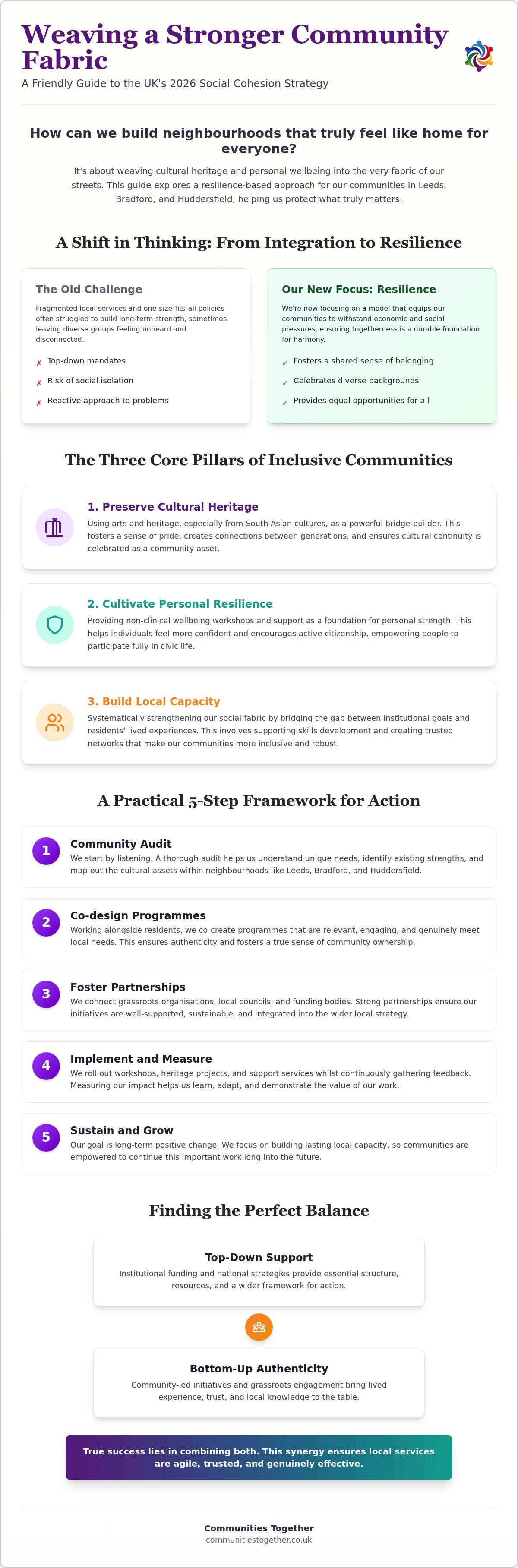
Five Key Steps to Implementing Cohesion in West Yorkshire
Implementing a successful social cohesion strategy UK within the vibrant yet complex landscapes of West Yorkshire necessitates a methodical and phased approach that prioritises local knowledge, structural sustainability, and inclusive participation. We believe that by following a structured sequence of actions, local authorities and community groups can transition from reactive measures to a proactive model of togetherness that fosters long-term stability and mutual respect. This process is designed to be thorough and inclusive, ensuring that every resident feels a sense of ownership over the collective progress of their neighbourhood.
Step 1: Conduct a thorough community audit to identify existing social capital, local strengths, and critical service gaps across Leeds, Bradford, and Huddersfield.
Step 2: Design inclusive engagement programmes that reflect local cultural heritage and provide meaningful platforms for diverse voices to be heard.
Step 3: Deliver wellbeing and skills workshops to build individual capacity, ensuring that residents have the personal resilience required for active citizenship.
Step 4: Establish robust partnerships between local grassroots groups and statutory bodies to create a unified and accountable delivery framework.
Step 5: Monitor and evaluate social impact using a blend of qualitative stories and quantitative data to ensure the strategy remains responsive and effective.
Designing Inclusive Engagement Programmes
Ensuring that activities are accessible to people from all backgrounds and abilities is a fundamental requirement for any initiative that seeks to bridge social divides and promote harmony. We've found that using friendly, approachable language and creating warm, welcoming spaces encourages participation amongst those who might otherwise feel disconnected or hesitant to engage with institutional services. By linking these local efforts to strategic community engagement programmes UK, we can ensure that every creative session or heritage project contributes to a larger, more impactful narrative of regional growth. This approach transforms simple activities into powerful catalysts for social change, allowing us to facilitate deeper connections and maintain a steady rhythm of community development.
Measuring What Matters in Social Cohesion
To ensure accountability and justify continued investment, we must move beyond surface-level metrics and focus on tracking changes in local trust levels and the strength of social networks. Using personal development milestones as indicators of community growth allows us to see how individual progress translates into collective endurance, building a more resilient foundation for the future. Whilst statistical data provides a necessary overview of reach and participation, we also prioritise collecting stories of impact to complement the numbers, providing a richer, more earnest account of how our work touches lives. This dual focus on data and narrative ensures that our social cohesion strategy UK remains grounded in the lived experiences of residents whilst meeting the rigorous standards of our partners and stakeholders.
How Communities Together Supports Strategic Local Growth
Communities Together serves as a dedicated facilitator for regional development, acting as a professional conduit that links local aspirations with broader institutional goals to foster sustainable growth across West Yorkshire. By working alongside our valued partners in Leeds, Bradford, and Huddersfield, we strive to strengthen the social fabric through a methodical approach that prioritises cultural continuity, collective endurance, and social responsibility. Our involvement ensures that a social cohesion strategy UK is not merely a policy document but a living, breathing reality that improves the daily lives of residents by facilitating learning, skills, and personal development for everyone. We believe that by building these local foundations, we can maintain a stable environment where harmony and progress are shared by all, ensuring that no neighbourhood is left behind as our urban centres evolve.
Our Wellbeing and Resilience Workshops
We recognise that the strength of any community begins with the individual, which is why we provide structured, supportive learning environments to help residents overcome the barriers of social isolation through our specialised interventions. By focusing on personal growth as a vital catalyst for community participation, our sessions empower people to rediscover their confidence and take an active role in their local area, fostering a sense of purpose and accountability that benefits the whole region. We invite you to explore our collaborative wellbeing workshops UK to understand how these non-clinical interventions provide a foundation for active citizenship and long-term resilience. Through this supportive framework, we help individuals build the emotional strength required to navigate modern pressures whilst contributing to the collective wellbeing and structural strength of their neighbourhoods.
Preserving Heritage for a Cohesive Future
Our commitment to South Asian arts and heritage activities serves as a friendly and inclusive bridge-builder, designed to expand educational access and foster mutual respect amongst diverse groups in our vibrant region. We believe that connecting cultural traditions with modern social cohesion goals allows us to preserve our shared history whilst building a future that is grounded in trust, understanding, and mutual appreciation. By inviting local groups to partner with us for cultural participation projects, we facilitate a rhythmic exchange of ideas and traditions that enriches the entire community and prevents the fragmentation of our social fabric. These activities are not just about looking back; they're about building a methodical framework for togetherness that celebrates our region's unique demographic tapestry and ensures that every voice is heard, valued, and integrated into our shared story.
Building a Resilient Future Through Collective Action
Establishing a durable social cohesion strategy UK requires a sincere commitment to bridging cultural divides through the intentional integration of arts, heritage, and personal development. By moving beyond rigid institutional mandates and embracing collaborative partnerships, we ensure that our neighbourhoods across Huddersfield, Halifax, Leeds, Bradford, and Wakefield remain stable, harmonious, and prepared for future challenges. We've seen that when communities lead with their unique cultural strengths, they build a foundation of mutual trust that supports long-term prosperity and collective endurance for every resident.
As we look towards 2026, our mission remains focused on facilitating these vital connections and maintaining the structural integrity of our social fabric. We're here to act as your professional conduit for growth, leveraging our specialist South Asian heritage projects to ensure that your community engagement programmes are inclusive, impactful, and deeply rooted in the heritage that makes our region so vibrant. Together, we can create a future where every voice is valued and every neighbourhood thrives.
Frequently Asked Questions
What is the main goal of a social cohesion strategy in the UK?
The primary objective of a social cohesion strategy UK is to foster mutual trust, shared belonging, and active participation amongst all residents to ensure long-term stability and regional harmony. By creating a framework that values diversity whilst promoting equal opportunities, these strategies seek to eliminate the structural barriers that lead to social fragmentation. It's about building a society where everyone feels they have a meaningful stake in their local area's future.
How can arts and heritage improve social cohesion in diverse areas?
Arts and heritage act as powerful bridge-builders by providing a neutral ground for residents of all backgrounds to share stories and celebrate cultural continuity. In West Yorkshire, using South Asian arts activities allows us to facilitate meaningful dialogue and educational access, helping different generations find common ground. This creative approach transforms local history into a collective asset that strengthens the social fabric and encourages deeper regional pride.
What role do wellbeing workshops play in community resilience?
Wellbeing workshops serve as the foundational layer for community resilience by equipping individuals with the emotional strength and social skills required for active citizenship. These non-clinical interventions help residents manage personal pressures whilst building supportive networks that reduce the risk of social isolation. By empowering people to take control of their own wellbeing, we create a more stable and engaged population capable of contributing to collective growth.
How can local businesses support social cohesion in West Yorkshire?
Local businesses in West Yorkshire can support social cohesion by offering skills development opportunities, sponsoring inclusive community events, and adopting ethical recruitment practices that reflect their area's demographic tapestry. By investing in the local social infrastructure, businesses help maintain the economic stability required for neighbourhoods to thrive. These partnerships ensure that the private sector plays a methodical role in facilitating togetherness and long-term regional endurance.
Why is community capacity building important for non-profits?
Community capacity building is essential because it ensures that local groups have the infrastructure, skills, and confidence to sustain their own growth without constant external intervention. For non-profits, this methodical approach turns passive beneficiaries into active leaders who can facilitate their own cohesion initiatives. It's about moving from a model of service delivery to one of empowerment, ensuring that progress is maintained by those who understand the local context best.
How do we measure the success of a social cohesion programme?
We measure the success of a social cohesion programme by tracking qualitative shifts in local trust levels alongside quantitative data such as participation rates and personal development milestones. Success is often indicated by an increase in cross-cultural interactions and a decrease in reported social isolation within urban centres. By collecting stories of impact, we gain an earnest understanding of how our work facilitates long-term harmony and structural strength.
Can cultural preservation projects reduce social isolation?
Cultural preservation projects significantly reduce social isolation by providing residents with a renewed sense of pride and a platform for meaningful participation. By protecting shared histories, such as South Asian heritage, we create welcoming spaces where individuals can reconnect with their traditions whilst engaging with their neighbours. This process facilitates a sense of belonging that is vital for maintaining the mental wellbeing and collective resilience of diverse populations.
What are the best practices for community engagement in 2026?
In 2026, the best practices for community engagement focus on using inclusive language, creating accessible spaces, and fostering genuine partnerships between residents and statutory bodies. It's vital to adopt a "delivery with" rather than "delivery to" approach, ensuring that every project is grounded in the lived experiences of the community. This methodical focus on transparency and mutual respect helps build the trust required for a successful social cohesion strategy UK.


Comments