
Community Partnership Models UK: A Strategic Guide to Collaborative Success in 2026
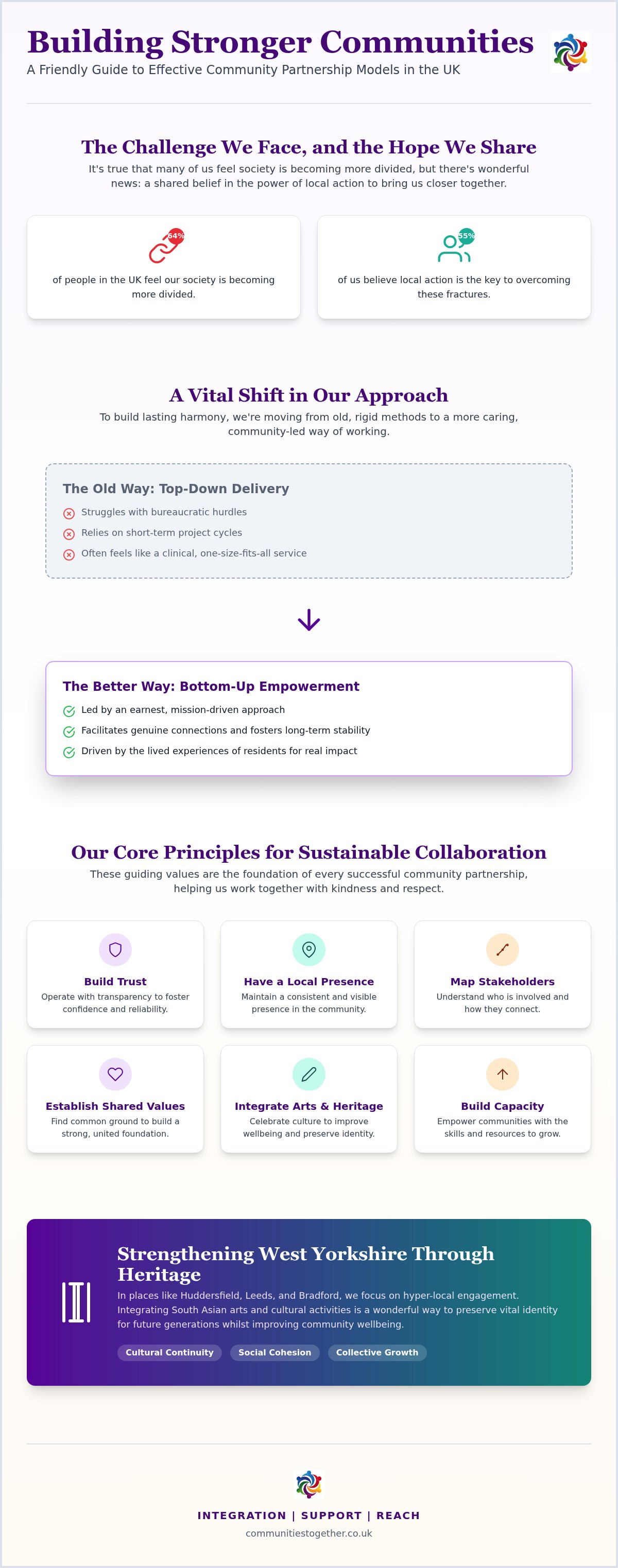
Whilst 64% of people in the UK believe our society is becoming increasingly divided, it's heartening to know that 55% of us still feel local action is the key to overcoming these social fractures. You've likely seen how traditional, top-down approaches often struggle to bridge these gaps, especially when bureaucratic hurdles or short-term project cycles stall meaningful progress. Finding the right community partnership models UK organisations can rely on requires a shift away from clinical service delivery towards a more earnest, mission-driven approach that celebrates our shared heritage. We understand that building trust amongst diverse groups in places like Huddersfield or Leeds isn't just about ticking boxes; it's about facilitating genuine connections, fostering long-term stability, and ensuring every voice is heard.
In this guide, you'll discover how to build and scale effective community partnership models that prioritise social cohesion and cultural resilience through every stage of development. We'll provide a clear framework for collaboration that helps you move past unsustainable funding cycles by focusing on capacity building, heritage preservation, and collective endurance. By exploring evidence-based methods for cultural continuity, we'll show you how to create a stable foundation for your projects, ensuring they deliver measurable social benefits and lasting harmony for the communities you serve.
Table of Contents
Understanding the Landscape of Community Partnership Models in the UK
Evaluating the Different Frameworks: From Place-Based to Cultural Models
The Ten Core Principles for Sustainable Community Collaboration
How to Organise and Implement a Collaborative Partnership Model
Strengthening West Yorkshire: The Communities Together Approach
Understanding the Landscape of Community Partnership Models in the UK
Community partnership models UK organisations use are evolving into sophisticated frameworks that foster social change, promote inclusivity, and ensure long-term stability for every resident involved. We're seeing a vital shift from old-fashioned, top-down service delivery towards a model of bottom-up community empowerment where people lead their own progress. This transition isn't just a trend; it's a necessary response to the complex social challenges of 2026, requiring us to build structures that are resilient, culturally aware, and deeply rooted in local trust. By facilitating these connections, we help create a reliable foundation for togetherness and social responsibility.
To better understand how these collaborative frameworks function in practice, watch this helpful video:
By 2026, the demand for cultural resilience has become paramount, especially as 64% of Britons perceive a growing sense of division within our society. Social enterprises and non-profits now act as essential bridge-builders, facilitating communication between local authorities and the people they serve whilst maintaining the professional literacy needed for complex project management. Whilst earlier frameworks like Local Strategic Partnerships (LSPs) provided a statutory foundation for cross-sector work, modern approaches are increasingly driven by the lived experiences of residents rather than administrative convenience. This ensures that every action taken is purposeful, accountable, and designed to yield lasting social benefits.
The Evolution of Place-Based Partnerships
In the North of England, geographic focus is proving essential for tackling specific local inequalities in places like Huddersfield and Leeds. We've moved beyond the "one-size-fits-all" mentality to embrace hyper-local engagement that respects the unique character of every district. Successful place-based work relies on a shared vision, mutual accountability, and a consistent local presence. By organising our efforts around specific neighbourhoods, we can facilitate cultural continuity, strengthen social ties, and provide a stable foundation for collective growth.
Why Collaboration Outperforms Competition in 2026
Collaboration is the most effective way to ensure that vulnerable community members receive the support they deserve without facing fragmented services. By adopting these community partnership models UK stakeholders can move away from competitive bidding and towards a more earnest, collective approach to social welfare. By pooling resources, sharing expertise, and communicating transparently, partners can reduce service duplication and achieve much better outcomes. This spirit of togetherness also makes collaborative bids more attractive to funders, as they demonstrate a commitment to sustainability, efficiency, and long-term impact. It's about working together to achieve harmony, progress, and resilience for everyone involved.
Evaluating the Different Frameworks: From Place-Based to Cultural Models
Selecting the most appropriate framework is a vital first step for any organisation looking to foster social responsibility, harmony, and structural strength within local districts. Whilst the Community Interest Company (CIC) model provides a robust legal structure for many social enterprises, the operational community partnership models UK leaders choose must also reflect the specific needs of their residents. We often see a distinction between service-led models, which focus on streamlining access to essential support, and co-design models, which place residents at the heart of programme development to ensure every outcome is relevant and sustainable. Each approach offers unique strengths; service-led models excel at providing immediate stability, whereas co-design builds long-term agency and collective endurance amongst participants.
The cultural heritage model represents a third, deeply earnest approach that uses arts and tradition to foster social cohesion and cultural continuity. By facilitating shared experiences through heritage, this model creates a stable foundation for togetherness that often feels more approachable than formal institutional interventions. Choosing the right path involves balancing the need for professional accountability with a desire for inclusive, community-oriented growth. For those seeking to strengthen their local impact, exploring partnership and community capacity building can provide the necessary tools to navigate these complex collaborative landscapes.
The Impact of Arts and Heritage-Led Partnerships
South Asian arts and heritage activities serve as a powerful catalyst for engagement, helping to bridge generational and cultural divides whilst building modern community resilience. These projects allow residents to celebrate their traditions, share their stories, and develop a sense of belonging that clinical approaches often fail to capture. We've found that heritage-led partnerships reduce social isolation more effectively than clinical interventions because they focus on what connects us, facilitating a sense of pride and mutual respect. By preserving cultural traditions, we aren't just looking backwards; we're creating a vibrant, inclusive future where every individual feels valued and understood.
Wellbeing and Resilience Frameworks
Integrating wellbeing and resilience workshops into broader community infrastructure ensures that personal development remains a cornerstone of local progress. These non-clinical frameworks provide residents with the skills they need to manage life's challenges, fostering a sense of inner strength and collective endurance. A person's sense of cultural identity is deeply intertwined with their individual wellbeing, providing a stable anchor that supports emotional health and social confidence. By facilitating these workshops, we help residents build the resilience required to thrive, ensuring that our communities remain strong, supportive, and interconnected for years to come.
The Ten Core Principles for Sustainable Community Collaboration
Building a resilient society requires more than just administrative agreements; it demands a deep, earnest commitment to shared values and ethical practice. Effective community partnership models UK organisations employ today are built on a foundation of trust, which we establish through transparency and a consistent, visible presence within the neighbourhoods we serve. By prioritising long-term social benefits over short-term project excitement, we facilitate a sense of stability that encourages residents to engage more deeply with our programmes. We've found that "starting where people are", respecting their current needs, cultural traditions, and lived experiences, is far more effective than following a rigid agenda set by distant funders or governing bodies.
Measuring success through social impact rather than just numerical data allows us to capture the true essence of community progress. Whilst numbers can show attendance, they don't reflect the sense of belonging or the reduction in isolation that occurs when residents participate in South Asian arts and heritage activities. We focus on qualitative evidence, such as the strengthening of social ties amongst neighbours, the preservation of cultural traditions, and the increased confidence of local volunteers who take on leadership roles. By facilitating these deeper connections, we ensure our work remains purposeful, accountable, and deeply rooted in the needs of the people we support.
Inclusivity and Cultural Competence
Engaging diverse communities in Leeds and Bradford requires a nuanced understanding of local history and cultural identity, especially as the Asian and Asian British population in West Yorkshire grew by 28% in the decade leading up to 2021. We ensure our South Asian heritage projects are inclusive of all generations by facilitating activities that allow elders to share their wisdom whilst inviting young people to lead through modern creative expressions. Accessible communication is vital; using clear language and providing translation where necessary ensures that barriers to participation are removed. This inclusive approach fosters harmony and ensures that everyone, regardless of their background, feels like a valued partner in the community's growth.
Capacity Building and Long-Term Sustainability
True sustainability comes from empowering local leaders through learning, skills, and personal development opportunities that build lasting structural strength. We transition from simple "consultation" to active partnership by encouraging shared ownership of every initiative, ensuring that residents have a genuine voice in the decisions that affect their lives. Strengthening these local networks is a core part of Community Capacity Building in the UK, providing a stable foundation for future innovation and collective endurance. When we invest in people, we aren't just delivering a temporary project; we're facilitating the long-term resilience and togetherness of the entire community.
How to Organise and Implement a Collaborative Partnership Model
Implementing community partnership models UK organisations can depend on requires a methodical yet warm approach to local mapping. We start by identifying key stakeholders across West Yorkshire, from established local authorities to grassroots groups in Huddersfield and Halifax. By facilitating these initial conversations, we can establish a shared set of values and a formal partnership agreement that serves as a reliable foundation for togetherness. Setting realistic milestones for community engagement and heritage preservation ensures that every partner remains accountable whilst maintaining the quiet confidence needed for long-term success. Creating a feedback loop allows for continuous programme improvement, ensuring our actions always align with the community's evolving needs.
Step 1: Identifying Shared Objectives
Aligning the high-level goals of local authorities with the lived needs of community residents is essential for building structural strength. We conduct initial engagement sessions to ensure the partnership addresses real-world pains, such as social isolation or bureaucratic hurdles, before any work begins. Drafting a "Statement of Intent" creates a collective promise that everyone can get behind, fostering a sense of purpose and shared responsibility from the very beginning. This document acts as a principled guide, ensuring every action taken is both purposeful and inclusive.
Step 2: Building the Infrastructure
Building the infrastructure involves allocating clear roles, such as facilitators, advocates, and project managers, to ensure the project moves at a measured pace. We must determine the governance structure, deciding whether a formal board or a more flexible informal network best supports our mission-driven goals and the long-term social benefits we seek. It's vital that the model facilitates learning, skills, and personal development for all partners. By investing in the people behind the partnership, we ensure that capacity building remains a core outcome of the collaboration, providing a stable foundation for others to build upon.
Step 3: Launching and Iterating
Launching a pilot project, such as a local heritage workshop or a wellbeing session, allows us to test our framework in a controlled environment whilst building trust amongst residents. We collect qualitative data during these initial phases to prove the value of social cohesion to our stakeholders, demonstrating the measurable effects of our work on the community's cultural continuity. Celebrating small wins early in the partnership is vital for building momentum, reinforcing trust, and proving that collective action can lead to genuine progress. This iterative approach ensures that our programmes remain absorptive and reassuring as they grow in scale.
Strengthening West Yorkshire: The Communities Together Approach
At Communities Together, our commitment to fostering social cohesion across Huddersfield, Leeds, and Bradford is rooted in a deep understanding of the diverse threads that form our local social fabric. By employing effective community partnership models UK leaders can trust, we facilitate meaningful connections that bridge cultural divides, celebrate our shared history, and promote long-term stability for every resident. We integrate South Asian arts and heritage activities into modern engagement programmes to ensure that tradition remains a vibrant part of our collective progress, whilst our wellbeing and resilience workshops provide the structural strength needed for residents to thrive. This earnest, mission-driven approach allows us to act as an authoritative bridge-builder, facilitating togetherness and social responsibility through every initiative we lead.
Our workshops focus on building non-clinical resilience, providing a stable foundation for personal development and emotional health within our local districts, whilst ensuring that every participant feels supported and valued. By creating a consistent local presence, we help residents develop the inner strength and collective endurance required to navigate life's challenges, ensuring that every participant feels supported and valued. These programmes are designed to be absorptive and reassuring, moving at a measured pace that respects the individual needs of our community members whilst contributing to the broader goal of social harmony and togetherness.
Collaborative Success in Huddersfield and Halifax
In Huddersfield and Halifax, our work focuses on reducing isolation through cultural participation, facilitating opportunities for residents to come together and share their unique stories in a supportive environment. We support local groups with capacity building and skills development, ensuring that the benefits of our Strategic Community Engagement Programmes are felt long after the initial project concludes. By empowering local leaders and providing them with the professional literacy needed for complex collaboration, we help maintain a steady pulse of progress that strengthens the entire region, fostering a sense of pride and mutual respect amongst all participants.
Partnering for a More Resilient West Yorkshire
Our vision for 2026 is a connected network of culturally rich communities where every organisation works in harmony to foster social resilience and cultural continuity for future generations. We invite local authorities, charities, and community groups to collaborate with us on future heritage and culture projects, as we believe that togetherness is the most reliable foundation for lasting social change. Your organisation can get involved by reaching out to discuss how we can facilitate growth, strengthen local networks, and build a more inclusive future for everyone in West Yorkshire, ensuring that our collective efforts lead to measurable social benefits.
Building a Resilient Future Together
We've explored how a shift towards bottom-up empowerment and the integration of cultural identity can transform our local districts into vibrant hubs of togetherness. By adopting earnest community partnership models UK organisations can rely on, you'll move past bureaucratic hurdles to create a stable foundation for lasting social impact. Our work in South Asian arts and heritage preservation across Huddersfield, Leeds, and Bradford demonstrates that celebrating shared traditions is a powerful way to reduce isolation whilst building the structural strength our communities deserve. Facilitating these deep, meaningful connections ensures that every resident feels valued and understood, fostering the collective endurance needed for a harmonious 2026.
As a mission-driven non-profit, we're dedicated to acting as an authoritative bridge-builder for your next collaborative project. We're excited to help you facilitate new paths for social responsibility and progress within your neighbourhood. Let's work together to ensure every community in West Yorkshire remains resilient, inclusive, and connected for years to come.
Frequently Asked Questions
What are the main types of community partnership models used in the UK?
The main types of community partnership models UK organisations utilise include place-based frameworks, service-led initiatives, and co-design models. Place-based models focus on specific geographic areas like Huddersfield or Halifax to tackle local inequalities, whilst service-led models streamline access to essential support. Co-design puts residents at the heart of decision-making, ensuring that every project is relevant. These structures provide a stable foundation for togetherness, allowing partners to share resources and facilitate long-term social progress.
How do community partnership models improve social cohesion?
These models improve social cohesion by facilitating genuine connections amongst diverse groups and reducing the sense of isolation that many people currently perceive. By building trust through a consistent local presence, partnerships create a welcoming space where residents can participate in shared activities. This inclusive approach fosters harmony and mutual respect, helping to bridge generational or cultural gaps. It's about creating a sense of belonging and structural strength that encourages collective growth and shared responsibility.
Can arts and heritage projects really work as a partnership model?
Yes, heritage-led projects act as a powerful catalyst for engagement and cultural continuity. By facilitating South Asian arts and heritage activities, partners can reach groups that might find traditional institutional services less approachable. These projects focus on shared stories and traditions, which build modern community resilience whilst preserving vital cultural identity. We've found that this model is particularly effective at fostering togetherness across multi-generational groups in West Yorkshire, as it celebrates what connects us.
How much does it cost to set up a community partnership?
The cost of establishing a partnership varies significantly depending on the scale of the project and the resources required for staffing, venue hire, and materials. Funding often comes from a mixture of local authority grants, national lottery funds, or specific programmes like the British Council's Connections Through Culture grants. Instead of focusing on a single figure, it's more helpful to consider the long-term social benefits and the efficiency gained through pooling resources and reducing service duplication.
What is the difference between a partnership and a community engagement programme?
A community partnership model is the overarching structural framework that defines how different organisations work together, including their governance and shared values. In contrast, a community engagement programme is the specific set of activities, such as wellbeing workshops or heritage events, delivered to residents. One provides the reliable foundation and professional accountability, whilst the other represents the practical application of those values to achieve measurable effects on society and personal development for every participant.
How can we measure the success of a community partnership model?
Success is best measured through social impact and qualitative data rather than just numerical attendance figures. We look for evidence of improved social cohesion, such as increased confidence amongst residents, the strengthening of local networks, and a greater sense of cultural pride. By collecting feedback through inclusive loops, we can assess how well the model facilitates togetherness and resilience. This approach ensures that the partnership remains accountable to the people it serves and achieves lasting harmony.
What happens if a community partnership model fails to engage the local community?
If engagement is low, it's often a sign that the model needs to pivot and "start where people are" rather than following a rigid agenda. We recommend facilitating a transparent feedback loop to understand the specific barriers residents face, such as language or bureaucratic hurdles. By iterating on the co-design process and involving residents in the decision-making, you can rebuild trust and ensure the partnership remains a purposeful conduit for collective growth and cultural resilience.
How can smaller charities in West Yorkshire get involved in larger partnerships?
Smaller charities in areas like Bradford or Wakefield can get involved by connecting with established facilitators who specialise in partnership and community capacity building. We focus on empowering local leaders through learning, skills, and personal development, helping smaller groups gain the professional literacy needed for larger collaborations. By joining a connected network, smaller organisations can share their unique local expertise whilst benefiting from the structural strength and resources of a broader, mission-driven partnership for West Yorkshire.


Comments