
Community Cohesion Initiatives UK: Navigating the 2026 Landscape of Social Unity
Updated: Jul 15
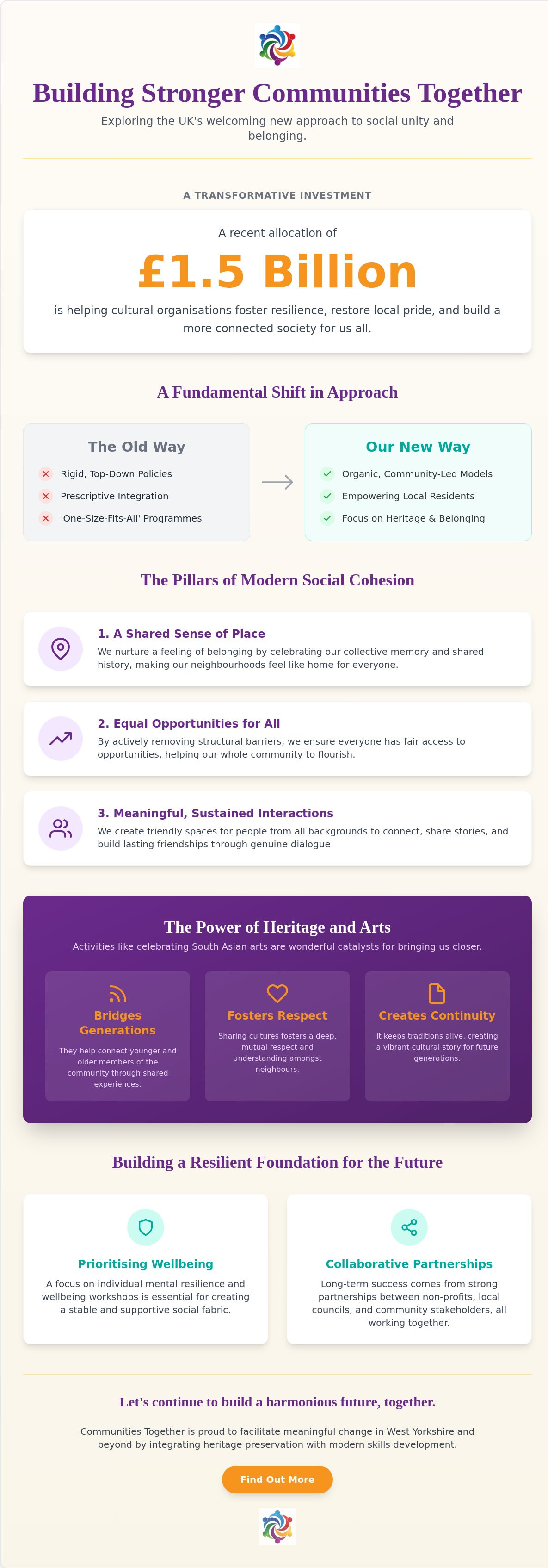
The recent allocation of £1.5 billion towards cultural organisations highlights a transformative period for community cohesion initiatives UK, moving beyond traditional policy frameworks to embrace a more nuanced, heritage-led approach to social unity. It's understandable that many local leaders and residents feel a sense of disconnection whilst managing the complexities of urban isolation, fragmented social structures, and the persistent challenge of quantifying the long-term efficacy of local engagement projects. This article offers a comprehensive analysis of the evolving strategies defining our social landscape in 2026, exploring how the Social Cohesion Action Plan and the Pride in Place programme are being utilised to foster resilience, restore local pride, and maintain cultural continuity across the country.
By examining practical examples of culture-led integration and the impact of the Common Ground Resilience Fund, we'll provide a clear framework for building community capacity and facilitating meaningful dialogue amongst diverse populations. You'll gain insight into how grassroots movements are working alongside institutional frameworks to create a stable foundation for collective growth, ensuring that every citizen feels a renewed sense of belonging and purpose within their neighbourhood. We'll explore the methodical steps required to measure social impact, the role of heritage in bridging generational divides, and the collaborative efforts needed to ensure a harmonious future for all.
Table of Contents
Understanding the Evolution of Community Cohesion Initiatives in the UK
The Emergence of Heritage and Arts as Catalysts for Social Integration
Prioritising Wellbeing and Resilience to Combat Social Isolation
Building Sustainable Infrastructure Through Collaborative Capacity Building
Facilitating Meaningful Change with Communities Together in West Yorkshire
Understanding the Evolution of Community Cohesion Initiatives in the UK
In the wake of the 2026 Social Cohesion Action Plan, the conceptual framework for Understanding Community Cohesion has expanded beyond mere peaceful coexistence to encompass a proactive, multifaceted resilience that addresses the digital fragmentation of our modern era. The landscape of community cohesion initiatives UK has undergone a significant transformation, moving away from the prescriptive, top-down integration strategies of the early 2000s towards a model that prioritises organic growth, local agency, and the preservation of cultural heritage to foster a profound sense of belonging amongst all residents. This shift acknowledges that social harmony cannot be mandated through policy alone; it requires a steady commitment to building trust, facilitating dialogue, and maintaining the structural strength of our local neighbourhoods whilst ensuring that every individual feels seen and supported. We're witnessing a move towards a more nuanced approach that values the unique identity of each district, recognising that true unity is found in the threads of our shared history and collective aspirations.
To better understand this concept, watch this helpful video:
The Core Pillars of Modern Social Cohesion
Effective strategies today are built upon three essential pillars: the cultivation of a shared sense of place through collective memory, the active reduction of structural barriers to ensure equal opportunities, and the facilitation of meaningful, sustained interactions between individuals from diverse backgrounds. By investing in South Asian arts and heritage activities, communities can bridge generational divides, celebrate cultural continuity, and create inclusive spaces where every voice is heard and valued. These pillars work in tandem to transform local districts into vibrant hubs of activity, where tradition and progress are balanced to achieve long-term stability, social responsibility, and a renewed pride in place. It's about more than just proximity; it's about creating the conditions where people can truly thrive together.
Why Traditional Models are Shifting
The move away from "one-size-fits-all" programmes is a direct response to the increasing social isolation found in urban areas, where fragmented local communities often struggle to maintain the threads of togetherness that define a healthy society. We're seeing a transition towards bespoke, place-based interventions that focus on non-clinical wellbeing and resilience workshops as a foundation for unity. By partnering with organisations like Communities Together, local councils can implement tailored community cohesion initiatives UK that build capacity, enhance skills, and foster a collective endurance capable of withstanding the economic and technological shocks of the mid-2020s. This methodical approach ensures that interventions are not just temporary fixes but are instead woven into the very fabric of the community to promote lasting harmony and mutual support for everyone involved.
The Emergence of Heritage and Arts as Catalysts for Social Integration
Cultural preservation has emerged as a vital cornerstone of modern community cohesion initiatives UK, providing a tangible framework for bridging generational and ethnic divides through the shared appreciation of artistic expression and collective memory. By focusing on the intricate threads of our diverse history, these programmes move beyond superficial interaction to foster deep-seated empathy and mutual understanding amongst residents who might otherwise remain isolated. Storytelling serves as a particularly potent tool in this regard, as it allows individuals to share their lived experiences whilst discovering common values that transcend perceived differences and build a more resilient social fabric. This methodical approach aligns with the wider objectives outlined in the UK Government's Cohesion Strategy, which emphasises the need for confident communities that are grounded in a secure sense of identity and shared belonging.
South Asian Arts and Heritage Preservation
Within the vibrant urban centres of West Yorkshire, South Asian arts and heritage activities have proven exceptionally effective at creating inclusive platforms for engagement that celebrate cultural continuity whilst inviting modern participation from all backgrounds. These initiatives often involve traditional crafts, music, and performance to create shared spaces for dialogue, where the act of collective creation becomes a catalyst for social integration and structural strength. By preserving these rich traditions, organisations can build community capacity amongst younger generations, ensuring that heritage education isn't merely a look into the past but a foundational element of future social stability and regional pride. Successful case studies in cities like Bradford demonstrate how these arts-led interventions can revitalise local districts, reduce prejudice, and facilitate a lasting sense of togetherness through shared creative goals.
Educational Access and Cultural Participation
Expanding access to heritage projects for schools and local community groups is essential for strengthening the social fabric of the United Kingdom, as it equips individuals with the skills and knowledge needed to navigate a diverse society with confidence and respect. When students engage with the histories and artistic contributions of their neighbours, they develop a more sophisticated understanding of the interconnectedness that defines their local area. Cultural participation acts as a vital bridge that spans the gap between isolated groups by providing a neutral, creative ground where shared experiences replace fragmented perceptions. Through methodical partnership and community capacity building, we can ensure that these opportunities are available to all, fostering a culture of learning, skills, and personal development that supports long-term harmony and collective endurance for everyone involved.
Prioritising Wellbeing and Resilience to Combat Social Isolation
Building a stable and harmonious neighbourhood starts with the internal strength of every resident, as individual mental resilience serves as the fundamental bedrock upon which broader social stability is constructed. We've seen a significant shift towards "wellbeing-first" community cohesion initiatives UK, which prioritise the emotional health of the individual to facilitate a more naturally occurring sense of togetherness amongst neighbours. It's often the case that when people feel secure, confident, and supported within themselves, they're far more likely to engage positively with others, contribute to local projects, and maintain the threads of social harmony that keep our districts vibrant. This approach is supported by the House of Commons Library's analysis of community cohesion, which highlights how interconnected individual wellbeing and national social resilience have become in our modern landscape.
By implementing non-clinical interventions, we can measurably reduce the burden on local public services whilst providing a more compassionate, community-rooted form of support. These programmes don't just treat the symptoms of isolation; they address the structural and emotional causes by building long-term capacity for endurance and mutual aid. It's a methodical way of ensuring that our social safety nets are woven from trust and shared experience rather than just administrative processes. This strategy creates a rhythmic pulse of professional care and social delivery that feels both grounded and aspirational for every participant involved; to further support this journey, you can discover Citizen Coaching and Counselling for specialised anger management and therapeutic services.
Wellbeing and Resilience Workshops
Our structured workshops are designed to foster emotional intelligence, develop personal coping skills, and create safe, welcoming spaces for our most vulnerable residents to find their feet again. By providing a nurturing environment, we help individuals build the confidence needed to navigate diverse social settings, reducing the anxiety that often leads to fragmentation and urban isolation. These sessions focus on:
Developing personal agency and self-efficacy to empower local residents.
Fostering emotional intelligence to help navigate complex social dynamics.
Building supportive social networks that endure well beyond the workshop setting.
It's about empowering people to become active architects of their own local harmony, ensuring that every individual has the tools to contribute meaningfully to their community.
Reducing Isolation Through Collaborative Learning
In urban centres like Huddersfield and Leeds, we've found that acquiring new skills in a group setting is a remarkably effective way to forge lasting social bonds and enhance regional resilience. When people learn together, they're not just gaining practical knowledge; they're bridging the gap between individual growth and collective community strength. We warmly invite you to explore our programmes for learning, skills and personal development, which are specifically tailored to help residents transition from isolation to active participation. This collaborative approach ensures that personal progress contributes directly to the structural strength of the whole neighbourhood, creating a legacy of shared achievement and enduring togetherness for everyone involved.
Building Sustainable Infrastructure Through Collaborative Capacity Building
To ensure that the benefits of individual resilience and cultural participation endure, we must transition towards a model of sustainable infrastructure that prioritises long-term capacity building over the short-term, project-based funding cycles of previous years. The current landscape of community cohesion initiatives UK increasingly recognises that social harmony cannot be sustained through isolated interventions; it requires a robust network of collaborative partnerships between non-profits, local councils, and private stakeholders who are committed to a shared vision of regional stability. By empowering local groups to take ownership of their own cohesion strategies, we facilitate a move from external dependency to internal strength, creating a foundation for collective growth that remains resilient even after initial investments have concluded. This methodical approach ensures that every statement of intent is balanced by a measurable statement of impact, fostering a culture of accountability and social responsibility across the public sector.
Community Engagement and Capacity Building
We believe that providing the necessary tools, training, and strategic guidance to local leaders is essential for enabling them to organise effectively and maintain the structural strength of their neighbourhoods. Within the context of community cohesion initiatives UK, our programmes focus on fostering inclusive engagement that actively reaches the most marginalised members of society, ensuring that every voice is heard and every contribution is valued within the broader narrative of togetherness. Capacity building acts as the vital scaffolding that supports the ongoing development of local leadership, thereby ensuring the longevity of social harmony through the cultivation of internal expertise and community agency. By investing in people, we build a legacy of collective endurance, cultural continuity, and mutual support that defines the very best of our social fabric.
Strategic Partnerships in West Yorkshire
In urban centres such as Bradford, Wakefield, and Halifax, we've observed that the most successful models of collaborative growth are those where local organisations share resources, insights, and networks to maximise their collective social impact. As an authoritative bridge-builder, Communities Together plays a pivotal role in facilitating these regional partnerships, acting as a professional conduit that links grassroots movements with institutional support to achieve common goals. This collaborative spirit allows for the creation of a stable foundation where tradition and progress are balanced to achieve long-term social benefits for the entire region, whilst reducing the fragmentation often found in isolated projects. We invite you to discover how we can support your local goals through our partnership and community capacity building services, ensuring a harmonious and resilient future for all.
Facilitating Meaningful Change with Communities Together in West Yorkshire
At Communities Together, our mission-driven approach to community engagement is designed to transform local districts by weaving together the complex threads of cultural heritage, individual wellbeing, and structural resilience, which allows us to act as a methodical advocate for community cohesion initiatives UK. By delivering high-quality South Asian arts and heritage activities, we facilitate a unique form of regional social cohesion that celebrates tradition whilst addressing the modern challenges of urban isolation, demographic shifts, and fragmented social bonds. Our work across West Yorkshire is defined by a commitment to professional excellence, inclusive participation, and collaborative growth, ensuring that every project we undertake provides a stable foundation for the communities we serve to thrive, endure, and grow together. We take great pride in our role as a professional conduit for change, moving at a measured pace to ensure that every statement of intent is balanced by a measurable statement of impact on the lives of local residents.
Our Approach to Community Engagement Programmes
Our structured community engagement programmes are specifically tailored to meet the needs of diverse urban backgrounds in centres like Huddersfield, where we provide a stable foundation for collective growth through the delivery of high-quality educational and cultural activities. These initiatives empower individuals through a methodical focus on learning, skills, and personal development, allowing participants to gain the confidence, self-efficacy, and agency required to contribute meaningfully to their local neighbourhoods. By bridging the gap between historical cultural preservation and contemporary wellbeing, we ensure that our interventions are not only relevant to the challenges of 2026 but are also deeply restorative and sustainable. We've seen how acquiring new skills in a group setting fosters long-term social bonds, enhances regional resilience, and creates a rhythmic pulse of professional promise and social delivery that resonates throughout the entire district.
Join Our Mission for a More Cohesive Future
We warmly invite local councils, grassroots organisations, and private stakeholders to join our mission by exploring opportunities for partnership and community capacity building that prioritise long-term social benefits, structural strength, and collective responsibility. Whether you're looking to host our wellbeing and resilience workshops for your local group or seeking a principled expert to help facilitate a heritage-led integration project, we're here to provide the expertise and support needed to foster a more united society. Our approach is built on a foundation of reliability and serious commitment to social welfare, ensuring that we act as a stable foundation for others to build upon whilst maintaining the highest standards of professional literacy in community development. We encourage you to enquire about our community engagement programmes today to learn how we can work together to achieve lasting social unity, facilitate meaningful interactions, and build a more cohesive future for all residents in West Yorkshire and beyond.
Fostering a Legacy of Social Unity and Collective Resilience
The transition towards organic, heritage-led models marks a significant milestone for community cohesion initiatives UK, shifting the focus from rigid policy towards a more nuanced appreciation of local identity and individual wellbeing. We've explored how South Asian arts and heritage activities serve as vital catalysts for integration, whilst structured resilience workshops provide the emotional intelligence needed to navigate our modern, diverse social landscape. By prioritising long-term capacity building and collaborative partnerships, we can ensure that the structural strength of our neighbourhoods remains robust, creating an enduring foundation for togetherness that transcends temporary funding cycles and addresses the challenges of urban isolation.
As specialists in South Asian Arts and Heritage Preservation, our team at Communities Together acts as a methodical advocate for social harmony across Huddersfield, Halifax, Leeds, Bradford, and Wakefield. We're dedicated to acting as expert facilitators in community capacity building and resilience, helping local leaders to organise effectively and maintain the threads of cultural continuity that define our region. We warmly invite you to discover how our Community Engagement Programmes can strengthen your local area and support your mission for a more inclusive future. Together, we can facilitate meaningful change and build a society where every resident feels a deep, lasting sense of belonging and pride.
Frequently Asked Questions
What is the primary goal of community cohesion initiatives in the UK?
The primary objective of these programmes is to cultivate a shared sense of belonging and mutual respect amongst diverse populations whilst proactively addressing the structural barriers that often hinder social participation. By creating stable environments where individuals from all backgrounds can interact meaningfully, community cohesion initiatives UK seek to build trust, facilitate dialogue, and maintain the long-term social stability of our local neighbourhoods. It's about ensuring that every resident feels valued and supported within the wider narrative of their district's growth and collective endurance.
How do arts and heritage activities contribute to social unity?
Arts and heritage activities serve as powerful creative catalysts that bridge generational and ethnic divides by providing neutral, welcoming spaces for shared expression and collective storytelling. These projects allow residents to discover common values and shared histories, which helps to reduce prejudice and foster a profound sense of empathy across the community. By celebrating cultural continuity through performance and traditional crafts, we can create inclusive platforms that strengthen the social fabric and revitalise local districts through a renewed pride in place.
Why is community capacity building important for local resilience?
Capacity building is essential because it equips local leaders and residents with the specialised tools, training, and confidence needed to take ownership of their own social landscape. When we facilitate internal agency and leadership, we ensure that community cohesion initiatives UK remain sustainable and effective long after initial external funding has concluded. This methodical approach transforms neighbourhoods from being passive recipients of aid into active, self-sustaining hubs of mutual support and regional resilience that can withstand future economic or social shocks.
What role does wellbeing play in fostering social cohesion?
Individual mental resilience acts as the fundamental bedrock of community stability, as people who feel secure and supported are far more likely to engage positively with their neighbours and contribute to local life. Our non-clinical wellbeing and resilience workshops help to reduce the anxieties associated with urban isolation, providing a safe space for vulnerable residents to build confidence and supportive social networks. This wellbeing-first approach ensures that social harmony grows naturally from a foundation of healthy, empowered individuals who are ready to participate in collective growth.
How can local organisations in West Yorkshire partner with Communities Together?
We warmly welcome partnerships with local councils, non-profits, and private stakeholders who share our mission for a more harmonious society through our dedicated partnership and community capacity building programmes. By acting as an authoritative bridge-builder, we help organisations in Huddersfield, Halifax, Leeds, Bradford, and Wakefield to share resources, maximise their social impact, and facilitate long-term regional stability. We're here to provide the professional expertise and collaborative framework needed to weave together the complex threads of our social fabric for the benefit of all.
What are some examples of successful community cohesion projects?
Successful interventions often include the establishment of Neighbourhood Boards, which empower residents to make decisions about their own areas, and the Know Your Neighbourhood Fund, which supports volunteering in disadvantaged districts. Other impactful models involve heritage-led integration projects that revitalise high streets and create intergenerational dialogue through shared creative goals. These practical examples demonstrate how targeted, community-led interventions can restore local pride and facilitate a lasting sense of togetherness amongst diverse populations whilst achieving measurable social benefits.
How is the success of a cohesion initiative measured in 2026?
In 2026, success is evaluated through a sophisticated Social Cohesion Measurement Framework that tracks data-driven indicators such as levels of local trust, volunteer participation rates, and the measurable reduction of social isolation. This methodical approach ensures that every statement of intent is balanced by a clear statement of impact, allowing facilitators to identify and address tensions before they escalate. By using these precise metrics, we can demonstrate the long-term value of our work to stakeholders whilst ensuring that our programmes continue to meet the evolving needs of our communities.
How do South Asian heritage projects benefit the wider community?
South Asian heritage projects enrich the entire community by promoting cultural literacy and fostering a deeper understanding of the diverse histories that define our modern United Kingdom. These initiatives provide inclusive platforms for learning, skills, and personal development that are open to everyone, regardless of their ethnic background. By integrating traditional preservation with modern engagement, these projects create vibrant, shared spaces that celebrate cultural continuity whilst building a more resilient and interconnected society for every resident to enjoy.


Comments