
Collaborative Community Projects UK: A Strategic Guide to Building Social Cohesion in 2026
Whilst the English Devolution and Community Empowerment Act 2026 has fundamentally reshaped our local governance, the true challenge lies in ensuring that the £5.8 billion allocated via the Pride in Place Programme translates into enduring social cohesion rather than temporary infrastructure. You've likely found that navigating fragmented local resources and the complexities of engaging diverse groups requires more than just goodwill; it demands a robust structural foundation. By implementing sophisticated community partnership models UK organisations can bridge the gap between initial funding and long-term resilience, ensuring that every project facilitates growth, maintains stability, and fosters a genuine sense of belonging.
In this guide, we'll explore how to design and sustain impactful collaborative projects that strengthen our local infrastructure whilst meticulously preserving the rich tapestry of South Asian heritage through the arts. We'll examine a clear framework for building partnerships that are inclusive, methodical, and deeply rooted in the principles of social responsibility. From securing capital grants through the Common Ground Resilience Fund to empowering Neighbourhood Boards, you'll discover the essential strategies needed to transform local challenges into opportunities for collective endurance, cultural continuity, and shared prosperity.
Table of Contents
Defining Collaborative Community Projects in the Modern UK Landscape
A Strategic Framework for Effective Community Partnership Building
Leveraging South Asian Arts and Heritage for Social Cohesion
Overcoming Common Barriers in Collaborative Community Projects
Partnering for Impact: How Communities Together Facilitates Growth
Defining Collaborative Community Projects in the Modern UK Landscape
In the evolving social fabric of 2026, collaborative community projects serve as more than just logistical arrangements; they're the essential frameworks through which diverse stakeholders unite to achieve transformative social goals. By adopting sophisticated community partnership models UK organisations can move beyond superficial cooperation to establish deep-rooted delivery systems that prioritise long-term structural health and social harmony. This approach is particularly vital given the recent legislative shifts, such as the English Devolution and Community Empowerment Act 2026, which empowers local leaders to take direct accountability for their districts' unique social needs.
Whilst a simple partnership might focus on a singular, time-bound objective, a community-led delivery model ensures that cultural continuity remains a pillar of the project, allowing traditions to be preserved whilst the community evolves together. This distinction is crucial for maintaining community cohesion in the UK, as it allows for the integration of diverse voices into the very foundation of local development and collective endurance.
To better understand how these relationships function in practice, this overview of community partnerships provides valuable insight:
The Core Elements of Successful UK Collaborations
Building a successful collaboration begins with the establishment of mutual trust and shared accountability, ensuring that every partner feels a genuine sense of ownership over the collective outcome. It's vital that participation is truly inclusive, reflecting the rich demographic profile of West Yorkshire to ensure that no voice is marginalised during the initial planning or delivery phases. In the context of our local districts, social cohesion is the steady, harmonious bond that forms when residents from different backgrounds share a sense of belonging and work toward common aspirations.
Why Collaboration Matters for Social Resilience
Collaborative efforts are instrumental in reducing social isolation, particularly when they involve shared creative and heritage-based activities that offer residents a meaningful way to connect with one another. By building social capital that remains within the community long after a specific project concludes, these initiatives ensure that the local infrastructure is better equipped to handle future challenges with confidence. In cities like Leeds, Bradford, and Huddersfield, addressing the specific needs of diverse groups through tailored community engagement programmes allows for a more resilient, interconnected society that values both its unique heritage and its shared future.
A Strategic Framework for Effective Community Partnership Building
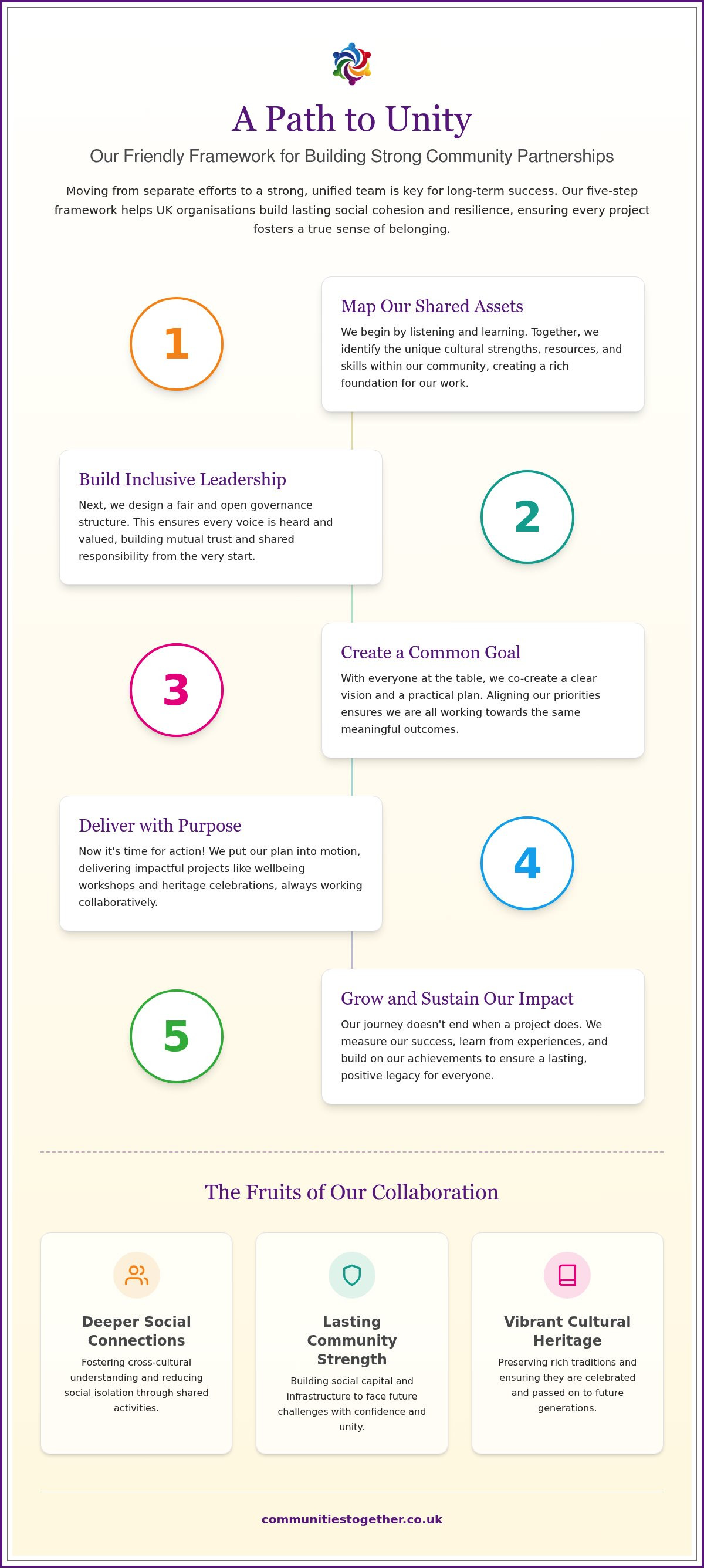
Establishing a robust community partnership model requires a deliberate shift from individual group interventions to a unified, collective infrastructure that supports long-term stability and social responsibility. This transition ensures that local resources aren't merely shared but are strategically integrated to foster structural strength, enhance social delivery, and promote togetherness across West Yorkshire. By following a methodical five-step process, organisations can facilitate a move towards more resilient social frameworks that align with the national strategy for social cohesion. This framework includes identifying cultural assets, designing inclusive governance, facilitating skill-sharing, monitoring social impact, and securing long-term sustenance for the collective benefit of all residents.
Central to this framework is the concept of community capacity building UK practitioners use to empower smaller grassroots groups. This ensures that even the smallest organisations have the skills, confidence, and resources to participate as equal partners. When we invest in the professional literacy of local leaders, we create a stable foundation for community partnership models UK stakeholders can trust to deliver meaningful change. If you're looking to strengthen your local network, exploring our partnership and community capacity building services can provide the methodical support needed for collective growth.
Step 1: Identifying Stakeholders and Cultural Assets
The first step involves meticulously mapping local stakeholder groups in Huddersfield and Halifax to identify complementary strengths, uncover hidden heritage assets within South Asian communities, and develop inclusive outreach strategies. We must recognise that cultural assets aren't just physical landmarks; they're the stories, traditions, and lived experiences that define our Yorkshire towns. By utilising techniques that prioritise genuine engagement, we can avoid gatekeeping behaviours and ensure that the project reflects the authentic needs of the people it serves. This phase is about building trust, establishing a baseline of mutual respect, and identifying the unique threads of the social fabric that we intend to weave together.
Step 2: Designing Inclusive Governance and Delivery Models
Governance models must be flexible enough to accommodate varying levels of community involvement whilst maintaining total transparency in resource allocation and decision-making. Using co-design principles ensures that projects are developed with local people rather than for them, creating a sense of shared purpose and accountability that lasts beyond the initial funding period. It's about creating a professional conduit for growth where every partner, regardless of their size, has a voice in the strategic direction of the initiative. This methodical approach ensures that the delivery model is grounded in reality, responsive to local challenges, and capable of achieving measurable effects on society.
Leveraging South Asian Arts and Heritage for Social Cohesion
South Asian arts and heritage act as a vital conduit for cross-cultural dialogue, allowing communities to share narratives that transcend linguistic and social barriers whilst building a foundation for mutual respect. By implementing sophisticated community partnership models UK facilitators can ensure these cultural activities are not merely performative but are deeply integrated into the local social fabric to promote togetherness, understanding, and long-term stability. A systematic review of local government partnership models demonstrates that when local authorities and community groups align through shared cultural values, the resulting social interventions are markedly more effective and sustainable. Within this strategic landscape, community-led heritage projects UK initiatives provide a methodical way to protect our shared history whilst fostering a sense of collective endurance that is both resilient and inclusive.
Cultural Participation as a Tool for Wellbeing
Engaging in South Asian heritage activities offers a profound link to individual mental resilience, providing participants with a sense of purpose and belonging that is essential for long-term health. Workshops in Leeds and Bradford utilise traditional South Asian arts, such as intricate calligraphy, textile weaving, and classical music, to foster modern resilience and personal growth amongst diverse populations. These non-clinical interventions are meticulously designed to reduce social isolation, build specialised skills, and enhance the emotional endurance of individuals who may otherwise feel disconnected from their local surroundings. Heritage workshops bring disparate age groups together by establishing a shared space where the wisdom of elders is honoured and the fresh perspectives of the youth are celebrated, creating a rhythmic exchange of knowledge that strengthens the entire community fabric.
Preserving Traditions whilst Innovating for the Future
Maintaining cultural continuity requires a delicate balance between authentic preservation and contemporary artistic expression within the West Yorkshire landscape, ensuring that traditions remain relevant for modern audiences. Collaborative projects often employ digital archiving and oral history to capture the nuanced lived experiences of South Asian communities, facilitating a process where personal stories become part of a larger, collective narrative of endurance. This methodical approach to heritage preservation encourages a broader cultural exchange where different communities can learn from and appreciate South Asian traditions, promoting a sense of harmony and shared identity. By facilitating these exchanges, we don't just look backward; we build a stable foundation for a future where cultural diversity is recognised as a primary source of structural strength for the UK.
Overcoming Common Barriers in Collaborative Community Projects
Whilst the perceived administrative burden of collaboration often deters individual organisations from pursuing joint ventures, the long-term benefits of shared accountability and increased social delivery far outweigh the initial investment of time. Working in isolation can sometimes feel faster in the short term, yet the absence of a wider support network often leads to a lack of long-term resilience and a higher risk of project fatigue. By adopting formalised community partnership models UK leaders can navigate the specific regulatory requirements of local authorities in Leeds and Bradford whilst ensuring that their projects remain responsive to the needs of the people they serve. Success in this arena requires a methodical approach to both resource management and professional literacy amongst project facilitators, creating a stable foundation for collective growth and social responsibility.
Managing Resource Scarcity and Funding Gaps
Moving beyond a reliance on traditional grants involves a strategic exploration of shared physical assets and collective volunteer capacity, which effectively builds a more stable foundation for social growth. Major UK funders increasingly view collaborative bids as more attractive because they demonstrate a unified commitment to social responsibility and a reduced risk of service duplication. This collective approach allows for a more efficient allocation of limited resources, ensuring that community priorities are met without compromising the quality of delivery. Utilising shared office spaces and collective equipment stores in Halifax significantly lowers individual project costs whilst fostering a culture of mutual support and togetherness amongst local groups. By facilitating the sharing of infrastructure, we don't just save money; we build a more interconnected and resilient voluntary sector that can withstand future economic challenges with confidence.
Bridging the Skills Gap in Local Initiatives
Identifying the specific training needs of volunteers is a critical component of maintaining a high standard of community engagement and project delivery. Implementing a robust skills and personal development UK framework allows local initiatives to cultivate the leadership qualities necessary for managing complex, multi-stakeholder environments. We must encourage formal mentorship between established regional organisations and emerging grassroots start-ups to ensure that professional expertise is shared rather than siloed, promoting a sense of harmony and shared identity. This methodical investment in personal development empowers individuals to take ownership of their local heritage projects, ensuring that the skills gained remain within the community for the benefit of future generations. Through continuous learning and skills training, we can facilitate a more professional, capable, and earnest approach to community development that values tradition and progress in equal measure.
Partnering for Impact: How Communities Together Facilitates Growth
Communities Together serves as a dedicated facilitator for South Asian arts engagement across West Yorkshire, providing the stable foundation and professional expertise required to transform local initiatives into sustainable social assets. Our commitment to building long-term resilience involves a methodical approach to partnership, where we act as a principled expert to ensure that every project facilitates growth, maintains cultural continuity, and achieves measurable social delivery. By implementing sophisticated community partnership models UK organisations can trust, we bridge the gap between initial community aspirations and the establishment of a robust, collective infrastructure that supports togetherness and social responsibility. We welcome local groups in Huddersfield and Leeds to explore how our collaborative framework can enhance their project's impact and durability whilst fostering a genuine sense of belonging for all residents.
Our Approach to Capacity Building and Engagement
Our approach to capacity building focuses on strengthening the internal infrastructure of local groups, ensuring they possess the professional literacy and confidence to manage complex heritage and engagement programmes. We provide a unique combination of South Asian arts and heritage expertise, facilitating workshops and activities that celebrate tradition whilst addressing modern social challenges with earnest intent. By working closely with local groups to strengthen their internal infrastructure, we provide the necessary capacity building that enables smaller organisations to deliver high-impact social interventions using proven community partnership models UK stakeholders rely on for success. Recently, our work in Wakefield and Bradford has demonstrated the power of this methodical facilitation, resulting in increased community participation, strengthened social bonds, and a more resilient voluntary sector that values both tradition and progress in equal measure.
Taking the Next Step in Your Collaborative Journey
As you look toward the future of your local initiatives, we invite you to join our collaborative wellbeing workshops UK practitioners and residents use to foster individual resilience and collective harmony. These programmes are designed to integrate seamlessly into broader community strategies, providing participants with the skills and personal development needed to sustain impactful social change. We also offer comprehensive learning and skills development programmes for groups seeking to enhance their strategic delivery and partnership capabilities. Taking the next step in your collaborative journey ensures that your organisation remains a stable pillar of the community, capable of navigating the evolving landscape of 2026 with confidence and purpose. We're here to help you weave the threads of your local community into a resilient and vibrant social fabric.
Building a Resilient Future for Yorkshire Communities
As we navigate the legislative and social shifts of 2026, it's clear that the enduring strength of our local districts depends on our ability to facilitate deep-rooted connections that transcend individual group efforts. By embracing methodical community partnership models UK leaders can facilitate a transition from fragmented activities to a unified infrastructure that prioritises togetherness, structural strength, and cultural continuity. We've explored how integrating South Asian arts and heritage preservation into these frameworks doesn't just protect our shared history; it actively builds the social capital and emotional endurance necessary for our towns to thrive together for generations to come.
Our mission-driven approach has already fostered a proven impact across Huddersfield, Leeds, and Bradford, where we continue to act as dedicated specialists in South Asian heritage preservation and community resilience. We remain committed to acting as a stable foundation for local groups, providing the capacity building and professional facilitator expertise needed to maintain harmony and social responsibility across West Yorkshire. Together, we can ensure that every collaborative project delivers measurable benefits whilst honouring the rich traditions that define our vibrant region.
We look forward to supporting your collaborative journey and building a future where every community in Yorkshire feels empowered, interconnected, and resilient.
Frequently Asked Questions
What are some examples of collaborative community projects in the UK?
Collaborative community projects in the UK often involve cross-sector alliances, such as the Neighbourhood Boards established under the £5.8 billion Pride in Place Programme, where residents and local authorities co-design regeneration priorities. Another prominent example includes South Asian Heritage Month activities, which facilitate cultural exchange through shared arts and oral history projects to strengthen local social fabrics and ensure cultural continuity across diverse districts.
How do I find partners for a community project in West Yorkshire?
Finding partners in West Yorkshire requires identifying organisations with complementary, mission-driven goals in districts like Huddersfield, Halifax, and Leeds. You can engage with established facilitators who specialise in community engagement and South Asian arts to build the trust and shared accountability necessary for long-term success. Networking through local authority forums and voluntary sector hubs often reveals partners who possess the expertise to weave complex social threads together.
What funding is available for collaborative community projects in 2026?
In 2026, significant funding is available through the Pride in Place Programme, which offers up to £20 million per area over a decade for community-led priorities. Additionally, the £150 million Pride in Place Impact Fund and specific South Asian Heritage Month grants provide capital to kickstart local regeneration and cultural preservation initiatives that promote social cohesion and build long-term structural strength within our local infrastructure.
How can arts and heritage projects help reduce social isolation?
Arts and heritage projects reduce social isolation by creating shared creative spaces where residents connect through traditional crafts, textile weaving, or classical music. These non-clinical wellbeing interventions foster a sense of purpose and togetherness, helping individuals build the emotional endurance needed to overcome loneliness whilst celebrating their cultural identity. By facilitating intergenerational knowledge exchange, these projects ensure that residents of all ages feel a genuine sense of belonging.
What is community capacity building and why is it important?
Community capacity building is the methodical process of strengthening the internal infrastructure and professional literacy of local groups to ensure they can participate as equal partners in wider initiatives. It's essential for maintaining the stability of community partnership models UK stakeholders depend on, as it empowers grassroots leaders to manage resources, navigate complex regulations, and deliver impactful social outcomes with the quiet confidence of an established facilitator.
Can small grassroots groups lead a collaborative project?
Small grassroots groups can certainly lead collaborative projects, particularly under the new framework established by the English Devolution and Community Empowerment Act 2026. By facilitating skill-sharing and seeking mentorship from established organisations, these groups can build the structural strength required to lead inclusive, community-led delivery models. This leadership ensures that projects remain deeply rooted in the authentic needs and aspirations of the local community they serve.
How do we measure the success of a social cohesion initiative?
Success in social cohesion initiatives is measured by assessing the growth of bridging social capital, the diversity of participation levels, and the long-term sustainability of the project's impact. Methodical monitoring of these factors ensures that the initiative facilitates genuine togetherness and contributes to the collective endurance of the local community. We look for measurable effects on society, such as increased cross-cultural understanding and the preservation of shared heritage assets.
What role does South Asian heritage play in UK community projects?
South Asian heritage plays a primary role in UK community projects by providing a rich tapestry of traditions and narratives that facilitate cross-cultural understanding and mutual respect. Integrating these assets into community partnership models UK organisations use ensures cultural continuity, allowing diverse populations to find common ground whilst preserving unique identities. This inclusive approach acts as a professional conduit for collective growth, strengthening the social fabric of our towns and cities.


Comments