
Benefits of Cultural Heritage Education in Schools: Building Resilient Communities in 2026
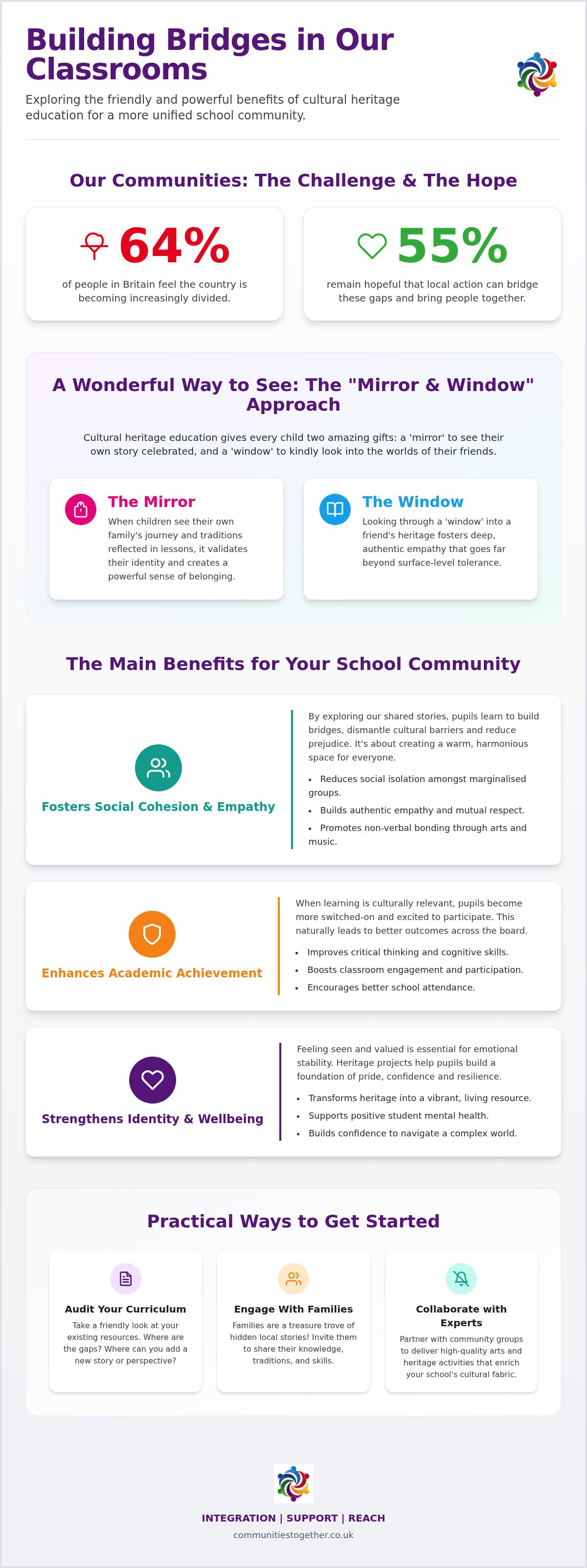
Did you know that as of early 2026, 64% of people in Britain feel the country is becoming increasingly divided, yet 55% remain hopeful that local action can bridge these gaps? As an educator or community leader, you likely recognise the weight of this responsibility whilst navigating the pressure of the new 2026 Ofsted inclusion judgements and the constant challenge of securing resources for diverse heritage projects. We understand that fostering a sense of belonging in a fragmented urban landscape requires more than just a standard lesson plan; it demands a dedicated commitment to the shared stories that define our collective identity. By exploring the multi-faceted benefits of cultural heritage education in schools, you'll discover how these initiatives act as a strategic pillar for social resilience, serving to facilitate empathetic growth, encourage academic excellence, and promote community harmony. This article provides a thorough examination of how heritage education fosters social cohesion, enhances pupil engagement, and strengthens the cultural fabric of schools across West Yorkshire to build a more resilient and unified future for all.
Table of Contents
Understanding the Transformative Benefits of Cultural Heritage Education
Fostering Social Cohesion and Empathy amongst Diverse Student Groups
Enhancing Academic Achievement and Cognitive Development through Heritage Learning
Practical Strategies for Integrating Cultural Heritage into the School Curriculum
Collaborative Partnerships: How Communities Together Supports Schools in West Yorkshire
Understanding the Transformative Benefits of Cultural Heritage Education
We're so glad you're joining us to explore how we can make our schools feel like a true home for every student. Cultural heritage education is a lovely, inclusive journey that brings together the physical treasures of our past with the living traditions we carry in our hearts today. It's about much more than just looking back; it's a warm and thoughtful way to help our students feel they truly belong whilst encouraging a deep sense of mutual respect right inside the school gates. When we talk about understanding multicultural education, we're really talking about celebrating the unique spark every child brings to the classroom. By embracing these ideas, we can ensure the benefits of cultural heritage education in schools create a welcoming space where everyone feels valued, connected, and understood.
Beyond History Books: What is Living Heritage?
Living heritage is so much more than what's found in a dusty textbook; it's the vibrant, active way we participate in our culture through music, storytelling, and beautiful crafts. For our wonderful schools in West Yorkshire, this often means bringing South Asian arts to life, reflecting the real, everyday experiences of our pupils in places like Bradford, Leeds, and Huddersfield. It's a joy to see students move from just reading about the past to actually shaping their own community's story. Simply put, living heritage is the friendly bridge that connects our ancestral roots with the busy, contemporary lives we lead today.
The Role of Heritage in Modern UK Schools
In today's classrooms, this kind of learning fits perfectly with what's expected for a child's personal development and social understanding, especially under the 2026 Ofsted framework. By sharing inclusive stories that represent everyone in a diverse classroom, we can help our young people feel less isolated and much more connected to their friends and neighbours. This approach helps us meet the latest standards whilst keeping our focus on what really matters: the happiness and growth of our children. If you'd like to see how this fits into the bigger picture across the country, do take a look at our guide on Cultural Heritage Preservation in the UK. It's all about building a supportive foundation where every student has the chance to grow and shine together.
Fostering Social Cohesion and Empathy amongst Diverse Student Groups
By facilitating shared projects that explore our collective past, schools can effectively dismantle cultural barriers, reduce deep-seated prejudice, and promote a more harmonious environment for every pupil. This process is often understood through the "mirror and window" theory, where students find themselves reflected in the curriculum whilst simultaneously gaining a clear view into the lived experiences of their peers. When a child sees their family's journey acknowledged in the classroom, it validates their identity and creates a sense of belonging that is essential for emotional stability. Conversely, looking through the "window" into another's heritage fosters a deep, authentic empathy that transcends surface-level tolerance. The benefits of cultural heritage education in schools are most evident when these dual perspectives help to reduce social isolation amongst marginalised groups, ensuring that no student feels like an outsider in their own place of learning. In urban centres like Bradford or Leeds, understanding local South Asian heritage builds a foundation of pride and resilience that allows young people to navigate a complex world with confidence and grace.
Building Bridges through South Asian Arts and Culture
Creative activities involving traditional music, intricate textile arts, or classical dance serve as powerful facilitators for non-verbal communication and bonding amongst students who may speak different primary languages. These artistic expressions allow pupils to celebrate diversity whilst discovering the common ground found in shared human experiences, such as the joy of storytelling or the precision of craft. By engaging in these tactile and rhythmic traditions, schools can actively support the social cohesion through arts initiative, which seeks to weave disparate community threads into a stronger, more resilient social fabric. This methodical approach to cultural participation ensures that schools remain vibrant hubs of togetherness rather than isolated learning centres.
Strengthening Community Resilience through Collective Identity
There are significant psychological benefits for students who perceive that their family heritage is genuinely valued by their educational institution, leading to increased self-esteem and a stronger commitment to their studies. According to UNESCO on living heritage in education, integrating these traditions into the learning environment is a vital step in building stronger community connections and fostering a sense of pride. This sense of "collective endurance" is crucial for maintaining long-term community stability in our diverse urban districts, as it encourages the formation of supportive local networks that can withstand social pressures. When we invest in these programmes, we are not just teaching history; we are facilitating the structural strength of our society. If you are looking for ways to implement these strategies, consider exploring our community engagement programmes to see how we can support your school's unique journey toward harmony.
Enhancing Academic Achievement and Cognitive Development through Heritage Learning
Integrating heritage into the classroom isn't just about social harmony; it's a powerful catalyst for cognitive growth that sharpens analytical minds and fosters a genuine love for learning. When we employ culturally relevant pedagogy, we create an environment where students feel seen and valued, which naturally leads to higher rates of attendance, deeper classroom engagement, and a more vibrant academic culture. One of the significant benefits of cultural heritage education in schools is how it transforms abstract curriculum standards into tangible, lived experiences that resonate with a child's own identity. By facilitating projects that require students to research their own lineages, interview community elders, and synthesise complex historical narratives, we help them develop a robust suite of transferable skills that serve them across all subjects. This interdisciplinary approach ensures that heritage learning doesn't take time away from core subjects but rather enriches them by providing a meaningful context for literacy, numeracy, and social studies.
Boosting Literacy and Communication Skills
Oral history projects offer a uniquely supportive space where students can practice their speaking and listening skills in a friendly, low-pressure environment that celebrates their personal stories. By valuing bilingualism and heritage languages within the classroom, we empower pupils to see their linguistic diversity as a strength that enhances their cognitive flexibility and communication prowess. We've seen how storytelling projects in Leeds schools have significantly improved student confidence by giving young people the platform to articulate their heritage with pride and clarity. These activities help students find their voice whilst building the structural strength of their literacy skills through authentic, purposeful communication.
Critical Thinking and Historical Enquiry
Analysing local heritage sites, such as the historic textile mills in Huddersfield, allows students to connect their immediate surroundings to broader global themes of industry, migration, and social change. This methodical enquiry encourages pupils to engage with multi-perspective history, which is vital for developing the mature, empathetic thinking required to navigate our modern world. Such projects help students understand that history is not a single narrative but a collection of diverse voices, facilitating a deeper level of intellectual maturity and social awareness. To learn more about how these activities support broader growth, you can explore our guide on Skills and Personal Development UK. By building these analytical foundations, we ensure that the benefits of cultural heritage education in schools extend far beyond the classroom, preparing students for a lifetime of informed citizenship and professional success.
Practical Strategies for Integrating Cultural Heritage into the School Curriculum
Bringing these wonderful stories into your daily school life is a truly rewarding journey that doesn't have to feel like extra work. It's all about finding those natural, friendly spots in your current lessons where heritage can shine through and make learning feel more personal for every child. One of the most heartening benefits of cultural heritage education in schools is how it transforms the classroom into a space where every student's background is a cause for celebration. By taking a few simple, thoughtful steps, you can start weaving these traditions into your school's unique personality whilst making sure everyone feels included and heard. We're here to help you find the best way forward for your staff and your lovely community of learners.
Step 1: Finding natural spots for heritage. Take a friendly look through your current plans in subjects like Geography, RE, or Art to see where these beautiful stories fit best.
Step 2: Listening to our families. Reach out to your school's parents and carers to uncover the "hidden" treasures and personal histories that they might love to share.
Step 3: Joining forces with friends. Work together with local groups like Communities Together to bring in friendly experts who can lead hands-on workshops.
Step 4: Sharing the magic. Put together a "Living Museum" or a simple showcase where the whole neighbourhood can come and see what the children have discovered.
Step 5: Gathering heartfelt feedback. Have a little chat with your students and families to see what they enjoyed most, which helps you keep these programmes going for years to come.
Developing Inclusive Community Programmes
There's something truly special about inviting community elders into the classroom to share their South Asian heritage through music or storytelling. These visits create a warm, supportive atmosphere where children can learn directly from those who carry our traditions with pride. If you're based in Huddersfield or Halifax, you might consider organising a "Heritage Day" that focuses on the stories of our local area. It's a fantastic way to ensure every activity feels welcoming and celebrates the diverse mix of families that make our West Yorkshire schools so vibrant and full of life.
Utilising Digital Tools for Heritage Preservation
We can also use some clever digital tools to keep these precious memories safe for the future. Encouraging your students to create their own podcasts or digital stories is a brilliant way to document local heritage whilst building their confidence and tech skills. These projects help preserve the rich South Asian arts heritage of West Yorkshire in a way that's fun and engaging for young people. Plus, these activities are a wonderful part of our broader community capacity building UK goals, as they help our students become the proud guardians of their own history.
Collaborative Partnerships: How Communities Together Supports Schools in West Yorkshire
We'd love to walk alongside you as a friendly partner to help bring heritage to life in your school. At Communities Together, we're truly passionate about helping schools across West Yorkshire celebrate South Asian arts and culture in a way that feels natural, joyful, and deeply personal. We see ourselves as supportive friends who can help connect your busy classroom with the wonderful community resources and stories that are waiting just outside your gates. By working together, we can help you unlock the real benefits of cultural heritage education in schools, creating a welcoming space where every child feels they have a special and valued place in our shared story. Our team is here to support your headteachers and community leads with workshops that focus on building togetherness and helping our young people feel strong, proud, and connected.
Bespoke South Asian Heritage Projects for Schools
Our team loves visiting schools across the Leeds, Bradford, and Wakefield districts to share our colourful and engaging workshops. We've designed these sessions to be incredibly welcoming and inclusive, ensuring that every child—no matter their family background—feels comfortable and excited to join in the fun. These projects are a big part of our collaborative wellbeing workshops UK, where we use heritage as a gentle, creative tool to help students feel more settled and confident in their own skin. It’s all about creating those happy moments of discovery and connection that stay with a child for a lifetime.
Building Capacity for Long-Term Impact
We're not just here for a one-off visit; we really want to help your school feel confident in leading these heritage journeys yourselves for years to come. As a non-profit that cares deeply about our local area, we're here to cheer you on and provide the friendly support you need to keep these stories alive and thriving in your curriculum. We believe that when schools and community groups walk hand-in-hand, we create a much more supportive and resilient world for our children to grow up in. It would be our absolute pleasure to have a chat and explore how we can support your school's unique needs and help your students shine.
Building a Unified Future through Shared Heritage
Embracing the benefits of cultural heritage education in schools is a vital step toward creating a more harmonious and empathetic society across the Huddersfield, Leeds, and Bradford districts. By facilitating shared projects that value South Asian arts and local history, schools can effectively bridge cultural divides whilst boosting student confidence, academic engagement, and a sense of collective identity. As non-profit community engagement experts, we've seen how these initiatives provide a stable foundation for collective growth, social responsibility, and the structural strength of our local neighbourhoods. Our specialists in South Asian arts and heritage are dedicated to supporting social cohesion through professional workshops that empower students to become the methodical custodians of their own stories. We're here to help you weave these vibrant traditions into the fabric of your curriculum, ensuring every child feels a deep, authentic sense of belonging.
We look forward to partnering with you to build a more resilient and inclusive future for all our young people.
Frequently Asked Questions
What are the main benefits of cultural heritage education for primary school children?
The primary benefits of cultural heritage education in schools for primary-aged children include the development of a secure sense of personal identity and the facilitation of early-years empathy through shared storytelling. By engaging with both tangible and intangible traditions, younger pupils learn to appreciate the diverse threads of their local community, which helps to reduce social isolation from an early age. This methodical approach fosters a lifelong respect for cultural continuity and communal togetherness.
How can heritage education improve social cohesion in diverse urban areas like Bradford?
Heritage education improves social cohesion in urban centres by providing a methodical framework for students to discover shared human experiences and common historical narratives. In districts like Bradford, these programmes act as an authoritative bridge between disparate community groups, facilitating open dialogue and reducing prejudice through the celebration of local South Asian contributions. This collaborative process ensures that the school acts as a stable foundation for togetherness and long-term community harmony.
Is cultural heritage education part of the UK National Curriculum for 2026?
While it isn't a standalone subject, cultural heritage education is deeply integrated into the 2026 UK National Curriculum through the requirement to build "cultural capital" and meet new Ofsted standalone inclusion judgements. Schools are expected to facilitate personal development by ensuring students possess the social literacy and diverse knowledge needed for life in modern Britain. This methodical approach ensures that heritage remains a vital resource for meeting national educational standards whilst fostering social responsibility.
Can schools in Leeds partner with community organisations for heritage projects?
Schools in Leeds and the wider West Yorkshire region are actively encouraged to partner with community organisations to deliver high-quality heritage projects, especially under the 2026 Enrichment Framework. These collaborations allow schools to access specialised expertise in South Asian arts and heritage, facilitating workshops that are both professionally facilitated and deeply rooted in local history. Such partnerships help to build community capacity and ensure that heritage learning is authentic, inclusive, and sustainable for the long term.
How does South Asian heritage education benefit students from other backgrounds?
South Asian heritage education provides a vital "window" for students from all backgrounds to understand the diverse cultural threads that define their local neighbourhood in West Yorkshire. By exploring traditional music, textile arts, and oral histories, every pupil develops a more sophisticated global perspective and a deeper sense of empathy for their peers. This inclusive approach ensures the benefits of cultural heritage education in schools are felt by the entire student body, fostering mutual respect and social harmony.
What practical activities can teachers use to introduce cultural heritage in the classroom?
Teachers can employ various methodical activities such as recording oral histories from community elders, creating "living museums" of family artefacts, or developing digital storytelling podcasts to document local traditions. These hands-on projects allow students to become active contributors to their community's narrative whilst building essential skills in research, communication, and critical thinking. Facilitating these creative sessions ensures that heritage remains a vibrant, living resource that enriches the overall learning environment for every child.
How does heritage learning support student wellbeing and resilience?
Heritage learning supports student wellbeing by validating a pupil's family history and fostering a profound sense of belonging that is essential for emotional stability. When students feel their heritage is respected by their institution, they develop a stronger "collective endurance" and a more resilient sense of self. This methodical focus on identity and inclusion helps to reduce social isolation and promotes a more supportive and reassuring school atmosphere that benefits the entire community.
Are there grants available for school-based cultural heritage projects in West Yorkshire?
Various funding streams are available for school-based heritage projects in West Yorkshire, including the Heritage Schools programme funded by the DCMS and annual National Lottery funding provided through Arts Council England. Additionally, the 2026 Enrichment Framework includes investment specifically designed to assist schools in deprived areas with cultural and creative activities. We recommend checking current government planning and local authority guidelines to identify the most appropriate financial support for your specific community engagement initiative.


Comments