
What is Community Cohesion? A Guide to Building Stronger Neighbourhoods in 2026
Updated: Aug 15
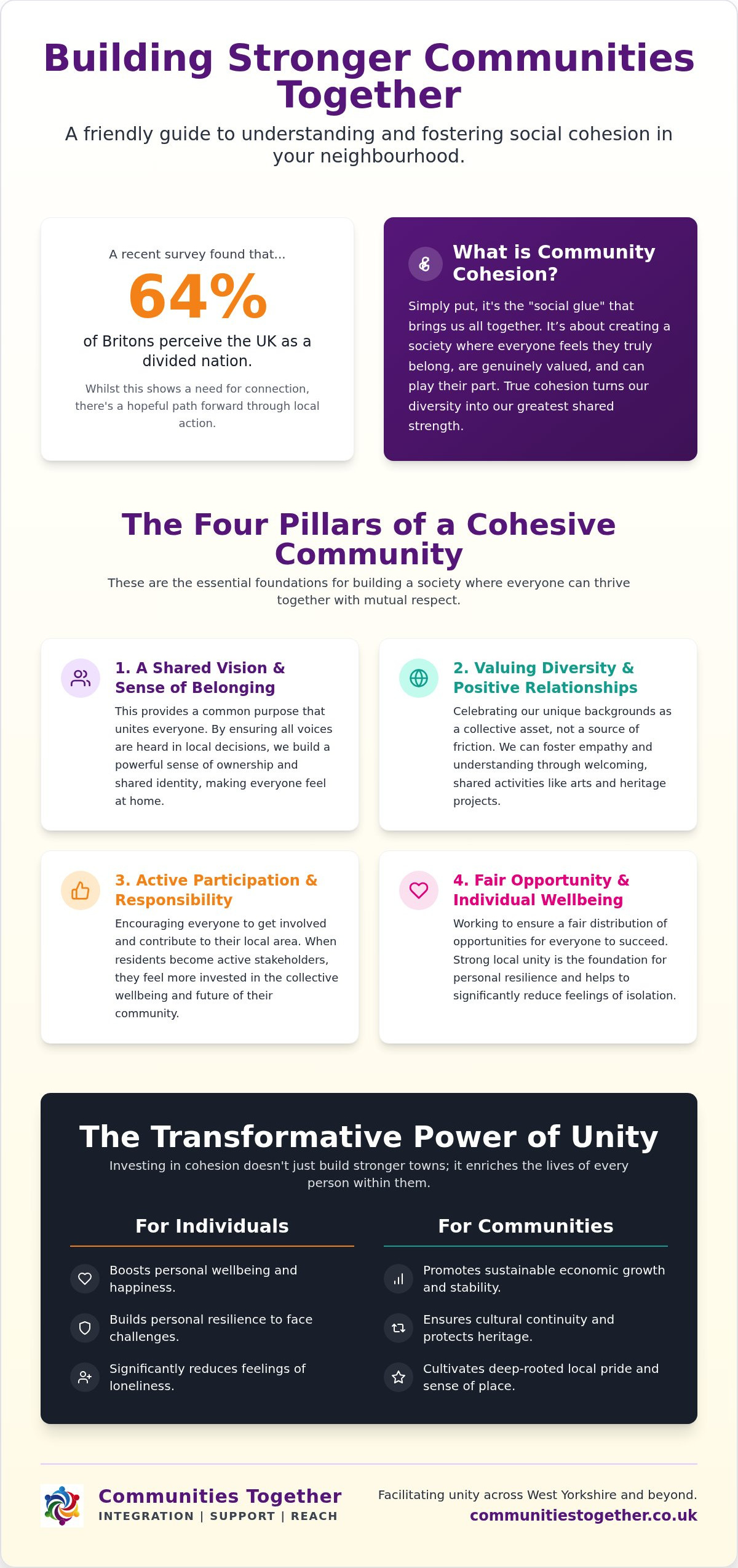
Whilst 64% of Britons currently perceive the United Kingdom as a divided nation, a statistic that highlights a growing sense of social fragmentation, the true strength of our society often resides in the quiet, local efforts that foster togetherness. It's natural to feel a sense of concern regarding these social divisions or to feel alienated by the complex "policy speak" that often surrounds government initiatives. You're likely seeking a clearer understanding of what is community cohesion and how it translates into the everyday life of your own street, park, or community centre.
This guide serves as a professional roadmap to help you discover how shared heritage projects, inclusive arts initiatives, and local resilience programmes work together to create a lasting sense of belonging for everyone. We'll examine the practical frameworks of the 2026 Social Cohesion Action Plan. We'll also offer tangible ideas for community projects that build structural strength, ensure cultural continuity, and encourage collective endurance. By the end of this article, you'll have a comprehensive overview of how to facilitate unity, providing a sense of hope and a clear path forward for strengthening the social fabric of your neighbourhood.
Table of Contents
Defining Community Cohesion in the Modern UK Context
Understanding community cohesion is essential for anyone interested in the structural health of our neighbourhoods, as it describes the complex bonds that tie a diverse society together in a state of sustainable harmony. At its core, the answer to what is community cohesion involves a shared vision where every individual feels they truly belong, are genuinely valued, and possess the agency to contribute to their local area. It acts as the "social glue" that allows different groups to live and work together whilst celebrating their unique identities, ensuring that diversity is viewed as a collective asset rather than a source of friction. By fostering an environment where individuals from varied cultural, economic, and social backgrounds can interact with purpose, we create a network of support that enhances public safety, promotes economic growth, and secures cultural continuity.
The Origins and Evolution of the Term
The concept gained significant prominence following a period of urban disturbances in the early 2000s, which highlighted the risks of communities living "parallel lives" and the urgent need for meaningful interaction between different backgrounds. Since that period, the focus has shifted from a simple model of integration towards a more sophisticated framework of shared belonging, mutual respect, and social responsibility. The 2026 Social Cohesion Action Plan, titled "Protecting What Matters," reflects this evolution by prioritising local resilience and the protection of shared values in an increasingly complex world. Modern cohesion strategies now recognise that social bonds are maintained through active participation, consistent dialogue, and the fair distribution of opportunities across all demographics. Today, the definition of cohesion has expanded to encompass digital community spaces, ensuring that our online interactions foster the same sense of safety, inclusivity, and belonging as our physical neighbourhoods.
Why Cohesion Matters for our Local Towns
In local West Yorkshire towns such as Huddersfield, Halifax, and Leeds, building strong social bonds is not merely a theoretical exercise but a practical necessity for long-term stability. Strong community ties act as a vital buffer against economic challenges, social disturbances, and the feeling of isolation that can affect residents during times of uncertainty. When we invest in facilitating community engagement, we're essentially building local pride, enhancing resilience, and creating a sturdy foundation for future generations to inherit. It's through these local connections that we see the greatest impact on individual wellbeing and collective strength. By supporting South Asian arts and heritage projects or local skills workshops, we help residents to find common ground, share their unique stories, and develop a deep-rooted sense of pride in their local area.
The Four Pillars of a Cohesive and Inclusive Community
To move from a theoretical understanding of what is community cohesion to its practical application, we must examine the four foundational pillars that support a stable and inclusive society. These pillars act as a structural framework, ensuring that social bonds are not left to chance but are methodically built, facilitated, and maintained through deliberate action. This approach is consistent with current UK integration and cohesion policy, which highlights the necessity of creating environments where residents from all backgrounds can thrive together. By focusing on these core areas, local authorities and community groups can address the root causes of division whilst fostering a culture of mutual respect and shared responsibility.
Developing a Shared Vision and Belonging
Establishing a common vision is perhaps the most critical step in building a resilient neighbourhood, as it provides a sense of direction and purpose that transcends individual differences. This process involves creating inclusive spaces where every voice is heard and respected amongst peers, ensuring that even those who feel marginalised have a platform to contribute. Encouraging participation in local decision-making helps to build a sense of ownership, turning residents into active stakeholders who are invested in the collective wellbeing of their area. Our community engagement programmes UK are designed to facilitate this vision by providing the professional expertise needed to bridge gaps between different social groups, thereby strengthening the social fabric through collaborative effort and shared achievement.
Equally important are the pillars of similar life opportunities and positive relationships, which ensure that cohesion is grounded in fairness and empathy. True unity is impossible if certain groups face systemic barriers to health, education, or employment, making the pursuit of equity a central component of any cohesion strategy. When people from diverse backgrounds interact in positive, non-superficial ways, they develop the trust and understanding required to challenge stereotypes and build lasting friendships. It's about creating a "social glue" that is strong enough to withstand external pressures, facilitating a community where everyone has the chance to succeed whilst feeling deeply connected to those around them.
Valuing Diversity whilst Building Unity
A cohesive community doesn't require individuals to abandon their unique identities; instead, it thrives on the active appreciation of different cultural backgrounds as a source of collective strength. Moving beyond mere tolerance, we should aim for a society where unique traditions are celebrated as part of our shared heritage, a practice that actually strengthens the overall "whole" by fostering a deeper sense of mutual curiosity and respect. Practical examples of this can be found in inclusive festivals and heritage events in Bradford and Wakefield, where South Asian arts and local history projects provide a neutral ground for residents to connect and share their stories. These initiatives are vital for maintaining cultural continuity and building the collective endurance needed to navigate modern challenges. If you're interested in developing similar projects, our team is available for partnership and community capacity building to help turn your local vision into a reality.
Strengthening Social Bonds Through Cultural Heritage and Arts
Cultural heritage and the arts serve as powerful, non-confrontational vehicles for social integration, providing a neutral ground where diverse groups can connect through shared human experiences. When we examine what is community cohesion in a practical setting, we often find it flourishing within creative spaces that encourage residents to step outside their immediate social circles and engage with the unfamiliar. By facilitating shared creative projects, local organisations help to reduce prejudice, foster mutual understanding, and build the empathy required for a truly inclusive society. These activities don't just produce art; they produce the structural strength needed to sustain a harmonious neighbourhood over the long term. This collaborative environment ensures that every participant, regardless of their background, feels a sense of purpose and accountability toward the collective wellbeing of their town.
The Role of South Asian Arts in West Yorkshire
Heritage Projects as a Tool for Connection
Local history offers a unique opportunity to find common threads between immigrant and host communities, revealing shared struggles, triumphs, and aspirations that might otherwise remain hidden. Through community-led heritage projects UK, we empower marginalised voices to take ownership of their history, ensuring their contributions to the local area are recognised and celebrated by all. This process of cultural preservation is essential for neighbourhood stability, as it fosters a sense of local pride and collective endurance amongst residents. By facilitating these connections, we don't just look back at the past; we build a more resilient future where what is community cohesion is defined by our ability to honour our differences whilst building a shared legacy. We invite you to join us in these efforts, as together we can build, facilitate, and maintain the strong foundations that every thriving community deserves.
The Vital Connection Between Cohesion and Individual Wellbeing
The relationship between a stable social environment and the psychological health of its residents is profound, as cohesive communities consistently report lower levels of social isolation and loneliness amongst their members. When we consider what is community cohesion from a wellbeing perspective, we're examining the invisible yet vital social infrastructure that facilitates individual endurance, promotes mental health, and secures collective strength. A deep-seated sense of belonging is a primary driver of personal resilience, providing residents with the emotional security needed to navigate the complexities of modern life. Community-led initiatives are uniquely positioned to offer these social support networks, often reaching individuals in ways that clinical services cannot by fostering genuine human connection, shared purpose, and mutual respect.
Reducing Isolation Through Social Connectivity
Structured wellbeing and resilience workshops serve as a critical foundation for residents in urban areas like Halifax and Huddersfield, creating a welcoming space where lasting friendships can flourish through shared activity and mutual support. These programmes are designed to facilitate social connectivity, offering a proactive approach to mental health that prioritises togetherness, stability, and cultural continuity. By providing a platform for residents to connect outside of their immediate households, we help to dismantle the barriers of isolation that often lead to poor health outcomes. Social connectivity acts as a buffer for mental health, providing a protective layer of support that helps individuals withstand the pressures of economic or social challenges whilst building a network of peers who share similar life experiences.
Building Resilience in Diverse Neighbourhoods
Empowering individuals with the tools to navigate social change is essential for maintaining the overall harmony of a town, as resilient people are better equipped to contribute to a stable and cohesive whole. The role of skills and personal development UK programmes is paramount in this regard, as they provide residents with the opportunity to learn new crafts, gain vocational skills, and build the confidence required for greater employability. When an individual gains new skills, they don't just improve their own prospects; they enhance the capacity of their entire community to adapt, grow, and thrive in an ever-evolving landscape. This methodical approach to capacity building ensures that what is community cohesion remains a lived reality, where personal growth and social unity go hand in hand. We believe that every resident deserves to feel supported, heard, and valued within their local area, creating a supportive ecosystem where everyone is appreciated for their unique contributions.
How Communities Together Initiatives Foster Lasting Unity
Communities Together serves as a methodical advocate and authoritative bridge-builder, translating the abstract concept of what is community cohesion into measurable social impact across the vibrant regions of West Yorkshire. By acting as a professional conduit for collective growth, we ensure that our initiatives are not merely short-term activities but sustainable foundations for harmony, stability, and social responsibility. Our organisation operates with the quiet confidence of an established facilitator, prioritising long-term social benefits over temporary excitement to ensure that the social fabric of our local towns remains resilient and inclusive. We believe that by providing a stable foundation for others to build upon, we can weave together the diverse threads of our society to create a more harmonious and supportive environment for everyone.
Our Approach to Capacity Building and Partnerships
We prioritise the structural strength of our local neighbourhoods by focusing on community capacity building UK, a process that empowers grassroots organisations to become sustainable, effective, and self-reliant. By partnering with local authorities and stakeholders in Bradford and Leeds, we deliver inclusive programmes that address specific local needs whilst maintaining a high degree of professional accountability and purpose. Supporting these groups allows us to strengthen local infrastructure, facilitate meaningful dialogue, and ensure that the expertise to maintain what is community cohesion remains within the community itself. This methodical approach involves providing the necessary training, resources, and skills to facilitate long-term resilience, cultural continuity, and collective endurance amongst all residents.
Get Involved: Building a Brighter Future Together
Creating a more cohesive West Yorkshire requires the active participation of residents, partners, and governing bodies alike, and we offer numerous opportunities for you to contribute to this vital mission. Whether you're interested in joining our South Asian arts and heritage activities, participating in our wellbeing workshops, or developing new vocational skills, your involvement helps to strengthen the bonds that tie our society together in harmony. We invite you to partner with Communities Together for local engagement initiatives that celebrate our diverse identities whilst building a shared sense of place and local pride. By working together, we can ensure that every individual feels they belong, are valued, and possess the agency to shape a brighter, more united future for our neighbourhoods. Joining this movement allows us to build, facilitate, and maintain the strong foundations that every thriving community deserves, ensuring that our towns remain places of opportunity and respect for generations to come.
Building a Resilient Future Across West Yorkshire
Strengthening the social fabric of our local neighbourhoods requires a methodical and collaborative approach that prioritises shared belonging, mutual respect, and the active preservation of our diverse cultural heritage to ensure long-term stability. We've explored how a clear understanding of what is community cohesion moves us beyond abstract policy speak and towards practical local action, ensuring that every resident in Huddersfield, Halifax, Leeds, Bradford, and Wakefield feels genuinely valued, heard, and supported within their immediate environment. By facilitating inclusive arts projects and wellbeing workshops, we provide the structural strength needed to reduce isolation, build collective endurance, and foster a lasting sense of pride amongst all community members. These efforts ensure that our towns remain stable, harmonious, and supportive environments for future generations to inherit.
As mission-driven facilitators specialising in South Asian heritage preservation, we're dedicated to acting as a professional bridge-builder and a reliable foundation for your local engagement goals. We believe that by working together, we can maintain the stability and cultural continuity our towns deserve whilst building a more inclusive and resilient society for everyone. Your participation is the vital thread that allows us to weave a stronger, more connected community fabric.
We look forward to facilitating a brighter, more united future with you and your neighbours.
Frequently Asked Questions
What is the main difference between community cohesion and social integration?
Social integration typically refers to the process by which individuals or minority groups adapt to the wider society, whilst community cohesion describes the broader bonds that tie a whole, diverse population together in harmony. Cohesion is a multi-directional concept that requires effort from all residents to build a shared vision and a sense of belonging for everyone. It focuses on the quality of relationships and the structural strength of the social fabric.
How can community cohesion be measured in a local area?
Local authorities often measure what is community cohesion by analysing survey data on how well people from different backgrounds get along in their immediate area. They also monitor levels of civic participation, the frequency of neighbourly interactions, and the degree of trust residents place in local institutions. These metrics help facilitators to identify areas that require additional support through capacity-building programmes or resilience workshops to ensure long-term stability.
Why is diversity considered a strength for community cohesion?
Diversity is considered a strength because it introduces a wealth of varied perspectives, skills, and cultural traditions that enhance the collective endurance and innovation of a town. When a neighbourhood values its differences, it builds a more robust social fabric that is better equipped to navigate economic challenges and social changes. Celebrating this variety ensures that what is community cohesion is rooted in genuine appreciation rather than mere tolerance or passive coexistence.
What are some practical examples of community cohesion projects?
Practical projects include inclusive arts festivals, shared heritage preservation workshops, and community-led gardening initiatives that encourage residents to work toward a common goal together. In West Yorkshire, successful examples often involve South Asian heritage storytelling or intergenerational skills exchanges that facilitate meaningful interaction between diverse groups. These projects provide a neutral space for building trust, sharing stories, and developing a collective sense of local pride and togetherness.
How does social isolation affect community cohesion?
Social isolation acts as a significant barrier to unity by preventing the formation of the trust, empathy, and mutual support networks necessary for a stable society. When residents feel disconnected from their neighbours, the "social glue" that maintains harmony begins to weaken, leading to increased misunderstanding and potential division. Addressing isolation through wellbeing workshops is essential for building the personal resilience required to support a healthy and cohesive whole.
Can arts and heritage projects really improve social unity?
Arts and heritage projects are highly effective because they provide a non-confrontational, creative platform for residents to connect through shared human experiences and collective achievements. By engaging in collective storytelling or traditional craft preservation, people from diverse backgrounds can find common ground and develop a sense of shared belonging. These initiatives foster cultural continuity and build the empathy needed to maintain long-term social harmony across different ethnic groups.
What is the role of local government in supporting community cohesion?
Local government provides the strategic leadership, funding frameworks, and policy guidance necessary to facilitate large-scale unity initiatives within our towns and cities. By implementing national strategies like the Social Cohesion Action Plan, they create a supportive environment for grassroots organisations to thrive and grow. Their role involves coordinating services, addressing systemic inequalities, and ensuring that resources are distributed fairly to support the structural strength of every local neighbourhood.
How can I start a cohesion project in my own neighbourhood?
To start a project, you should first identify a common interest or local need and begin facilitating informal conversations with your neighbours to build a core group of volunteers. Once you've established a shared vision, you can reach out to professional facilitators for guidance on partnership and community capacity building. Seeking support from established organisations allows you to access the expertise needed to secure funding, organise workshops, and maintain your project's impact.


Comments