
What is Community Cohesion? A Comprehensive Guide to Building Stronger Societies in 2026
Updated: 3 days ago
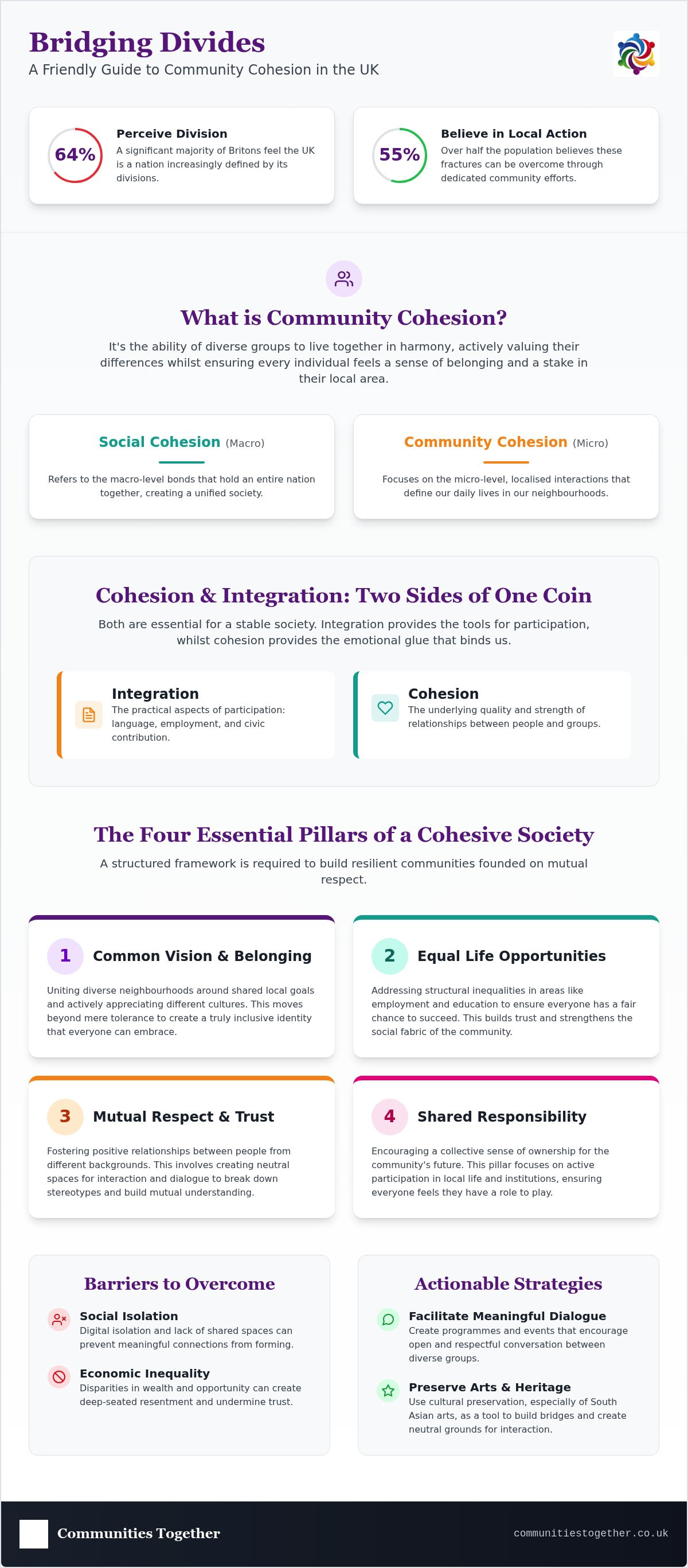
Whilst 64% of Britons currently perceive the United Kingdom as a nation increasingly defined by its divisions, there's a profound and enduring belief amongst 55% of the population that these social fractures can be overcome through the power of dedicated local action. We recognise that the path toward unity often feels obscured by academic jargon or the complex realities of urban life, yet the necessity of implementing effective community cohesion strategies UK wide has never been more urgent. By facilitating meaningful dialogue, maintaining cultural continuity, and fostering a sense of shared responsibility, we can begin to bridge the gaps that often separate diverse neighbourhoods.
You likely feel that the strength of our social fabric depends on more than just top-down policy, and you're right to seek practical frameworks that transform abstract concepts into tangible local improvements. This comprehensive guide is designed to clarify the vital distinction between cohesion and integration, providing you with actionable strategies for engagement whilst demonstrating how the preservation of South Asian arts and heritage can cultivate collective endurance. We'll explore the government's 2026 "Protecting What Matters" action plan, examine the role of wellbeing workshops in building resilience, and highlight how collaborative heritage projects create a stable foundation for long-term social harmony.
Table of Contents
Defining Community Cohesion in a Modern British Context
The concept of Community Cohesion emerged as a pivotal framework for British social policy following the civil unrest in northern towns during 2001, shifting the focus toward building a common vision, fostering mutual respect, and establishing a sense of belonging for all citizens. It's defined by the ability of diverse groups to live in harmony whilst actively valuing their differences, ensuring that every individual feels a stake in their local area regardless of their ethnic, religious, or socio-economic background. By prioritising these shared values, we create environments where people don't just coexist but thrive together through mutual respect, shared purpose, and collective growth.
To understand how to implement community cohesion strategies UK wide, it's essential to differentiate between social cohesion and community cohesion. Whilst social cohesion relates to the macro-level bonds that hold a whole nation together, community cohesion addresses the micro-level, localised interactions that define our daily lives in districts like Huddersfield or Leeds. It's found in the vibrancy of local community centres, the collaborative spirit of shared spaces, and the resilience of local networks that support one another during times of change. Community cohesion is a shared sense of belonging that transcends individual backgrounds to create a unified local identity.
The Distinction Between Cohesion and Integration
Whilst integration focuses on the practical aspects of participation in society, such as language proficiency, employment, and civic contribution, cohesion focuses on the underlying quality and strength of human relationships. Both are necessary for a stable, inclusive society because integration provides the necessary tools for engagement, whilst cohesion provides the emotional glue that prevents social fragmentation. We believe that integration supports cohesion most effectively when it doesn't demand cultural assimilation, allowing individuals to maintain their unique heritage whilst fully participating in a broader, inclusive British identity.
Why Cohesion Matters in 2026
In 2026, our societies face unprecedented challenges stemming from digital isolation, rapid economic shifts, and global uncertainty, all of which can exacerbate feelings of alienation and distrust. Building cohesion acts as a vital safeguard against these pressures, fostering the local resilience needed to navigate change and preventing the fragmentation of our social fabric. By investing in Strategic Community Engagement Programmes in the UK, organisations can facilitate the meaningful connections that turn diverse neighbourhoods into supportive, unified communities. This methodical approach ensures that stability is maintained, harmony is facilitated, and social responsibility is shared amongst all residents.
The Four Essential Pillars of a Cohesive Society
Achieving social harmony requires a structured framework built upon four foundational pillars that ensure resilience and mutual respect across all levels of society, especially when developing community cohesion strategies UK organisations can actually use. The first of these is a common vision and sense of belonging, which serves to unite diverse neighbourhoods in towns like Huddersfield and Halifax by focusing on shared local goals rather than individual differences. Recent research into the modern British context underscores that a cohesive society must move beyond mere tolerance toward an active appreciation of diverse cultural heritage and traditions. This involves celebrating the unique contributions of various groups, ensuring that cultural continuity is maintained whilst building a broader, inclusive identity that everyone can embrace.
Equally vital is the pursuit of equal life opportunities, as structural inequalities often undermine social bonds and create deep-seated resentment within fragmented areas. When people feel that their prospects are limited by their background, the social fabric weakens; therefore, effective community cohesion strategies UK organisations implement must address these disparities to foster genuine trust. Finally, the development of strong and positive relationships through cross-cultural interactions in schools, community centres, and workplaces provides the everyday connections that sustain unity. These interactions are the heartbeat of a neighbourhood, turning strangers into neighbours through shared experiences and collaborative efforts.
Building a Shared Sense of Belonging
In West Yorkshire, local landmarks and a shared industrial history often provide the narrative threads that weave a collective identity for residents. Whether it's the textile heritage of the Colne Valley or the architectural significance of the Piece Hall, these shared touchpoints make every community member feel like a stakeholder in their town's future. To support this, Community Capacity Building provides the essential infrastructure required to turn these inclusive narratives into practical, community-led initiatives. By strengthening local leadership and resources, we ensure that the sense of belonging is grounded in tangible progress and shared success.
Fostering Cross-Community Relationships
The "contact hypothesis" suggests that meaningful and frequent interaction between different groups significantly reduces prejudice and builds long-term empathy. To facilitate this, we recommend organising inclusive events, such as heritage workshops or community markets, that encourage natural dialogue amongst people from varied backgrounds. It's often helpful to involve professional facilitators who can manage these interactions, ensuring they remain positive and productive whilst navigating complex social threads. If you're looking to strengthen these bonds in your own area, our community engagement programmes offer a methodical approach to bringing people together through shared purpose.
Addressing Common Barriers to Genuine Community Integration
Identifying and dismantling the structural and social barriers that hinder unity is a critical component of any community cohesion strategies UK organisations seek to implement. Economic inequality often serves as a primary catalyst for fragmentation, where a perceived "difference of opportunity" leads to a profound lack of trust in local institutions, public services, and the broader democratic process. This sense of being left behind is frequently compounded by fragmented infrastructure, where local grassroots groups find themselves without the necessary capacity, technical skills, or financial resources to collaborate effectively on shared social projects. Aligning with the Local Government Association guidance on cohesion, we recognise that addressing these gaps requires a commitment to transparency, equity, and the proactive education of all residents regarding our shared and diverse backgrounds.
In diverse urban centres such as Bradford and Leeds, cultural misunderstandings often stem from a lack of heritage education, which can inadvertently foster suspicion and social distance between different ethnic groups. Without a methodical approach to sharing our collective histories, we risk the development of parallel lives where communities exist in proximity but without meaningful connection. It's essential that we facilitate spaces where these misunderstandings can be resolved through open dialogue, mutual learning, and the collaborative pursuit of shared local goals.
Overcoming Social Isolation Through Culture
Social isolation presents a significant threat to the social fabric of our neighbourhoods, particularly amongst elderly residents and newly arrived migrant groups who may struggle to navigate unfamiliar social landscapes. Cultural participation acts as a vital bridge in these instances, providing a non-clinical intervention that allows isolated individuals to find common ground, build personal resilience, and regain a sense of agency within their local area. By engaging in Collaborative Wellbeing and Resilience Workshops, participants can develop the social confidence and emotional strength needed to contribute to the collective endurance of their community whilst fostering new, supportive relationships.
Challenging Misconceptions About Cohesion
A common myth suggests that cohesion requires cultural assimilation or the erasure of individual differences, yet the reality is that cohesion thrives on cultural continuity where every person feels secure and valued in their unique identity. Preserving South Asian arts heritage, for example, doesn't create division; instead, it strengthens British society by enriching our collective cultural landscape, fostering dialogue, and providing a stable foundation for mutual appreciation. Professional advocacy plays a crucial role in this process, as it allows us to challenge negative stereotypes, facilitate authentic representation, and maintain a principled stance on the value of diversity. When we move beyond the fear of difference, we create a society that's more resilient, inclusive, and fundamentally united, which is the ultimate goal of all community cohesion strategies UK wide.
Practical Strategies for Fostering Togetherness in West Yorkshire
Implementing effective community cohesion strategies UK organisations can deploy at a local level requires a nuanced understanding of specific demographics, ensuring that engagement programmes in cities like Leeds, Bradford, and Wakefield are tailored to reflect the unique cultural tapestries of their residents. By facilitating robust partnerships between third-sector organisations and local councils, we can strengthen the structural infrastructure of our neighbourhoods, allowing for a more coordinated approach to social challenges. Providing skills and personal development opportunities empowers individuals to move from passive participation to active contribution, fostering a sense of agency that's vital for long-term stability and social harmony. These methodical programmes are not merely about bringing people into a room; they are about building the capacity of every resident to act as a principled stakeholder in their community's collective success.
The Power of Arts and Heritage Projects
South Asian arts activities serve as an essential "neutral ground" where interaction and shared learning can occur without the pressure of political or social conflict, allowing residents to connect through the universal language of creativity. These projects educate the wider community about vital traditions, whilst simultaneously preserving the cultural heritage of diverse groups to ensure their history remains a living, respected part of the British landscape. The methodical preservation of these stories fosters a deep sense of collective pride and endurance amongst all residents, regardless of their individual backgrounds. Community-Led Heritage Projects serve as a catalyst for social unity by connecting our shared past with a collaborative future.
Building Resilience in Huddersfield and Halifax
In towns like Huddersfield and Halifax, building resilience is often achieved through wellbeing workshops that equip the local population with the emotional tools needed to navigate rapid social and economic change. These sessions provide a safe, inclusive environment for residents to process their experiences, build personal strength, and develop the mutual trust required for collective growth. Capacity building for local grassroots groups ensures they possess the structural strength to survive economic fluctuations, maintaining their vital role as reliable facilitators of togetherness. Grounding these efforts in the lived reality of West Yorkshire residents ensures that every intervention is both relevant and sustainable, providing a stable foundation for communities to build upon for generations to come.
How Communities Together Facilitates Cohesion through Arts and Heritage
At Communities Together, we implement community cohesion strategies UK organisations can rely on by adopting a methodical approach to engagement that prioritises long-term structural strength over temporary interventions. Our work across the North of England is built upon the foundational belief that social harmony is facilitated through the intentional preservation of cultural continuity, particularly through our dedicated South Asian arts and heritage activities. By acting as an authoritative bridge-builder, we create the necessary conduits for diverse groups to share their traditions, find common ground, and develop a mutual appreciation that enriches the entire region. This process of building cultural bridges is not merely an artistic endeavour but a vital social necessity that ensures the collective endurance of our neighbourhoods whilst fostering a sense of shared purpose and accountability.
Our resilience workshops are designed to improve individual wellbeing and enhance collective community strength, providing a safe space for residents to develop the emotional intelligence and social confidence required for harmonious living. We believe that by facilitating these meaningful interactions, we can help to reduce social isolation and mitigate the impact of cultural misunderstandings that often lead to fragmentation. Our goal is to act as a professional conduit for growth, ensuring that every project we undertake contributes to the measurable stability and unity of the local population.
Our Earnest Commitment to West Yorkshire
We maintain a deeply mission-driven focus on the districts of Huddersfield, Halifax, Leeds, Bradford, and Wakefield, providing a principled foundation for collaborative growth and meaningful cultural participation. Our engagement programmes are specifically structured to facilitate learning, skills acquisition, and personal development, ensuring that residents possess the practical tools required to contribute to a more inclusive society. By strengthening local leadership and fostering a sense of shared responsibility, we help to weave a more resilient social fabric that can withstand economic challenges, demographic shifts, and global uncertainty. This commitment to capacity building allows us to act as a stable facilitator for progress, balancing the preservation of tradition with the evolving needs of modern social development.
Taking the Next Step Towards Cohesion
We invite local stakeholders, council partners, and community leaders to explore our diverse range of wellbeing workshops and engagement programmes, which offer a reliable framework for fostering togetherness in their own areas. By getting involved in our heritage preservation projects, you can help to foster a renewed sense of local pride and ensure that the rich cultural history of West Yorkshire is celebrated by all residents. Our methodical approach to community engagement provides a stable foundation for others to build upon, turning abstract social goals into tangible, long-term results for the people we serve. We believe that the pursuit of unity is a shared responsibility, and by working together, we can maintain a society that's harmonious, principled, and deeply connected. If you're ready to strengthen the social fabric of your region, we encourage you to contact us to discuss partnership opportunities.
Building a Unified Future for Our Communities
Building a society that's truly inclusive requires a methodical commitment to the essential pillars of belonging, mutual respect, and equal opportunity for every resident. We've explored how the intentional preservation of cultural heritage and the implementation of robust community cohesion strategies UK wide can transform abstract policy into tangible local unity that benefits everyone. By facilitating South Asian arts activities and wellbeing workshops, we ensure that every individual feels valued and secure in their unique identity whilst contributing to the collective strength and endurance of their neighbourhood.
As a mission-driven non-profit with decades of experience in West Yorkshire partnership building, we remain dedicated to social resilience and inclusive growth across Huddersfield, Halifax, Leeds, Bradford, and Wakefield districts. Our role as specialists in South Asian arts and heritage preservation allows us to act as an authoritative bridge-builder, providing a stable foundation for those seeking to resolve social divides and maintain cultural continuity.
We believe that the threads of our social fabric are strongest when they're woven with intention, empathy, and a shared sense of responsibility. Let's work together to build a more harmonious and resilient society that empowers every community member to thrive.
Frequently Asked Questions
What is the difference between community cohesion and social inclusion?
Community cohesion focuses on the quality of relationships and the bond between diverse groups, whilst social inclusion specifically addresses the removal of barriers to participation in society for marginalised individuals. Whilst social inclusion ensures people have access to services and opportunities, cohesion ensures that those individuals feel a genuine sense of belonging and mutual respect within their local area. Both are essential for a stable society, yet they target different aspects of the social fabric.
How can small community groups improve cohesion in their local area?
Small community groups can improve cohesion by facilitating inclusive events that encourage natural dialogue amongst residents from varied backgrounds. By organising shared projects, such as community gardens or local history exhibitions, these groups create neutral grounds for interaction. Staying connected through local resource hubs is also vital; for instance, those in the West London area can visit Feltham Deals to find community events and news. Building partnerships with other local organisations and councils also strengthens the structural infrastructure, allowing for more effective implementation of community cohesion strategies UK wide. These grassroots efforts are vital for maintaining the everyday interactions that define unity.
Community cohesion does not require everyone to possess identical values; rather, it relies on a shared commitment to mutual respect and a common vision for the local area. A cohesive society thrives when diverse groups value their differences whilst identifying shared goals that transcend individual backgrounds. This "unity in diversity" allows for cultural continuity, ensuring that every person feels secure in their unique identity whilst participating in a broader, inclusive British identity that prioritises harmony and collective growth.
What role does cultural heritage play in building social cohesion?
Cultural heritage plays a foundational role in building social cohesion by acting as a bridge between different generations and ethnic groups. By sharing and preserving diverse traditions, such as South Asian arts, we foster a deeper understanding and an active appreciation for the unique contributions of all residents. This methodical approach to heritage preservation builds collective pride and endurance, creating a stable foundation for dialogue and reducing the social distance that often leads to fragmentation in urban centres.
How is community cohesion measured by local councils in the UK?
Local councils in the UK are increasingly using the Social Cohesion Measurement Framework, developed in 2026, to provide clearer and more consistent metrics for assessing local unity. This framework often includes indicators such as the level of trust between neighbours, the frequency of cross-cultural interactions, and the local perception of belonging. Councils also monitor hate crime statistics and conduct regular community surveys to identify areas where social fractures may be developing, allowing for more targeted and methodical interventions.
Can arts and heritage projects really help to reduce social isolation?
Arts and heritage projects are highly effective non-clinical interventions that measurably reduce social isolation by providing individuals with a sense of purpose and a platform for connection. For elderly or migrant groups in West Yorkshire, participating in South Asian arts activities offers a pathway to build new relationships and regain social confidence. These programmes facilitate a sense of agency and collective endurance, turning isolated individuals into active stakeholders who are more resilient to the pressures of social change.
What are the most common challenges to building community cohesion today?
The most common challenges to building community cohesion today include structural economic inequality, digital isolation, and the rapid spread of online misinformation that fuels social division. When there is a perceived "difference of opportunity," trust in local institutions often erodes, leading to fragmentation. Additionally, a lack of cultural representation and fragmented infrastructure can prevent local groups from collaborating effectively. Addressing these barriers requires principled advocacy and a methodical commitment to building community cohesion strategies UK organisations can rely upon for long-term stability.
How can I get involved with community engagement programmes in West Yorkshire?
You can get involved in community engagement programmes in West Yorkshire by contacting us at Communities Together to explore our various workshop offerings and heritage projects. We actively facilitate South Asian arts and heritage preservation activities across Huddersfield, Halifax, Leeds, Bradford, and Wakefield. Whether you're a local leader looking to strengthen your area or an individual seeking personal development, our methodical programmes provide a professional conduit for cultural participation and collaborative growth within our region.


Comments