
Community Arts Projects in Leeds: Fostering Social Cohesion and Cultural Heritage
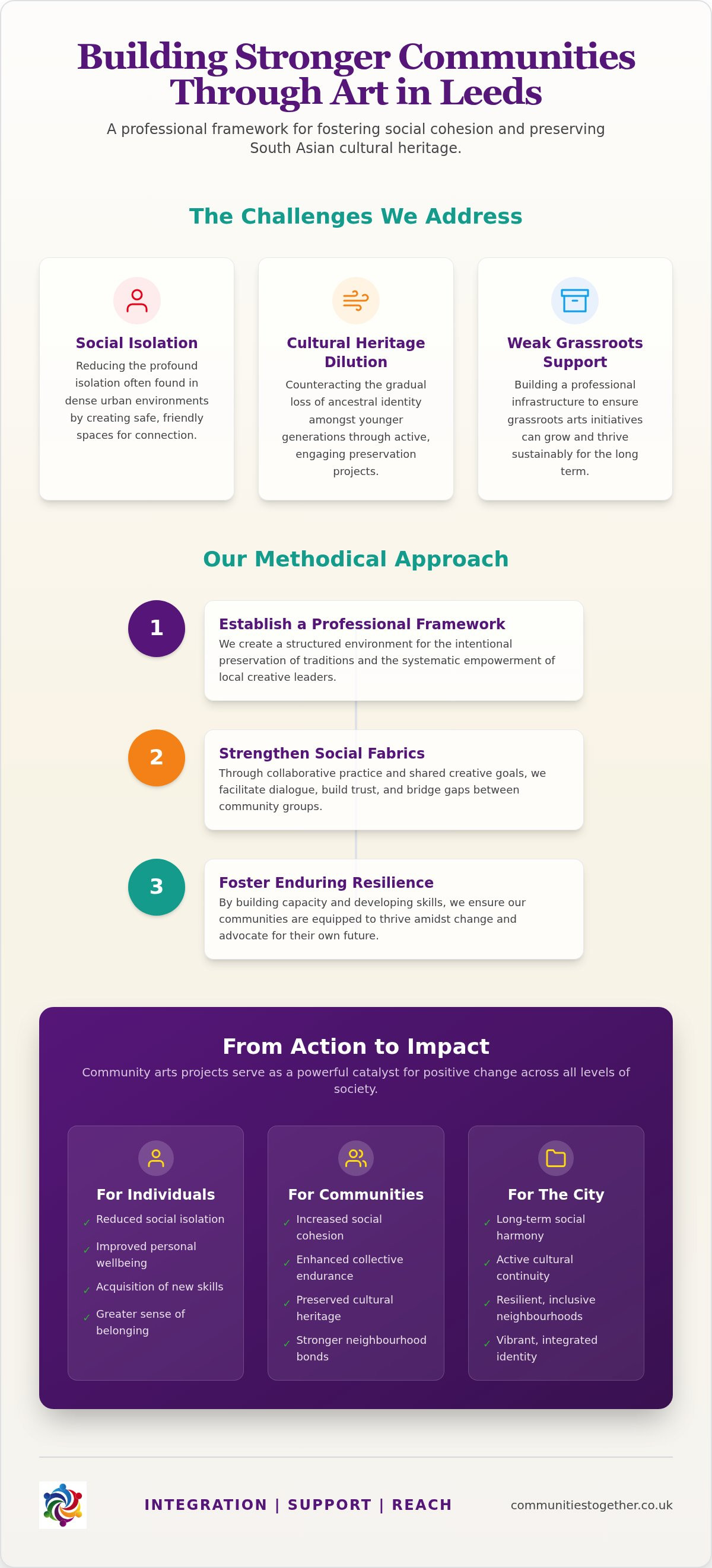
Can a single creative intervention serve as the foundation for enduring social stability and the protection of ancestral identity? You probably recognise that in the busy wards of our city, the dual challenges of social isolation and the gradual dilution of South Asian cultural heritage amongst younger generations require more than just temporary fixes. By engaging with community arts projects Leeds, we can establish a professional framework that supports the intentional preservation of traditions, the strengthening of local social fabrics, and the systematic empowerment of grassroots creative leaders.
This article shows how Leeds’ vibrant creative landscape facilitates the building of resilient neighbourhoods whilst ensuring that South Asian heritage remains a living part of our collective future. We're going to explore the methodologies of professional facilitation, the importance of capacity building for local artists, and the long-term social benefits of fostering inclusive, heritage-focused creative spaces. By the end, you'll understand how these collaborative practices serve as a methodical bridge between our shared history and a more cohesive, culturally rich tomorrow for our communities.
Table of Contents
The Strategic Importance of Community Arts Projects in Leeds
We've found that within the urban landscape of West Yorkshire, community arts projects Leeds function as much more than just aesthetic endeavours; they're sophisticated instruments of social engineering designed to facilitate cultural preservation, promote structural harmony, and empower our local residents. Unlike commercial art sales, which often prioritise individual acquisition and market value over collective wellbeing, our mission-driven community engagement focuses on the shared acquisition of agency, the protection of ancestral heritage, and the systematic strengthening of neighbourhood bonds through collaborative practice. It's a distinction that's vital for anyone who views creativity as a professional conduit for addressing systemic challenges like social fragmentation, the erosion of local identity, and the lack of professional infrastructure for grassroots organisations.
Leeds has emerged as a critical hub for these initiatives because our diverse wards require a methodical and principled approach to navigating a complex social fabric. By facilitating shared creative goals amongst residents, these programmes allow for the earnest documentation of diverse histories, including the rich legacies of public art in Leeds that reflect our city's evolving character and cultural diversity. These projects act as a stable foundation for cultural continuity, ensuring that the unique narratives of West Yorkshire aren't only maintained for posterity but are also actively integrated into the city’s contemporary identity through professional facilitation and mutual respect.
To better understand the practical application of these collaborative principles in a local setting, you can watch this helpful video showcasing a recent exhibition:
Building Social Cohesion through Creative Practice
When disparate community groups gather to pursue a unified artistic objective, they engage in a process that naturally facilitates meaningful dialogue, encourages mutual understanding, and builds lasting trust. This structured participation is particularly effective at reducing the profound social isolation often found in densely populated urban environments by providing a safe, friendly space for interpersonal connection. By creating inclusive environments where every voice is valued and heard, we can effectively bridge the gaps created by age, background, or economic status. Social cohesion is the structural strength of a diverse community.
Arts as a Catalyst for Community Resilience
You'll find that participation in creative workshops does more than produce a tangible outcome; it fosters the personal development, collective endurance, and psychological resilience necessary for our communities to thrive amidst social or economic change. Through the acquisition of new community skills, such as project management, collaborative problem-solving, and creative literacy, individuals become more capable of advocating for their own neighbourhoods and maintaining local traditions. For a broader perspective on how these initiatives fit into national frameworks, you should consult our guide on Strategic Community Engagement Programmes in the UK. This long-term commitment to capacity building ensures that the social benefits of our work remain sustainable, measurable, and impactful for future generations.
Preserving South Asian Arts and Heritage in West Yorkshire
The systematic preservation of South Asian arts and heritage within urban Leeds is a vital undertaking that ensures cultural continuity, fosters community pride, and builds a sense of belonging amongst our diverse residents. Within the context of community arts projects Leeds, we recognise that structured heritage preservation isn't merely an act of historical documentation; it's an active, mission-driven process that facilitates the transmission of ancestral knowledge whilst protecting the unique identities of our neighbourhoods. By creating professional conduits for heritage education, these programmes allow participants to explore their roots, celebrate their contributions to West Yorkshire, and develop a robust cultural foundation that supports their personal and collective growth.
Our methodology focuses on the earnest pursuit of cultural authenticity, ensuring that the stories and traditions of South Asian communities are told with precision, respect, and professional facilitation. We believe that by building the capacity of local groups to document their own histories, we're creating a stable foundation for social stability and long-term harmony. This approach doesn't just look to the past; it provides the structural strength needed for communities to navigate the complexities of modern urban life with confidence and a clear sense of self.
South Asian Heritage Month and Local Engagement
South Asian Heritage Month represents a significant focal point for our local engagement, providing a platform for Leeds community groups to showcase the depth and vibrancy of their traditions through structured creative practice. We integrate specialised heritage workshops into schools and community centres across the city to ensure that younger generations have the opportunity to engage with their history in an environment that's both educational and empowering. For those looking to participate in upcoming initiatives, our South Asian Heritage Month 2026: Leeds Activity Guide offers a comprehensive overview of how we facilitate cultural preservation through capacity building, skills development, and collaborative storytelling.
Traditional Arts as Modern Community Tools
By utilising traditional South Asian music, dance, and visual arts, we can effectively bridge generational gaps and create inclusive spaces where elders and youth can share experiences and build mutual respect. The professional facilitation of these activities is essential to ensure cultural authenticity, providing the necessary infrastructure for grassroots groups to maintain their artistic integrity whilst engaging with wider audiences. A notable example of this approach can be seen in initiatives that foster musical connections in the community, demonstrating how artistic collaboration can improve individual wellbeing and collective harmony. The methodical preservation of South Asian traditions serves as a bridge to progress. If you're interested in how these programmes can strengthen your local neighbourhood, you might consider exploring our South Asian Arts and Heritage Activities to learn more about our collaborative methodology.
The Intersection of Wellbeing and Community Arts
We've observed that the earnest pursuit of collective health in West Yorkshire requires a shift from purely clinical models to non-clinical interventions that leverage the power of creative expression. Within the framework of community arts projects Leeds, we facilitate workshops that don't just teach artistic skills but serve as fundamental tools for building resilience, improving mental wellbeing, and fostering a sense of shared purpose amongst diverse populations. By prioritising the long-term social impact of these activities, we're able to address the root causes of urban stress whilst maintaining a stable foundation for individual and collective growth. It's a methodical approach that views creativity as a professional conduit for health, stability, and social responsibility.
This process-oriented model ensures that every creative session is balanced by a statement of impact, moving beyond short-term excitement to achieve measurable improvements in community endurance. We believe that by building, facilitating, and maintaining these creative spaces, we can help residents acquire the personal development skills necessary for long-term community health. It's about more than just making art; it's about the systematic empowerment of individuals to become active participants in their own wellbeing journeys.
Wellbeing and Resilience Workshops
Our methodology for these workshops is rooted in the principled belief that cultural participation is a key driver of structural strength within a community. We focus on creating safe, inclusive environments where residents feel empowered to share their narratives, acquire new skills, and develop the emotional endurance needed to navigate modern challenges. This professional facilitation ensures that participants aren't just passive recipients of a service but are active contributors to their own wellbeing. For a deeper understanding of our approach, you can explore our guide on Collaborative Wellbeing and Resilience Workshops, which outlines how we integrate heritage and creativity to support social stability and personal growth.
Reducing Isolation through Inclusive Participation
In specific Leeds wards where social isolation is most prevalent, we've seen how regular, structured arts engagement can transform the lives of residents by providing a consistent platform for connectivity and mutual support. The process of moving from isolated individuals to a collaborative community is methodical, involving the gradual building of trust, the facilitation of shared creative goals, and the maintenance of inclusive spaces that welcome all backgrounds. This aligns with the broader objectives found in Leeds City Council's Culture Strategy, which emphasises co-production and community consultation as essential components of a healthy, cohesive city. By fostering these connections, we don't just reduce loneliness; we build the social capital and collective resilience necessary for our neighbourhoods to thrive and endure together.
Organising Effective Community Arts Projects in Leeds
The successful implementation of community arts projects Leeds requires more than creative vision; it demands a methodical commitment to building professional infrastructure, facilitating cross-sector partnerships, and maintaining high standards of accountability. To ensure that grassroots initiatives don't remain transient, organisers must focus on the deliberate creation of arts infrastructure that supports long-term social benefits, cultural continuity, and structural harmony. This involves navigating the complex landscape of community learning and development in West Yorkshire by aligning project goals with the strategic priorities of local governing bodies, such as the Leeds City Council and the West Yorkshire Combined Authority. By adhering to these professional standards, we establish a stable foundation that allows for the systematic empowerment of residents and the meaningful preservation of our shared heritage.
Partnership and Capacity Building Strategies
Identifying key stakeholders within the community arts projects Leeds landscape is a critical first step that requires a principled understanding of the local social fabric and the specific needs of diverse wards. This methodical approach ensures that project organisers can access vital support, such as the Explore & Experience Grant Scheme, which provided one-off grants of £250 to £1,500 for cultural groups with an application deadline in August 2026. By identifying key stakeholders, establishing clear lines of communication, and facilitating shared accountability, we can ensure that every project serves as a professional conduit for collective growth, cultural continuity, and social stability. We believe that by building the capacity of local groups, we're not just delivering a programme but are strengthening the very foundation of our neighbourhoods to ensure project longevity and resilience. For a comprehensive overview of these methodologies, you should consult our guide on Community Capacity Building in the UK. This focus on infrastructure helps transition grassroots groups from temporary entities into established facilitators of social change.
Learning and Skills Development for Participants
Every arts project should be designed to facilitate the acquisition of new skills, the development of personal resilience, and the acquisition of professional literacy amongst participants. Measuring the social impact of community-led heritage projects is essential for demonstrating accountability to stakeholders whilst ensuring that our methods remain effective and inclusive. This is particularly relevant when applying for larger initiatives like the Stronger Leeds Grant Funding, where a total of £200,000 was allocated for projects starting from July 2026 to support third-sector organisations and grassroots groups. Professional literacy in community development is the essential toolkit that allows local leaders to navigate legal requirements, funding cycles, and social welfare frameworks with confidence.
Communities Together: Facilitating Social Harmony in Leeds
At Communities Together, we maintain an earnest commitment to strengthening the social fabric of West Yorkshire through the professional facilitation of community arts projects Leeds, Bradford, and Wakefield. We believe that by building inclusive community infrastructure, we're providing a stable foundation for residents to preserve South Asian heritage, acquire essential life skills, and improve their collective wellbeing. Our regional work is defined by a deep sense of accountability and a focus on long-term social benefits, ensuring that every creative intervention serves as a methodical bridge between cultural tradition, modern social resilience, and future prosperity. This is particularly vital as we look towards the collaborative opportunities presented by the institutional partnership between the University of Leeds and Bradford 2025 UK City of Culture, which emphasises the importance of interdisciplinary research, sector collaboration, and public engagement across our diverse wards.
Our Approach to Collaborative Growth
We utilise a "wise facilitator" model that prioritises the empowerment of local groups, allowing them to lead their own heritage projects whilst we provide the professional framework, technical expertise, and methodical advocacy needed for success. You're more than just a participant in our programmes; you're a potential partner in social change, and we invite you to join us in this principled pursuit of harmony, stability, and cultural continuity. Our approach ensures that South Asian arts heritage education is not just a temporary activity but a living part of the city’s identity that is facilitated, documented, and maintained for future generations. By focusing on the acquisition of agency and the protection of ancestral identity, we help communities move from a state of fragmentation to one of structural strength and mutual respect. We'd love to work alongside you to ensure these traditions continue to thrive in a friendly and supportive environment.
Connecting with Communities Together
Organisations across Leeds can partner with us to access specialised capacity building, wellbeing workshops, and South Asian cultural activities that are designed to foster togetherness and structural strength. Whether you're seeking to develop a new project or strengthen an existing initiative, our team provides the professional literacy and community-oriented support required to achieve measurable social impact. We're dedicated to building, facilitating, and maintaining these creative spaces to ensure that every resident has the opportunity to contribute to the vibrant cultural landscape of our city. By working together, we can create a more inclusive future where heritage is celebrated and every individual feels a genuine sense of belonging.
Building a Cohesive Future through Creative Collaboration
The strategic implementation of community arts projects Leeds serves as a vital conduit for maintaining cultural continuity whilst strengthening the structural resilience of our diverse neighbourhoods. We've seen how the professional facilitation of heritage activities and the earnest pursuit of collective wellbeing provide a stable foundation for social stability across West Yorkshire. By prioritising methodical capacity building, we ensure that grassroots initiatives transition from temporary events into sustainable pillars of social harmony that empower every resident.
As specialists in South Asian heritage preservation and inclusive community engagement, we're dedicated to acting as an authoritative bridge-builder for local groups. We believe that by working together, we can protect our ancestral identities and build a more interconnected city where everyone feels a genuine sense of belonging. We're here to help. It's a journey of shared growth that starts with a commitment to professional excellence and community responsibility.
We look forward to facilitating your next creative project and helping your community thrive for generations to come. Your passion for local culture is the spark that drives our collective progress.
Frequently Asked Questions
What are the primary benefits of community arts projects in Leeds?
Community arts projects Leeds facilitate the systematic strengthening of the social fabric by providing inclusive spaces for dialogue, the earnest preservation of ancestral heritage, and the acquisition of new community skills. These initiatives improve individual wellbeing through non-clinical interventions whilst fostering collective endurance and structural harmony across diverse neighbourhoods. By building professional infrastructure, these programmes ensure that local groups can thrive sustainably and contribute to the city's long-term cultural continuity.
How do South Asian heritage projects contribute to social cohesion?
South Asian heritage projects contribute to social cohesion by facilitating the transmission of ancestral knowledge, the protection of unique cultural identities, and the development of a shared narrative amongst diverse residents. These programmes bridge generational gaps and encourage mutual respect between different community groups, which leads to increased social stability and a deeper sense of belonging. By documenting and celebrating local histories, these initiatives create a stable foundation for long-term harmony and collective pride.
Can community arts projects help reduce social isolation in urban areas?
Structured community arts projects Leeds effectively reduce social isolation by providing consistent platforms for connectivity, the facilitation of shared creative goals, and the maintenance of safe, inclusive environments for all residents. These non-clinical interventions move individuals from a state of fragmentation to one of collaborative community, which helps to mitigate the psychological stress of urban living. By fostering meaningful interpersonal relationships, these programmes build the social capital and collective resilience necessary for healthy neighbourhoods.
What is community capacity building in the context of the arts?
Community capacity building in the arts involves the methodical development of professional infrastructure, the acquisition of project management skills, and the facilitation of collaborative partnerships to ensure project longevity. We focus on empowering local groups to lead their own heritage initiatives by providing technical expertise, professional literacy, and structural support. This process ensures that grassroots organisations can navigate funding cycles and legal requirements, which creates a reliable foundation for sustainable cultural growth.
How can local Leeds groups access heritage and cultural preservation workshops?
Local groups can access heritage and cultural preservation workshops by partnering with Communities Together to facilitate structured learning, the documentation of ancestral stories, and the professional facilitation of traditional artistic disciplines. We provide tailored support for schools and community centres, ensuring that these programmes are accessible, educational, and impactful for all participants. By engaging with our capacity building services, organisations can establish the necessary framework to protect and celebrate their unique cultural contributions.
Are these wellbeing workshops suitable for all age groups in the community?
Our wellbeing and resilience workshops are designed to be inclusive and intergenerational, which allows elders and youth to share experiences, acquire new skills, and build mutual respect through collaborative practice. We adapt our methodologies to meet the specific needs of diverse age groups, ensuring that every participant can engage in a meaningful way whilst contributing to the collective health of their neighbourhood. This approach fosters togetherness and strengthens the social bonds that are essential for long-term community endurance.
How does Communities Together support South Asian arts in West Yorkshire?
Communities Together supports South Asian arts in West Yorkshire by providing professional facilitation, methodical advocacy for heritage education, and the systematic building of community capacity across Leeds, Bradford, and Wakefield. We specialise in the preservation of traditional music, dance, and visual arts, ensuring that these cultural practices remain a living part of the city's contemporary identity. Our work focuses on creating professional conduits for cultural continuity and the long-term empowerment of local residents.
What role do collaborative partnerships play in successful community projects?
Collaborative partnerships are essential for successful community projects because they facilitate stakeholder alignment, the acquisition of vital funding, and the maintenance of high professional standards. By working with local governing bodies and third-sector organisations, we can ensure that every initiative is integrated into the broader strategic priorities of the region. This collaborative approach provides the structural strength and accountability needed to achieve measurable social impact and ensure the long-term sustainability of our work.


Comments