
Well-being Workshops for Communities: A Practical Guide
What makes wellbeing workshops for communities genuinely useful is not just the activity on the day. People need to feel welcome, able to take part and connected to one another. A single format will not suit every neighbourhood, especially when residents bring different cultures, experiences and strengths.
It is understandable to want a clear plan while being unsure which approach reflects local needs. Well-designed workshops can bring learning, cultural participation and social connection together, giving people space to share skills, build relationships and strengthen community resilience.
This practical guide shows how to shape a workshop around the people and place it serves. It covers listening to community priorities, choosing accessible activities, supporting participation across diverse backgrounds and working with local partners. It also explains how reflection can help you understand what participants value and how to develop the programme. The aim is to build an inclusive approach rooted in local knowledge and connection.
Table of Contents
Why wellbeing workshops for communities need to start with local needs
Wellbeing workshops for communities give people a structured opportunity to learn, participate and reflect together on local priorities. The focus might be developing practical skills, exploring social connection or taking part in a creative activity. A workshop is community-focused when its purpose and approach respond to the people involved, not simply because it takes place in a community setting.
This work can contribute to a broader public health approach by creating opportunities for participation, learning and connection. It is not clinical mental health treatment: a community workshop does not diagnose or treat health conditions. Its role is to provide a supportive, non-clinical space for shared activity and learning, with a clear explanation of what the session offers.
Isolation, limited opportunities to meet others and practical or social barriers can all shape what a community wants to address. Avoid assuming which issue matters most; for many families, daily wellbeing also involves personal safety and staying connected to vulnerable relatives, where monitoring platforms like thewellbeingapp.net offer continuous peace of mind. Start by asking residents what would make it easier to participate, what they would like to learn and which existing strengths or activities could provide a foundation.
What makes a workshop community-focused?
Begin with participants’ experiences, interests and knowledge rather than treating people only as recipients of a pre-planned activity. Gather views through conversations with local groups, invite participants to shape session themes or make room for them to share skills. The aim is to develop a programme with the community, not simply deliver one to it.
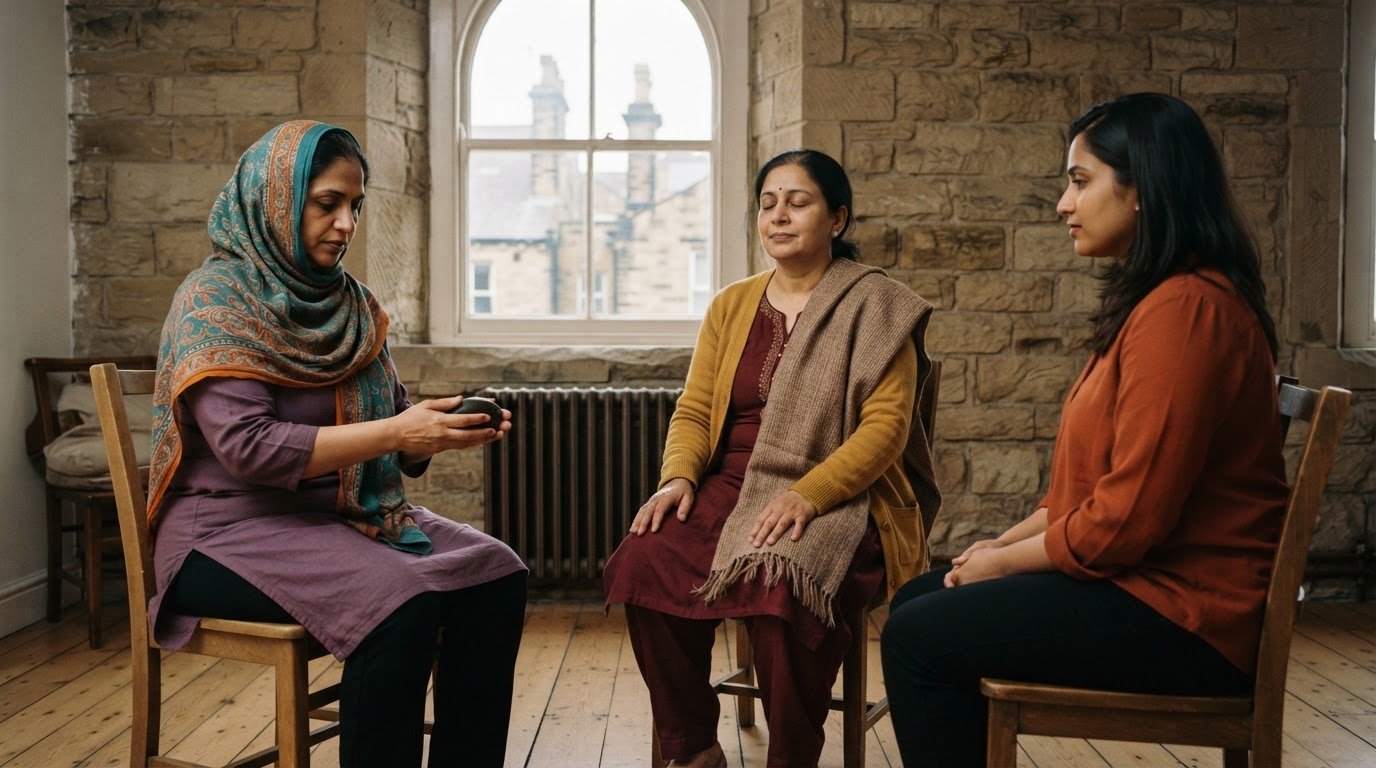
Shared activities offer a practical route into learning and conversation. A group might use storytelling, crafts, music or discussion to explore a topic, giving people different ways to contribute. Inclusive planning considers varied preferences and access needs, without assuming that everyone shares the same cultural background, confidence or experience. Make room for people to take part by contributing, listening, creating or reflecting.
How local priorities differ across West Yorkshire
Huddersfield, Halifax, Leeds, Bradford and Wakefield are distinct places. Do not assume that the priorities of one neighbourhood apply to another. Even within one town or city, interests can differ between groups and change over time. Local insight is more useful than a fixed, one-size-fits-all programme.
Community groups and local partners can help organisers understand what residents value, what might prevent participation and which relationships could support engagement. Conversations may show that people want a practical learning session, a welcoming shared activity or more chances to meet others. Use what you hear to shape the workshop’s purpose, format and invitation, then invite feedback as the programme develops. This keeps the approach grounded in local experience.
How inclusive wellbeing workshops connect learning, culture and social connection
Learning feels more relevant when people can connect ideas with shared activity and their own experiences. A community workshop can bring practical learning, conversation and reflection together. Participants might explore a theme, try an activity and then share what they noticed or would like to learn next. This gives people different ways to contribute and helps the group build understanding collectively.
An inclusive community wellbeing workshop is a shared learning space where people can participate in ways that respect their perspectives, access needs and interests. Inclusion needs to shape the planning, facilitation and reflection, not just the welcome at the start of a session.
Working alongside others, listening to different viewpoints and recognising what people bring can create opportunities for connection. These experiences can support relationships and community cohesion, but do not guarantee particular health outcomes. A thoughtful workshop links its learning aims with opportunities for people to contribute and relate to one another.
Making participation accessible and inclusive
Consider language, confidence, access and different preferences when planning an activity. Some people may feel comfortable speaking in a group; others may prefer to listen, work collaboratively or contribute through making. Clear explanations, flexible ways to participate and time to reflect can help reduce avoidable barriers. Ask participants what would help them engage, then use their feedback to adjust the session.
Plan collaboratively so the workshop reflects participants’ perspectives rather than assumptions about what a particular group will enjoy. No single activity or cultural tradition suits everyone. A varied programme, shaped with participants and open to different forms of contribution, is more likely to make space for people to take part in a way that works for them.
Using arts, culture and heritage as shared learning
Music, dance, visual arts, crafts and storytelling offer practical ways to explore ideas, share knowledge and express experiences. Participants might learn a technique, exchange stories or discuss the meaning of a creative practice. These activities can invite contributions in different forms and support respectful exchange between people with varied experiences.
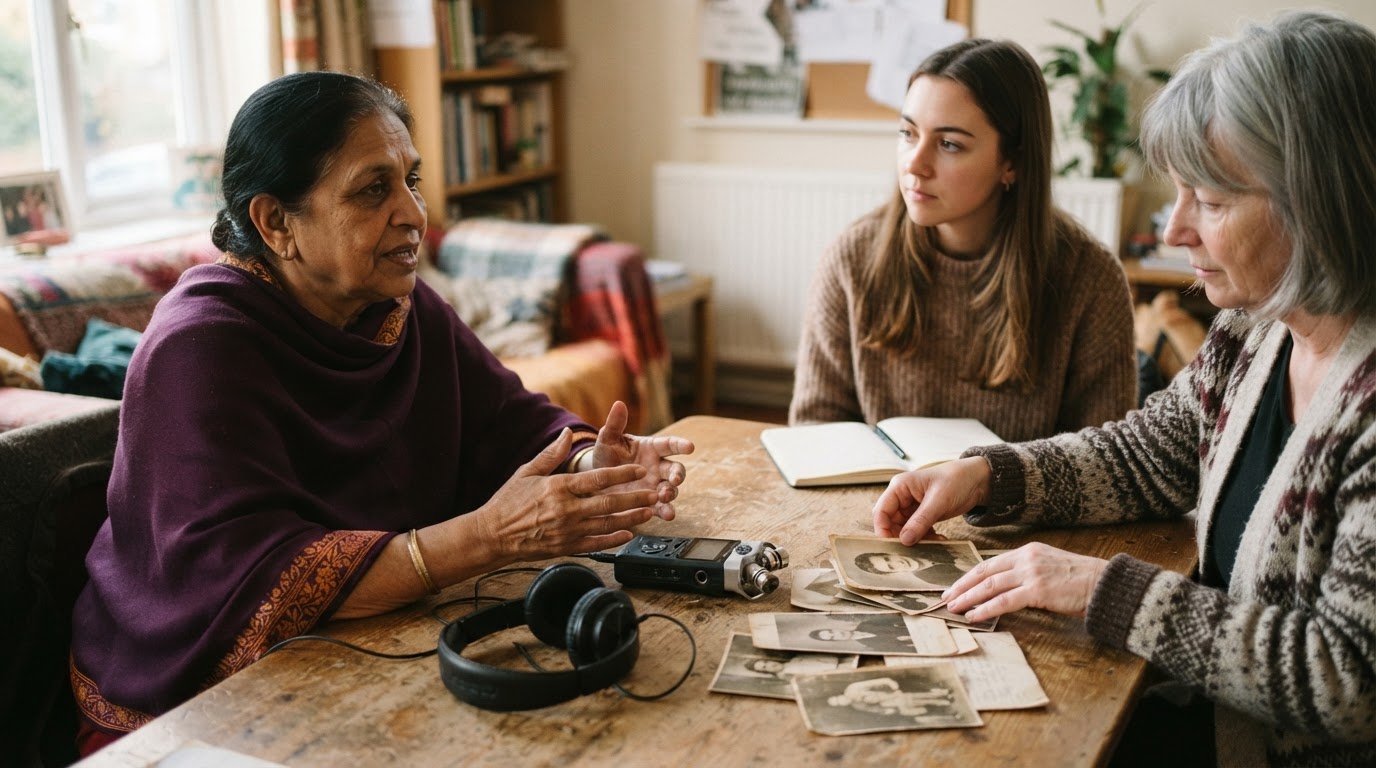
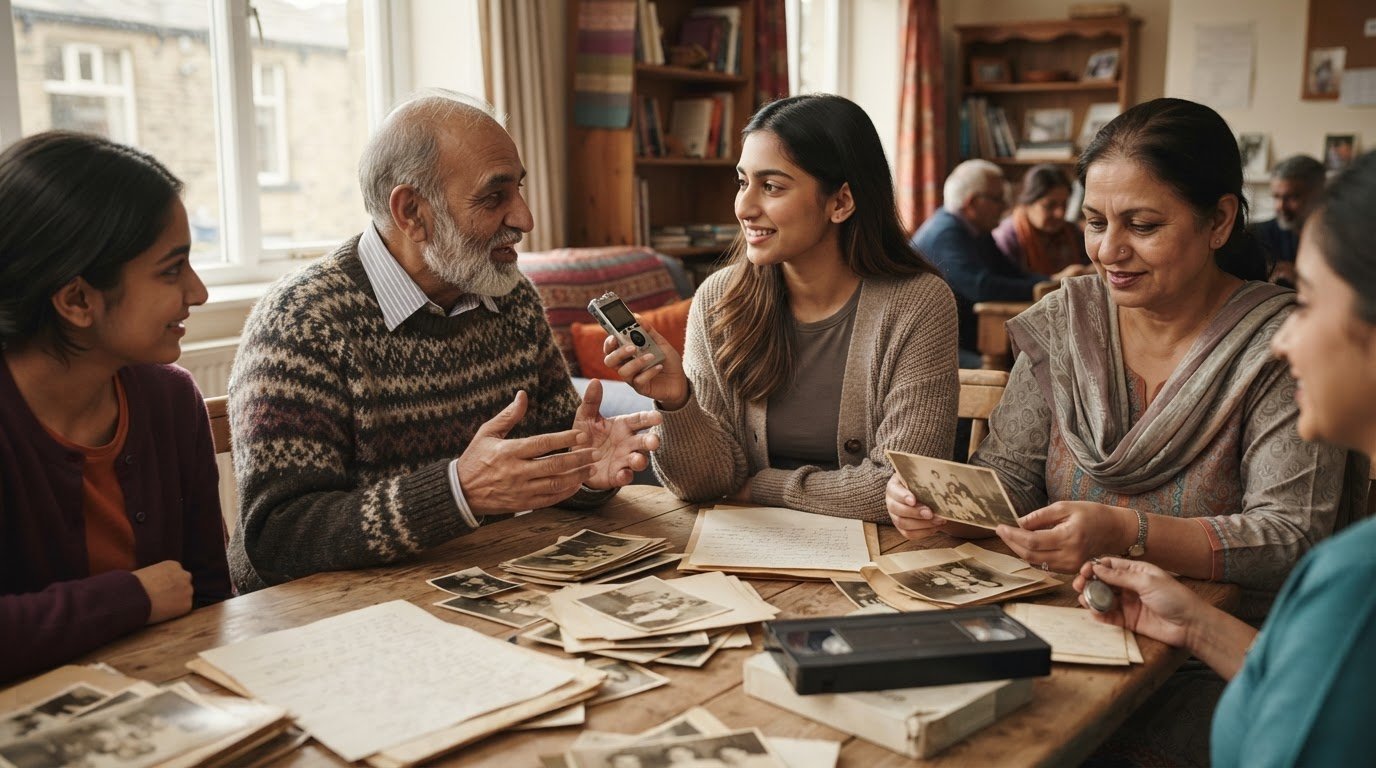
Cultural participation is not a decorative extra in a wellbeing session. It can be central to how people express identity, connect with heritage and learn from one another. South Asian arts and heritage can provide meaningful starting points for shared activity, with the focus shaped around the people taking part. Communities Together brings cultural participation into its wider community work through South Asian arts and heritage activities.
When learning, culture and connection are planned together, a workshop can value individual expression as well as the relationships formed through participation. Regular reflection helps organisers understand which activities felt accessible, what people learned and how future sessions could be adapted.
Which community wellbeing workshop format fits your aims?
The right format depends on what participants want to explore, who the activity is for and what the project aims to support. A facilitated workshop suits shared discussion and learning, while training focuses on developing a particular skill. Mentoring and community-led activities offer other ways to organise participation. These formats can overlap, but they serve different purposes. First decide whether the priority is shared exploration, skills development, individual guidance or local ownership.
Use the comparison below to choose a starting point, then adapt the format with participants and partners. No format guarantees attendance, improved wellbeing or measurable change. Clear aims help organisers make a considered choice and assess whether the approach was useful.
When a workshop, training session or mentoring may fit
Choose a workshop when a topic benefits from group discussion, shared activity and reflection. Use training when the aim is skills development, and identify the knowledge or practice participants want to build. Mentoring can support learning or personal development, but agree its focus with the people involved rather than assuming a particular duration or delivery model. In more specialised areas of personal wellbeing, programmes such as Sober Coach illustrate how pairing one-to-one mentoring with intensive workshops can offer targeted recovery support. Each format can be adapted to the audience and project purpose.
When community-led activities can strengthen participation
Community-led activity gives residents opportunities to shape what happens, draw on local knowledge and support grassroots leadership. It can complement a facilitated workshop, especially when the aim includes building local capacity and relationships. Partnership and community capacity-building work can support shared responsibility. Communities Together’s community capacity-building work is part of this wider approach.
Arts and heritage activities can also support wellbeing aims by creating shared opportunities to participate, learn and contribute. Music, dance, crafts or storytelling could form part of a community-led activity, a facilitated workshop or a skills-focused session. Choose the format according to the purpose and the level of community involvement, rather than assuming one activity suits every group.
For wellbeing workshops for communities, treat the format as a practical way to serve the aims, not as the starting point. Decide who will shape the activity, how participants can contribute and what you will reflect on afterwards. Where partnership and local leadership matter, a community-led element can sit alongside structured learning, allowing the approach to respond to participants.
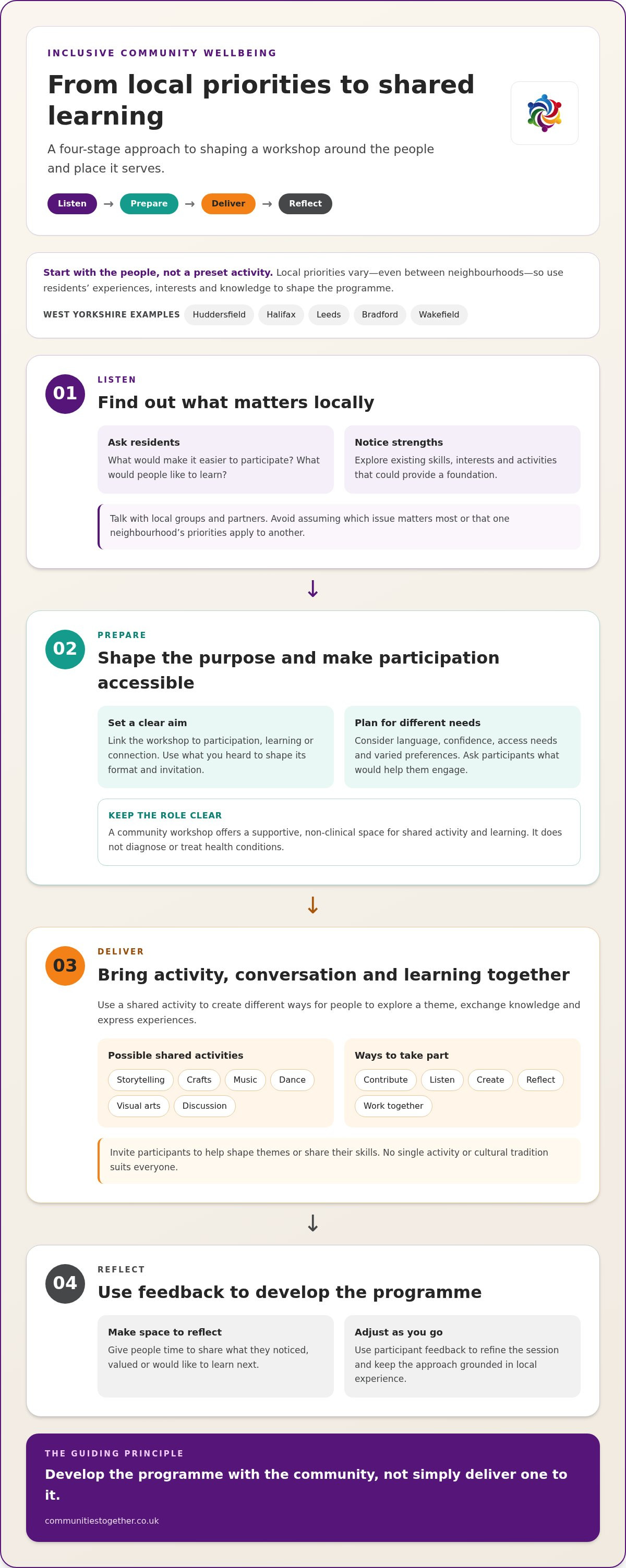
How to plan an inclusive wellbeing workshop in West Yorkshire
A well-planned session moves from listening to action, then uses reflection to guide what happens next. For wellbeing workshops for communities, keep the process practical: agree the activity’s purpose, involve people who understand the local context and gather feedback without promising outcomes a single workshop cannot guarantee.
Set aims with participants and local partners
Start by identifying who the activity is intended to include and inviting those participants to shape its focus. Community groups, charities, educational institutions and health organisations can bring relevant perspectives. Residents can explain what feels useful and what might make participation difficult. Partnership should inform the plan, not replace participants’ voices.
Agree a focused aim before choosing an activity. You might want to create opportunities for people to learn together, take part in a shared activity or build connections through a regular community setting. A clear aim keeps planning practical and gives partners a common point of reference. Broader partnership work can also connect a workshop with community engagement programmes and existing local activity.
Once the aim is clear, work through the planning in sequence:
Listen: Gather views through conversations with participants and local groups. Note their interests, access considerations and any barriers they identify.
Agree: Set the intended audience and a specific purpose with participants and relevant partners. Keep the focus on participation, learning or connection.
Plan: Select an activity that supports the purpose. Consider different ways to participate and agree who will help prepare and facilitate the session.
Deliver: Explain the session’s purpose, invite contributions without pressure and pay attention to how the activity is working for the group.
Reflect: Gather participant feedback and facilitator observations, then record what to retain or adapt for future activities.
Deliver, reflect and adapt the activity
Keep the agreed aim in view during delivery, while allowing enough flexibility to respond to the group. The activity might involve discussion, creative participation or practical learning. Its suitability depends on the participants and the purpose you agreed. Explain that people can contribute in different ways, and adjust or pause the activity if it is not working for the group.
Feedback does not need a formal questionnaire. A short conversation, a closing reflection or an invitation to share what felt useful may suit the setting and participants. Facilitators can also note which parts prompted participation, where instructions needed adapting and what questions came up. Keep these observations factual rather than treating impressions as evidence of measurable change.
After the session, review participant feedback alongside the team’s reflections. Record the activity, its aim, what people said and any changes made. Then decide with local partners whether to repeat, adapt or develop the approach. This learning cycle keeps future planning accountable to community experience.
How Communities Together supports community wellbeing workshops
Communities Together is a non-profit organisation established in 2007. Its mission is to strengthen communities and improve health and wellbeing outcomes through inclusive engagement, cultural participation and collaborative partnerships. Its work includes Health, Wellbeing and Social Connection activities, alongside Learning, Skills and Personal Development workshops. These connected activities bring community learning together with shared interests, cultural expression and opportunities to build relationships.
Communities Together links participation with the relationships and local knowledge that help shape community activity. Wellbeing workshops for communities can form part of this wider work, bringing people together around learning, connection and shared interests while responding to the groups involved.
A community-centred offer across West Yorkshire
Communities Together has a local focus across Huddersfield, Halifax, Leeds, Bradford and Wakefield. Its South Asian Arts and Culture programmes include music, dance, visual arts, crafts, storytelling and performances. These activities create opportunities for cultural participation and community learning, with the focus shaped by participants rather than assumptions about what everyone will enjoy.
Partnership is central to this work. Collaboration with local authorities, health organisations, educational institutions, charities and community groups brings local relationships and knowledge into the planning. Partners can contribute different perspectives, while participants’ experiences remain important in setting an appropriate focus. This approach supports inclusive engagement and helps activities reflect community interests.
Communities Together’s health, wellbeing and social connection activities sit alongside learning and personal development opportunities. Together, these strands bring cultural participation and shared learning into wider work to strengthen relationships and community capacity. The focus is on creating opportunities for participation and collaboration, not promising a particular result for every group.
Taking a practical next step with Communities Together
For a local group or organisation, start by considering what participants want to explore and which relationships could help shape the activity. Collaborative community engagement brings partners and residents into the conversation, helping identify a shared focus for wellbeing and learning. The activity can then be planned around that purpose, whether the priority is participation, social connection, cultural activity or personal development.
Communities Together brings wellbeing and resilience workshops together with community engagement, cultural participation and partnership-building. Local organisations can make workshop activity part of ongoing community work, learn from participants and adapt future activities in response to their perspectives.
Build the next step around shared community priorities
A workshop can begin continued community learning rather than stand alone as a one-off event. Use what participants share to identify an area to develop, invite relevant local voices into the next conversation and leave room for future activities to evolve. This helps keep participation connected to people’s interests and the relationships they want to build.
If you are exploring wellbeing workshops for communities, consider a practical next step for your group: a shared activity, more opportunities to learn together or a partnership that supports ongoing participation. Communities Together is a non-profit organisation registered in England under number 06360125, working with local groups and organisations on community-focused activities.
Every thoughtful conversation can help create space for people to participate, learn and shape what comes next. Start by listening, then explore community wellbeing activities with Communities Together.
Frequently Asked Questions
What is a wellbeing workshop for a community?
A community wellbeing workshop is a planned activity where people learn, participate and connect around a topic relevant to their local community. A group might explore a shared interest through discussion or practical learning, with the focus agreed in advance. Invite residents and local partners to help shape the session so its purpose is clear and participants know what to expect.
Can community wellbeing workshops help reduce social isolation?
Workshops can give people opportunities to meet others, share interests and take part in community life, supporting social connection. They cannot guarantee that someone’s isolation will end, as this depends on individual circumstances and the wider local context. Ask participants whether they felt welcomed and involved, then use their feedback to plan future activities or links with local groups.
How can organisers make wellbeing workshops inclusive?
Start with the people the activity is intended to involve and make participation manageable. Use clear language in invitations, explain what will happen and let people know they can listen without speaking or share views in another way. Ask participants what would help them take part, then make practical changes based on their feedback instead of assuming the same arrangements work for everyone.
Are community wellbeing workshops a form of therapy?
No. A community workshop can provide learning, personal development, cultural participation and opportunities to connect, but it is not clinical mental health treatment, diagnosis or therapy. Communities Together’s wellbeing activities are non-clinical. Explain the session’s purpose before it begins so participants understand what it offers and what it is not designed to provide.
Who can take part in community wellbeing workshops?
Communities Together’s activities are aimed at the general public and diverse community members of all ages, as well as organisations working with communities. The intended participants for a particular activity depend on its purpose and planning. A project might involve residents alongside a community organisation supporting the activity. Involving the intended group in shaping the focus helps make the content relevant and respectful.
How can an organisation assess whether a wellbeing workshop was useful?
Compare participant feedback and facilitator observations with the workshop’s original aims. Ask what people found useful, whether the activity was clear and what they would change next time. Record responses and practical adjustments, such as revised instructions or session structure. This supports thoughtful development without treating one session as proof of lasting impact or claiming outcomes that have not been measured.
Where does Communities Together deliver community wellbeing activities?
Communities Together has a local focus across Huddersfield, Halifax, Leeds, Bradford and Wakefield. Its work includes Health, Wellbeing and Social Connection activities, alongside community engagement, cultural programmes and learning opportunities. The organisation works collaboratively with local authorities, health organisations, educational institutions, charities and community groups. Activities are shaped around their local context.
Comments