
Preserving Family History and Heritage through stories, collections and community partnerships
The most valuable family archive isn’t necessarily a box of rare documents; it can bring together photographs, home videos, family trees, treasured possessions and the stories attached to them. Preserving family history and heritage means keeping these materials accessible and recording what family members know, so details about people, places and traditions can be carried forward. Cultural partnerships can also help connect family memories with wider community histories.
It’s natural to think first of photographs or official records, but everyday objects and conversations can hold just as much meaning. A picture of a familiar home, for example, can show where relatives lived, while a recorded conversation can preserve memories that might otherwise be lost within a generation.
This article explains what a family archive can include and how to start one, from asking thoughtful questions and organising photographs to digitising old videos and caring for family objects. It also explores how families and cultural organisations can work together to preserve heritage, strengthen community connections and pass knowledge between generations.
Table of Contents
1. Exploring the Family Archive: What Is a Family Archive?
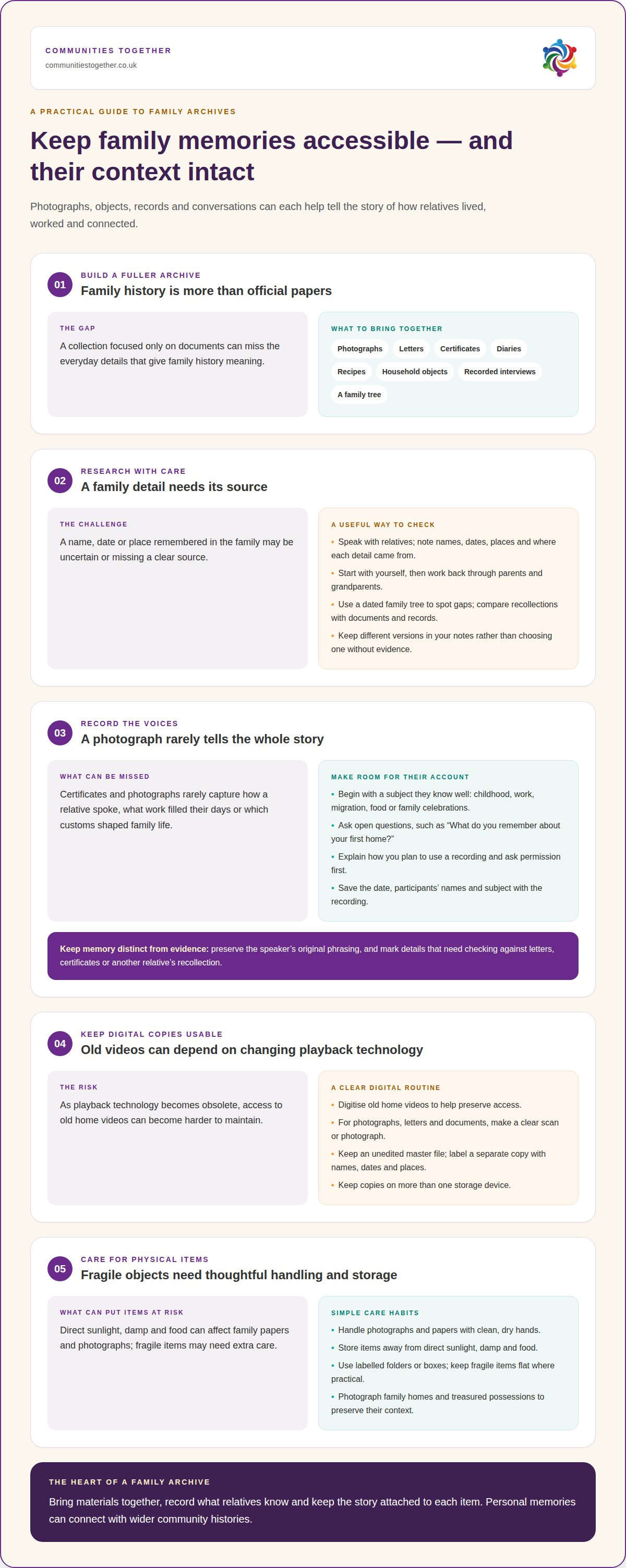
A family archive brings together records that show how relatives lived, worked and connected. It might include photographs, letters, certificates, diaries, recipes, household objects and recorded interviews. A family tree can list ancestors’ full names and birth and death dates. Together, these materials add context and help guide further research.
To research your family history in the UK, start by speaking with relatives and noting the names, dates and places they remember. Begin with yourself, then work back through parents and grandparents, recording where each detail came from. A dated family tree helps reveal gaps and distinguish confirmed information from family recollections.
For birth, marriage and death records, start with the General Register Office and the relevant local register office. Search by name, approximate date and place, then compare results with family documents. A certificate can provide details to check against other evidence, while an index can help you identify a possible record.
Census records and parish registers can add details about households, occupations and local connections. Search catalogue descriptions by place and family name, and note each record’s date and location. Parish registers can help trace events recorded by a church, while census entries can help compare relatives living at the same address.
To verify a family story, note who shared it, when they heard it and which people or places it involves. Compare its details with certificates, census entries, letters or dated photographs. Keep different versions in your notes instead of choosing one without evidence, and update family-tree entries when stronger records emerge.
Treat identifiable details about living relatives and DNA results as sensitive. Ask permission before recording, sharing or publishing someone’s personal story or genetic information, and respect their choice not to participate. DNA testing requires the tested person’s informed consent. Never use a sample taken without their knowledge.
The cost of UK genealogy websites depends on the service and the records or access period you choose. Some records may be searchable without a paid subscription, while other catalogues or document access may require payment. Before paying, identify the record you need and compare access options and any certificate-ordering charges.
To digitise old photographs, letters and documents, scan or photograph each item clearly. Save an unedited master file, then label a separate copy with names, dates and places. Keep copies on more than one storage device. Digitising old home videos can also preserve access as playback technology becomes obsolete.
To care for physical items, handle photographs and papers with clean, dry hands, and store them away from direct sunlight, damp and food. Use labelled folders or boxes, and keep fragile items flat where practical. Photograph family homes and treasured possessions, too: these images preserve context about where relatives lived.
2. Recording family memories through conversations
Family conversations preserve details certificates and photographs rarely capture: how a relative spoke, what work filled their days and which customs shaped family life. Memories and knowledge can be lost within a generation, so recording them while relatives can still share their experiences helps retain names, places and personal context.
Begin with one relative and a subject they know well, such as childhood, work, migration, food or family celebrations. Ask open questions and give them time to answer. “What do you remember about your first home?” can prompt a fuller account than a question expecting only a date or name.
Prepare a short list of prompts, but let the conversation unfold naturally. If an aunt recalls a family recipe, ask who taught her, which ingredients she used and when the dish was served. Specific details can lead to names and relationships, while follow-up questions may clarify an unfamiliar place or expression.
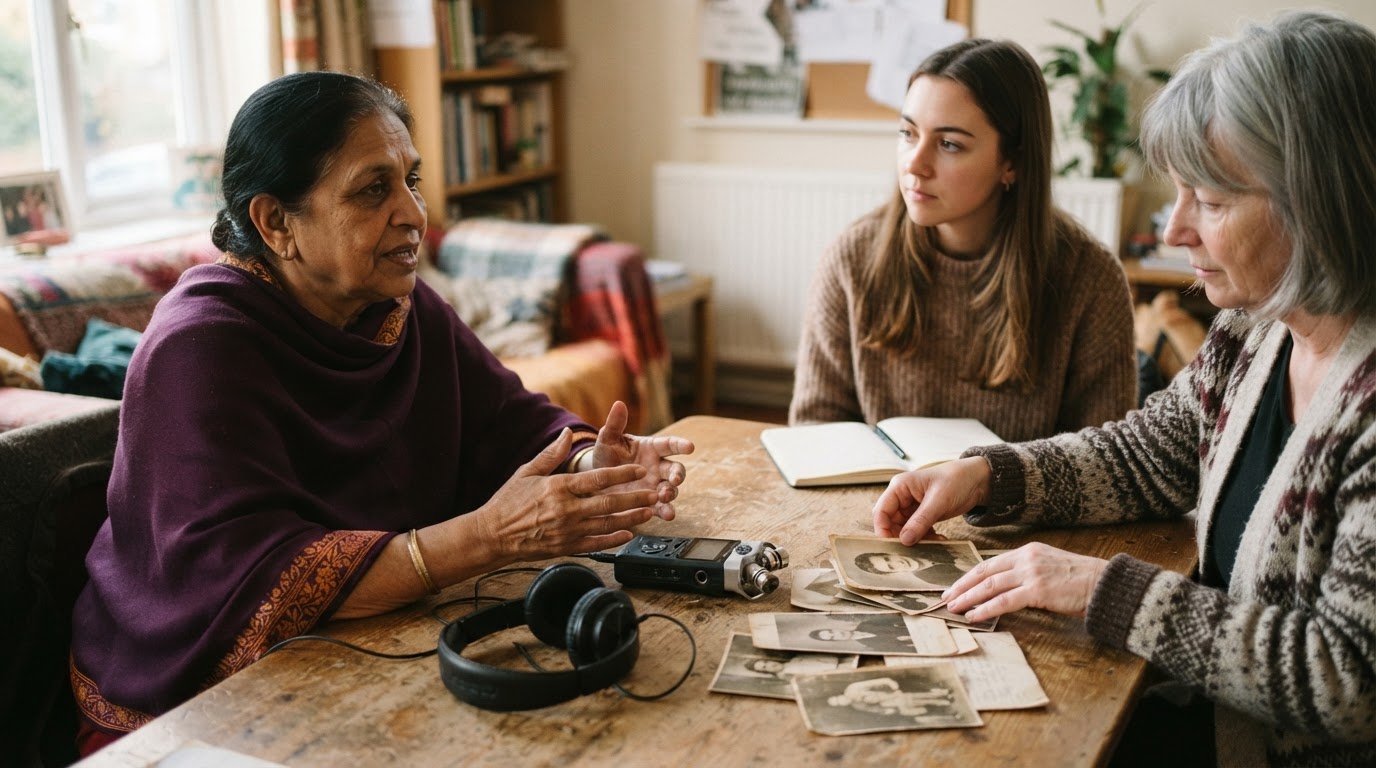
Before recording, explain how you plan to use the interview and ask permission. A phone recording captures spoken words; written notes can capture gestures, interruptions and details the microphone misses. Save the date, participants’ names and the subject alongside the file, so relatives can understand its context later.
Listen without correcting the account as it unfolds. If a date or family connection seems unclear, mark it for comparison with letters, certificates or another relative’s recollection. Keep the speaker’s original phrasing and record any edits separately. This preserves their voice while distinguishing personal memory from details checked against other records.
A family tree maps relationships and recorded dates; an oral history captures people’s experiences in their own words. DNA testing can indicate genetic relationships, but it doesn’t explain someone’s memories, identity or family traditions. These approaches can complement one another, but they answer different questions.
After the conversation, label the recording and create a transcript or summary with the speaker’s name and key topics. Ask the relative to clarify any names you may have misheard, especially unfamiliar spellings. Store the original separately from edited extracts, and share copies with agreed family members so the account remains accessible.
For families in West Yorkshire, conversations can link personal memories with local workplaces, neighbourhoods and community traditions. Invite relatives to describe a familiar street, a local gathering place or a journey between homes. Pairing their accounts with the people and places they name gives future listeners a clearer picture of family life.
3. Caring for family collections
A collection remains useful when its contents are identifiable, handled carefully and stored consistently. Start with a simple inventory: give each item a reference number, describe it, and record its known owner, date and condition. For example, label a photograph “Auntie Mina, outside the family shop, date uncertain” rather than guessing a year. Keep the inventory separate from fragile originals, so details remain available during handling.
Before moving a box of papers, clear a stable surface and work through one small group at a time. Support loose letters beneath their edges, and don’t force folded sheets open if the paper resists. Keep photographs in their existing order where possible: a sequence may show who attended a gathering or how an album was arranged. Record captions exactly before adding your own notes.
Different materials need different handling. Don’t pack a paper letter, framed photograph, medal and piece of clothing together without protection. Place small objects in separate, labelled containers, and keep metal items away from papers they could mark. For a delicate garment, avoid hanging it by the shoulders; supported folding can reduce strain on the fabric.
Choose a storage place with steady conditions, away from radiators, extreme loft temperatures and leaking pipes. In a West Yorkshire home, check cupboards beside outside walls for damp before storing family papers there. Avoid tight packing, which can bend photographs or make boxes difficult to remove safely. A shelf that gives you access to labelled boxes without shifting heavy items helps prevent accidental damage.
Photograph an item’s condition before cleaning or repairing it. If a framed picture has loose backing, record the problem instead of removing it hastily. Don’t use household glue, sticky tape or cleaning products on original materials; they can leave stains or make later conservation more difficult. If an item has mould, flaking paint or brittle paper, isolate it from the rest of the collection and seek specialist conservation advice.
Digital copies make a collection easier to access, but they don’t replace originals. Keep an unedited master scan or photograph, then create a separate copy for cropping or sharing. Use consistent file names, such as “Mina_family-shop_front”, and add known dates or locations to a catalogue. Store another copy separately from the device holding the main files, and periodically check that files still open.
Finally, make collection care a shared routine. Ask relatives to return borrowed items to their recorded place, and update the inventory when a new letter or photograph arrives. A short note explaining an object’s handling needs can prevent well-meaning family members from cleaning, framing or rearranging it in ways that cause lasting harm.
Regular, gentle care helps keep a collection usable over time. Consistent handling and storage practices can help preserve family papers, photographs and other belongings in different formats. They also make it easier for relatives to access and understand the collection.
4. Collaboration between families and cultural institutions
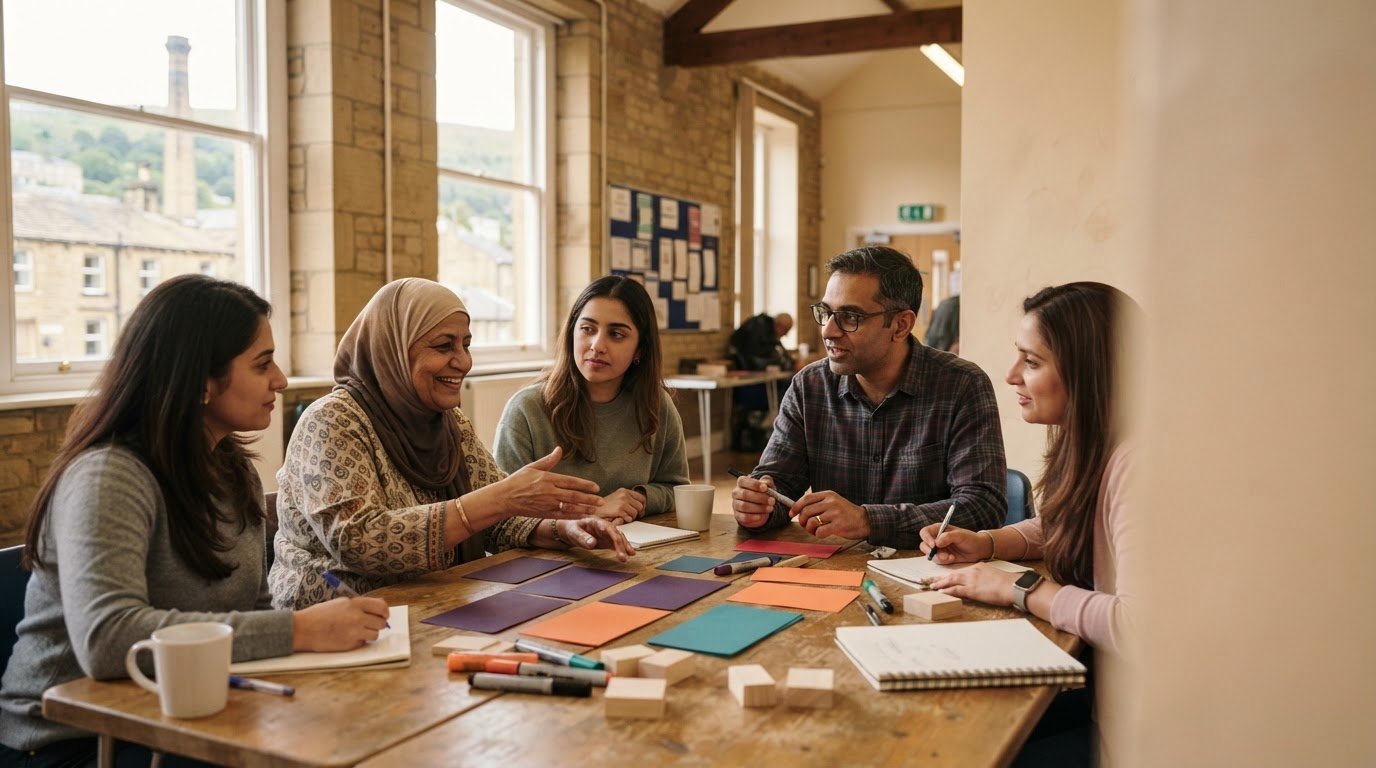
A family archive gains context when relatives work with archivists, librarians, museum staff or local historians. Families bring names, memories and knowledge of relationships; cultural organisations can help interpret records, identify gaps and connect personal accounts with wider local history. In West Yorkshire, relatives identifying the people and community setting in a workplace photograph can make it more meaningful.
Start by defining a shared purpose. A family might want to document a migration story, preserve a collection of letters or record neighbourhood memories. Write down the people, places and materials involved, then decide who will gather information and how relatives can contribute. A clear scope keeps a small heritage project manageable.
Local archives and libraries can guide research into historical records and explain how collections are described and accessed. West Yorkshire Archive Service is a useful starting point for regional archival research. Bring a short list of surnames, place names and approximate dates, along with any existing references. Specific details can help staff or volunteers suggest relevant catalogues and next steps.
Where can you get help with family history research in the UK? Start with a local archive service, public library, family history society or museum, where staff and volunteers may point you towards relevant collections. For more complex research, a professional genealogist can help interpret records and trace connections.
Families and cultural organisations can also collaborate on oral history projects. Relatives, for example, might record memories of a local shop, place of worship or community celebration, then work with a local heritage group to organise the accounts. Add dates, names and place descriptions to each recording so future listeners can understand its setting.
Agree how materials will be used before sharing them. A family might keep recordings within the household, present selected extracts at a community event or contribute copies to an archive. Record who contributed each item and any limits they set on access. These decisions support respectful participation and clarify responsibilities.
Shared projects work best when families help describe their own histories. Invite contributors to review captions, pronunciations and translations, and correct errors before presenting materials publicly. If an archive catalogue uses unfamiliar terminology, ask whether family descriptions can accompany it. This way, collaboration supports preservation and accurate representation of lived experience.
To get started, choose one collection or story, identify a local organisation with relevant expertise, and agree on practical steps together. A family’s letters, a community group’s knowledge and an archivist’s guidance each contribute something distinct. This partnership can connect individual memories with West Yorkshire’s cultural histories.
5. Why is preserving family history and heritage important?
A family story can show how a household’s choices connect with wider social change. In West Yorkshire, relatives may remember work, migration, worship or neighbourhood life in Leeds, Bradford or Huddersfield. Preserving these accounts helps future generations understand not only who came before them, but also the circumstances that shaped family life.
Recorded history can strengthen belonging by giving names and context to inherited customs. A grandparent’s account of preparing a particular dish, for example, might explain its language, ingredients and place in family gatherings. Without that context, a recipe may survive while its meaning and the people who passed it on become harder to recognise.
Family records can also broaden the picture in local histories. An official document might record an address or occupation, while a relative can describe the daily routines behind those details. Comparing both accounts helps descendants see how individual lives connected with workplaces, schools, community organisations and local change.
Careful preservation can also improve the accuracy of family history. A dated photograph, a letter and a relative’s recollection may describe the same event from different perspectives. Keeping each source with its context helps future readers distinguish documented details from later interpretation, and revise an account when new evidence emerges.
Sharing heritage can create meaningful connections between generations. A younger relative might ask an older family member about a song, celebration or journey between homes. Recording and discussing the answers creates an opportunity to pass on knowledge, while giving younger relatives space to share their own memories and questions.
Personal histories can help communities represent a wider range of experiences. A family’s story of moving to Bradford, for instance, may include the relationships, skills and traditions that shaped its arrival and later generations. When families share accounts on their own terms, community heritage can reflect more than prominent buildings or public events.
There is value in recording complexity, too. Families may remember the same event differently or discover gaps in a story. Preserve those differences respectfully, note where accounts come from, and avoid presenting one recollection as the only version. This leaves room for honest discussion and gives future generations a clearer basis for understanding their history.
Choose one meaningful story, identify the people and places involved, and decide how relatives would like it preserved. This small, considered step can connect family experience with shared heritage across West Yorkshire.
Communities Together: Community Engagement Programmes
Communities Together can help families connect personal stories with wider community heritage. Its Heritage and Cultural Preservation projects and Community Engagement Programmes support shared efforts to strengthen local connections. South Asian Arts and Heritage Activities also create opportunities to explore cultural traditions and pass knowledge between generations.
If your family or community group is considering how to bring heritage stories and cultural activities together, Communities Together’s work may be relevant. Visit Communities Together to learn more or get in touch.
Let family stories grow into shared heritage
The next step can be a conversation about how your family’s history might connect with the wider community. Choose a story or tradition that matters to you, then consider who could help carry it forward and how future generations might take part. Preserving family history and heritage can become a shared process, shaped by the people whose experiences give it meaning.
Communities Together offers Community Engagement Programmes, South Asian Arts and Heritage Activities, and Wellbeing and Resilience Workshops. These activities bring people together through culture, connection and community participation, with each group’s needs guiding the focus.
Whether you’re beginning with family memories or developing a community heritage idea, a thoughtful first conversation can help you decide what to do next. Your stories and traditions can continue to enrich a living heritage.
Frequently Asked Questions
Exploring the Family Archive: What Is a Family Archive?
A family archive is an organised collection of materials that helps explain a family’s history and relationships. It can include records created by relatives, alongside notes identifying people, places and events. Give the collection a clear scope, such as one branch of the family or a particular period, and keep a simple catalogue so others can understand how each item fits.
How can I record and preserve family stories and interviews?
Record an interview in a quiet room, and make a brief topic list before you begin. Ask the speaker to explain unfamiliar names, local expressions and place pronunciations, then note these details alongside the recording. Add a contents note or timestamps to help relatives find key passages later. Keep the speaker’s words distinct from editorial notes, and agree who may listen to or share the interview.
Comments