
UK Third Sector: Social Cohesion Guide 2026
Updated: Aug 15
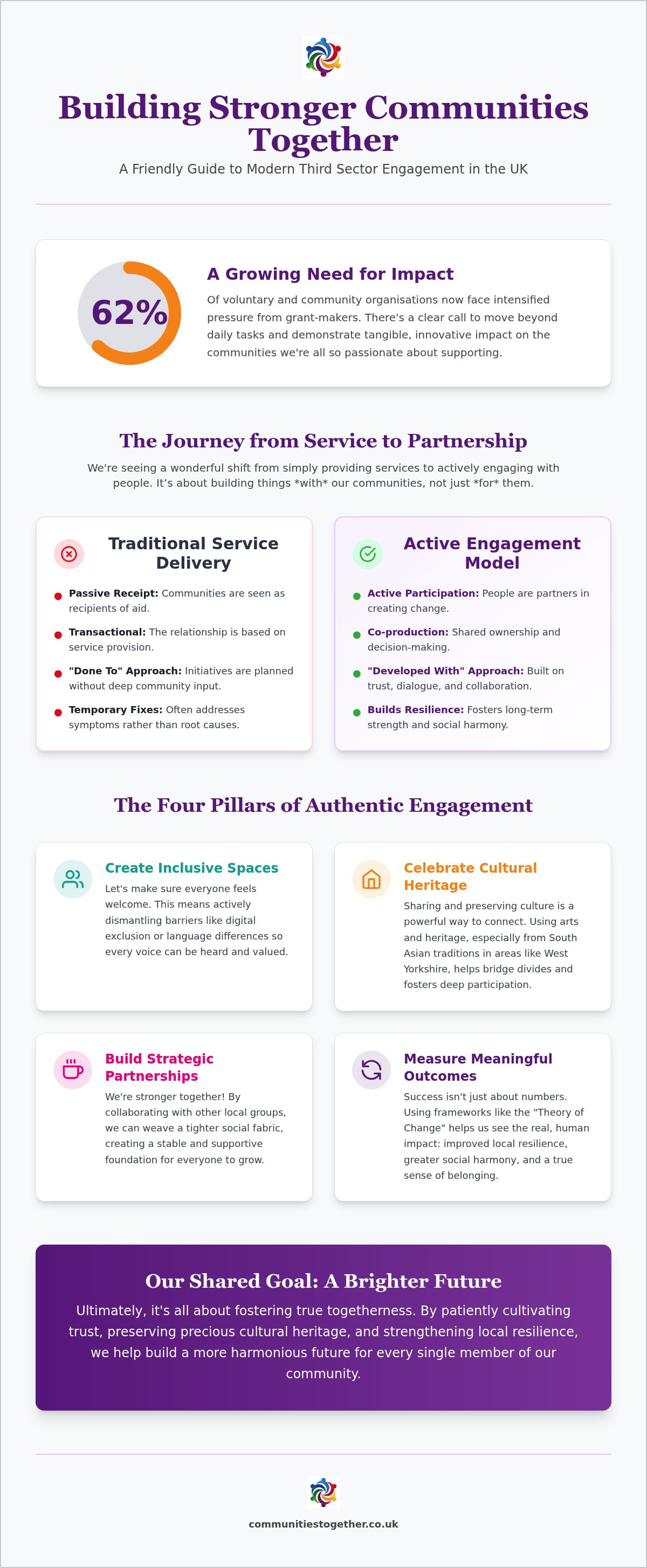
With 62% of voluntary, community, and social enterprise organisations now facing intensified pressure from grant-makers to demonstrate innovation and tangible impact, the necessity for a sophisticated approach to third sector community engagement UK wide has never been more pressing. We understand that for many dedicated practitioners, the aspiration to build meaningful connections often collides with the reality of limited resources, the challenge of engaging marginalised groups, and the persistent difficulty of reaching those who remain most isolated within our local areas. It's frequently disheartening when engagement efforts begin to feel like a procedural "tick-box" exercise rather than the transformative work of building a more unified society.
You likely recognise that fostering true togetherness requires more than just service delivery; it demands the patient cultivation of trust, the preservation of cultural heritage, and the strengthening of local resilience. In light of the new Community and Engagement Survey (CES) framework, this guide provides a comprehensive path for moving beyond superficial interactions to achieve authentic social cohesion through inclusive engagement, cultural preservation, and the building of strategic partnerships. We'll explore how your organisation can improve participation rates, reach isolated groups, and measure long-term impact, ultimately facilitating a more resilient and harmonious future for every member of the community.
Table of Contents
Defining the Landscape: Why Third Sector Community Engagement Matters in 2026
Establishing Inclusive Frameworks: Best Practices for Diverse Participation
Navigating Complexities: Overcoming Structural Barriers to Local Engagement
Quantifying Success: Measuring the Impact of Social Cohesion Initiatives
Empowering West Yorkshire: How Communities Together Strengthens Local Social Fabric
Defining the Landscape: Why Third Sector Community Engagement Matters in 2026
In our current social climate, third sector community engagement UK wide represents a methodical, collaborative process that seeks to empower local groups to address shared concerns, facilitate collective action, and maintain the structural integrity of our social fabric. This approach moves beyond the mere provision of aid, positioning the UK voluntary sector as a fundamental pillar of civil society that fosters social cohesion amongst increasingly diverse populations whilst preserving local identities. By acting as vital facilitators of community resilience, charities and social enterprises help to weave together the complex threads of our neighbourhoods, ensuring that every voice is heard and every contribution is valued within the broader context of national progress.
The transition from traditional "service delivery" models to "active engagement" strategies has become particularly pronounced in the post-2025 landscape, reflecting a shift towards a more inclusive, participatory, and accountable form of social development. To better understand how these concepts translate into practical action, watch this helpful video:
The Evolution of Civil Society and Engagement
The role of the third sector has undergone a significant transformation, moving away from a purely transactional relationship with residents and towards a focus on building social capital, facilitating mutual trust, and establishing long-term cultural continuity. Implementing inclusive community engagement programmes UK is now essential for ensuring long-term stability and creating a sense of shared purpose within our towns and cities. Within the specific contexts of West Yorkshire districts like Huddersfield and Halifax, social capital is defined as the robust network of relationships, shared values, and reciprocal trust that enables local residents to work together for the collective benefit of their community.
Distinguishing Engagement from Simple Service Delivery
Genuine engagement is fundamentally different from passive service receipt, as it prioritises active community participation, co-production, and the shared ownership of local initiatives. This shift towards active third sector community engagement UK ensures that projects are not just "done to" a community but are developed "with" them, resulting in more relevant services, stronger local resilience, and a deeper sense of belonging for all involved. When organisations commit to this level of collaboration, they don't just provide a temporary fix; they build a permanent foundation for growth.
By moving towards this collaborative model, organisations can offer better-informed learning, skills, and personal development opportunities that truly reflect the aspirations of local people. This approach empowers residents to take control of their own growth, facilitates the acquisition of new competencies, and strengthens the overall capacity of the local area to thrive in a changing world. It's through this methodical empowerment that we see the most significant improvements in community wellbeing and structural strength.
Establishing Inclusive Frameworks: Best Practices for Diverse Participation
To achieve meaningful third sector community engagement UK based organisations must move beyond generic outreach and design frameworks that mirror the specific demographic realities of regions like Huddersfield, Leeds, and Bradford. This involves a deliberate commitment to inclusivity that prioritises the voices of those often left on the periphery of social planning. By ensuring both physical and digital accessibility—a goal that can be supported by digital specialists like Cornerstone Marketing Solutions—we prevent the exclusion of isolated or vulnerable individuals, creating a truly representative space for collective growth. When programmes are built to be accessible from the outset, they don't just reach more people; they build a more robust foundation for long-term community health.
Culturally Sensitive Heritage Projects
Leveraging South Asian arts and heritage serves as a powerful vehicle for cultural participation, offering a vital bridge between generations and diverse community groups. When we preserve traditions through South Asian arts and heritage activities, we foster a profound sense of belonging and cultural continuity that is essential for social stability. Heritage workshops in schools are particularly effective in this regard, as they build early-years social cohesion by teaching children the value of diverse narratives and shared history. In this context, the organisation acts as a "wise facilitator", managing sensitive cultural stories with care whilst promoting a unified local identity. This methodical approach aligns with the UK government's social cohesion strategy, which emphasises the importance of building confident and resilient communities through shared understanding and mutual respect.
Implementing Co-production and Collaborative Design
Effective engagement relies on co-production models where community members are treated as equal partners in the design of workshops and initiatives. This collaborative process ensures that programmes are grounded in reality and possess the structural strength to survive beyond the initial funding cycle. To implement this successfully, organisations should consider the following steps:
Identify and involve local community leaders during the earliest planning phases to ensure cultural relevance.
Integrate "lived experience" into the curriculum of wellbeing and resilience workshops to address actual community needs.
Establish transparent feedback loops that allow residents to shape the evolution of the project.
Co-production fundamentally reduces the power imbalance between charities and the communities they serve by decentralising decision-making and validating local expertise as a primary source of knowledge. It's a shift from "doing for" to "working with," which is the hallmark of authentic third sector community engagement UK wide. If your organisation is looking to deepen its impact, exploring established Community Engagement Programmes can provide a practical starting point for building these essential, trust-based bridges.
Navigating Complexities: Overcoming Structural Barriers to Local Engagement
Authentic third sector community engagement UK wide requires us to move beyond the superficial "tick-box" approach that often characterises institutional outreach, instead embracing a long-term commitment to building genuine trust and mutual accountability. We understand that the path to social cohesion is often obstructed by deep-seated structural barriers, including linguistic differences, digital exclusion, and a historical mistrust of official bodies that can leave entire neighbourhoods feeling unheard and undervalued. Overcoming these complexities demands a proactive strategy that utilises local ambassadors to reach isolated groups, facilitating a more inclusive dialogue that prioritises the lived experiences of every resident. By focusing on non-clinical interventions, we can improve community wellbeing, foster a sense of collective endurance, and create a stable foundation for social harmony.
Bridging the Digital and Linguistic Divide
In diverse hubs such as Halifax and Wakefield, effective communication necessitates a multi-lingual approach that respects the cultural heritage of all residents whilst ensuring that vital information remains accessible to everyone. We've found that whilst digital platforms offer valuable tools for connection, they must be thoughtfully blended with traditional face-to-face activities at local community centres to prevent the exclusion of those without reliable internet access or digital literacy. Success in this area relies on the principle of "meeting people where they are," which involves bringing activities into familiar local spaces rather than expecting residents to navigate unfamiliar institutional environments. This nuanced approach to participation is supported by findings in the UK Third Sector Engagement Report, which highlights the necessity of diverse engagement methods to reach underrepresented populations.
Rebuilding Trust in marginalised Neighbourhoods
Repairing fractured relationships within urban neighbourhoods requires a methodical and transparent approach that prioritises long-term presence over short-term, project-based interventions that often vanish once funding cycles conclude. To build lasting structural strength, third sector organisations must demonstrate consistent accountability, facilitate open dialogue, and maintain a visible presence that reassures residents of their enduring commitment to the area. We believe that by acting as a reliable bridge-builder, your organisation can help to repair historic mistrust, facilitate cultural continuity, and strengthen the social fabric of the local area. This steady, absorptive process is central to the work we do at Communities Together, where we focus on building resilience and social cohesion through collaborative partnerships that stand the test of time.
Quantifying Success: Measuring the Impact of Social Cohesion Initiatives
To ensure that third sector community engagement UK remains both effective and accountable, we must adopt a methodical approach to evaluating the social outcomes of our initiatives. Whilst traditional metrics such as attendance figures and participant demographics provide a necessary baseline, they often fail to capture the profound, "unseen" benefits that cultural participation has on individual wellbeing and collective endurance. By moving beyond simple quantitative data, we can begin to measure the structural strength of our local social fabric, the depth of intergenerational trust, and the resilience of our neighbourhoods. We utilise social impact reports not merely as a requirement for funding, but as a vital tool for demonstrating value to stakeholders, facilitating transparent communication with partners, and maintaining our commitment to long-term social harmony.
Utilising the Theory of Change
The "Theory of Change" serves as a professional roadmap that links specific actions, such as a heritage workshop or a resilience programme, to broader, long-term social benefits. This framework allows us to define measurable indicators for abstract concepts like "social cohesion" and "community resilience" by mapping out the logical progression from initial input to final impact. When applying for support, it's helpful to use precise language that connects cultural heritage to specific social goals. For example, a successful grant application might state: "By facilitating South Asian arts and heritage activities, we aim to strengthen cultural identity, foster meaningful intergenerational dialogue, and achieve a demonstrable reduction in social isolation amongst elderly residents in West Yorkshire." To support such initiatives, practitioners can explore Charitable Donations and Grant Funding through the SHEEInnovate Global Initiative (SIGI).
Capturing Qualitative Community Resilience
Capturing the true essence of personal development and growth requires us to collect stories and testimonials that reflect the lived experiences of those we serve. These qualitative insights are essential for tracking the progress of local social infrastructure and understanding how our programmes facilitate a sense of belonging and togetherness. We prioritise ethical data collection by ensuring that the process remains inclusive and respectful, whilst maintaining the warmth and trust we've built within the community. Longitudinal studies are particularly valuable in this regard, as they allow us to observe the steady, absorptive impact of our work over several years, providing a comprehensive overview of how sustained engagement leads to stronger, more resilient local areas.
Empowering West Yorkshire: How Communities Together Strengthens Local Social Fabric
Communities Together serves as a methodical bridge-builder and an authoritative advocate for social progress across the diverse landscapes of West Yorkshire, including the thriving districts of Huddersfield, Halifax, Leeds, Bradford, and Wakefield. By seamlessly integrating heritage preservation, artistic expression, and wellbeing initiatives, we facilitate a sophisticated model of third sector community engagement UK that prioritises long-term structural strength and collective harmony. We understand that the preservation of cultural continuity is essential for fostering a sense of belonging, and our programmes are designed to act as a stable foundation upon which local residents can build a more resilient and interconnected future. Our work is driven by a deep sense of accountability to the people we serve, ensuring that every project contributes to the enduring stability and social responsibility of the region.
Bespoke Workshops in Huddersfield and Leeds
Our bespoke workshops in Huddersfield and Leeds provide tailored resilience and skills training that specifically addresses the complex needs of diverse populations who may otherwise face barriers to participation or experience social isolation. These programmes utilise the rich tapestry of South Asian arts to foster a shared sense of local identity, encouraging participants to engage with their heritage whilst developing practical skills that enhance their personal wellbeing and professional development. By creating these inclusive and welcoming environments, we help to reduce isolation, facilitate meaningful intergenerational dialogue, and ensure that every member of the community feels empowered to contribute to the local social fabric. We believe that by providing these learning and skills opportunities, we are not just delivering a service but are nurturing the long-term potential of every individual involved.
Capacity Building for Sustainable Collaborative Growth
Beyond direct delivery, we are deeply committed to community capacity building UK, providing the methodical support and infrastructure necessary for smaller local groups and grassroots organisations to achieve sustainable growth. We believe that a collaborative partnership model is the most effective vehicle for strengthening local social infrastructure, as it encourages the sharing of knowledge, the pooling of resources, and the alignment of social goals amongst diverse stakeholders. By acting as a professional conduit for collective growth, we invite you to join us in our mission to maintain social responsibility and foster lasting harmony throughout West Yorkshire. Our goal is to ensure that the social fabric of our towns and cities remains robust, adaptable, and capable of supporting the wellbeing of all residents for generations to come.
Cultivating a Resilient and Harmonious Future Together
The evolution of third sector community engagement UK wide depends on our collective ability to move beyond transactional service delivery and towards the cultivation of deep, trust-based relationships. By implementing inclusive frameworks that honour cultural heritage, addressing structural barriers with transparency, and utilising methodical evaluation tools like the Theory of Change, organisations can foster authentic social cohesion that withstands the pressures of a changing social landscape. We've seen how a steady, purposeful approach to participation doesn't just deliver immediate results but builds a permanent foundation for local identity, structural strength, and collective endurance.
We remain dedicated to serving Huddersfield, Halifax, Leeds, Bradford, and Wakefield as specialist experts in South Asian arts and heritage preservation. Our mission-driven approach prioritises long-term harmony and structural resilience, ensuring that every community member feels a profound sense of belonging and purpose within the social fabric we weave together. It's through these collaborative partnerships that we can truly strengthen our local infrastructure and facilitate growth that's both sustainable and inclusive.
Your commitment to building these vital bridges is what makes a lasting difference, and we're here to support that journey every step of the way. Together, we can create a future where every neighbourhood thrives through mutual respect and shared understanding.
Frequently Asked Questions
What is the definition of third sector community engagement in the UK?
Third sector community engagement UK is defined as the methodical, collaborative process of working alongside local groups to address shared concerns, facilitate collective action, and maintain the structural integrity of the social fabric. It's a shift from traditional service delivery to a model that positions voluntary organisations as essential conduits for building social capital, fostering mutual trust, and establishing a sense of shared purpose amongst diverse populations.
How can charities improve social cohesion through arts and heritage projects?
These projects serve as a powerful vehicle for cultural participation by offering a shared platform for dialogue, education, and the preservation of diverse traditions. By celebrating South Asian heritage activities, organisations can bridge generational divides, foster a profound sense of belonging, and create a unified local identity that respects individual backgrounds whilst promoting collective endurance, social harmony, and long-term community stability.
What are the main barriers to community engagement for non-profit organisations?
Non-profit organisations often encounter significant structural barriers such as linguistic differences, digital exclusion, and a historic mistrust of institutional bodies within marginalised neighbourhoods. These complexities require a proactive strategy involving local ambassadors and a consistent, long-term presence to repair fractured relationships, ensure accessibility for vulnerable individuals, and facilitate a more inclusive dialogue that reaches those who are most isolated from traditional services.
How do you measure the impact of community wellbeing and resilience workshops?
Impact is measured through the Theory of Change framework, which maps specific actions to long-term social outcomes such as improved resilience and a deeper sense of belonging. We distinguish between quantitative metrics like attendance and qualitative evidence such as personal testimonials, using longitudinal studies to track the steady, absorptive progress of local social infrastructure and individual wellbeing over several years to ensure accountability.
Why is cultural sensitivity important in UK community engagement programmes?
Cultural sensitivity is fundamental to third sector community engagement UK because it ensures that programmes are respectful of diverse narratives and grounded in the demographic realities of the local area. By acting as a "wise facilitator" of sensitive cultural stories, organisations can build the deep trust necessary for meaningful participation, preventing the exclusion of minority groups and strengthening the overall social fabric through mutual respect.
How can local organisations in West Yorkshire access community capacity building support?
Local groups in districts such as Huddersfield, Halifax, and Leeds can access community capacity building support through collaborative partnerships with established bridge-builders like Communities Together. We provide the methodical foundation, shared resources, and professional infrastructure necessary for grassroots organisations to flourish, facilitating sustainable growth and strengthening the social responsibility of the entire West Yorkshire region through a deeply collaborative and earnest partnership model.
Can arts and heritage workshops really reduce social isolation in urban areas?
Arts and heritage workshops effectively reduce social isolation by creating safe, inclusive spaces where individuals can connect through shared creative expression and cultural continuity. These non-clinical interventions provide a stable environment for residents to acquire new skills, build supportive networks, and develop a stronger sense of local identity, which is particularly vital for those living in densely populated urban centres who feel disconnected.
What is the role of co-production in third sector engagement?
Co-production decentralises decision-making by involving community members as equal partners in the design, delivery, and evaluation of local initiatives. This collaborative model validates local expertise, reduces power imbalances between charities and residents, and ensures that programmes are authentically aligned with the lived experiences and aspirations of the people they're intended to serve, ultimately leading to more resilient and sustainable community outcomes.


Comments