
UK Social Isolation Programmes: Cultural Connection Guide
Updated: Aug 14
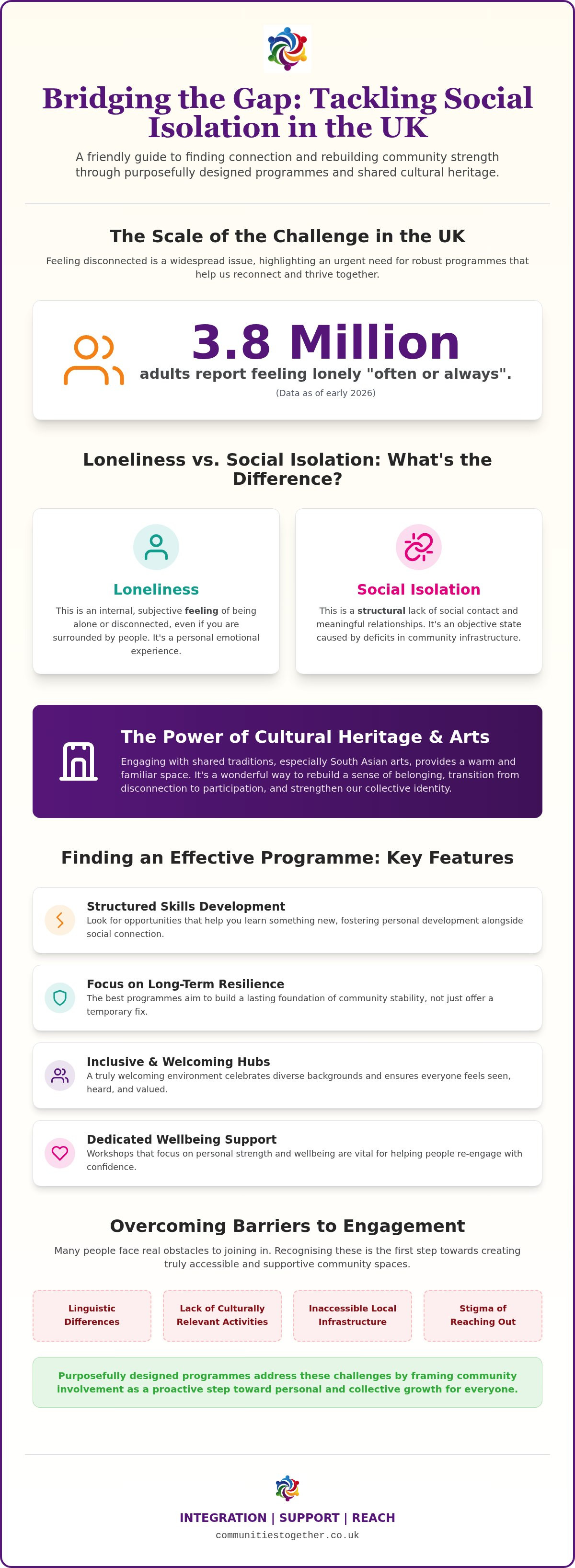
With approximately 3.8 million adults in the UK reporting that they feel lonely often or always as of early 2026, the challenge of fostering genuine human connection has become a matter of national importance and structural necessity. It's completely understandable if you feel that local community infrastructure has become difficult to navigate, or if you're experiencing a sense of hesitation when considering re-engaging with social groups after a long period of isolation. We're here to help you discover how purposefully designed programmes to reduce social isolation UK wide can help you find a path back to collective strength through cultural heritage projects, community engagement initiatives, and resilience workshops. This guide provides a comprehensive overview of how these structured interventions work to facilitate personal development, preserve vital cultural traditions, and build the long-term social fabric required for your wellbeing. By exploring these pathways, you'll see how it's possible to develop new skills whilst meeting like-minded people who share your commitment to heritage and community growth.
Table of Contents
Understanding the Landscape of Social Isolation in the UK
Social isolation is defined as a structural deficit in community infrastructure and meaningful social contact, which differs significantly from the internal, subjective experience of loneliness. Whilst loneliness can affect anyone at various life stages, chronic social isolation represents a tangible lack of external connections that often results in a profound erosion of collective resilience within our neighbourhoods. In 2026, data indicates that approximately 3.8 million adults in the UK report feeling lonely "often or always," a statistic that highlights the urgent need for robust programmes to reduce social isolation UK wide. These initiatives aren't just about providing a place to talk; they're about rebuilding the very fabric of our society through consistent engagement, shared purpose, and the facilitation of long-term social stability.
The national conversation surrounding this issue gained significant momentum following the work of the Jo Cox Commission on Loneliness, which established that social disconnection is a major public health challenge requiring a coordinated, institutional response. By focusing on structural strength and cultural continuity, we can move beyond temporary fixes and towards sustainable community development that values every individual's contribution. It's a collaborative effort that requires us to understand both the sociological roots of isolation and the practical steps needed to weave people back into the heart of their local areas.
To better understand the physiological and psychological effects of this disconnection, watch this helpful video:
The Impact of Isolation on Community Cohesion
Identifying Barriers to Engagement
Many residents in West Yorkshire face complex obstacles that prevent them from accessing mainstream social activities, ranging from linguistic differences to a lack of culturally relevant opportunities. In areas like Huddersfield and Halifax, limited local infrastructure can make social spaces feel physically or emotionally inaccessible, particularly for those from diverse backgrounds who may not see their heritage reflected in existing services. Addressing the stigma of reaching out is also crucial. We must frame community involvement as a proactive step toward personal development and collective growth. You can explore how we facilitate these connections through our dedicated work at learn more, where we prioritise inclusive engagement as a core methodology for social change.
Why Cultural Heritage and Arts Programmes Drive Social Cohesion
Cultural heritage acts as a vital conduit for togetherness, offering a stable foundation for individuals to transition from a state of disconnection to one of active community participation. By engaging with ancestral traditions and shared histories, participants often experience an immediate sense of belonging that transcends the superficial interactions found in generic social settings. This is precisely why programmes to reduce social isolation UK wide are increasingly incorporating South Asian arts and heritage activities as a primary methodology. These initiatives provide a culturally resonant entry point that acknowledges an individual's identity whilst simultaneously fostering new, meaningful connections. The UK's national strategy for tackling loneliness emphasises the necessity of such community-led solutions to build social capital and improve collective wellbeing. Through the process of "creative socialising," individuals can reduce the anxiety often associated with re-engaging with groups by focusing their energy on a shared artistic task, which facilitates a more natural and reassuring rhythm of interaction.
Arts as a Universal Language for Connection
Traditional crafts and performance serve as a universal language that bridges the gaps between different community backgrounds by highlighting our shared human experiences. Within the supportive environment of a community group, creative expression provides significant psychological benefits, including the development of personal resilience, the improvement of self-esteem, and the cultivation of a sense of purpose. In diverse urban centres such as Leeds and Bradford, heritage projects allow people to collaborate on tangible goals, which helps to dismantle barriers and promote inclusive participation. If you're looking for ways to get involved, you might find our South Asian arts and heritage activities a welcoming space to start your journey toward social reconnection.
Preserving Identity Whilst Building New Ties
Cultural preservation projects empower individuals to share their personal narratives, ensuring that their unique voices contribute to the broader community story. We strive to create a "wise facilitator" environment where tradition and modern community life meet to support long-term social stability and individual growth. By documenting oral histories or participating in traditional music workshops, older populations can pass down valuable knowledge to younger generations, creating a vital intergenerational bridge. To explore how digital companionship can further support seniors in maintaining these connections, you can check out Tomō. Heritage education fosters collective endurance by anchoring diverse groups in a shared understanding of their historical contributions and their collective future potential.
Evaluating Effective Models for Reducing Isolation
When evaluating the efficacy of the various programmes to reduce social isolation UK providers offer, it's essential to distinguish between purely social clubs and more structured, mission-driven interventions such as wellbeing workshops or skills development initiatives. Whilst social clubs provide valuable immediate contact, they often lack the long-term structural strength required to facilitate deep-seated community resilience and collective endurance. In contrast, professional community engagement models prioritise capacity building, which involves strengthening the skills, competencies, and abilities of local residents to ensure the sustainability of social networks. Non-clinical interventions are particularly effective in this regard, as they focus on personal growth, cultural continuity, and social responsibility without the clinical distance often found in traditional medical settings. This methodical approach ensures that every statement of intent is balanced by a measurable statement of impact on the lives of participants, creating a stable foundation for others to build upon.
The success of these models frequently depends on collaborative partnerships between grassroots organisations, local authorities, and national bodies such as the National Lottery Community Fund. By pooling resources and expertise, these facilitators can expand their reach to more isolated individuals, ensuring that the social fabric is woven with a high degree of professional literacy and accountability. These partnerships are not merely about funding; they're about building, facilitating, and maintaining a professional conduit for collective growth that respects both tradition and progress. By working together, organisations can deliver a comprehensive overview of cause and effect, demonstrating how specific community actions lead to broader social outcomes such as improved harmony and reduced disconnection.
Wellbeing and Resilience Workshops
Focusing on personal development is a critical component of successful engagement, as it provides individuals with the internal confidence, emotional stability, and self-assurance needed to re-engage with the wider world. There's a direct link between learning new resilience skills and reducing the profound sense of existential loneliness that often accompanies long periods of disconnection from local community infrastructure. To understand how these sessions are structured to support collective growth and individual recovery, you can read our collaborative wellbeing workshops UK guide, which outlines our professional approach to non-clinical support. These workshops empower participants to navigate their personal challenges whilst contributing to the broader strength of their social group.
Skills-Based Learning and Development
Structured learning environments naturally foster organic social relationships by providing a common purpose and a shared focus that bypasses the initial anxiety of meeting new people. As participants acquire new skills in areas such as heritage preservation or traditional arts, they often undergo a transition from being a learner to becoming a community mentor, a volunteer, or a methodical advocate for others. This process is particularly evident in our work across West Yorkshire, where we've seen how inclusive community programmes in Wakefield empower residents to take ownership of their local heritage whilst building a stable foundation for their future. By facilitating these learning pathways, we help to maintain a rhythmic pulse of social delivery that benefits the individual and the broader community in equal measure.
How to Access and Establish Inclusive Community Programmes
Accessing the right support system involves more than just finding a nearby group; it requires a deliberate process of identifying local hubs that specialise in inclusive engagement, assessing their commitment to diverse backgrounds, and ensuring they possess the professional literacy needed to support your journey. High-quality programmes to reduce social isolation UK are those that demonstrate a clear sense of accountability, provide a warm welcome through structured induction, and offer a clear pathway from initial participation to more advanced community roles. To establish a sustainable connection, we recommend following a methodical five-step approach:
Identify local hubs: Seek out organisations that understand the specific cultural nuances of West Yorkshire and possess a proven track record in heritage preservation.
Assess inclusive credentials: Look for programmes that prioritising social responsibility and demonstrate a methodical approach to welcoming new members.
Start with low-pressure workshops: Engage with heritage or skills-based sessions to rebuild your confidence without the immediate pressure of intense social interaction.
Engage in capacity building: As your confidence grows, look for opportunities to take on leadership roles that help strengthen the local social fabric.
Maintain regular participation: Foster collaborative growth by committing to consistent attendance, which helps to build collective endurance for everyone involved.
Finding the Right Fit in West Yorkshire
Navigating community engagement opportunities in Huddersfield, Halifax, and Leeds often depends on local knowledge. This is particularly true when you're seeking out "hard-to-reach" cultural projects that might not be widely advertised in mainstream channels. It's vital to seek out organisations that prioritise transparency and professional accountability in their delivery. Local knowledge is key. By connecting with established facilitators who understand the complex threads of our social fabric, you can ensure that your participation contributes to both your personal wellbeing and the stability of the wider community. We're committed to maintaining these vital links throughout 2026 and beyond.
Supporting Others to Reconnect
Acting as a bridge-builder for friends or family members who are isolated involves facilitating safe spaces for engagement and providing the steady reassurance needed to overcome re-entry anxiety. You don't have to do it alone. Community leaders play a crucial role in this process by acting as methodical advocates for those who feel disconnected from local infrastructure. Community learning and development UK initiatives provide a stable foundation for social re-entry by equipping individuals with the practical skills and emotional resilience needed to navigate communal spaces with renewed confidence. It's a gradual process. By working together, we can weave a stronger, more inclusive narrative for every resident in our region.
Strategic Community Engagement: The Communities Together Approach
At Communities Together, we've dedicated our efforts to the vital mission of strengthening local social cohesion by facilitating South Asian arts and heritage activities that speak directly to the lived experiences of our residents. Our programmes to reduce social isolation UK wide are designed to act as a stable foundation for those who feel disconnected, providing a professional conduit for collective growth, cultural continuity, and long-term social stability. By delivering targeted wellbeing and resilience workshops in Huddersfield and across West Yorkshire, we empower individuals to reclaim their sense of purpose whilst contributing to the structural strength of their neighbourhoods. We believe that building community capacity is not just about short-term engagement; it's about establishing collaborative partnerships and infrastructure support that ensure our social fabric remains resilient, harmonious, and supportive for years to come.
Our Heritage and Cultural Preservation Projects
Our approach to preserving cultural traditions is deeply rooted in the belief that shared history can expand educational access and foster a more inclusive society for everyone. We've seen the transformative impact of our South Asian heritage workshops in Bradford and Wakefield schools, where students engage with ancestral narratives to develop a greater understanding of their place within a diverse UK. These projects represent a methodical intervention designed to protect our shared history whilst building the confidence, curiosity, and cultural literacy of the next generation. You can explore how these initiatives work in practice by reading our guide on Community-led heritage projects UK, which details our commitment to safeguarding the traditions that define our region. It's a process of building, facilitating, and maintaining the threads of our collective memory to ensure they're never lost.
Join a Community of Collective Growth
Our learning and skills programmes are specifically crafted to bridge the gap for isolated individuals, offering them a clear pathway from social re-entry to active community leadership. We maintain a professional, mission-driven focus on social welfare, ensuring that every workshop we facilitate is grounded in evidence-based practices that promote togetherness, harmony, and collective endurance. Whether you're looking to develop new artistic skills or simply want to meet like-minded people in a supportive environment, we warmly invite you to explore the local engagement opportunities available at Communities Together. By joining us, you're not just participating in a programme; you're becoming part of a methodical effort to weave a stronger, more harmonious future for all our communities whilst improving your own personal resilience and sense of belonging. We're here to act as your authoritative bridge-builder, providing the expertise and stability you need to reconnect with confidence.
Building a Resilient and Connected Future Together
Tackling social disconnection requires a methodical approach that values both individual wellbeing and the collective strength of our neighbourhoods. By participating in heritage preservation and creative socialising, you can find a sense of belonging whilst developing the resilience needed to navigate local community infrastructure with confidence. Effective programmes to reduce social isolation UK wide demonstrate that when we invest in cultural continuity and skills-based learning, we create a stable foundation for long-term social impact. It's a journey of recovery.
As specialists in South Asian arts and heritage preservation, we're dedicated to supporting residents across Huddersfield, Halifax, Leeds, Bradford, and Wakefield through professional, mission-driven facilitation. We understand that re-engaging with groups can feel daunting, but our workshops provide a warm, inclusive environment where your personal narrative is valued. Together, we can maintain the vital threads of our social fabric and ensure that every individual has the opportunity to thrive through shared purpose and collaborative growth. We're here to help.
We look forward to welcoming you into our community of collective growth and helping you take the next step toward a more connected life.
Frequently Asked Questions
What are the best programmes to reduce social isolation in the UK for 2026?
The most effective programmes to reduce social isolation UK wide in 2026 are those that combine structured social prescribing with community-led initiatives such as heritage preservation and wellbeing workshops. National Lottery-funded projects and grassroots cultural hubs provide essential non-clinical support that facilitates long-term personal development. These initiatives prioritise capacity building and collective resilience, ensuring that participants don't just meet people but build a stable foundation for their future wellbeing within a supportive, inclusive environment.
How can cultural heritage projects help with loneliness and social cohesion?
Cultural heritage projects create an immediate sense of belonging by anchoring individuals in a shared history and collective identity. By participating in traditional arts or oral history documentation, residents find a familiar entry point that reduces the anxiety of meeting new people. These activities foster social cohesion by bridging intergenerational gaps and encouraging diverse groups to collaborate on preserving their shared traditions, which ultimately strengthens the local social fabric and promotes long-term harmony.
Are there specific community engagement programmes for the South Asian community in West Yorkshire?
Yes, we facilitate dedicated South Asian arts and heritage activities across West Yorkshire, specifically serving residents in Huddersfield, Halifax, and Bradford. These programmes are designed to celebrate cultural continuity whilst providing a welcoming space for individuals from all backgrounds to reconnect. By focusing on traditional crafts and heritage preservation, we provide culturally resonant opportunities that empower participants to share their narratives and build meaningful ties within their local community infrastructure.
Can skills development workshops really help me make new friends?
Skills development workshops provide a structured environment where social relationships can form naturally through a shared focus on learning and personal growth. As you work alongside others to master traditional crafts or resilience techniques, the pressure of direct social interaction is replaced by a sense of collective achievement. This methodical approach to programmes to reduce social isolation UK helps transition participants from being learners to becoming community mentors, fostering organic and lasting friendships.
What is the difference between a social club and a community capacity building programme?
Whilst social clubs focus primarily on providing immediate social contact, community capacity building programmes are mission-driven initiatives designed to strengthen the long-term skills and resilience of a neighbourhood. Capacity building involves a methodical process of developing the competencies of local residents so they can take on leadership roles and maintain their own social networks. This approach ensures that community growth is sustainable, professional, and grounded in a sense of collective accountability.
How do I find inclusive community programmes in Leeds or Bradford?
You can find inclusive programmes in Leeds or Bradford by searching for local hubs that specialise in cultural engagement and partnership building. It's helpful to look for organisations that demonstrate a clear commitment to social responsibility and provide structured induction for new members. Many high-quality initiatives are delivered through community centres that host South Asian arts or wellbeing workshops, ensuring a warm welcome for individuals from diverse backgrounds seeking to reconnect.
Are wellbeing and resilience workshops suitable for everyone?
Our wellbeing and resilience workshops are designed to be inclusive and accessible for adults from all walks of life who are seeking to improve their personal endurance. These non-clinical sessions focus on abstract social concepts such as togetherness and collective strength, providing practical tools for managing the anxiety of social re-entry. Whether you're a younger adult or part of the older population, these workshops facilitate a reassuring rhythm of personal development and community growth.
How can I volunteer to help reduce social isolation in my local area?
Volunteering is a vital way to act as a bridge-builder and support the structural strength of your local area. You can get involved by supporting heritage preservation projects, assisting in wellbeing workshops, or helping to facilitate community engagement programmes. By sharing your skills and time, you contribute to the collective resilience of your neighbourhood whilst developing your own professional literacy in social welfare and cultural continuity within a methodical, supportive framework.


Comments