
UK Segregation: Social Cohesion Strategies 2026
If the vibrancy of our diverse towns is measured by the strength of their connections, why do so many residents in 2026 still feel like strangers within their own postcodes? It's understandable to feel a growing sense of unease regarding rising social tensions, especially when the divide between structural barriers and personal choice remains misunderstood and often overlooked. Tackling social segregation in the UK requires a methodical, earnest approach that prioritises the restoration of trust, the preservation of cultural heritage, and the facilitation of shared spaces for all. This article offers a comprehensive analysis of modern social division alongside the community-led strategies essential for fostering a more integrated, resilient, and harmonious society. We'll explore practical frameworks for sustainable engagement, examine the vital link between cultural participation and social resilience, and highlight the impactful work of local initiatives currently transforming lives across West Yorkshire. By understanding these complex dynamics, we can begin to build the structural strength and collective endurance needed for a truly unified future.
Table of Contents
Understanding Modern Segregation in the UK Context
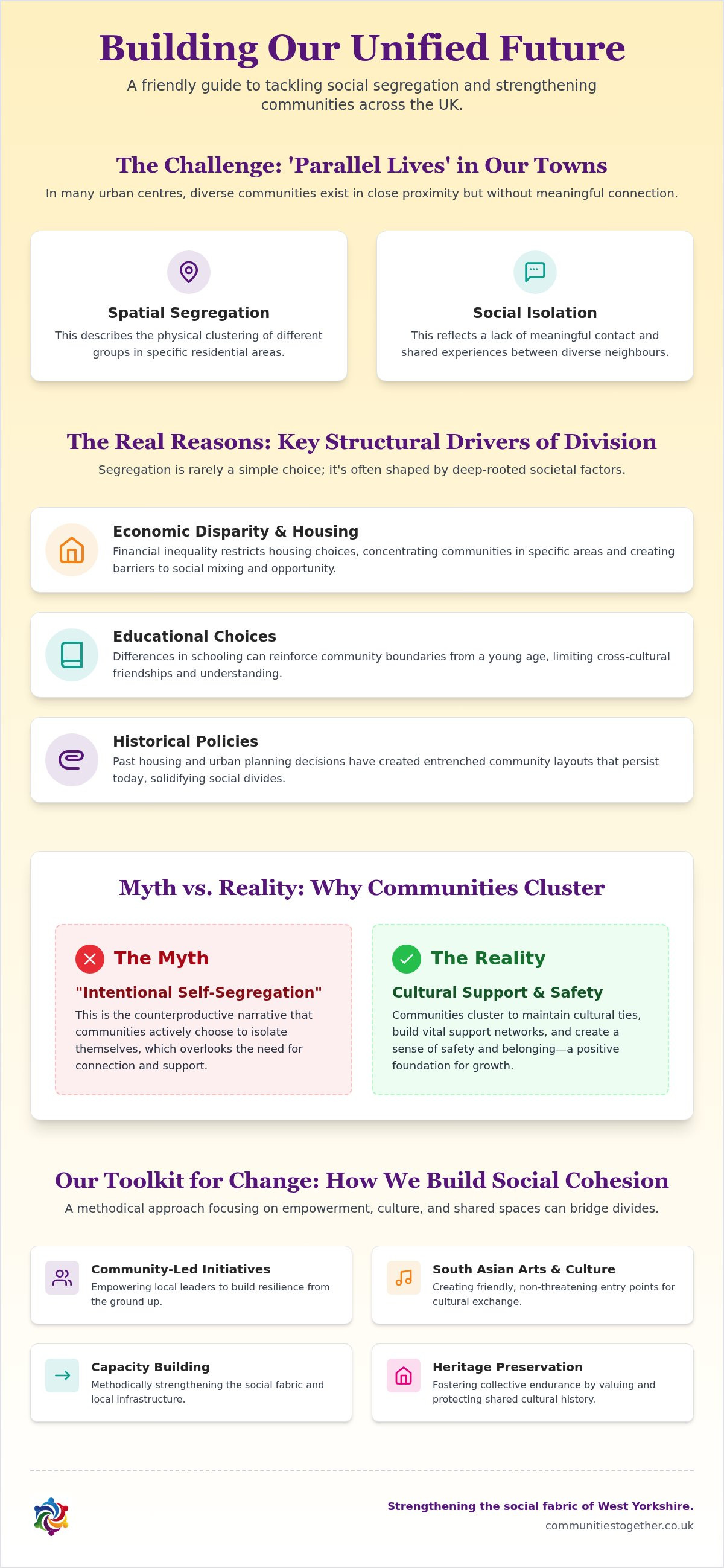
In the evolving landscape of 2026, segregation is recognised as a multifaceted phenomenon that extends far beyond simple residential patterns to include complex social and economic layers. Whilst traditional metrics often focus on the physical distribution of households, a comprehensive approach to tackling social segregation in the UK must address the deeper disconnects that prevent genuine community integration. Within urban centres like Leeds and Bradford, we observe a distinct difference between spatial segregation, which describes the geographic clustering of groups, and social isolation, which reflects a lack of meaningful contact between diverse residents. This leads to the phenomenon of parallel lives, where individuals exist in close physical proximity but lack the shared experiences or mutual understanding necessary for a unified society. Establishing social cohesion serves as the strategic alternative to these divided communities, providing a framework for building togetherness and cultural continuity.
The Distinction Between Choice and Constraint
Segregation is the physical and social separation of groups based on ethnicity or socio-economic status. Whilst some clustering is a favourite way for communities to maintain cultural ties and support networks, much of this division is driven by structural factors that limit genuine mobility. Historical housing policies and urban planning decisions have often inadvertently solidified these boundaries, creating entrenched community layouts that persist today. By facilitating heritage preservation and community capacity building, we can begin to address these structural legacies whilst respecting the cultural continuity that residents value. It's a matter of ensuring that where people live is a result of opportunity rather than a lack of alternatives.
Measuring Social Cohesion in 2026
The indicators of a healthy, integrated community have shifted toward measuring trust, shared participation, and collective endurance. In 2026, the focus has moved toward resilience as a core component of community strength, assessing how well a local area can withstand external pressures whilst maintaining internal harmony. Shared spaces, such as community centres and heritage sites, play a vital role in this process by fostering accidental interactions amongst diverse groups. These informal encounters are essential for building the structural strength needed to move from parallel lives toward a truly integrated social fabric. By prioritising these shared environments, we facilitate the methodical growth of a society that values both tradition and progress in equal measure.
The Structural Drivers of Community Division
Whilst the conceptual framework of parallel lives helps us understand the nature of social division, we must address the tangible structural drivers that entrench these patterns within West Yorkshire. Economic disparity remains a significant catalyst for separation, reinforcing residential boundaries in districts like Bradford and Halifax by restricting the housing choices available to lower-income households and concentrating diverse groups in specific, often underserved, geographic wards. This stratification is often compounded by a lack of affordable, inclusive community infrastructure, which hinders the organic development of shared social capital and limits the opportunities for residents to interact across socio-economic lines. Effectively community capacity building UK is essential for addressing these structural gaps, as it provides the methodical support needed to facilitate local leadership, improve community resilience, and strengthen the underlying social fabric.
Economic Disparity and Housing Patterns
The cost of living and the availability of housing dictate where different communities settle, often creating geographic clusters that reflect broader financial inequalities. Economic integration is a fundamental prerequisite for long-term social harmony, ensuring that residents from all backgrounds have equitable access to resources, stable environments, and professional opportunities. Without a concerted effort toward tackling social segregation in the UK through economic reform, financial barriers will continue to isolate our neighbourhoods, preventing the collective growth and shared prosperity that a unified society requires. Methodical investment in local infrastructure is a vital step in building the stability and harmony needed for diverse communities to thrive together.
Educational Segregation and the School Gate
Educational segregation often mirrors or even amplifies residential patterns, as school catchments frequently reflect the demographic makeup of their immediate surroundings. This school gate divide limits cross-cultural interaction during formative years, potentially leading to a lack of shared understanding and the inadvertent reinforcement of social silos amongst the next generation. Schools have a unique opportunity to act as bridge-builders by implementing inclusive community programmes that promote collaborative growth, cultural exchange, and mutual respect. By fostering these connections early, we can begin to dismantle the barriers that lead to social isolation and build a more resilient, integrated future for all residents in West Yorkshire.
In the mid-2020s, the digital divide has also emerged as a critical form of social exclusion, where unequal access to technology and digital literacy further isolates marginalised groups from the wider social and economic discourse. Addressing this gap requires a deliberate commitment to providing learning, skills, and personal development opportunities that ensure every member of the community can participate fully in a digital world. You might consider how strengthening local skills can help bridge these technological divides and foster greater community interconnectedness.
Debunking the Myth of 'Self-Segregation'
The prevailing narrative that minority communities deliberately choose to live apart out of a desire for isolation represents a significant oversimplification of the complex social dynamics at play in contemporary Britain, often ignoring the underlying structural pressures that necessitate the formation of cultural support networks. In reality, the phenomenon often described as self-segregation is frequently a rational response to the need for safety in numbers, the preservation of cultural heritage, and the accessibility of specialised services that are often absent in so-called neutral areas. When we focus on tackling social segregation in the UK, we must recognise that integration is an inherently two-way process that requires the host community to be as welcoming and inclusive as the minority groups are expected to be adaptable. Without this mutual effort, individuals are often forced back into ethnic enclaves where they feel a sense of security, belonging, and cultural continuity that is not always guaranteed in the wider social sphere.
Choice versus Constraint in Local Areas
Whilst many residents feel more comfortable amongst those with a shared heritage, this preference is often reinforced by external factors such as white flight, which has historically altered the demographics of towns like Huddersfield and Halifax by creating a vacuum that further solidifies residential boundaries. This demographic shift can inadvertently lead to a lack of cross-cultural interaction, making the creation of bridge spaces even more vital for fostering togetherness, building social capital, and facilitating the collaborative growth of our urban centres. By establishing professional conduits for engagement, we can provide residents with the confidence to step outside their immediate enclaves whilst knowing their cultural identity is respected and valued. It's about creating a stable foundation where everyone feels they belong, regardless of their postcode or background.
The Role of Media Narratives
The impact of sensationalised media headlines regarding no-go zones cannot be overstated, as these narratives contribute to a climate of fear, promote mistrust, and further entrench the very divisions they claim to report on. Earnest, fact-based reporting is essential for building community trust, providing a more nuanced perspective on the challenges of integration, and highlighting the many community-led success stories that exist across West Yorkshire. We should look toward initiatives that prioritise stability, harmony, and social responsibility as the true measures of our progress. By shifting the discourse away from provocative messaging and toward a methodical analysis of social cohesion, we can better support the practitioners and advocates working tirelessly to weave our diverse social fabric back together.
Strategies for Strengthening Social Cohesion and Resilience
Moving beyond the identification of structural barriers, we find that the implementation of methodical community engagement programmes UK is a vital step in breaking down deep-seated divisions and building a more resilient social fabric. By creating structured opportunities for diverse groups to interact, these initiatives facilitate the growth of mutual trust, the development of shared social capital, and the maintenance of long-term community harmony. This proactive approach is essential for tackling social segregation in the UK, as it shifts the focus from managing conflict to building a stable foundation for collective growth. It's a process that requires patience, professional expertise, and a deep-seated commitment to the wellbeing of every resident.
The Power of Arts and Heritage
Cultural preservation projects can measurably reduce social isolation by creating shared points of interest that transcend ethnic or socio-economic boundaries. In urban centres like Bradford and Leeds, South Asian arts and heritage activities serve as a non-threatening entry point for cultural exchange, allowing residents to explore shared histories whilst celebrating the unique contributions of diverse communities. These projects don't just preserve the past; they foster a sense of belonging for all residents by demonstrating that heritage and cultural preservation are collective responsibilities that strengthen our shared identity. When schools in West Yorkshire integrate these heritage projects into their curriculum, they provide students with the emotional intelligence and cultural literacy needed to navigate a diverse world with confidence and respect.
Building Community Capacity
To ensure these strategies are sustainable, we must invest in community capacity building by training local leaders in inclusive engagement skills, facilitating partnership building amongst small community groups, and providing individuals with the tools they need to participate fully in a diverse society. The provision of skills and personal development UK is particularly impactful for marginalised individuals, as it builds the personal resilience and professional confidence required to engage with the wider community. This methodical approach ensures that progress is not left to chance but is instead the result of a deliberate, professional effort to weave together the complex threads of our social fabric. Partnerships between local authorities and community organisations are essential for scaling these efforts and ensuring that every ward in West Yorkshire has access to the resources needed for togetherness.
Wellbeing and Collective Resilience
Addressing the psychological barriers to integration is equally important, which is why we advocate for collaborative wellbeing workshops UK to reduce the social anxiety that often arises in diverse environments. These workshops provide a safe space for residents to develop coping strategies, build emotional intelligence, and foster a sense of shared purpose. By linking personal wellbeing to community strength, we create a virtuous cycle of engagement that supports the long-term goal of tackling social segregation in the UK. It's through these shared experiences of growth and support that we build the collective endurance necessary for a harmonious future.
Facilitating Change: The Communities Together Approach
Communities Together operates as a professional conduit for social cohesion across West Yorkshire, employing a methodical and earnest approach to address the complex threads of our social fabric. By acting as a wise facilitator, we provide a stable foundation for collective growth in Huddersfield, Halifax, Leeds, Bradford, and Wakefield, ensuring that every intervention is grounded in the values of stability, harmony, and social responsibility. Our work is dedicated to tackling social segregation in the UK through the implementation of long-term strategies that prioritise the structural strength of our neighbourhoods whilst fostering a deep sense of togetherness amongst diverse residents. This methodical framework allows us to bridge the gap between individual experience and broader social outcomes, facilitating a narrative of interconnectedness that's both grounded and aspirational.
Local Impact in West Yorkshire
In urban centres like Leeds and Huddersfield, we deliver specific heritage workshops and wellbeing programmes designed to reduce isolation, build emotional intelligence, and create shared points of cultural interest. Our focus on community capacity building in Wakefield and Halifax is essential for strengthening local infrastructure, providing the training and resources necessary for local leaders to facilitate inclusive engagement within their own wards. Our South Asian arts programmes play a vital role in this process by preserving rich traditions whilst simultaneously inviting wider participation from the whole community, ensuring that cultural continuity becomes a bridge rather than a barrier. By maintaining a professional distance whilst executing warm, community-oriented goals, we help residents move from parallel lives toward a shared future of collaborative growth and mutual respect.
Your Role in a More Integrated Future
We encourage individuals, local authorities, and third-sector organisations to partner with Communities Together to achieve the scale and impact required for meaningful social change. By providing a clear pathway for community leaders to access resilience training and personal development, we empower the next generation of advocates to continue the vital work of tackling social segregation in the UK. We invite you to explore our community-led heritage projects UK to understand how heritage and cultural preservation can act as a catalyst for social integration and structural strength. Together, we can build a society that values its diverse threads whilst weaving them into a single, resilient fabric that's capable of enduring the challenges of the future. It's through this steady, deliberate effort that we'll create the stability and harmony our region deserves.
Building a Unified Future for West Yorkshire
True social integration requires a methodical commitment to addressing structural barriers whilst celebrating the diverse cultural threads that define our region. We've explored how moving beyond the myth of self-segregation allows us to focus on the essential work of building shared social capital, facilitating mutual trust, and maintaining cultural continuity. Tackling social segregation in the UK is not a challenge that can be solved through short-term excitement; instead, it demands the steady, professional expertise of established facilitators who understand the link between cultural participation and social resilience. By prioritising heritage preservation, community capacity building, and wellbeing workshops, we provide the stable foundation needed for every resident in Leeds, Bradford, and Huddersfield to thrive together. Our expertise in South Asian arts and heritage activities serves as a vital conduit for this collaborative growth, ensuring that tradition and progress move forward in equal measure.
It's through these deliberate, community-led efforts that we'll weave a more resilient social fabric for generations to come.
Frequently Asked Questions
What is the primary cause of segregation in the UK today?
The primary cause of segregation is a complex interplay of structural drivers, including economic disparity, historical housing policies, and limited access to inclusive infrastructure. These factors often restrict residential mobility, forcing groups into geographic clusters that reinforce social boundaries. Tackling social segregation in the UK requires addressing these underlying inequalities whilst facilitating shared spaces that encourage meaningful interaction amongst diverse residents. It's about transforming parallel lives into a cohesive social fabric through methodical, community-led intervention.
How does segregation in the UK affect local economies in West Yorkshire?
Social division negatively impacts local economies by fragmenting labour markets, reducing shared social capital, and limiting the flow of professional opportunities across diverse wards. In districts like Leeds and Bradford, entrenched residential boundaries can prevent residents from accessing a wider range of skills and services, ultimately stifling regional growth. Strengthening social cohesion ensures that economic prosperity is shared more equitably, fostering a resilient environment where all communities can contribute to the collective endurance of West Yorkshire.
Is segregation increasing or decreasing in cities like Leeds and Bradford?
Current trends indicate a nuanced landscape where residential mixing may be gradually increasing whilst social isolation remains a persistent challenge in urban centres like Leeds and Bradford. Whilst geographic boundaries are shifting, the phenomenon of parallel lives continues to restrict meaningful contact between different groups. This highlights the importance of proactive community engagement to ensure that physical proximity translates into genuine social integration and mutual understanding, rather than just shared postcodes within the 2026 landscape.
Can cultural heritage projects really help reduce social isolation?
Cultural heritage projects are highly effective in reducing social isolation by creating shared points of interest that transcend ethnic and socio-economic boundaries. By facilitating South Asian arts and heritage activities, we provide residents with a non-threatening entry point for cultural exchange and collaborative growth. These projects foster a sense of belonging and cultural continuity, helping to build the structural strength necessary for a more integrated society whilst celebrating the unique traditions of every community.
What is the difference between integration and assimilation?
Integration is an inclusive, two-way process where both the host community and minority groups adapt to create a shared social fabric based on mutual respect. In contrast, assimilation typically requires individuals to abandon their cultural identity to conform to a single dominant norm. We prioritise integration that values cultural heritage and tradition, as this approach builds more resilient and harmonious communities through the facilitation of togetherness and shared purpose for all residents.
How can community engagement programmes help my local area in Huddersfield?
In Huddersfield, our community engagement programmes focus on breaking down social barriers and strengthening local infrastructure through methodical capacity building. By providing residents with opportunities for learning, skills, and personal development, we empower individuals to participate more fully in a diverse society. These initiatives reduce isolation and build collective resilience, ensuring that the social fabric of Huddersfield remains strong, inclusive, and capable of enduring future challenges through collaborative growth and earnest partnership.
What role does education play in residential segregation?
Education plays a significant role in residential segregation as school catchment areas often mirror the demographic makeup of their immediate neighbourhoods, creating a school gate divide. This limits cross-cultural interaction during formative years, which can inadvertently reinforce social silos into adulthood. By implementing inclusive community programmes within educational settings, we can begin to dismantle these early barriers, fostering the mutual understanding and social cohesion necessary for tackling social segregation in the UK.
How do I get involved with Communities Together initiatives?
You can get involved with Communities Together by participating in our South Asian arts and heritage activities, attending our wellbeing workshops, or partnering with us for community capacity building. We offer a clear pathway for community leaders and organisations to access resilience training and collaborative growth opportunities. By joining our mission-driven initiatives, you contribute to the stability and harmony of West Yorkshire, helping us build a more integrated and unified future for everyone.


Comments