
UK Community Cohesion Projects: Strategic Guide 2026
Updated: 2 days ago
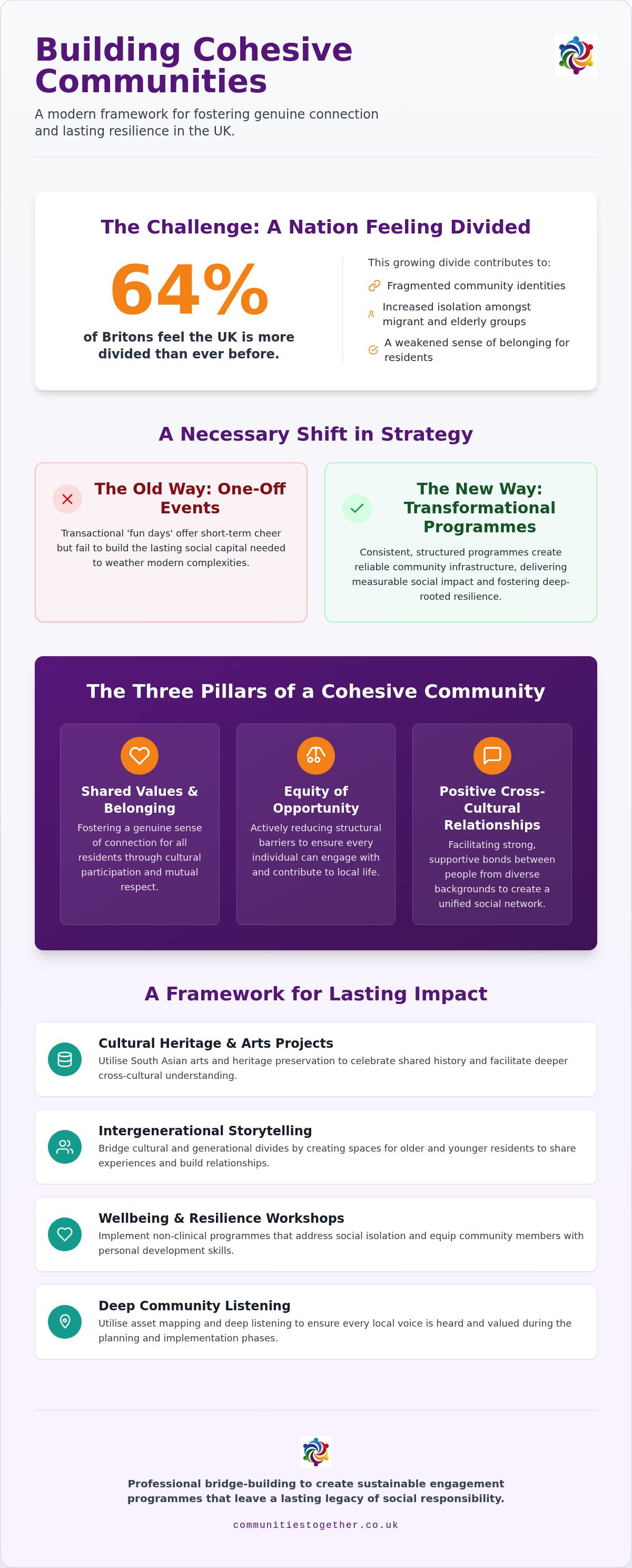
With 64% of Britons reporting that the United Kingdom feels more divided than ever before, the challenge of fostering genuine togetherness has become a critical priority for local authorities and grassroots organisers alike. We recognise the profound difficulty in moving beyond superficial, one-off gatherings to create meaningful structures that address fragmented identities, reduce the isolation felt by migrant populations, and provide a sense of belonging for our elderly residents. Finding the right community cohesion project ideas UK requires a methodical approach that balances immediate social needs with the long-term goal of building stable, harmonious, and resilient neighbourhoods.
By reading this guide, you'll discover how to integrate South Asian arts and heritage preservation into your local strategy to celebrate our shared history, facilitate deeper cross-cultural understanding, and empower individuals through skill-building workshops. We've curated a selection of innovative project templates designed to strengthen local bonds whilst providing the psychological resilience necessary for communities to thrive in uncertain times. This guide outlines practical frameworks for impactful projects, strategic advice for navigating the 2026 funding landscape, and proven methods for ensuring your initiatives leave a permanent legacy of social strength.
Table of Contents
Understanding Community Cohesion in the UK: The 2026 Landscape
Creative Heritage and Arts Projects to Bridge Cultural Divides
Wellbeing and Resilience Workshops: Strengthening the Social Fabric
Strategic Implementation: How to Organise for Lasting Impact
Partnering with Communities Together for Local Transformation
Understanding Community Cohesion in the UK: The 2026 Landscape
As we look toward the collective future of our towns and cities, the concept of Community cohesion has evolved into a measure of a local area's structural strength and social harmony. It's no longer just about peaceful coexistence; it's about the active cultivation of social responsibility and collective endurance within our modern British neighbourhoods. In 2026, the social fabric requires a more deliberate weaving of cultural heritage with progressive inclusion to ensure that every resident feels a deep sense of belonging whilst maintaining their unique cultural identity. This approach moves beyond simple tolerance, aiming instead for a robust state of togetherness where every individual feels invested in the stability of their local environment.
This shift demands a new level of inclusive engagement. At Communities Together, we act as professional facilitators in areas such as Huddersfield and Bradford, working methodically to bridge the gap between fragmented local identities and shared civic goals. By focusing on community cohesion project ideas UK that prioritise long-term stability and social responsibility over fleeting excitement, we can create environments where diversity is seen as a foundational asset rather than a point of friction. It's about building a reliable foundation where tradition and progress are valued in equal measure, ensuring that our communities remain resilient in the face of change.
To better understand how these concepts translate into practical action, watch this helpful video exploring cohesion through shared activity:
Whilst sport offers a practical pathway to cohesion, the long-term success of these initiatives depends on the reliability of the local infrastructure. For organisations overseeing community hubs, you can learn more about the specialist equipment inspections and sports facility maintenance provided by AMD Sport Services to keep your facilities safe and welcoming.
The Core Pillars of Cohesive Communities
Building a resilient community rests upon three primary pillars that must be addressed with equal rigour and earnestness. To achieve lasting harmony, we focus on:
Shared Values and Belonging: Fostering a genuine sense of connection for all residents through consistent cultural participation and mutual respect.
Equity of Opportunity: Actively working to reduce structural barriers to participation, ensuring that every individual has the support they need to engage with local life.
Positive Cross-Cultural Relationships: Facilitating strong bonds between people from diverse cultural and socio-economic backgrounds to create a unified, supportive social network.
Why One-Off Events Are No Longer Enough
The era of the transactional fun day is behind us. Whilst a single afternoon of celebration has its place, it rarely builds the sustainable social capital needed to weather the complexities of the modern landscape. We're seeing a necessary move toward transformational engagement programmes that provide consistent, structured community infrastructure. Implementing structured community cohesion project ideas UK allows for the creation of projects designed to deliver measurable social impact, moving beyond short-term cheer to foster the kind of deep-rooted resilience that allows a neighbourhood to support its most vulnerable members through methodical, collective action.
Creative Heritage and Arts Projects to Bridge Cultural Divides
Engaging with cultural heritage provides a methodical and earnest way to strengthen social bonds, ensuring that diverse histories are not just acknowledged but actively woven into the local identity. By moving away from generic, one-off events toward specific community cohesion project ideas UK, local organisers can facilitate a deeper cross-cultural understanding that addresses the root causes of social isolation amongst migrant groups and the elderly. This mission aligns with the strategic priorities outlined in the government's Protecting What Matters action plan, which emphasises that resilient communities are built upon a foundation of shared pride and local connection.
Utilising cultural heritage as a strategic tool allows us to bridge divides that might otherwise remain unaddressed. When we facilitate intergenerational storytelling, we aren't just sharing tales; we're preserving the collective memory of our towns whilst engaging younger residents in a meaningful dialogue with their elders. This process creates a shared "maker culture" through collaborative crafts like textile workshops, which provide a neutral space for residents to connect over a tangible, creative goal. Such initiatives are essential for moving beyond the transactional and toward a truly transformational social model that values every participant's contribution.
South Asian Heritage Preservation Initiatives
In West Yorkshire, documenting the journeys of South Asian families through community-led archives ensures that these vital contributions to our social fabric are permanently recorded for future generations. By hosting heritage workshops for schools, we can integrate these diverse histories into the local curriculum, providing all children with a more comprehensive understanding of their neighbours. Traditional music and dance further serve as inclusive mediums for celebration, allowing communities to share in the joy of cultural expression whilst building mutual respect. If you're looking to implement these strategies, our South Asian arts and heritage activities provide a professional framework for building lasting local harmony.
Collaborative Public Art Installations
Public art provides a visible, permanent symbol of a town's shared story, whether in Halifax, Leeds, or Bradford. Creating murals or sculptures that represent the collective journey of a place allows residents to see themselves reflected in their environment, fostering a sense of ownership. By inviting locals to contribute to heritage-themed displays in public centres, we ensure that the creative process is inclusive by design. This collaborative approach transforms public spaces into areas of shared pride, where community cohesion project ideas UK can manifest as physical landmarks of togetherness. Heritage education for diverse groups doesn't just impart facts; it actively reduces prejudice by expanding educational access and humanising the shared experience of living together.
Wellbeing and Resilience Workshops: Strengthening the Social Fabric
Individual wellbeing serves as the primary component of a resilient neighbourhood, as the personal endurance of residents directly influences the collective capacity of the group to withstand social pressures. When we implement non-clinical wellbeing interventions, we're not just supporting the individual; we're facilitating the structural strength of the entire social fabric. Effective community cohesion project ideas UK must therefore prioritise structured learning and personal development to ensure that residents possess the internal resources required for active civic participation. By moving beyond simple socialising to focus on methodical resilience, we can build a community that's both supportive and self-sustaining.
Peer support circles represent a vital tool for collaborative growth, especially amongst groups that have historically felt sidelined or isolated. These circles provide a safe, formalised environment where individuals can share experiences, develop coping strategies, and foster mutual accountability. This process-oriented approach ensures that the bonds formed are based on shared growth rather than just shared hardship, creating a more positive and forward-looking social dynamic that benefits the wider area.
Tackling Social Isolation Through Culture
Social isolation amongst elderly or migrant residents often stems from a lack of purposeful connection, which is why we organise "culture and coffee" mornings to bring together individuals from diverse backgrounds. These sessions aren't merely social gatherings; they're designed as wellbeing programmes that focus on shared interests, such as traditional crafts or local history, rather than on the problems residents face. Linking cultural participation to a sense of purpose has been shown to improve mental health outcomes, reinforcing the idea that cultural continuity is a key driver of personal and collective wellbeing.
Resilience Training for Community Leaders
To ensure long-term sustainability, we must invest in the people who anchor our neighbourhoods by providing comprehensive engagement skills training. Our Wellbeing and Resilience Workshops empower local advocates and volunteers with the tools they need to navigate complex social dynamics effectively. This includes specialised training in conflict resolution and harmony-building, which are essential for repairing the threads of fragmented groups. By promoting personal development as a fundamental tool for community capacity building, we enable local leaders to facilitate growth that's both inclusive and enduring. This methodical approach ensures that every voice is heard whilst maintaining the stability of the project over the long term.
Strategic Implementation: How to Organise for Lasting Impact
Implementing effective community cohesion project ideas UK requires a methodical transition from conceptual planning to grounded, sustainable action that respects the unique social fabric of each neighbourhood. This process begins with deep community listening and asset mapping, which allow organisers to identify the inherent strengths, cultural treasures, and social leaders within an area rather than merely focusing on its deficits. By building inclusive community programmes that ensure every voice is heard during the planning phase, we can foster a sense of collective ownership, social responsibility, and mutual respect. This earnest approach ensures that the resulting initiatives are not imposed from the outside but are instead a reflection of the community's own aspirations, cultural heritage, and shared goals.
To achieve lasting transformation, we must facilitate collaborative partnerships between local charities, councils, and businesses, creating a unified front that leverages diverse resources, expertise, and networks. Measuring the success of these programmes is equally essential, requiring robust social impact reporting, consistent participant feedback loops, and transparent accountability to stakeholders to refine our methods over time. By integrating local insights to achieve structural strength, social harmony, and long-term resilience, we ensure that every project contributes to the enduring stability of the area. This methodical rhythm of planning and evaluation allows us to build a reliable foundation for future growth and togetherness.
A Step-by-Step Planning Framework
Effective planning demands a clear definition of specific cohesion goals, whether that involves reducing youth tension, celebrating local heritage, or addressing the isolation felt by migrant groups. Once these objectives are established, we must identify and engage key stakeholders, purposefully reaching out to "unlikely" partners from diverse sectors to broaden the project's reach, impact, and sustainability. Securing sustainable funding is the final critical step, which is best achieved by demonstrating long-term social value and the potential for building community resilience through methodical, evidence-based interventions that promise a measurable return on social investment.
Building Community Capacity
The ultimate goal of any initiative is to ensure that the positive changes remain long after the initial funding has ceased, which is why we prioritise training local residents to take ownership of their own projects. This involves creating a comprehensive "community toolkit" that provides resources, guidance, and practical templates for future self-led initiatives, ensuring that the local social infrastructure continues to grow, adapt, and flourish independently. You can discover more about the principles of community capacity building UK to understand how we empower neighbourhoods to lead their own transformation through skill-sharing and professional mentorship.
Partnering with Communities Together for Local Transformation
Communities Together serves as a dedicated facilitator for social cohesion across West Yorkshire, bringing a methodical and principled approach to every partnership we undertake. We recognise that building structural strength in areas like Huddersfield, Leeds, and Bradford requires more than just goodwill; it demands a professional framework that respects tradition whilst embracing progress. By acting as an authoritative bridge-builder, we help local authorities and community groups navigate the complexities of modern social fabric to ensure that every resident feels a deep sense of belonging and social responsibility. This role as a wise facilitator allows us to weave together diverse social threads, creating a stable foundation for collective growth, harmony, and long-term resilience.
We maintain a steadfast commitment to local transformation that's rooted in an earnest desire to preserve cultural continuity whilst facilitating a unified future for all residents. We don't just offer activities; we provide a methodical pathway for communities to rediscover their shared heritage and build the psychological resilience necessary to thrive in an evolving landscape. By choosing a principled expert to lead your next heritage or wellbeing project, you're ensuring that the resulting initiatives are grounded in professional literacy and a deep understanding of social welfare. This approach ensures that every community cohesion project ideas UK we implement is designed for lasting impact rather than short-term excitement.
Our Approach to Social Cohesion
Our methodology prioritises high-quality cultural participation through South Asian arts and heritage activities, which serve as a powerful medium for reducing isolation and fostering mutual respect amongst diverse groups. We also provide specialised wellbeing and resilience workshops that address the root causes of fragmentation by equipping individuals with the tools for collective endurance and personal growth. These non-clinical interventions are essential for building the structural strength of a neighbourhood, ensuring that every participant feels valued, heard, and empowered. For those seeking comprehensive frameworks for their initiatives, our Strategic Community Engagement Programmes in the UK offer a proven pathway to social harmony and cultural continuity.
Getting Started with Your Project
Initiating a partnership with us is a deliberate step toward collaborative growth and long-term community capacity building. We offer a wide range of learning, skills, and personal development opportunities designed to empower local groups to lead their own transformation with confidence and accountability. We believe that true transformation occurs when local residents are equipped with the expertise to maintain their own social infrastructure and facilitate their own progress. Whether you're looking to preserve a specific cultural heritage or strengthen the social fabric of a diverse neighbourhood, we remain dedicated to providing the stability and expertise necessary for your community to flourish.
Cultivating a Resilient Future for British Communities
Building structural strength and social harmony within our neighbourhoods requires a methodical commitment to cultural continuity and collective endurance. We've explored how moving from transactional events to diverse community cohesion project ideas UK allows for the preservation of shared history whilst addressing social isolation. By prioritising heritage-led initiatives and structured wellbeing workshops, local organisers can facilitate a deeper cross-cultural understanding that benefits every resident.
As specialists in South Asian heritage preservation and West Yorkshire community engagement, Communities Together provides the expertise necessary for local transformation. Our mission-driven approach ensures that your initiatives are grounded in professional accountability and social responsibility. We invite you to join us in weaving together the complex threads of our social fabric for future generations. We'd be honoured to support your mission.
We're excited to help you build a more unified and resilient society where every individual feels a genuine sense of belonging and pride in their local area.
Frequently Asked Questions
What is the primary goal of community cohesion projects in the UK?
The primary goal of community cohesion projects is to foster structural strength and social harmony within a local area by building positive relationships between diverse groups. These initiatives aim to create a shared sense of belonging and social responsibility, ensuring that every resident feels invested in the stability of their neighbourhood. By facilitating mutual respect and reducing structural barriers to participation, such projects help maintain a unified and resilient social fabric across regions like West Yorkshire.
How can we measure the success of a social cohesion initiative?
Measuring the success of a social cohesion initiative requires a methodical approach that combines quantitative social impact reporting with qualitative participant feedback loops. We look for indicators such as increased cultural participation, a measurable reduction in reported social isolation, and the development of long-term collaborative partnerships. By tracking these outcomes, organisers can demonstrate the structural strength and collective endurance of the community, ensuring that the project delivers a lasting legacy of togetherness and social responsibility.
Which project ideas are best for engaging diverse youth groups?
Effective community cohesion project ideas UK for youth groups often involve collaborative public art installations or intergenerational storytelling projects that bridge generational divides. By engaging young people in heritage-themed murals or digital archives, we provide them with a sense of ownership over their local history whilst fostering respect for their elders. These projects encourage personal development and skill-sharing, helping to reduce youth tension and build a more inclusive social infrastructure in towns like Bradford and Leeds.
Can cultural heritage projects really reduce social isolation?
Cultural heritage projects are exceptionally effective at reducing social isolation by providing residents with a renewed sense of purpose and cultural continuity. By participating in South Asian arts and heritage activities, individuals from diverse backgrounds can find common ground and build supportive social networks. This methodical engagement helps to weave fragmented local identities together, creating a stable foundation for wellbeing and resilience that addresses the root causes of loneliness amongst migrant and elderly populations.
How much do community cohesion projects typically cost to run?
The cost of community cohesion projects varies significantly based on the scale and duration of the initiative. Whilst small grassroots events might require minimal funding, larger strategic programmes often seek support from national grants. For example, the Ministry of Housing, Communities and Local Government's Common Ground Award 2026 to 2027 offers capital funding between £20,000 and £50,000 for individual organisations. We recommend that groups focus on demonstrating long-term social value to secure sustainable investment.
What role do local councils play in supporting community cohesion?
Local councils in areas such as Huddersfield and Halifax play a vital role as strategic partners and facilitators of community cohesion. They often provide the necessary funding, resources, and policy frameworks to support grassroots initiatives whilst acting as authoritative bridge-builders between diverse sectors. By collaborating with charities and social enterprises, councils help to ensure that local community infrastructure remains robust, inclusive, and capable of addressing the specific social pressures faced by their residents.
How can we make our community projects more inclusive for non-English speakers?
Making projects more inclusive for non-English speakers involves utilising non-verbal mediums such as visual arts, traditional music, and collaborative crafts. By focusing on shared creative goals, we can facilitate meaningful connection without the immediate need for language fluency. Additionally, providing translated resources and employing bilingual community advocates ensures that every voice is heard during the planning phase. This earnest approach fosters a sense of equity and reduces the barriers that often lead to social isolation.
Why is South Asian arts and heritage important for UK community cohesion?
South Asian arts and heritage activities are essential for UK community cohesion because they celebrate the rich, diverse history that defines many of our modern neighbourhoods. In West Yorkshire, these projects help to preserve vital cultural traditions whilst fostering deeper mutual understanding amongst all residents. By integrating these histories into the local curriculum and public life, we expand educational access and humanise the shared experience of living together, ultimately building a more resilient and unified future.


Comments