
Strategic Community Partnership Development in the UK: A 2026 Guide
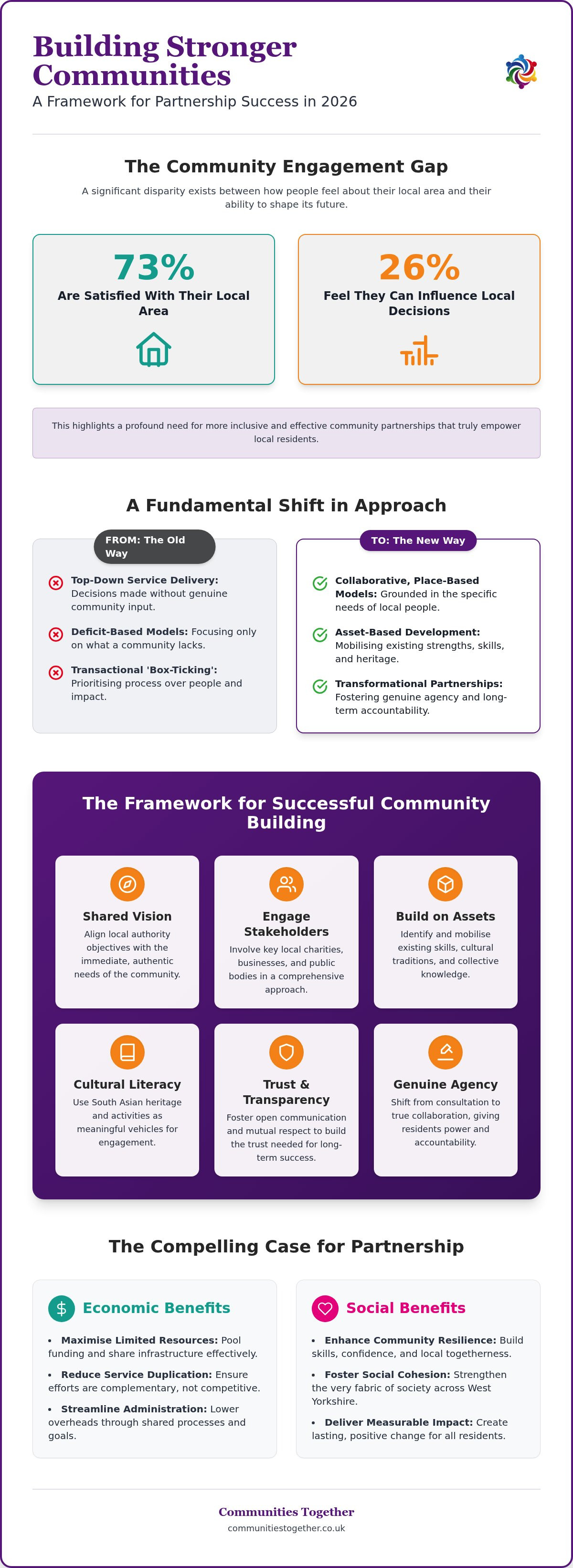
Whilst 73% of people in England expressed satisfaction with their local area in 2026, only 26% felt they possessed the agency to influence the decisions affecting their lives; this disparity highlights a profound need for more inclusive and effective community partnership development UK. It's understandable that many local authorities and organisations feel overwhelmed by institutional silos, particularly when attempting to engage with diverse South Asian communities in areas like Huddersfield, Halifax, and Leeds. You likely recognise that meaningful connection requires more than just a formal agreement; it demands a shared commitment to cultural continuity, mutual respect, and the dismantling of barriers that have historically kept multi-agency partnerships from reaching their full potential.
This guide promises to show you how to navigate the 2026 funding landscape, including the Pride in Place Community Right to Buy Fund, to build robust partnerships that deliver measurable local impact. We'll explore a clear framework for facilitating social cohesion, enhancing community capacity, and establishing sustainable infrastructure that honours heritage whilst fostering progress. By examining the shift from service delivery to systemic support, you'll discover how to transform your collaborative efforts into a steady pulse of professional promise and social delivery across West Yorkshire.
Table of Contents
Understanding Community Partnership Development in the UK Landscape
Effective community partnership development UK represents a sophisticated, multi-agency strategy designed to address local challenges by weaving together the unique expertise of public bodies, third-sector organisations, and local residents. In 2026, we've moved away from outdated, top-down service delivery models that often felt detached from reality, instead embracing place-based approaches that prioritise local leadership, cultural continuity, and collective endurance. This shift is largely driven by the English Devolution and Community Empowerment Act 2026, which encourages a move from being a donor to an investor, ensuring that every project is grounded in the specific needs of its people whilst maintaining a high degree of professional literacy in social welfare.
Establishing a robust framework requires the presence of professional facilitators who act as authoritative bridge-builders, helping to translate institutional goals into community-led actions whilst maintaining a high degree of accountability. This process involves a deep commitment to social responsibility, ensuring that partnerships don't just exist on paper but actually function as stable foundations for long-term growth, stability, and harmony. To better understand how these collaborative frameworks function in practice, watch this helpful video:
The Core Pillars of Effective Collaboration
Successful partnerships are built upon a shared vision that aligns closely with local authority objectives whilst remaining sensitive to the immediate needs of the community. It's vital to identify and engage key stakeholders amongst local charities, businesses, and public bodies to ensure a comprehensive approach to Understanding Community Engagement and its practical applications. By fostering transparent communication, mutual respect, and a culture of shared learning, organisations can build the trust necessary to sustain complex, multi-year initiatives that truly benefit the public, provide measurable results, and foster lasting change.
The Economic and Social Case for Partnership
There's a compelling economic argument for this collaborative model, as it allows for the maximisation of limited resources through shared infrastructure, the reduction of service duplication, and the streamlining of administrative processes. Beyond the financial benefits, these partnerships enhance community resilience by providing non-clinical interventions that help people develop the skills, confidence, and togetherness needed to thrive independently. Ultimately, by facilitating inclusive participation in local programmes, we can foster a sense of social cohesion that strengthens the very fabric of our society in areas like Huddersfield, Halifax, and Leeds, creating a rhythmic pulse of professional promise and social delivery.
The Framework for Successful Community Capacity Building
Establishing a resilient framework for community partnership development UK requires a fundamental shift in perspective, moving away from a deficit-based model that focuses on what a neighbourhood lacks to one that celebrates and mobilises its inherent strengths. This approach, often termed Asset-Based Development, ensures that we're building, facilitating, and maintaining local systems that are grounded in reality whilst being aspirational in their long-term social impact. By prioritising the identification of existing skills, cultural traditions, and collective knowledge, we can create a stable foundation that encourages residents to invest their time, energy, and passion into their local area, Bradford, or Wakefield.
The success of these efforts hinges on a long-term commitment that transcends the limitations of short-term, project-based funding cycles, which often create instability rather than growth. Initiatives like the £10m Test, Learn and Grow Capability Fund, announced in June 2026, provide a much-needed opportunity to invest in learning, skills, and personal development that reduce long-term isolation. When we move beyond transactional agreements, we begin to see the true value of collective endurance and the power of shared social responsibility.
Identifying and Mapping Community Assets
To truly understand the social fabric of West Yorkshire, one must look beyond administrative data to find the rich tapestry of experience held within diverse South Asian communities. Engaging with these groups ensures that every asset, whether it's a traditional craft, a deep-rooted oral history, or a local network of support, is recognised, valued, and integrated into the broader development strategy. Utilising resources such as NCCPE Partnership Tools allows organisations to map these assets systematically, fostering a renewed "sense of place" that counteracts isolation and builds a narrative of interconnectedness. This methodical mapping process is essential for creating a stable environment where tradition and progress can coexist in harmony.
Strengthening Local Infrastructure
Building sustainable community infrastructure isn't merely about physical spaces; it's about providing the training, personal development, and governance workshops that empower local residents to lead their own initiatives with confidence and professional literacy. By establishing robust governance structures for non-profit collaborations, we ensure that local groups possess the structural strength and collective endurance to manage complex projects independently. For a deeper look at these strategies, you might explore our detailed guide on community capacity building UK, which outlines the practical steps for reinforcing local agency. If you're looking to enhance your own organisation's impact, our partnership and community capacity building programmes offer a methodical way to weave these principles into your daily operations.
Transactional vs Transformational: Moving Beyond Box-Ticking
Many initiatives in community partnership development UK fail because they prioritise administrative box-ticking over the earnest emotional connection required to foster true community trust. Whilst many organisations aim to "consult" the public, this often results in a transactional relationship where residents feel like passive recipients rather than active architects of their own future. A truly transformational approach requires moving beyond simple service delivery to facilitate deep-rooted collaborations that honour lived experience, respect cultural continuity, and prioritise long-term social benefits over short-term political wins. This shift ensures that every statement of intent is balanced by a statement of impact, creating a rhythmic pulse of professional promise and social delivery that feels both grounded and aspirational.
According to a recent UK community partnership development study, the maintenance of reciprocal relationships is vital for ensuring that multi-agency frameworks deliver measurable social impact. This is where the role of the "wise facilitator" becomes essential, acting as a methodical advocate who understands the complex threads of the social fabric whilst possessing the professional literacy to bridge the gap between formal policy and the daily realities of residents in West Yorkshire. By acting as a stable foundation for others to build upon, these facilitators ensure that partnerships are reliable, serious, and deeply collaborative, ultimately weaving together the diverse threads of society into a stronger, more resilient whole.
Overcoming Institutional Silos
Institutional silos often prevent people-centred outcomes in urban centres such as Huddersfield and Halifax, where rigid agency boundaries can hinder the creation of a unified narrative across the health, housing, and cultural sectors. To overcome these barriers, partners must be willing to share risks and rewards, creating a culture of mutual accountability that values collective growth above individual departmental targets. This involves building a shared language of togetherness, structural strength, and collective endurance that allows for the seamless integration of various public services. By facilitating these connections, organisations can ensure that their efforts are not duplicated but are instead amplified to achieve greater stability, harmony, and social responsibility.
Measuring Impact and Accountability
True accountability requires a shift from counting quantitative outputs to producing sophisticated, qualitative social impact reporting that captures the nuances of community resilience. By using detailed case studies to demonstrate long-term improvements in wellbeing, cultural preservation, and personal development, we can provide stakeholders with a comprehensive overview of how inclusive participation leads to tangible results. Ultimately, the heart of any partnership lies in its responsibility to the community members themselves, ensuring that every action taken is balanced by a clear statement of impact. This methodical approach to measurement demonstrates a high degree of professional literacy, proving that strategic collaboration can indeed deliver the structural strength required for society to thrive.
Best Practices for Engaging Diverse and Isolated Communities
Successful community partnership development UK relies upon a foundation of cultural literacy that respects the unique identities and traditions of every neighbourhood. By prioritising cultural awareness at every stage of the process, organisations can ensure that their initiatives resonate with the lived experiences of residents in Huddersfield and Halifax. This involves facilitating environments where diverse voices are actively integrated into the decision-making processes that shape their lives, fostering a sense of togetherness, structural strength, and collective endurance.
Cultural Heritage as a Bridge-Builder
Preserving cultural traditions acts as a vital bridge-builder, fostering a profound sense of belonging and collective identity amongst groups that may feel marginalised by mainstream institutional processes. When we integrate heritage education into broader community wellbeing initiatives, we create a rhythmic pulse of cultural continuity that strengthens the social fabric of cities like Bradford and Leeds. You can learn more about these collaborative efforts in our guide to community-led heritage projects UK, which explores how shared history can be a stable foundation for modern progress.
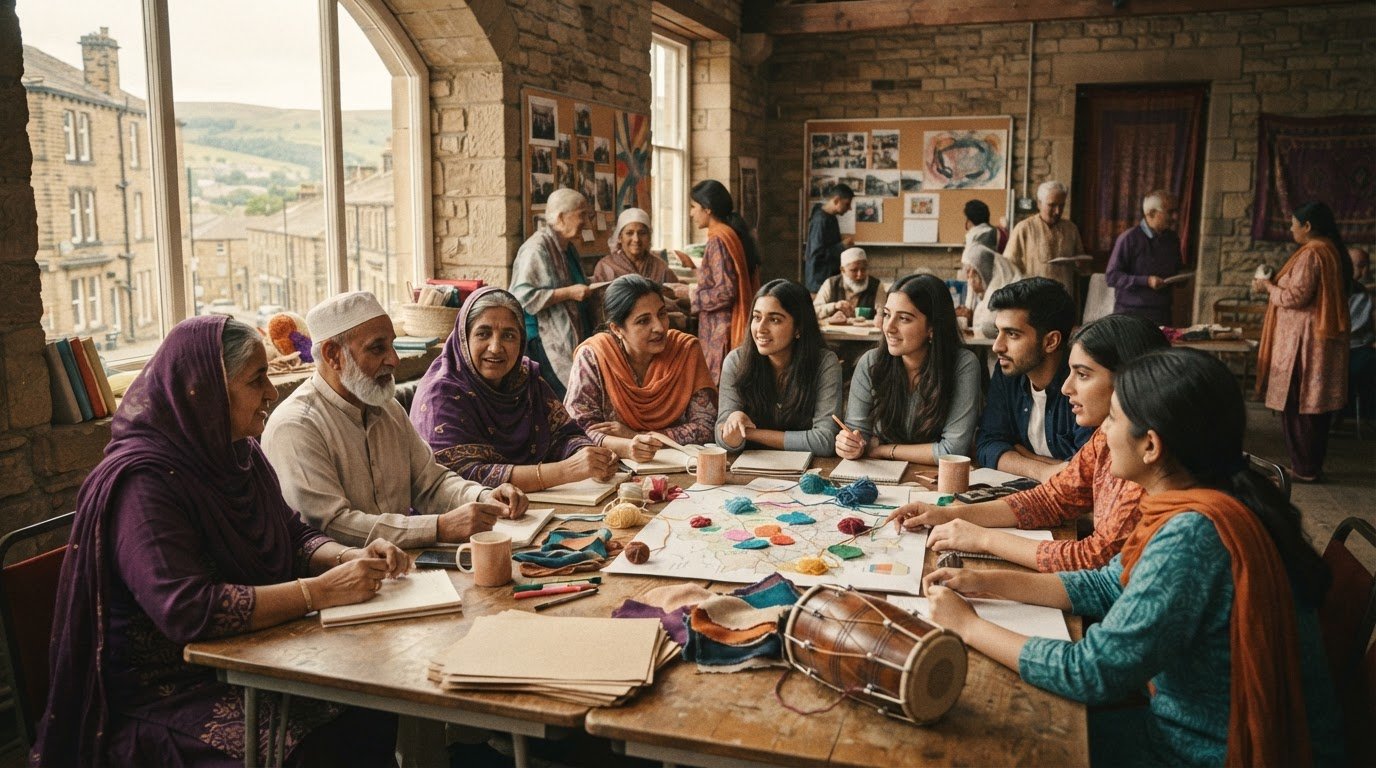
Using South Asian arts and heritage activities serves as a powerful vehicle for inclusive engagement, allowing for the expression of identity whilst building resilience through non-clinical interventions. These programmes provide a space for creative expression and personal development, helping to reduce isolation and build a narrative of interconnectedness that transcends traditional service delivery models. It's essential that these activities are led by individuals from the communities they serve, ensuring that representation is woven into the heart of the partnership's leadership structure.
Tailoring Engagement for Maximum Inclusion
Organising activities within accessible centres that are already trusted by residents is a methodical way to remove the psychological and physical barriers that often prevent participation. To ensure equitable access, partners must proactively address language differences and financial constraints, facilitating workshops that are truly open to all regardless of their background or economic status. By building resilience through structured learning, skills development, and arts-based activities, we can maintain a steady flow of social benefits that support long-term stability and harmony through strategic community partnership development UK across Wakefield and the wider region.
Facilitating Partnership Excellence in West Yorkshire
Communities Together organises collaborative growth across the region by serving as an authoritative bridge-builder between local authorities, diverse communities, and the public sector. Our approach to community partnership development UK prioritises the creation of stable foundations that allow for long-term social benefits, ensuring that every initiative is grounded in the specific cultural fabric of the North. By facilitating these connections, we help to weave together the complex threads of our society, providing a methodical way for stakeholders to achieve stability, harmony, and social responsibility whilst fostering a culture of collective growth. Local social enterprises play a vital role in this ecosystem, strengthening community infrastructure by providing the reliable, serious, and deeply collaborative support necessary for society to thrive.
Regional Success in Huddersfield and Halifax
In Huddersfield and Halifax, our wellbeing and resilience workshops have demonstrated a measurable impact on local social cohesion by providing residents with the tools to manage stress, build personal endurance, and foster a sense of togetherness. These programmes are particularly effective in reducing isolation amongst elderly residents in Halifax, where structured social activities and heritage projects offer a vital sense of purpose and connection. You can explore the broader framework of these initiatives in our guide to community engagement programmes UK, which outlines how we integrate cultural heritage into modern wellbeing strategies. By focusing on non-clinical interventions, we help to build a narrative of interconnectedness that supports both individual wellbeing and broader community strength.
Collaborative Growth in Leeds, Bradford, and Wakefield
Our work in Leeds focuses heavily on the importance of South Asian arts and heritage activities as a means of building a strong cultural identity and encouraging inclusive participation amongst all residents. In Bradford, we're dedicated to future-proofing community resilience by offering learning, skills, and personal development opportunities that empower individuals to lead their own development projects with confidence and professional literacy. By partnering with Communities Together in Wakefield and the surrounding areas, organisations can deliver high-quality heritage preservation that honours tradition whilst embracing progress. We invite local stakeholders, public bodies, and social enterprises to join us in this professional conduit for collective regional growth, ensuring that our shared social fabric remains strong, vibrant, and enduring for generations to come. This collaborative effort ensures that every statement of professional promise is matched by a statement of social delivery across West Yorkshire, creating a steady pulse of growth that benefits every member of our diverse community.
Strengthening the Social Fabric through Strategic Collaboration
Building a resilient social fabric requires a purposeful move from transactional agreements toward transformational relationships that honour lived experience, cultural continuity, and mutual respect. By embracing asset-based approaches and prioritising cultural literacy, organisations can ensure that community partnership development UK becomes a stable foundation for long-term social benefits rather than a temporary administrative exercise. This methodical approach ensures that every statement of intent is balanced by a statement of impact, maintaining the structural strength and collective endurance needed for every neighbourhood to thrive independently.
As specialists in South Asian heritage and arts with an established track record in Huddersfield, Halifax, Leeds, Bradford, and Wakefield, we understand the advocacy required to weave these complex threads together. We act as a reliable conduit for collective growth, facilitating community resilience through wellbeing workshops, heritage preservation, and skills development. Our goal is to provide the stability and harmony necessary for local residents to lead their own development projects with confidence and professional literacy.
It's an honour to support the growth of our vibrant region, and we look forward to creating a future where every professional promise is matched by measurable social delivery for all.
Frequently Asked Questions
What is the primary goal of community partnership development in the UK?
The primary goal of community partnership development UK is to facilitate a strategic, multi-agency approach to local problem-solving that prioritises social cohesion, structural strength, and collective resilience. By moving away from top-down service delivery, these partnerships aim to create stable foundations where local authorities and residents work together to achieve long-term social benefits. This collaborative framework ensures that every action is grounded in the specific needs of the community whilst maintaining a high degree of accountability and professional literacy.
How do asset-based approaches differ from traditional community engagement?
Asset-based approaches differ from traditional models by identifying and mobilising existing community strengths, such as local skills, cultural traditions, and social networks, rather than focusing solely on deficits or needs. Whilst traditional engagement often treats residents as passive recipients of services, asset-based strategies empower individuals to act as architects of their own development. This methodical shift fosters a deeper sense of togetherness and collective endurance, ensuring that community infrastructure is built upon a foundation of genuine local agency.
Can cultural heritage projects really improve social cohesion?
Cultural heritage projects serve as a powerful vehicle for improving social cohesion by fostering a profound sense of belonging and shared identity amongst diverse populations. By preserving South Asian arts and traditions, these initiatives create a rhythmic pulse of cultural continuity that bridges the gap between different generations and backgrounds. Such projects encourage inclusive participation and mutual respect, ultimately weaving together the complex threads of the social fabric to create a more harmonious and stable society across West Yorkshire.
What are the main challenges when working in a multi-agency partnership?
The main challenges in multi-agency partnerships often involve navigating institutional silos, managing complex agency boundaries, and ensuring transparent communication across different sectors. Difficulty engaging with isolated or diverse communities can also hinder progress if cultural literacy is not prioritised at every stage. Overcoming these barriers requires a methodical advocate who can facilitate a unified narrative, encourage a culture of shared risk, and maintain the professional literacy necessary to align institutional goals with lived experience in urban centres.
How can small community groups get involved in larger partnership developments?
Small community groups can get involved by participating in partnership and community capacity building programmes that provide the governance training and personal development needed to lead local projects. By joining professional conduits for collective growth, these groups can access resources like the Pride in Place Community Right to Buy Fund to take ownership of local assets. Building resilience through structured learning and skills development allows smaller organisations to contribute meaningfully to larger, multi-agency frameworks whilst maintaining their unique cultural identity.
How is the impact of community partnership programmes measured in 2026?
In 2026, the impact of community partnership development UK is measured through sophisticated social impact reporting that balances quantitative outputs with qualitative evidence of long-term wellbeing and resilience. This involves using detailed case studies to demonstrate improvements in social cohesion, cultural preservation, and individual agency within diverse neighbourhoods. By prioritising accountability to the community members themselves, organisations can ensure that their efforts deliver measurable social benefits that support the structural strength and collective endurance of the region.
What role does Communities Together play in West Yorkshire partnership building?
Communities Together acts as an authoritative bridge-builder and methodical advocate across Huddersfield, Halifax, Leeds, Bradford, and Wakefield. We specialise in facilitating community engagement programmes and South Asian arts activities that strengthen local social cohesion and reduce isolation. By providing wellbeing workshops and heritage preservation projects, we serve as a professional conduit for collective growth, helping local authorities and community groups to build robust, culturally-aware partnerships that deliver measurable impact and foster long-term stability for all residents.


Comments