
Storytelling Activities for Community Groups That Connect
What if stories meant to bring people together leave some voices unheard? Choosing storytelling activities for community groups takes more than finding an enjoyable prompt. The approach should make room for different experiences, cultural perspectives and confidence levels.
Stories can help people share memories, express hopes and build connections. Thoughtful facilitation supports participation without pressuring anyone to disclose more than they wish. A clear purpose, an inclusive format and care in gathering and sharing stories all help shape the experience.
This article explores creative activities that combine stories with art, music and performance, digital approaches using film, audio and photography, and short warm-ups for group sessions. It also covers practical considerations, including cultural context, accessibility and the time needed to develop a shared narrative, helping you choose an approach that suits your community’s aims.
Table of Contents
1. Creative activities combining stories with art, music and performance
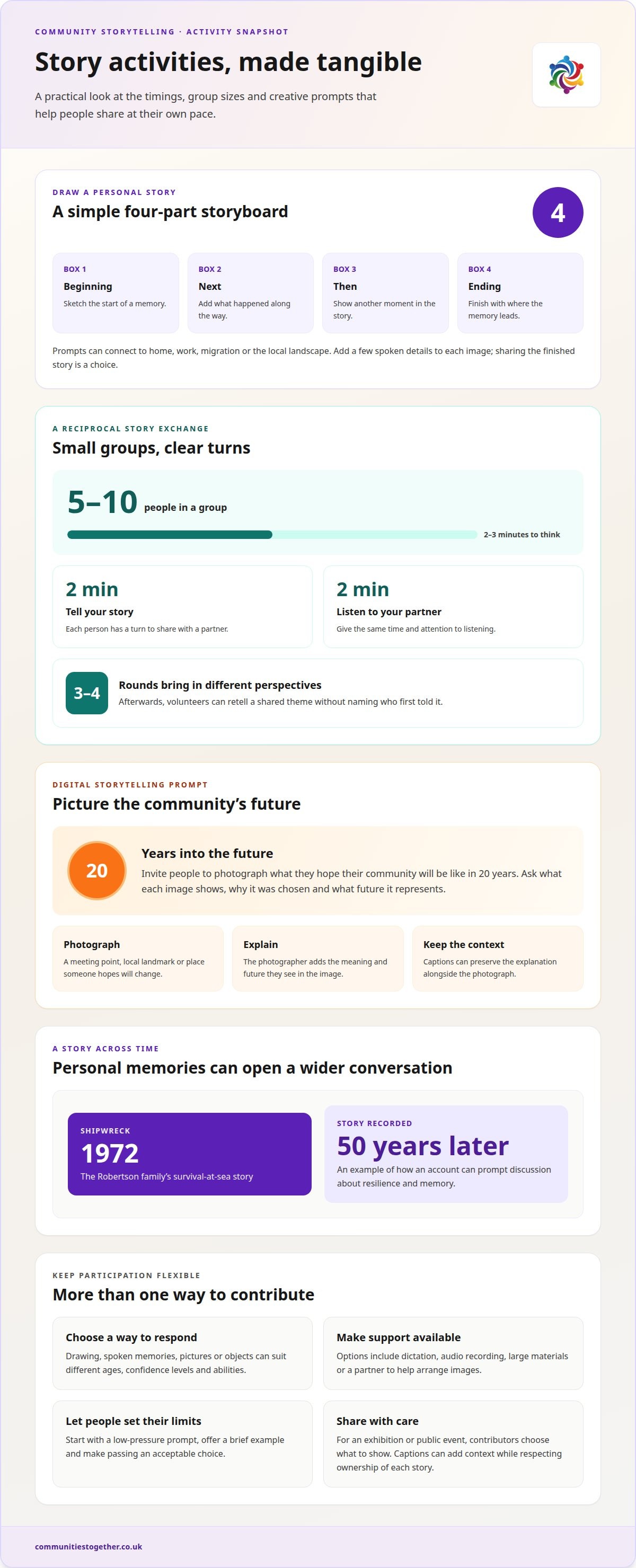
Drawing can give a personal story a clear beginning, middle and end. A facilitator might invite each person to divide a sheet into four boxes and sketch a memory connected to home, work, migration or the local landscape. Participants can add a few spoken details to each image and choose whether to share the finished story. The four-box structure offers a creative starting point without requiring polished writing.
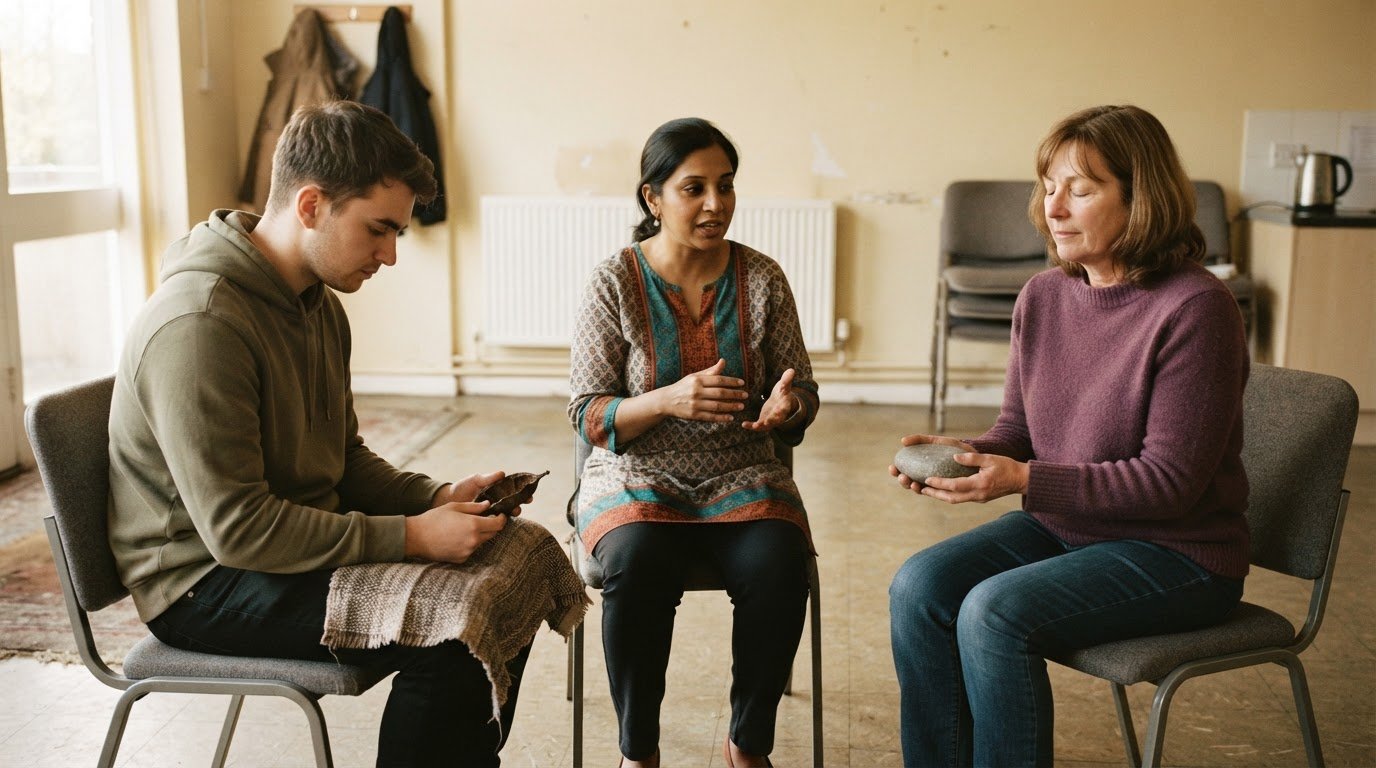
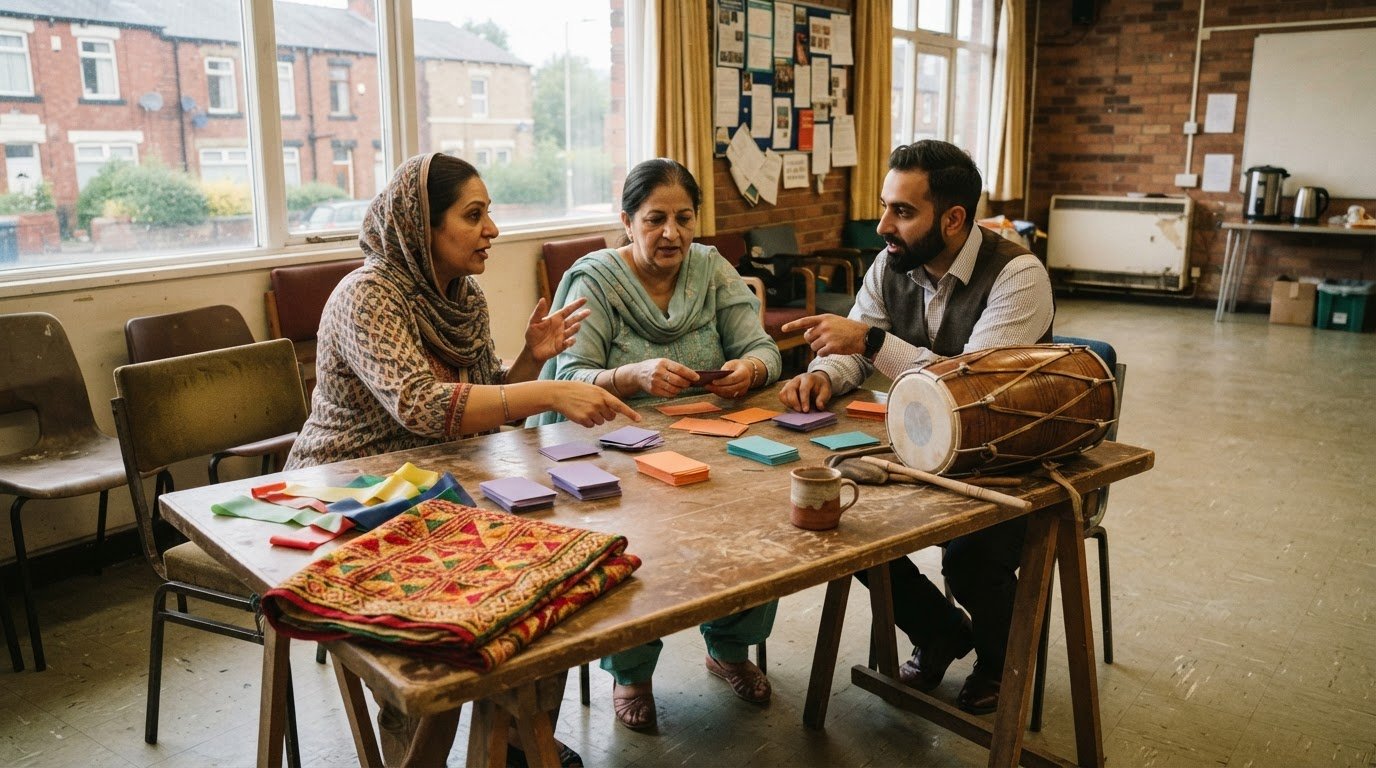
A facilitator can provide paper, pencils, coloured materials and simple props, then introduce a prompt and demonstrate how to use them. A shell, old photograph or piece of fabric, for example, might bring to mind a coastal memory or family journey. Music can also set the scene: participants might choose a familiar tune and describe the place, person or event it evokes.
Stories about land, work and coastal heritage can connect personal memories with shared local history. A participant might describe learning a trade, travelling for work or fishing with relatives, while others contribute related details. The Robertson family’s survival-at-sea story offers one example of a dramatic account that can prompt discussion about resilience and memory. Their shipwreck happened in 1972, and the family’s story was recorded 50 years later.
Names and nicknames offer another accessible starting point for personal stories. A facilitator can invite each person to write five words describing what they value about a chosen topic, such as their name, then share only the words they feel comfortable discussing. A name might hold a family memory, a connection to language or a story about moving to the local area.
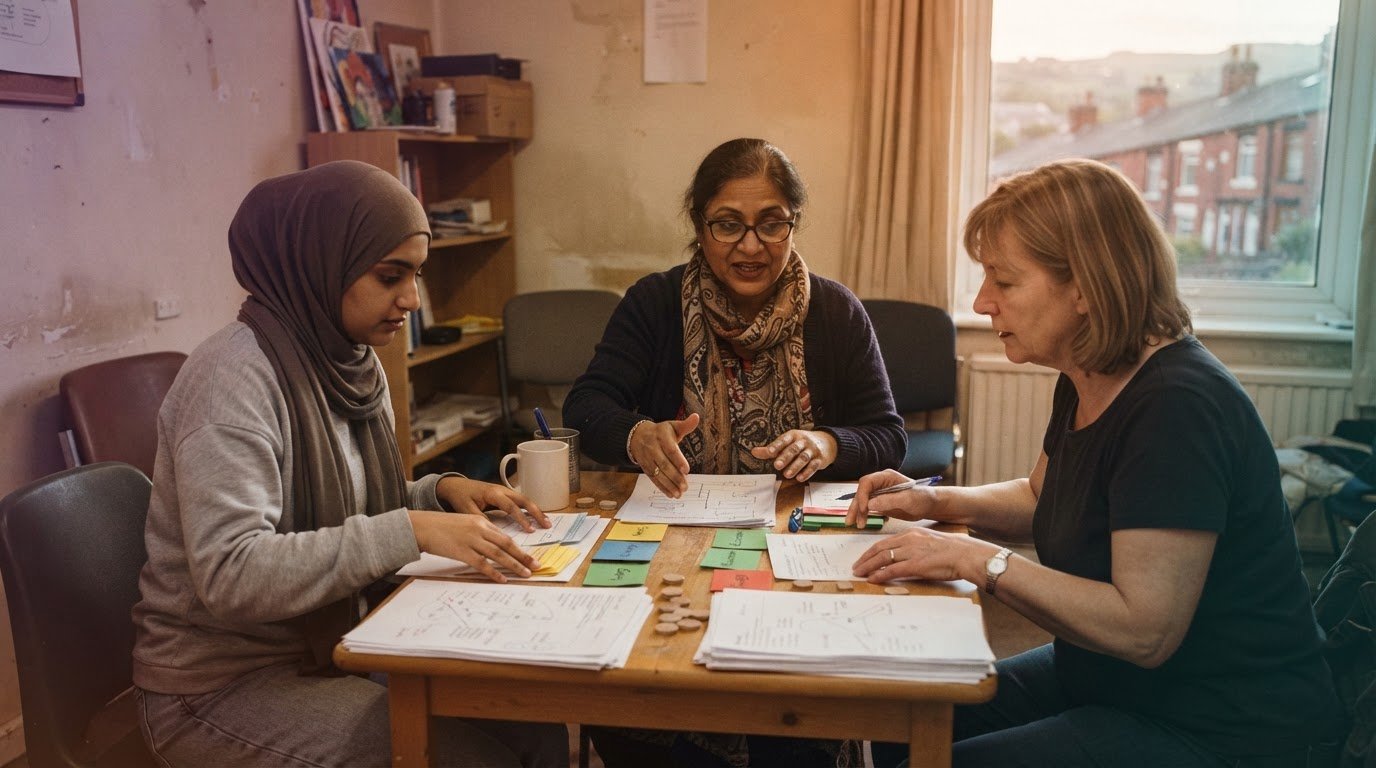
A story exchange encourages reciprocal listening rather than a single performance. In groups of five to ten, participants can take two to three minutes to think, then share with a partner. Each person gets two minutes to tell and two minutes to listen. Three to four rounds introduce different perspectives. The facilitator can then invite volunteers to retell a shared theme without identifying who first told it.
A facilitator can adapt these formats for children, older people and people with disabilities by adjusting the prompt, pace and response options. Toddlers might choose pictures or objects, while older participants could add spoken memories to a drawing. If writing is difficult, the facilitator can offer dictation, audio recording, large materials or a partner to help arrange images.
To share stories beyond a session, a group can turn drawings, short texts and recordings into an exhibition or public event. A display might trace local memories from a school or workplace to a shoreline, with each contributor choosing what to show. Clear captions and an invitation to respond can help visitors add context without taking ownership of someone else’s story.
To build trust, a facilitator can begin with a low-pressure prompt, share a brief example and make passing an acceptable choice. Participants might then create a performance using a remembered saying, a rhythm and a place-name. Moving from individual details to collective retelling can encourage connection while keeping each person in control of their contribution.
2. Digital storytelling through film, audio and photography
Digital storytelling can bring community perspectives together through photographs, recorded voices and short films. Each format gives participants a different way to shape and share an account. A facilitator might start by agreeing the project’s purpose, audience and format with the group. This helps each recording or image contribute to a coherent story rather than a collection of unrelated material. A photograph can provide a starting point, while a spoken reflection adds details viewers might otherwise miss.
Photography works well for exploring how people experience a shared place. Participants might photograph a meeting point, a local landmark or a place they hope will change. One community photo exercise asks people to picture what they hope their community will be like in 20 years. A facilitator can then invite each photographer to explain what their image shows, why they chose it and what future it represents. Captions can preserve those explanations alongside the photographs.
Audio interviews put listening at the heart of the process. A facilitator can help a participant shape a short account around a memory, turning point or community aspiration, then record it in their preferred language. Leave room for pauses and follow-up prompts rather than rushing towards a polished soundbite. A resident describing a local market, for instance, might recall its familiar sounds, the people they met there and how it has changed.
Short films can bring voices, locations and images together in a shared narrative. A facilitator can help participants decide whose perspectives to include, then gather footage that connects their accounts. A film about a community garden, for example, could combine a gardener’s recollection, close-ups of planting and a visitor’s reflection on the space. The sequence shows how different contributions can build a fuller picture without asking one person to speak for everyone.
A facilitator can help participants develop practical digital skills while keeping ownership of the story with its contributors. Before recording, they can explain the equipment, demonstrate playback and offer a practice take. Afterwards, participants can listen together, suggest edits and decide which details belong in the final version. If several languages are spoken, the group can consider subtitles or separate recordings so the original voices remain part of the finished work.
Plans for sharing shape the process from the outset. A private listening session, community screening or public exhibition each involves different decisions about editing and presentation. The facilitator can agree how contributors will be credited and what they want to share, then gather feedback before finalising the work. This supports reflection without treating personal stories as unrestricted public content.
For groups developing these abilities through structured activity, learning, skills and personal development can provide a relevant starting point for building confidence with digital storytelling.
3. One-minute community storytelling warm-ups
A one-minute story can help participants move from introductions to a shared subject. Each person tells a brief experience connected to the gathering’s theme, such as a meaningful place or a skill learned from someone else. The facilitator introduces the prompt, models a concise response and makes passing an acceptable choice. The time limit gives each contribution a clear shape without asking for a complete life story.
In “The Story of Your Name”, participants take one minute each to explain a name, nickname or its meaning. A facilitator might invite them to mention who chose it, how it is pronounced or a memory attached to it. The activity is designed for five to ten participants, giving everyone a chance to speak and listen. A simple follow-up, such as noticing a shared language or naming tradition, can help the group find connections.
Facilitators choose an icebreaker by matching its format to the group’s size, purpose and available time. The Story of Your Name suits five to ten participants, while a larger gathering can use pairs or small circles before sharing themes with everyone. The Local Government Association suggests warm-up or ice-breaker exercises that take 10 to 15 minutes, allowing time for instructions and reflection alongside the stories.
A concrete starting point can make a prompt easier to answer. The facilitator could place an everyday object, such as a key or recipe card, where everyone can see it, then invite a one-minute story about a similar object. Another prompt might ask participants to describe a character who taught them something, or an experience that changed how they see their neighbourhood. These details give a story shape without dictating its meaning.
In workshops, a facilitator can connect individual contributions by listening for recurring places, values or turning points. They might reflect these themes back to the group, then invite participants to add a detail or another perspective. This encourages attentive sharing rather than competition over the most dramatic story. It also gives quieter participants different ways to contribute, including listening first or responding to a shared theme.
For online sessions, a facilitator can introduce a spoken prompt in the main room or in smaller breakout discussions. The Local Government Association recommends limiting online workshop breakout rooms to four people. Keeping the prompt visible and giving participants time to consider their response can make the format easier to follow across devices and communication styles.
UK community groups can approach community engagement organisations and networks to find professional facilitators, sharing the gathering’s purpose, audience and preferred format. Funding applications can link the activity to clear community aims, such as sharing local heritage, developing skills or supporting participation, and outline costs and intended outcomes. A facilitator can shape the activity around those aims rather than treating a warm-up as a standalone exercise.
4. Practical challenges in applying storytelling to community-building
Stories can strengthen connection, but meaningful activities need a clear purpose and careful facilitation. Consider whose cultural worlds shape the story, who tells it and who listens. A family tradition, for example, may hold different meanings for different participants. Respecting those differences helps avoid cultural appropriation and prevents one account from being presented as representative of everyone.
Consent and safeguarding need particular care when stories involve children, personal experiences or public sharing. The facilitator should explain the activity, where contributions may appear and how participants can choose not to share. Before recording or displaying a story, seek clear permission for that use and agree which identifying details can be included. For children, use age-appropriate prompts and explain the process in a way they can understand; teams working in early childhood settings can also draw on safeguarding and sector training from providers such as Canavan Byrne to maintain rigorous standards.
Emotional boundaries matter, too. A prompt about home or belonging can bring up difficult experiences, so keep the exercise focused and avoid pressing anyone to disclose. Offer a fictional example, a neutral alternative or the option to listen without contributing. In a school workshop, for instance, children might invent a character’s journey rather than describe their own family history. Where storytelling uncovers deeper emotional needs or sensitive journeys of self-discovery, facilitators can signpost participants to professional support, such as the Gender Identity Center for specialised individual and group therapy.
Time is another practical consideration. The Local Government Association advises keeping narrative workshops to no more than 90 minutes. It also says that organising workshops, drafting a narrative, gathering comments and signing off a final version can take two to three months when there is a clear agreed timetable. This allows time for thoughtful review rather than rushing an authentic account towards publication.
Following up can be difficult if participants leave before sharing their contributions. The Local Government Association advises gathering stories during the workshop because people may not have time to provide them afterwards. Reserve time for recording, note-taking or a short written reflection before the session ends. This helps preserve participants’ words and reduces reliance on memory later.
The cost of professional storytelling workshops depends on the work involved, including preparation, session length, group size, materials, travel, and any recording, editing or public presentation. A single focused exercise needs a different plan from a series that gathers feedback and produces a final narrative. Agreeing the intended outcome, format and follow-up helps define the work clearly.
Trust also depends on how contributions are handled after an exercise ends. Give participants a chance to review edited words, captions or recordings before sharing them more widely. A community exhibition, for example, might include only approved stories and captions, with contributors choosing whether to include their names. This keeps the finished work connected to the people whose experiences shaped it.
5. What are easy storytelling activities for community groups?
For a brief session, a facilitator can use Story Around the Circle with groups of three to six people. The activity takes five to ten minutes, with each person adding a sentence or detail to a shared tale. The facilitator sets a simple opening, such as a neighbour finding an unusual object, then invites everyone to continue. A closing turn brings the story to an end without requiring advance preparation.
Story Seeds gives participants a little more time to shape an individual contribution. The activity takes 10 to 20 minutes, with 10 minutes set aside for writing stories. A facilitator can offer a prompt such as “a place I remember” or “something that changed”, then invite participants to share a detail, a short passage or a reflection. This format can suit groups who prefer time to think before speaking.
Story Spine gives groups a clear structure for a short collaborative narrative. Designed for two to nine people, it takes five to ten minutes. The facilitator introduces a beginning, such as “Once upon a time”, then guides the group through events using “Because of that…” three or more times. The repeated link connects each contribution to what came before, creating a simple sequence of cause and effect.
A map-story activity connects personal memories with shared places. The facilitator gives participants one minute to draw a map, then another minute to mark its story hotspots. Each person can put two sticky dots on meaningful places, such as a park, community hall or familiar street. A short discussion lets the group notice how different experiences shape its shared view of the area.
Future-focused activities help a group describe what it hopes to achieve. In a community postcard exercise, participants imagine their cards reaching the community in ten years, then share them in groups of four. Another prompt asks participants to write a newspaper headline about what their community has accomplished five years in the future. The facilitator can gather recurring hopes and use them to guide a discussion about shared priorities.
For children, a modern-tales exercise invites them to recreate a familiar story in a different genre, with 10 to 15 minutes for the activity. A facilitator might help the group retell a well-known tale as a mystery or adventure, making room for new characters and settings. The format can be adjusted for age and confidence, with drawing or spoken suggestions supporting children who would rather not write.
Across these activities, a facilitator selects a format that suits the group’s purpose, guides participation and draws out connections without dictating the story’s meaning.
Communities Together: South Asian Arts and Heritage Activities
Communities Together offers South Asian Arts and Heritage Activities for groups exploring cultural stories through creative, shared experiences. These activities bring personal memories and heritage into community engagement while making space for different voices and perspectives.
Turn to Communities Together when your group wants to connect storytelling with cultural preservation, strengthen participation or create opportunities to share what matters. Community Engagement Programmes and Wellbeing and Resilience Workshops can also support groups seeking connection, reflection and collective development. Shape the approach around your community’s purpose, the stories people wish to share and the forms of participation that feel right.
Contact Communities Together to discuss storytelling and heritage activities for your group.
Shape a lasting place for community stories
Consider what you want stories to make possible after a session ends. A shared record, stronger connections between generations or new opportunities for cultural expression can each give a programme direction. When storytelling activities for community groups are planned around a clear purpose, participants can help shape both what is shared and how those stories continue to matter.
Communities Together offers Community Engagement Programmes, South Asian Arts and Heritage Activities, and Wellbeing and Resilience Workshops. These programmes and activities can help groups bring people together, explore heritage and create opportunities to participate. Start with the community’s own priorities and the forms of sharing that feel meaningful to its members.
Every community has stories worth approaching with care. A thoughtful next step can help those stories strengthen connections and inform the work that follows.
Frequently Asked Questions
How does a professional facilitator run a community story circle?
A facilitator introduces a focused prompt, explains how the circle will work and helps participants listen without interruption. For a larger gathering in Huddersfield, Halifax, Leeds, Bradford or Wakefield, form groups of six to eight people who do not know one another well. In the first round, each person shares an experience in response to the prompt; in the second, participants reflect on insights across the stories. The facilitator closes by linking those insights to the group’s purpose.
Comments