
Reducing Loneliness in Communities: Practical Ways to Build Lasting Connection
Updated: 3 days ago
Seven per cent of people aged 16 and over in the UK reported feeling lonely often or always in 2025/26, according to a UK government report published on 14 August 2026. Reducing loneliness in communities takes more than organising a well-attended event. Lasting connection is more likely to grow when people have regular opportunities to take part, contribute and build trust over time.
A welcoming activity is only one part of the work. Practical, cultural or personal barriers can make it harder to attend, and open invitations may still reach mainly people who already feel confident joining in. A thoughtful approach makes room for different needs and recognises that connection grows through participation, not simply by bringing people into the same space.
This article explores practical ways to create inclusive, sustained opportunities for connection, from culturally rooted activities to stronger partnerships between local organisations. You’ll learn how regular, reciprocal participation can support belonging, how to involve people who may otherwise be overlooked, and how to shape a realistic approach around local strengths and needs.
Table of Contents
What does reducing loneliness in communities involve?
Reducing loneliness in communities starts with recognising that loneliness is personal and subjective. It arises when someone feels their relationships or social contact do not meet their need for connection. That is different from simply spending time alone. Someone may choose solitude and feel content, while a person with regular contact may still feel unseen, misunderstood or disconnected. These feelings can also change as circumstances, relationships and needs shift.
Community action can create opportunities to meet, participate and develop a sense of belonging. It cannot guarantee that every participant will feel less lonely, and a programme should not assume it can resolve the varied causes of an individual’s experience. A useful starting point is to make participation possible and meaningful while respecting each person’s needs and preferences. For a broader overview of the subject, see Understanding Loneliness: Causes, Effects, and Interventions.
How is loneliness different from social isolation?
Social isolation describes limited social contact or a small network of relationships; loneliness describes how someone feels about the quality or sufficiency of their connections. The experiences can overlap, but they are not interchangeable. Someone might have frequent contact and feel lonely, or spend considerable time alone without feeling lonely. Attendance, age or household status cannot tell us how someone feels, so communities should avoid assumptions or treating participation as a diagnosis.
Why can community connection matter?
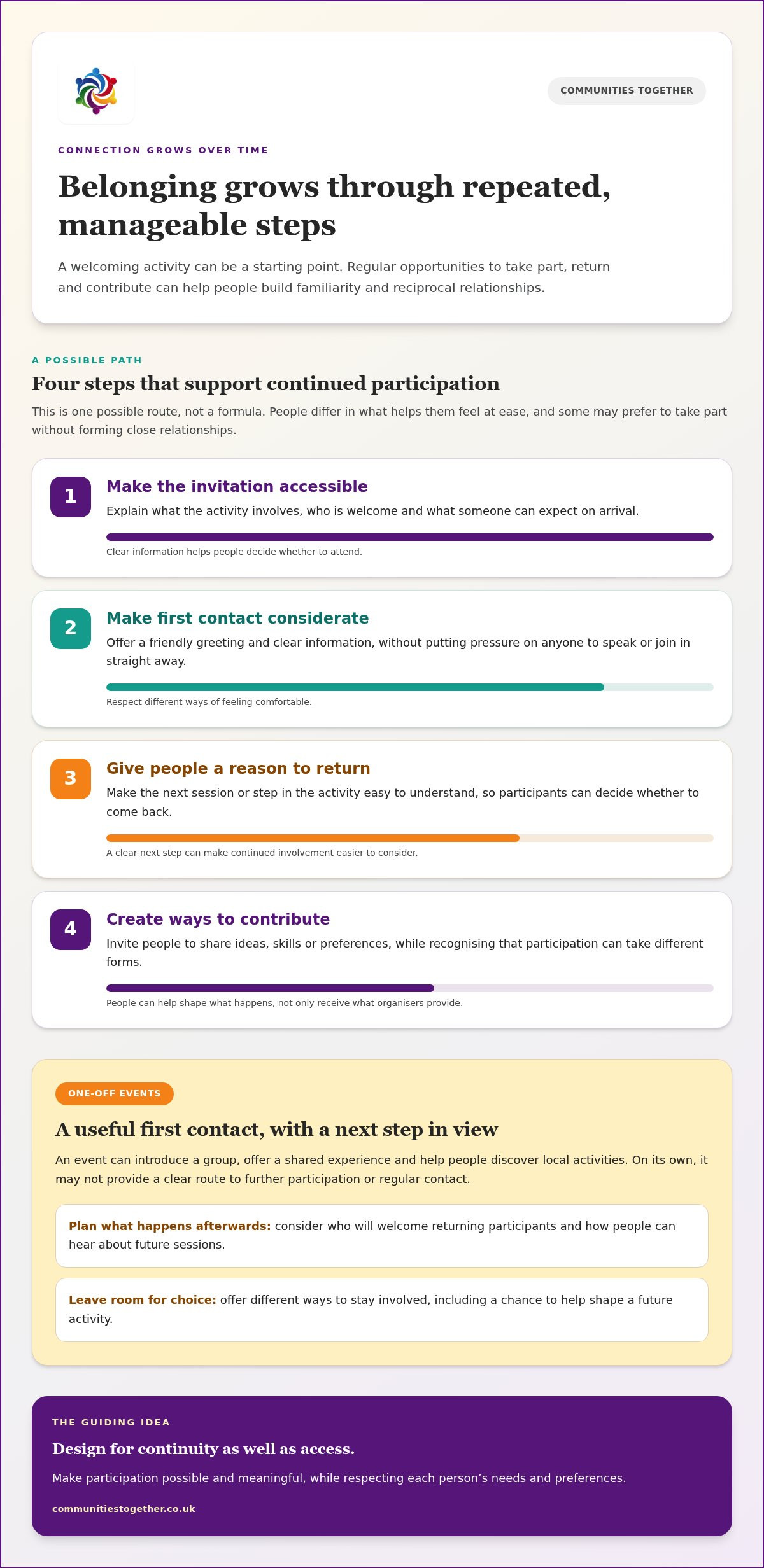
Welcoming community settings give people chances to meet around a shared interest, contribute skills and take part in something that matters to the group. Over time, this can build familiarity and reciprocal relationships, rather than positioning people only as recipients of help. A clear welcome, activities that invite different contributions and opportunities for people to shape what happens can help participation feel more like belonging.
Community connection can create opportunities for belonging, but it is not a guaranteed mental-health outcome. A group can offer a supportive social setting without claiming to treat distress or meet every person’s needs. Community programmes are not a substitute for clinical mental health care where that is needed. Their role is different and complementary: they can strengthen local opportunities for participation, while clinical care addresses health needs through appropriate professional support.
For organisers, this means looking beyond attendance numbers. Consider whether the setting feels accessible, whether participants can influence activities and whether there are ways to connect beyond a first visit. These are practical features communities can shape, even though each person’s experience of loneliness remains individual. A respectful approach offers choice, avoids labelling people and recognises that connection develops differently for everyone.
How do repeated community relationships help address loneliness?
Connection often develops through a series of manageable steps, rather than a single invitation creating an immediate sense of belonging. Someone might first hear about a group through a trusted local organisation, attend to see what it is like, return when the activity feels comfortable and gradually become familiar with other participants. This is one possible path, not a formula: people differ in what helps them feel at ease, and some may prefer to take part without forming close relationships.
For reducing loneliness in communities, design for continuity as well as access. Organisers can consider:
An accessible invitation: Explain what the activity involves, who is welcome and what someone can expect on arrival.
A considerate first contact: Offer a friendly greeting and clear information without putting pressure on anyone to speak or join in straight away.
A reason to return: Make the next session or step in the activity easy to understand, so participants can decide whether to come back.
Ways to contribute: Invite people to share ideas, skills or preferences, while respecting that participation can take different forms.
Why can one-off events fall short?
An event can be a valuable first point of contact. It gives people a shared experience and a chance to discover local activities. On its own, though, it may not provide a clear route to further participation or regular contact. A simple next step, such as an invitation to another session or a chance to help shape a future activity, can make continued involvement easier to consider.
That does not mean one-off events have little value. They can introduce a group, reveal local interests and help people decide whether an activity suits them. Their contribution can be stronger when organisers plan what happens afterwards: who will welcome returning participants, how people can hear about future sessions and whether there are different ways to stay involved.
What makes participation feel reciprocal?
Participation feels more reciprocal when people can influence the activity, rather than only receive what organisers have planned. They might suggest themes, share a skill, contribute cultural knowledge or help decide how a group project develops. Listen to people’s preferences: some may enjoy taking on a role, while others may value attending without added responsibility.
Offer choices, such as contributing an idea, helping with a practical task or simply taking part.
Make space for participants’ knowledge and experience to shape the group’s direction.
Ask what is working and what could make future sessions more welcoming.
Attendance brings people into a space; contribution can help them feel they have a place within it. Familiarity may grow through repeated contact, but organisers should not promise a particular emotional or mental-health outcome. Community engagement programmes can help local groups create these opportunities with care. Explore community engagement programmes as one way to support participation and shared ownership.
Which community approaches can create more meaningful connection?
Different activities offer different ways to meet, participate and build familiarity. A recurring interest group gives people a shared focus, while a peer group can centre on listening and mutual understanding. A community project can bring neighbours together around a common goal, and arts or heritage activities can make space for cultural expression and learning. No approach is automatically more effective than another. The right fit depends on local interests, access needs and existing relationships.
Interest-based groups bring people together around activities such as learning a skill or exploring a shared hobby. Participants can join by doing, watching or exchanging ideas.
Cultural activities offer ways to share traditions, creative practice and heritage, while welcoming people with different backgrounds and experiences. Cultural and social networks such as CaribSocial highlight how shared roots and community interaction can foster a lasting sense of belonging.
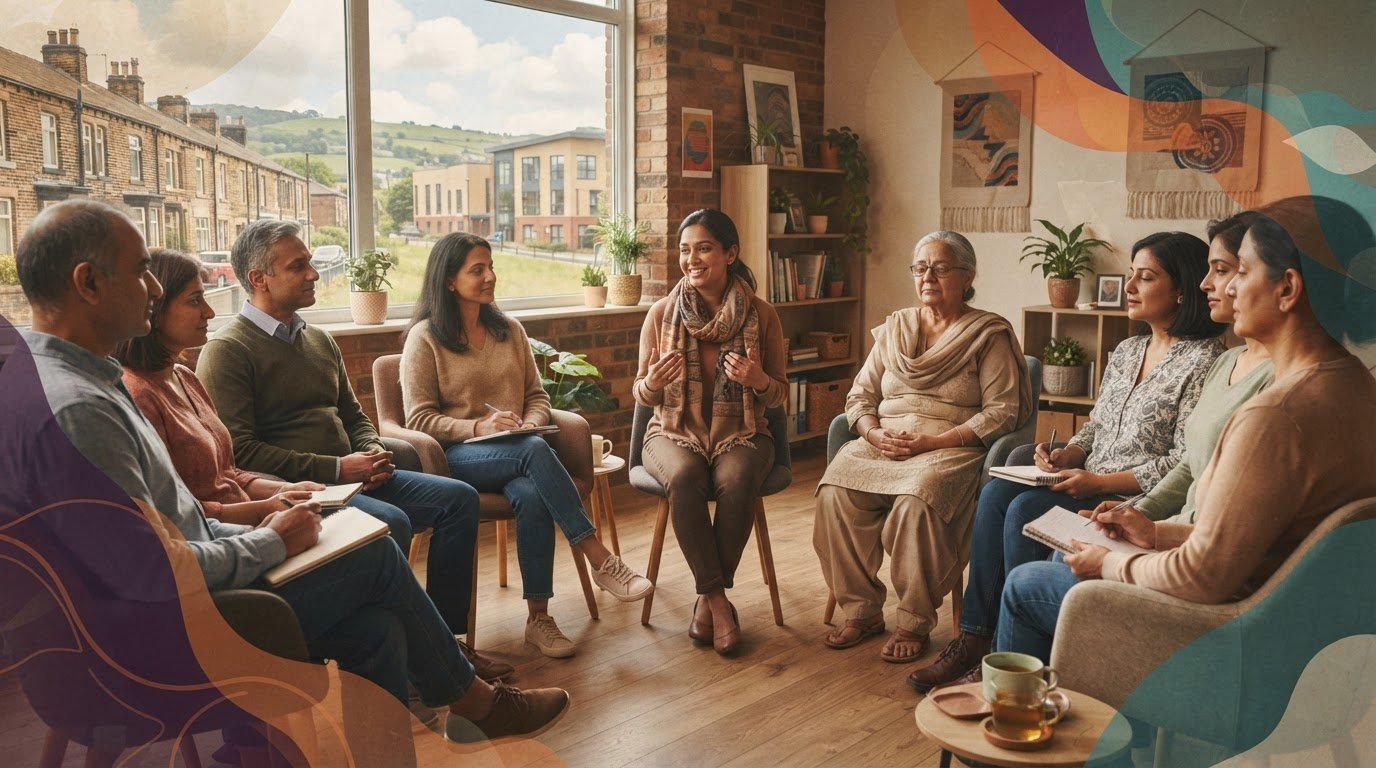
Peer connection creates space for people with shared experiences to listen and offer mutual understanding, with participation shaped by the group’s preferences.
Shared community projects invite people to plan or make something together, giving participants opportunities to contribute practical knowledge and influence the result.
How can arts, heritage and shared interests bring people together?
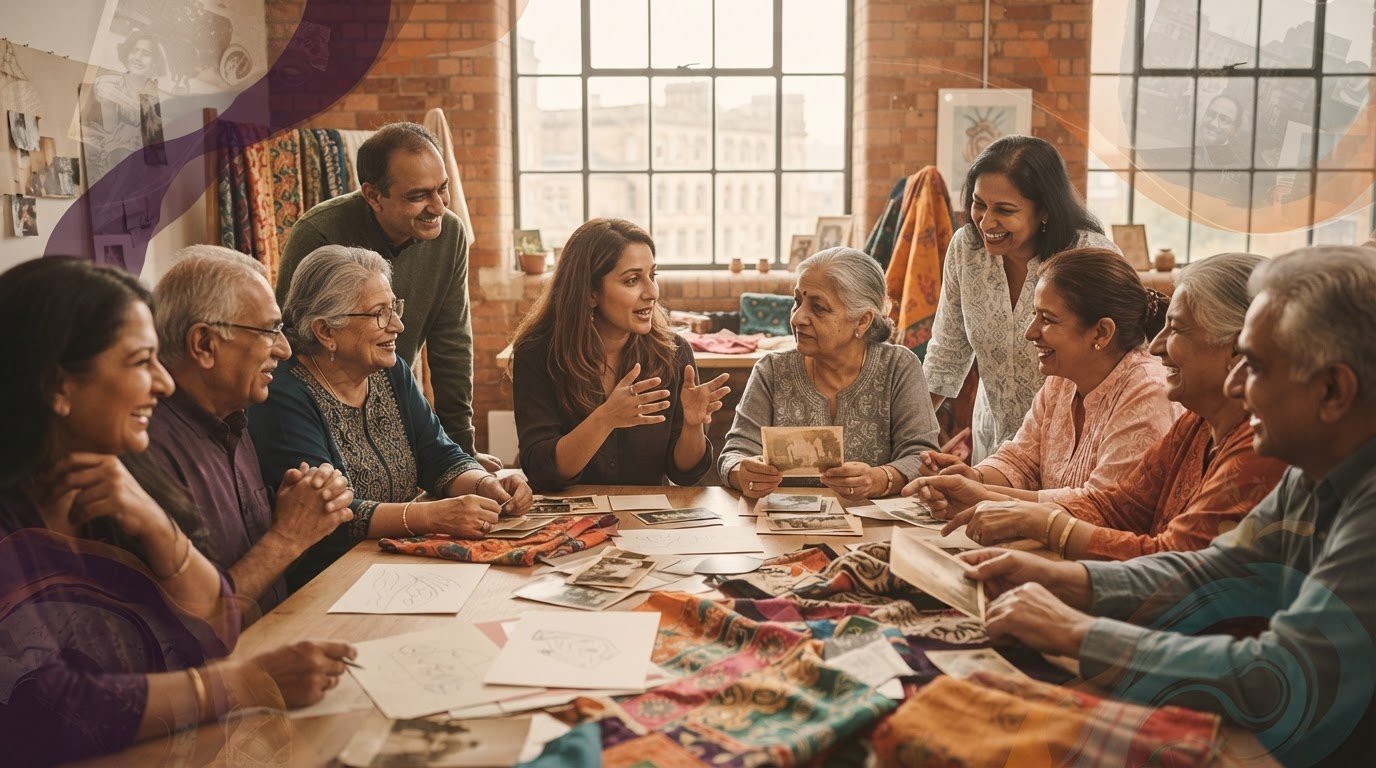
A shared activity can take some pressure off conversation. People might learn a craft, explore a local story or contribute to a creative project, with the activity providing a natural point of connection. South Asian arts and heritage can offer a culturally rooted route into shared participation without assuming that one tradition represents everyone. Structured community engagement programmes can help local groups develop activities around interests and relationships in their community.
The format matters as much as the theme. Is the activity mainly for listening, making, learning, talking or working together? Can newcomers observe before joining in, and is there a clear way to return? These questions help organisers design for participation rather than simply choose an appealing subject. Facilitated group activities and interactive challenges, such as those run by TeamLabs, offer practical inspiration for how structured play can help break the ice and foster collaboration among participants. A heritage activity, for example, might invite people to share knowledge, ask questions or contribute in a way that feels comfortable.
How can groups make connection accessible to more people?
An open invitation does not automatically make an activity welcoming. Language, confidence, cultural relevance, accessibility and practical arrangements can all affect whether someone feels able to attend and participate. Instead of assuming which barriers matter, involve intended participants in shaping the invitation, format and welcome. This can reveal useful changes, from clearer information about what to expect to more flexible ways of joining.
For reducing loneliness in communities, inclusion means offering genuine choices, not expecting everyone to participate in the same way. Someone might prefer a familiar cultural activity, a quiet role in a project or a group centred on conversation. Listening before deciding helps local organisers avoid a one-size-fits-all approach. Reviewing feedback also gives them a chance to adapt as interests and circumstances change. The aim is not just access, but participation that feels relevant, respectful and possible to sustain.
How can local groups turn good intentions into sustained action?
A good idea becomes more useful when local people can help shape it, participate in a way that suits them and influence what happens next. A practical process can move groups from broad concern about loneliness to an activity rooted in community knowledge, without assuming every place or participant has the same needs.
Listen locally. Start with what residents, community organisations and local groups already know. Ask what people value, what activities they would welcome and how they might prefer to be involved.
Identify barriers. Explore what could make participation difficult, such as unclear information, language, timing, access or uncertainty about what to expect. Treat these as questions to investigate, not assumptions about individuals.
Co-design an activity. Work with interested participants to agree its focus, format and ways to contribute. This helps ensure the activity reflects local interests rather than being planned on people’s behalf.
Welcome participants. Explain how to join, what will happen and who can help on arrival. A thoughtful welcome makes the first experience clearer and helps participants decide whether they want to return.
Review and adapt. Gather feedback, share what has been learned and agree any changes with participants and partners.
This process can guide work across Huddersfield, Halifax, Leeds, Bradford and Wakefield, while allowing each local group to listen and respond to its own community. The work need not begin with a large programme: start with a manageable activity, learn from participation and develop it in partnership as local interest and capacity become clearer. Community engagement programmes can provide a framework for bringing local voices and partners into that work.
How should a community identify what people need?
Begin with listening, not labels. A conversation through an existing group, a short discussion after an activity or a simple written way to share ideas can all inform planning. Make it possible to contribute without attending a meeting, and record themes such as preferred activities or practical barriers rather than collecting personal details that are not needed.
Explain how people’s views will be used. If participants suggest a format or identify something that could make joining easier, reflect that back and say what can be changed. This builds trust in the planning process and gives people a meaningful chance to influence the activity, whether or not they want an ongoing role.
How can groups learn whether their approach is working?
Before an activity begins, agree a few learning questions: are people returning, do participants feel welcome and are they helping shape what happens? Use feedback and repeat participation as useful signals, not proof that loneliness has been eliminated. Share what you learn with participants and partners, then adapt together in response to experience.
Groups aiming to build a collaborative approach can explore community engagement programmes to support local participation and shared ownership.
How can Communities Together support connection across West Yorkshire?
Turning community interest into participation takes collaboration, local knowledge and opportunities for people to contribute. Communities Together works across Huddersfield, Halifax, Leeds, Bradford and Wakefield, delivering community engagement and capacity-building programmes alongside cultural activities, wellbeing and resilience workshops, and learning opportunities. This work helps local groups develop shared activities that reflect their priorities and offer people different ways to take part.
For reducing loneliness in communities, this collaborative approach matters because no single activity will suit everyone. Local organisations and participants understand existing relationships, interests and strengths. Partnership can bring those contributions together. The aim is not to promise an outcome for every individual, but to support welcoming opportunities for participation, shared learning and community ownership.
What role can community engagement programmes play?
Community engagement gives local people a role in identifying shared priorities and shaping activities, rather than leaving decisions entirely to others. This can involve listening to different perspectives, making space for people to contribute ideas and helping groups build on their own knowledge and relationships. Partnership and capacity building can strengthen community organisations and support their active role in local activity.
Local infrastructure depends not only on individual activities, but also on relationships between groups and their ability to work together. Shared planning and learning can help partners develop activities with local participation at the centre. It is a collaborative approach: local groups and participants help define what connection looks like in their own setting.
How can culturally rooted activities support belonging?
South Asian arts and heritage activities offer a route into cultural participation and shared learning. Creative practice and heritage can provide a focus for exchanging knowledge, exploring traditions and taking part alongside others. These activities can be meaningful to people with different relationships to culture, but no single activity represents every South Asian person or local community. A respectful approach makes room for varied identities, interests and experiences.
Alongside cultural activity, wellbeing and resilience workshops and learning opportunities give participants further ways to develop skills and engage with others. These are community-based opportunities, not clinical mental health treatment, and they do not guarantee that someone’s loneliness will change. Their value lies in creating accessible settings where people can learn, share and contribute, with activities shaped around local participation.
Communities Together brings engagement, partnership and capacity building together so local groups can develop opportunities for connection. Whether a community is exploring a culturally rooted activity, a learning opportunity or another shared interest, the starting point is listening to participants and building with them. This gives local people a meaningful role in shaping how activities take form and grow.
Make the next step a shared one
Reducing loneliness in communities is not a task one organisation can carry alone, and progress does not depend on launching a large initiative. A useful next step might be to bring together people invested in local connection and agree one practical action to learn from: a conversation with residents, a shared activity to develop or a closer way for existing groups to work together. Starting with a manageable commitment keeps the work grounded and gives participants a real voice. It also lets partners build trust and shared responsibility as plans develop.
Communities Together supports this collaborative work through community engagement and capacity building. If your group is considering how to turn local interest into a welcoming, sustained opportunity, exploring a programme together can help identify a starting point that fits your community. The most useful first step is one people feel able to shape and sustain together.
Small steps, shaped with care and strengthened through partnership, can help make connection part of everyday community life. There is room to begin wherever you are.
Frequently Asked Questions
What is the difference between loneliness and social isolation?
They describe related but different experiences: social isolation concerns how much contact someone has, while loneliness concerns whether their relationships feel satisfying. For example, someone who lives alone may feel connected through regular conversations and shared interests, while a person in a busy household may still feel lonely. For community organisers, the practical lesson is to offer choice and avoid deciding what someone needs based only on how often they attend activities.
Can community activities help reduce loneliness?
Yes. Community activities offer ways to meet people, share interests and take part in local life, although they cannot promise a particular result for every participant. For reducing loneliness in communities, organisers can make activities easier to approach by explaining what to expect, offering different ways to join in and giving people time to become familiar with the group. These opportunities complement clinical mental health care where that is needed.
How can local groups reach people who do not usually attend events?
Use trusted, familiar routes to share invitations rather than relying only on posters or online announcements. A group might ask local residents what wording feels welcoming, share details through established community networks and let people express interest without committing to attend. Clear information about the activity, who it is for and what happens on arrival can reduce uncertainty. Follow-up should be friendly and optional, never an assumption that someone needs help.
What types of community activities can help people connect?
There is no single activity that suits everyone. Groups might offer a shared learning session, a practical project, a discussion around a common interest or a creative activity, with options to observe, contribute or take a quieter role. In West Yorkshire, organisers can build on interests people identify locally, then review whether the format feels comfortable and worthwhile. The aim is meaningful participation, not ranking activities or promising outcomes.
How can a community group measure whether its activities are making a difference?
Combine simple participation records with voluntary feedback, and be clear about what each can show. A group could note whether people return, ask what participants value and record suggestions that lead to changes. A short conversation or anonymous comment can complement attendance information. These observations help organisers learn and adapt; they are not proof that loneliness has ended, so describe findings carefully and discuss them with participants.
Can arts and heritage activities help people feel more connected?
They can create a shared focus for learning, making and exchanging knowledge, which may help participants find common ground. For instance, a group could invite people to contribute a song, craft, memory or question connected with a heritage theme, while leaving room for those who prefer to listen. South Asian arts and heritage activities are one possible route, not a representation of every South Asian person or every community in Huddersfield, Halifax, Leeds, Bradford or Wakefield.

Comments