
Community Storytelling Workshops in Leeds: A Guide to Shared Stories
A community story is strongest when local people shape both what is shared and how it is heard. Community storytelling workshops Leeds groups develop collaboratively can make room for local voices, cultural participation and connections between people with different experiences.
A listing may tell you the date, venue or intended age group, but not how an activity welcomes people from varied backgrounds or supports a wider community aim. You may be looking for more than an engaging session: perhaps a thoughtful way to build shared understanding, preserve heritage or bring people together around a local project.
This guide explores how storytelling can contribute to those aims and how to shape a workshop around the people involved. You’ll find ideas for community and heritage projects, ways to include different perspectives, and practical steps for developing themes and activities with local groups. Communities Together brings storytelling and story capture into its wider work in cultural engagement, heritage and learning across Leeds and West Yorkshire, including Huddersfield, Halifax, Bradford and Wakefield. Its work is shaped in collaboration with community groups and partner organisations.
Table of Contents
What community storytelling workshops in Leeds can offer local groups
A community storytelling workshop is a facilitated creative activity shaped around participants’ experiences and shared interests. Rather than bringing people together only to watch a finished performance, it invites them to contribute, listen and influence what the group explores. Stories might be spoken, written, captured or expressed through another creative form, depending on the project’s purpose and the people taking part.
This guide looks at how community storytelling workshops Leeds groups can develop to support participation and local projects. It isn’t a listing for one dated event, age group or venue. The focus is on the process: making room for different experiences, connecting people through shared themes and exploring local culture in ways that reflect participants’ perspectives.
For example, a residents’ group might explore memories of a changing neighbourhood, while an educational institution or charity could invite participants to share how they understand a local theme. These are starting points, not fixed formats. First agree what the activity is for, then shape it with the people whose voices and knowledge it aims to include.
What makes a storytelling workshop community-focused?
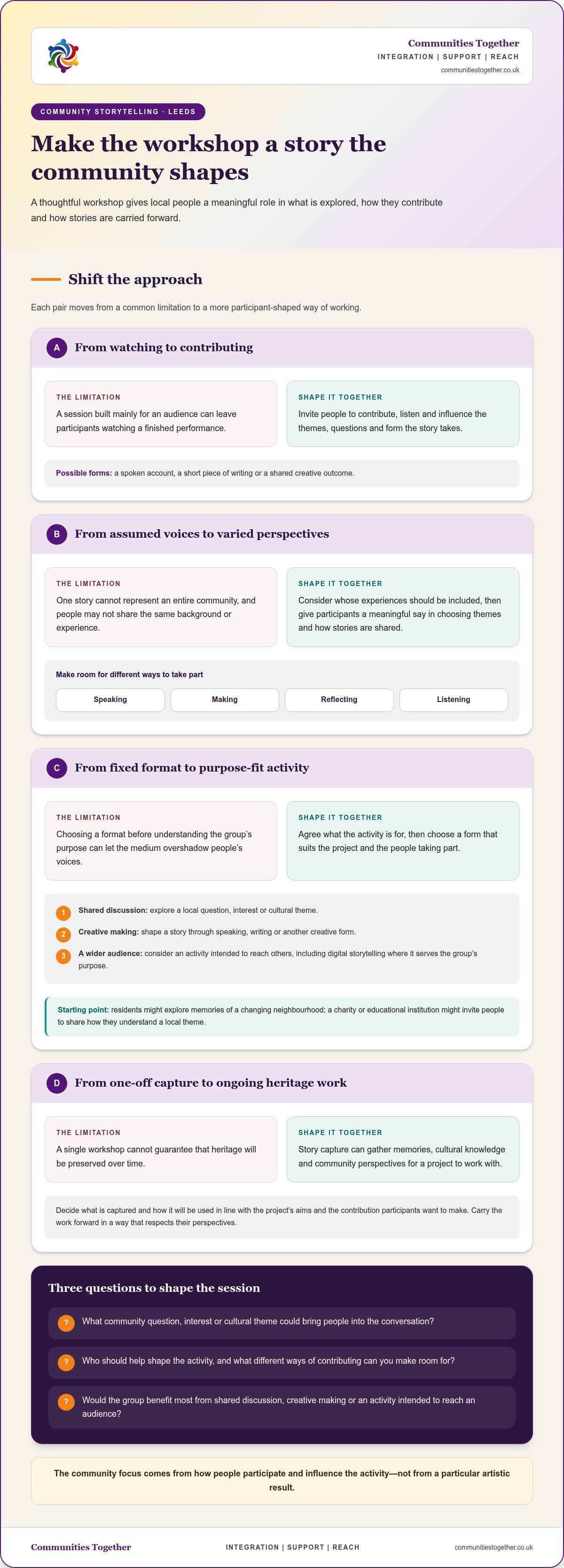
Participants are contributors, not simply an audience. Their experiences can inform the themes, the questions explored and the form a story takes, whether that’s a spoken account, a short piece of writing or a shared creative outcome. A facilitator can support the process by setting a respectful tone, offering different ways to take part and making space for a range of voices. The aim isn’t to make everyone reach the same conclusions.
This collaborative approach connects storytelling with inclusive engagement. People can share their perspectives, listen to others and identify points of connection or difference. A workshop doesn’t need to produce a polished performance to be meaningful. Its community focus comes from how people participate and influence the activity, not from a particular artistic result.
Who might take part in Leeds storytelling activity?
Storytelling can work for residents, community groups, charities and educational institutions exploring local identity, cultural knowledge or a shared concern. It isn’t reserved for children, confident writers or trained performers. People can contribute by speaking, making, reflecting or listening, with the format tailored to the project and group.
In Leeds, a project might draw on the group’s interests, cultural experiences or connection to a place, without assuming that everyone shares the same background. Digital approaches can also be part of the creative mix. Digital Storytelling in Community Workshops offers an overview of how digital storytelling is used in settings including education, museums and communities. The medium should serve the group’s purpose, rather than overshadow its voices.
Before planning, consider a few practical questions:
What community question, interest or cultural theme could bring people into the conversation?
Who should help shape the activity, and what different ways of contributing can you make room for?
Would the group benefit most from shared discussion, creative making or an activity intended to reach an audience?
These questions help distinguish a participatory workshop from an event designed mainly for spectators. They also give local groups a clearer basis for using storytelling to support cultural participation, shared understanding and community connection.
How community storytelling can connect local voices, culture and heritage
Stories can make lived experience and cultural knowledge more visible, especially when people have space to share perspectives that are not always represented in public accounts of a place. A memory of a family tradition, a reflection on change or knowledge passed between generations can help others understand how people relate to their culture and surroundings. Listening matters too: it gives participants a chance to encounter experiences beyond their own, without suggesting that one story can represent an entire community.
Story capture as part of heritage work
Story capture can contribute to heritage and cultural preservation by gathering memories, knowledge and perspectives for a project to work with. A project might explore how a tradition is understood, record accounts connected with a community or bring different interpretations of a shared theme into conversation. What is captured and how it is used should reflect the project’s aims and the contribution participants want to make.
Communities Together includes storytelling and story capture in its wider arts, culture and heritage activity. These can sit alongside conversations about what matters to participants and how their knowledge can inform a project. A workshop on its own cannot guarantee that heritage will be preserved over time. It can create material and shared reflection that contribute to preservation work when carried forward in a way that respects participants’ perspectives.
Creating space for different cultural forms
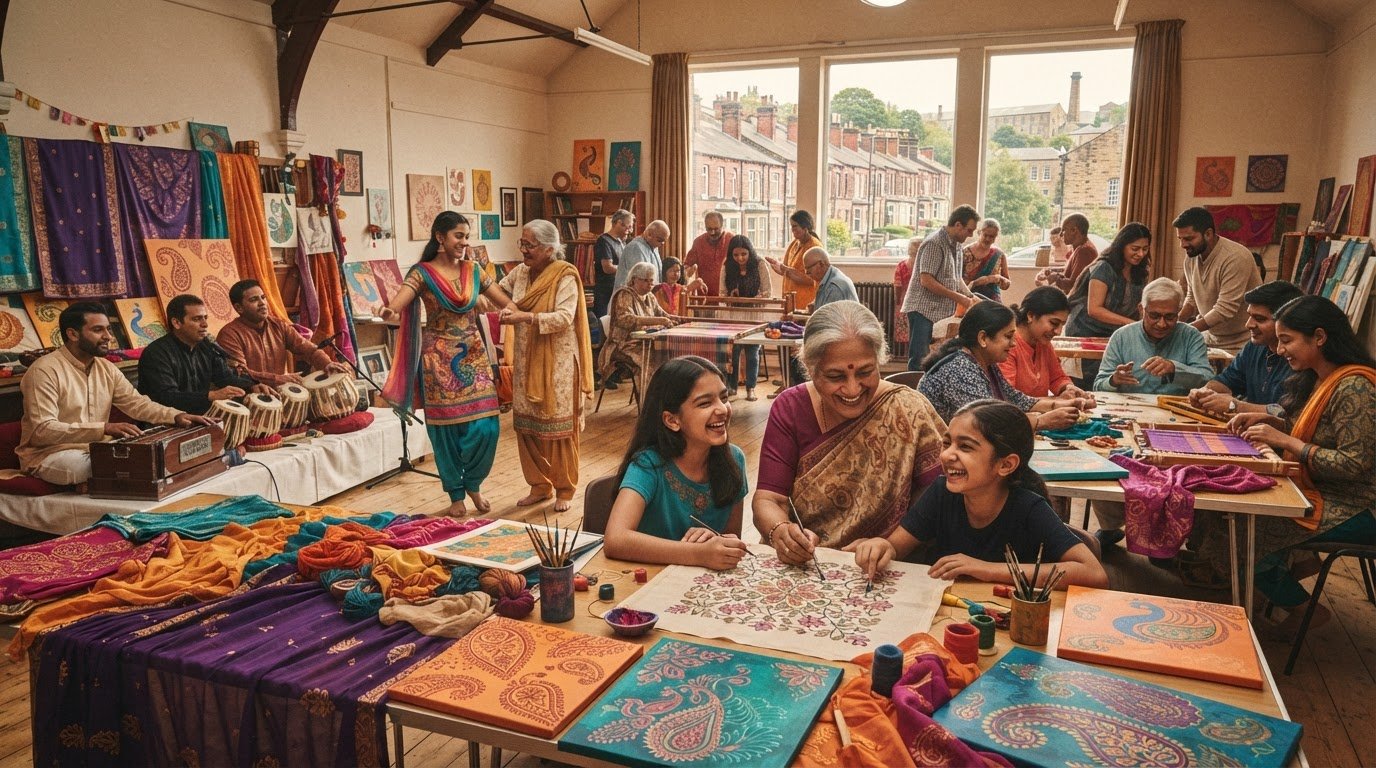
Stories needn’t be expressed through speech alone. South Asian arts and culture can include storytelling, music, dance, visual arts, crafts and performances. These forms allow a project to connect spoken accounts with creative practices that carry their own histories and meanings. A group might explore a story through discussion, then respond through making, movement or performance, according to the project’s purpose and participants’ interests.
Combining creative forms can offer people different ways to take part and create opportunities to share cultural knowledge across backgrounds. The aim isn’t to flatten distinct experiences into one account, but to support respectful exchange and let participants decide what they want to contribute. Projects in Leeds can draw on local voices and connections while recognising that cultural heritage is diverse and may be understood differently by each person involved.
For organisations developing community storytelling workshops Leeds communities can shape, connecting stories with cultural practice is one way to link participation with heritage aims. Communities Together’s heritage and cultural preservation work provides a wider context for groups considering how creative activity can support local voices.
When participants help shape and share their stories, they can contribute to cultural continuity and strengthen connections between people and place.
Choosing a storytelling workshop format for a Leeds community project
The right format depends on what a group hopes to explore and how participants want to take part. A project focused on listening may need a different approach from one exploring cultural knowledge through creative practice. Treat the options as adaptable starting points, not a fixed package. A workshop can combine approaches, change direction as people contribute or finish without a public-facing output.
This comparison can help organisers connect a project aim with participant involvement and possible outcomes. The outputs are examples, not requirements.
Story-sharing and story capture
Story-sharing can be an informal exchange, with the emphasis on listening and noticing what participants share or experience differently. Story capture has a more defined project purpose: gathering memories, knowledge or perspectives for the work to consider. A group might identify themes connected with place, identity or cultural heritage, then decide whether open conversation or a more focused capture approach best supports its aims.
Arts-based workshops and performance
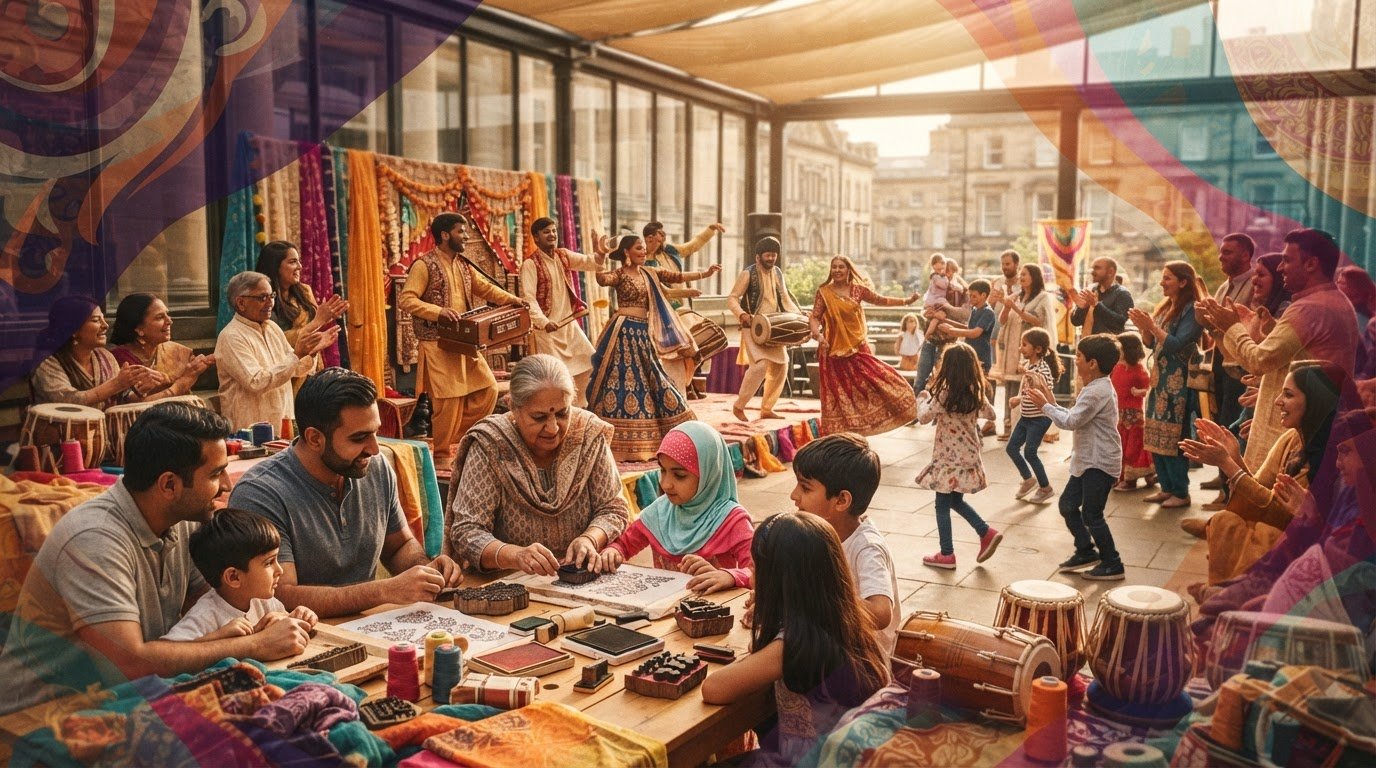
Storytelling can sit alongside activities such as crafts, dance and visual arts, giving participants different ways to explore an idea. Making or sharing stories isn’t the same as preparing a performance. The first can focus on the creative process, while the second involves presenting work to an audience. Leeds festival listings have included workshops, talks and performances, illustrating the range of event formats. A public showcase isn’t necessary for every project.
When choosing a format, consider whether participants want to speak, make, move, listen or collaborate, and whether the project needs an output at all. Don’t treat an exhibition or performance as the automatic measure of success. The format should serve the community aim and the people taking part. If creative work will be shared beyond the group, agree how it will be used early on, so expectations are clear and participants can influence the process.
Communities Together brings storytelling into its wider community engagement and South Asian arts and heritage activity. Groups developing community storytelling workshops Leeds projects can explore how these formats can be shaped collaboratively through community storytelling and heritage activity.
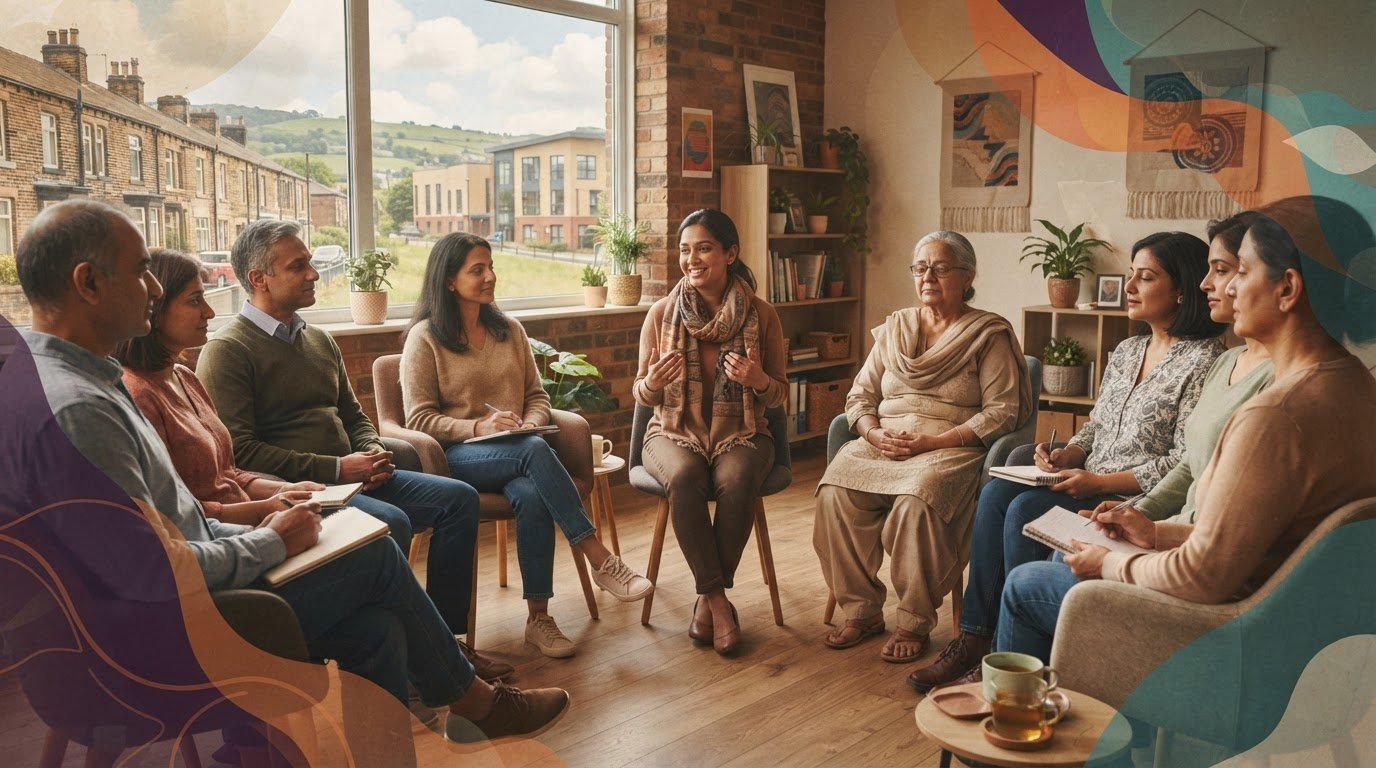
How to shape community storytelling workshops in Leeds
A well-shaped workshop starts with the community purpose, not a pre-set activity. For community storytelling workshops Leeds groups are planning, decide what the project hopes to make possible, whose perspectives should inform it and how participants can influence the process. A clear sequence helps organisers and partners turn those intentions into a practical, collaborative plan.
Agree the purpose and invite participation
Start by agreeing a specific intention, such as creating opportunities for cultural participation, exploring heritage or bringing local voices into conversation. Identify the residents, community groups and partner organisations whose knowledge can help shape the activity. Involving them early can show which themes matter, what forms of participation feel appropriate and what the project should avoid assuming about a community.
Use these steps to move from an initial idea to a considered activity:
Define the purpose. Describe what the project is there to explore or support. Keep the intention clear enough to guide decisions, while leaving room for participants’ contributions to influence its direction.
Map whose perspectives matter. Consider who the project aims to involve and which community partners can help build relationships. Include people with different experiences of the topic rather than assuming one voice represents everyone.
Invite participants into the design. Make space for people to suggest themes, creative forms and shared priorities. Their input can help decide whether the activity centres on conversation, story capture or another creative approach.
Choose an activity that fits. Select storytelling, story capture or related arts activities in response to the agreed purpose and participants’ interests. Don’t treat any format as an automatic package.
Agree how work will be shared and reviewed. If the project calls for stories or creative work to be shared, decide together what that could look like. Afterwards, reflect on who took part, what people learned and what feedback could inform future activity.
Choose activities and reflect on learning
Leave room for adjustment. A group exploring cultural heritage may favour a different approach from partners bringing local voices together, and participants may suggest forms organisers hadn’t considered. If sharing work beyond the group is part of the purpose, discuss that early. A performance or display shouldn’t be assumed as the required end point.
Reflection can be practical and participant-led. Organisers might consider whose perspectives were heard, which activities supported involvement and what participants would change next time. Notes from a closing conversation or partner discussion can document learning without reducing community experience to a made-up statistic or a single measure of success.
Where storytelling forms part of wider partnership aims, connect the workshop plan with Communities Together’s broader community engagement programmes. This helps creative activity support a coherent approach to participation and collaboration.
Develop community storytelling workshops in Leeds with Communities Together
Communities Together is a non-profit organisation established in 2007, working across Leeds and other parts of West Yorkshire, including Huddersfield, Halifax, Bradford and Wakefield. Storytelling and story capture are part of its arts, culture and heritage activity, alongside South Asian arts, heritage preservation and community engagement. Storytelling can therefore support a wider project, rather than being treated as an isolated activity with a predetermined result.
For groups exploring community storytelling workshops Leeds, begin with what matters locally. A project might centre on cultural participation, heritage or bringing different community perspectives into a shared activity. Shape the themes and creative approach collaboratively, keeping the purpose connected to participants’ interests and the knowledge they bring.
A collaborative approach to local storytelling
Communities Together works collaboratively with community groups, educational institutions, charities, local authorities and health organisations. These partnerships bring together different forms of local knowledge and provide a basis for developing a project. Community members and grassroots groups aren’t simply audiences for cultural activity: they can help shape its themes, participation and direction.
This approach recognises that local stories and cultural experiences vary. A group might explore a shared theme through story capture, connect spoken accounts with South Asian arts or consider how a creative activity can support a heritage project. Partners can develop the activity around those aims, without assuming one format or outcome will suit every group.
Storytelling sits within a broader approach to participation. Communities Together’s community engagement programmes give organisations context for connecting creative activity with their work alongside community groups and partners.
Take a practical next step together
For a Leeds group or organisation, a useful first step is to bring together people who understand the community and agree what the activity should support. Consider whose experiences the project hopes to include, which cultural or local themes participants want to explore, and whether storytelling, story capture or another creative form best fits the purpose. Partners can then shape an activity around the people involved instead of relying on a generic format.
Communities Together’s wider work offers relevant context for this kind of collaboration. Chloe Duffield described the Sangam Festival as helping her understand another group’s art, culture and community. Her comment reflects the potential of cultural activity to support understanding. For a group planning local activity, the focus is on making space for people to encounter and learn from perspectives beyond their own.
If your organisation is considering storytelling as part of a community or heritage project, think about how the activity can be shaped around local voices, shared interests and practical aims. A collaborative discussion can help clarify the purpose and identify an approach that feels meaningful to participants.
Begin with the voices you hope to bring together
Start with a thoughtful conversation with the people a project hopes to involve. Invite them to identify what they’d value exploring, what they feel comfortable sharing and how they’d like their contributions to shape the activity. That early exchange can help turn an idea for community storytelling workshops Leeds into a project rooted in local priorities, with room for different experiences and creative choices.
Keep listening as plans develop. A community-led activity doesn’t need every detail settled from the outset; it can take shape through partnership, reflection and participants’ perspectives. Communities Together’s work connects storytelling with wider cultural and community aims.
With a shared purpose and local voices at the centre, your next creative conversation can be a meaningful starting point for connection.
Frequently Asked Questions
Are community storytelling workshops in Leeds only for children?
No. They can be designed for adults, mixed-age groups or particular communities, depending on the project and who wants to take part. A residents’ association might invite long-standing residents and newer neighbours to share perspectives on local change, while a school could involve pupils alongside families or community partners. The intended participants should help shape the approach. Storytelling isn’t inherently a children’s activity.
Can a community storytelling workshop include music, dance or visual art?
Yes. Music, dance and visual art can complement spoken stories, with the creative form chosen to suit the theme and participants’ interests. A group exploring a cultural tradition, for example, might use drawing to respond to a story or movement to interpret an idea. These activities can sit alongside South Asian arts and heritage work without requiring a finished performance or exhibition.
What is the difference between community storytelling and a public performance?
Community storytelling can centre on participants exchanging ideas and exploring experiences together. A public performance is prepared for an audience. A project may include both, but one doesn’t have to lead to the other. If the aim is to help a group listen to different perspectives, a discussion or creative session may fit better than presenting stories publicly. Let the project’s purpose guide the choice.
Can a local organisation help shape a storytelling workshop?
Yes. A local organisation can help identify a relevant theme, invite people with knowledge of the community and discuss what participation could look like. For example, a charity working with residents might share insight into issues its community wants to explore, while leaving participants room to influence the questions and creative approach. Community storytelling workshops Leeds organisations develop collaboratively can reflect local interests rather than follow a standard format.
Do participants need to be writers or experienced performers?
No. People don’t need writing or performance experience to contribute. Organisers can offer different ways to take part, such as speaking, listening, making an artwork or reflecting on a shared theme. Someone who prefers not to tell a personal story could still contribute ideas about a place, tradition or community experience. Agreeing these options in advance can help people feel more at ease and make participation more inclusive.
How can a school or charity use storytelling in a community project?
A school or charity in Leeds, Huddersfield, Halifax, Bradford or Wakefield could use storytelling to explore a theme connected with its community aims. A school might invite pupils to consider how cultural traditions are passed between generations; a charity could use group story-sharing to inform a community heritage activity. Start with a clear purpose, involve relevant partners and participants in shaping the activity, then reflect on what the group learned.
Comments