
How to Organise Inclusive Community Programmes: A Practical Guide for West Yorkshire

Whilst West Yorkshire is home to a diverse population of 2.4 million people, simply opening the doors to a local hall doesn't guarantee that our inclusive community programmes will reach those who need them most, especially when structural barriers persist. You might find it frustrating when participation from underrepresented groups remains low, or perhaps you're concerned that a lack of multilingual resources might lead to accidental exclusion during your outreach efforts; these are valid anxieties for any facilitator committed to social responsibility. It's a common challenge for earnest organisers who strive to balance professional accountability with a warm, welcoming environment that truly resonates with every resident across our distinct towns and cities.
This guide provides the essential steps for designing, delivering, and sustaining community initiatives that empower individuals whilst strengthening the social fabric of our region. You'll discover how to cultivate stronger local partnerships, implement co-design strategies that value cultural heritage, and achieve measurable social cohesion through methodical engagement. We'll examine the practical ways to move from standalone events to a steady, reliable framework for collective growth, ensuring your programmes act as a principled foundation for togetherness, cultural continuity, and long-term community resilience.
Key Takeaways
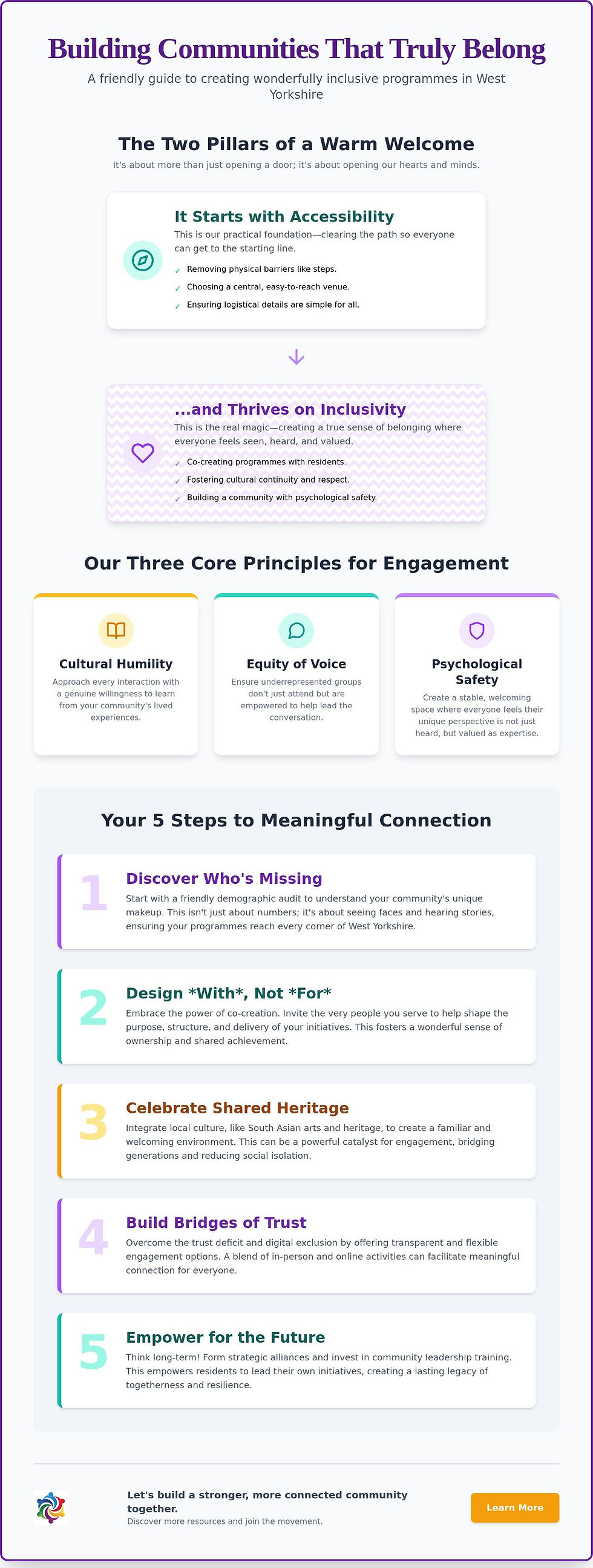
Discover the vital distinction between removing physical barriers and actively fostering a sense of belonging through co-creation with the residents you serve, ensuring every participant feels seen and valued.
Learn how to conduct demographic audits and map local assets to ensure your inclusive community programmes reach every corner of West Yorkshire’s diverse population whilst building structural strength.
Explore the benefits of integrating South Asian arts and heritage into your activities to create a familiar environment that encourages participation, cultural continuity, and collective endurance.
Gain practical strategies for overcoming the trust deficit and digital exclusion by offering transparent, blended engagement options that facilitate meaningful connection for all.
Find out how to build lasting social impact by forming strategic alliances and investing in community leadership training to empower residents to maintain and lead their own initiatives.
Table of Contents
Understanding Inclusive Community Programmes: Beyond the Open Door
True inclusive community programmes are built on the belief that those who live the experience are best placed to lead the change. These initiatives represent far more than a simple invitation to participate; they're deeply rooted in the philosophy of co-creation, where the very individuals who will benefit from the initiative are the ones who help to shape its purpose, structure, and delivery. By grounding our work in established community development principles, we can move away from top-down service delivery and instead facilitate a collaborative environment where residents feel a profound sense of ownership and accountability. This approach ensures that every project we undertake is not just a temporary activity, but a meaningful contribution to the long-term structural strength of our local neighbourhoods.
It's vital to distinguish between accessibility and inclusivity, as they serve different but complementary roles in social welfare. It's a vital distinction. Whilst accessibility focuses on the vital task of removing physical or logistical barriers, such as providing ramps or choosing a central venue, inclusivity is a more abstract social concept that fosters a genuine sense of belonging and cultural continuity. In diverse cities like Leeds and Bradford, this distinction is essential for building social cohesion and community resilience. By prioritising these values, we don't just provide a service; we build a stable foundation that allows residents to support one another during times of change or hardship.
To better understand how we can build these supportive environments together, please watch this insightful video:
The Core Principles of Inclusive Engagement
Effective engagement relies on three pillars: cultural humility, equity of voice, and psychological safety. Safety comes first. We must approach every interaction with a willingness to learn from participants, ensuring that underrepresented groups don't just attend but actually lead the conversation. This methodical advocacy helps to dismantle power imbalances, creating a stable foundation where everyone’s lived experience is valued as expertise. When people feel psychologically safe, they're more likely to contribute their unique perspectives, which leads to more robust and effective outcomes for everyone involved.
Why West Yorkshire Needs Culturally-Specific Inclusive Design
The unique demographic tapestry of towns like Huddersfield, Halifax, and Wakefield requires a tailored approach that respects local traditions whilst driving progress. We've found that incorporating South Asian arts and heritage activities acts as a powerful catalyst for engagement, bridging the gap between generations and reducing social isolation amongst those who might otherwise feel disconnected. These tailored activities are often the first step towards broader participation in wellbeing and resilience workshops. By building these culturally-specific bridges, we facilitate a rhythmic pulse of togetherness that strengthens the entire region's social fabric.
How to Identify and Engage Underrepresented Groups
Identifying who is missing from your activities requires a methodical approach that blends statistical analysis with a warm, personal touch. To begin, conduct a local demographic audit by reviewing the latest census data and local council reports to understand the specific needs and cultural backgrounds of your neighbourhood. Once you have the data, map your existing community assets, which include faith centres, local shops, and grassroots groups, to see where people already gather and find support. This structured approach aligns with the Inclusive Cities framework, which suggests that organisations must actively seek out those on the margins to build truly inclusive community programmes. Trust is the currency of community work, so establish "bridge-builders" or community ambassadors who already hold trust within specific circles to act as a professional conduit for your mission. These ambassadors don't just relay information; they help to translate institutional goals into community benefits, ensuring that every resident feels a sense of purpose and accountability. Instead of formal consultations that can feel stiff or clinical, utilise "active listening" sessions where participants can share their stories in a relaxed environment that prioritises their comfort and voice. Community capacity building is the process of strengthening local skills, confidence, and community infrastructure to enable residents to lead their own development and collective growth.
Breaking the Language Barrier
Translation is just the start of a much deeper conversation about belonging. Go beyond simple literal translation by using culturally resonant imagery and terminology that feels familiar and welcoming to the audience you hope to reach. Partner with local organisations to provide informal translation during workshops, which is especially valuable in South Asian heritage projects where linguistic nuances are vital for building togetherness, cultural continuity, and mutual understanding. This approach ensures that your message isn't just heard, but is felt and embraced by the community.
Meeting People Where They Are
Don't expect everyone to walk through the doors of a traditional community centre right away. Sometimes these venues carry a history of exclusion or simply feel too formal for an initial, friendly encounter. Leverage "third spaces" like local markets, busy parks, and school gates for your initial contact, as meeting people where they already feel comfortable is the first step in building a lasting, reliable partnership. It's about being a visible, friendly presence in the places where life happens every day. You can learn more about our community engagement programmes to see how we facilitate these vital connections across West Yorkshire.
Designing Your Programme: A Step-by-Step Practical Guide
Creating truly inclusive community programmes requires a shift from planning for people to planning with them. This transition begins with a dedicated co-design phase where participants don't just attend an event but actually help to set the agenda, define the goals, and choose the methods of engagement. By following established UK government guidance on community programmes, we can ensure our design process is both professionally robust and deeply respectful of local voices. It's about building a stable foundation together. We've found that when residents see their own ideas reflected in the programme's structure, their sense of ownership and accountability grows, leading to higher retention and more meaningful social impact over time.
Flexibility is your greatest asset during this stage. A methodical facilitator understands that a programme must be a living entity, capable of evolving based on the continuous feedback of those it serves. If a particular activity isn't resonating or if a new barrier to participation emerges, we must be prepared to adapt our approach whilst staying true to our core mission. This responsiveness demonstrates that we're listening and that we value the collective wisdom of our participants, which is essential for maintaining trust and ensuring long-term success in our diverse West Yorkshire neighbourhoods.
Integrating Arts and Heritage for Inclusion
South Asian arts and heritage activities serve as a powerful bridge between generations, allowing younger residents to connect with their roots whilst elders share their stories in a supportive environment. By focusing on heritage preservation, we validate the lived experiences of our diverse residents and provide a familiar cultural touchstone that makes a new programme feel welcoming rather than clinical. Our wellbeing workshops often use creativity as a gentle tool for engagement, helping to reduce social isolation and build structural strength through shared artistic expression and cultural continuity.
Logistics and Environmental Inclusivity
Success often depends on the details of delivery. We must ensure that our timing and location are sensitive to the realities of daily life, such as religious holidays, childcare commitments, and varied work shifts that might otherwise prevent attendance. Consider these practical elements:
Venue Choice: Select locations that are physically accessible and feel culturally neutral or specifically welcoming to the groups you wish to engage.
Refreshments: Provide food and drink that cater to all dietary and religious requirements, as sharing a meal is a traditional way to build togetherness.
Safe Space Agreements: Establish clear guidelines for behaviour and dialogue at the start of every session to ensure everyone feels psychologically safe to contribute.
By attending to these logistical needs, we create an environment where the focus can remain on growth, learning, and the strengthening of our local social fabric.
Overcoming Common Barriers to Participation and Retention
Whilst the design of inclusive community programmes is a vital first step, maintaining long-term participation requires us to address the deep-seated barriers that often prevent residents from staying engaged over time. We must first confront the trust deficit, a common hurdle in marginalised communities where people may feel over-researched but under-served by institutional bodies. By being entirely transparent about our funding sources, our specific goals, and our intended social outcomes, we build a stable foundation of professional accountability that encourages residents to invest their time and energy. It's about honesty. We also need to tackle digital exclusion head-on, especially considering that 9% of our West Yorkshire neighbours remain offline whilst 25% lack the essential digital skills required for modern participation. Offering a blended model of engagement that combines traditional in-person workshops with accessible online options ensures that we don't accidentally exclude those without reliable internet access or the confidence to use digital tools.
Financial barriers often act as a silent deterrent to even the most welcoming activities, and lowering these hurdles is essential for fostering true equity. Providing travel expenses or offering childcare support during sessions allows parents and those on low incomes to participate without the weight of additional costs, creating a more accessible environment for collective growth. To keep people coming back, we must also counteract "consultation fatigue" by ensuring that every resident sees immediate, tangible results from their involvement. When participants see that their feedback leads to actual, visible change in their neighbourhood, their sense of purpose and commitment to the programme's success is significantly strengthened.
Building Long-Term Trust
Consistency is the heartbeat of community work; you can't just show up when you need a grant requirement met or a survey completed. Building lasting relationships means being a steady, reliable presence in the community, facilitating dialogue even when there are no immediate deadlines to meet. A methodical facilitator understands that conflict or differing viewpoints are natural within any group, and handling these moments with cultural humility helps to maintain harmony and structural strength. If you're looking to strengthen your own local networks, you can discover our partnership and capacity building work to see how we support sustainable growth.
Measuring Impact Beyond the Numbers
We must move beyond simple quantitative metrics like "how many people came" and instead ask "how has their wellbeing actually improved?" Using storytelling and qualitative data allows us to demonstrate the deep social impact of our work, capturing the nuances of togetherness and cultural continuity that numbers alone often miss. Our personal development workshops, for instance, focus on building individual resilience and collective endurance, providing residents with the skills and confidence to support one another long after the programme has ended. By recording these personal journeys, we provide a comprehensive overview of cause and effect that resonates with stakeholders and participants alike.
Sustaining Your Programme through Collaborative Partnerships
Securing the future of your initiative requires more than just a successful launch; it demands a methodical commitment to building enduring, collaborative partnerships that span across sectors. By forming strategic alliances with local authorities like the West Yorkshire Combined Authority, established non-profits, and grassroots organisations, we can create a robust infrastructure for our inclusive community programmes to ensure they remain a stable foundation for social responsibility, harmony, and progress. It's about shared goals. Diversifying your support through a combination of public grants—such as the Mayor's Safer Communities Fund or the Active Travel Community Fund—social enterprise initiatives, and local business partnerships allows you to maintain financial stability whilst focusing on the long-term emotional and social wellbeing of the residents you serve. We must also cultivate a learning culture where we openly share our insights with the community to foster transparency, accountability, and collective wisdom.
The Role of Capacity Building
True sustainability is found when we empower local groups to take ownership of their own heritage and cultural preservation projects. This process of capacity building involves providing targeted skills development for volunteers and emerging local leaders to achieve structural strength, cultural continuity, and community endurance. Communities Together supports local organisations across West Yorkshire by acting as a professional conduit for expertise, helping them to navigate the complexities of public sector requirements whilst staying grounded in their unique local traditions. We're here to help. This methodical advocacy ensures that grassroots groups have the tools they need to facilitate their own growth and maintain the social fabric of their neighbourhoods for years to come.
Creating a Lasting Legacy
The most profound legacy we can leave is the transition from a managed programme to a community-led initiative that thrives independently of its original facilitators. This shift towards local autonomy strengthens social cohesion and builds regional resilience, creating a steady, reliable environment where every resident feels a sense of belonging and purpose. It's a lasting change. By investing in these long-term social benefits, we ensure that the progress we make today becomes a stable foundation for the generations of tomorrow, insulating our towns against social isolation and fostering a rhythmic pulse of togetherness. We invite you to partner with Communities Together to build a more inclusive future and help us weave a stronger, more connected West Yorkshire.
Cultivating a Connected and Resilient West Yorkshire
Fostering inclusive community programmes is a rewarding, long-term commitment that requires us to move beyond simple attendance and towards a model of deep, collaborative co-creation. We've seen how identifying underrepresented groups through methodical audits, designing with cultural sensitivity, and dismantling barriers like digital exclusion can transform a local project into a stable foundation for social cohesion. By prioritising transparency, consistency, and professional accountability in your engagement, you can bridge the trust deficit whilst ensuring that every resident feels a genuine sense of ownership, purpose, and togetherness within their local neighbourhood.
At Communities Together, we're dedicated to facilitating this collective growth through our expertise in South Asian arts and heritage preservation, our commitment to regional resilience, and our proven track record in community capacity building. We understand the complex threads of our regional social fabric and possess the expertise to weave them together, helping you build lasting community resilience, cultural continuity, and structural strength across West Yorkshire. You don't have to navigate this path alone; we're here to act as a reliable bridge-builder for your mission. Explore how Communities Together can support your inclusive programme as we work together to maintain harmony and foster a rhythmic pulse of togetherness for everyone in our region.
Frequently Asked Questions
What are inclusive community programmes?
Inclusive community programmes are initiatives designed and delivered in partnership with residents to ensure that every individual, regardless of their background or ability, feels a genuine sense of belonging and ownership. These programmes move beyond simple participation by fostering a collaborative environment where underrepresented voices lead the conversation, ensuring that activities are culturally resonant and structurally accessible to all members of our local neighbourhoods in West Yorkshire.
How can I measure the success of an inclusive programme?
Success is measured by evaluating both quantitative participation rates and qualitative improvements in participant wellbeing, social cohesion, and individual resilience. You should track how effectively your initiative reaches underrepresented groups whilst using storytelling and feedback sessions to capture the abstract social benefits of togetherness and cultural continuity. This dual approach provides a comprehensive overview of your programme's impact on the long-term structural strength of the community.
How do I engage people who don’t speak English as their first language?
Engaging residents with diverse linguistic backgrounds requires you to go beyond simple translation by using culturally resonant imagery and partnering with trusted community ambassadors who can provide informal interpretation. By meeting people in familiar "third spaces" like local markets or parks, you can build the necessary trust to facilitate meaningful dialogue, ensuring that your outreach feels welcoming rather than clinical or institutional in its execution.
Why is South Asian heritage important for community cohesion in Yorkshire?
South Asian heritage acts as a powerful catalyst for engagement in West Yorkshire because it validates the lived experiences of a significant portion of our 2.4 million residents. By integrating traditional arts and history into your activities, you bridge generational divides and create a familiar cultural touchstone that fosters mutual respect, cultural continuity, and a shared sense of regional identity amongst diverse groups, which ultimately strengthens the social fabric.
What is the difference between diversity and inclusion in community work?
Diversity refers to the presence of people from various backgrounds within a setting, whilst inclusion is the active practice of ensuring those individuals feel valued, safe, and empowered to lead. In community work, diversity might mean having a representative group in the room, but inclusion is achieved only when those residents help to set the agenda and shape the outcomes of the project through a methodical co-design process.
How can small grassroots groups afford to run inclusive programmes?
Small groups can fund inclusive community programmes by applying for regional grants like the Mayor's Safer Communities Fund or by forming strategic alliances with larger organisations that offer capacity-building support. Diversifying your income through local business partnerships and social enterprise models also helps to maintain financial stability whilst allowing you to focus on delivering high-quality, supportive activities that facilitate long-term growth for your neighbours.
What are the best ways to avoid "tokenism" in community engagement?
Avoiding tokenism requires a methodical commitment to equity of voice, where participants are involved in the decision-making process from the very beginning rather than being consulted at the end of a project. You must ensure that engagement is consistent and transparent, showing residents how their specific contributions have led to tangible results, which helps to build a stable foundation of mutual trust, professional accountability, and collective endurance.
Can arts and heritage really improve community wellbeing?
Arts and heritage activities significantly improve community wellbeing by providing a gentle tool for engagement that reduces social isolation and builds individual resilience through creative expression. These projects facilitate a rhythmic pulse of togetherness, allowing residents to process shared histories and build collective endurance, which ultimately strengthens the local social fabric and improves the long-term health and stability of our diverse West Yorkshire towns and cities.
Disclaimer
These articles express an opinion and are in no way advisory.


Comments