
Heritage Preservation Projects in Wakefield: A Guide to Protecting Our Shared History
The true value of a historic landmark resides not merely in the silent endurance of its masonry but in the vibrant, lived experiences of the diverse communities that continue to gather within its shadow.
Many residents currently feel a deep-seated concern regarding the potential erosion of our local character, a sense of being untethered from the historical narratives of our ancestors, and a pressing need to see our architectural treasures revitalised for future generations. It's within this context of collective stewardship that the latest heritage preservation projects in Wakefield are emerging as vital instruments for social change, working to bridge the gap between our storied past and our shared aspirations for a more unified, culturally rich future.
This guide explores how modern restoration efforts are successfully blending physical conservation with inclusive cultural programmes to strengthen social cohesion, preserve South Asian cultural continuity, and empower you to take an active role in safeguarding our local identity. You'll gain a thorough understanding of major developments like the Upper Westgate Heritage Action Zone whilst discovering practical ways to engage with community-led activities that foster togetherness, build local capacity, and support long-term resilience.
Table of Contents
Understanding Heritage Preservation Projects in Wakefield
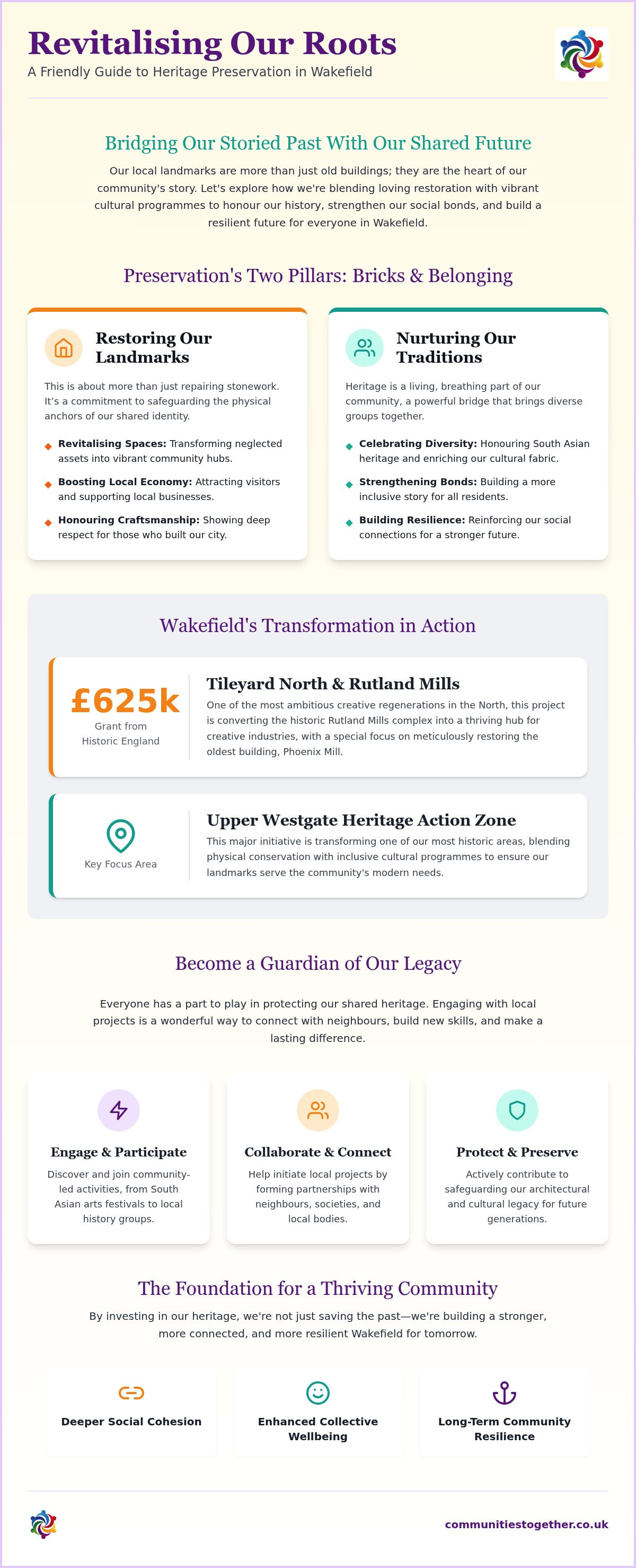
Heritage preservation projects in Wakefield represent a multifaceted commitment to safeguarding both the tangible architectural relics of our industrial past and the intangible cultural traditions that define our contemporary identity. By engaging in these initiatives, we aren't just repairing stonework; we're facilitating the continuation of local narratives that have been shaped by centuries of textile manufacturing, coal mining, and social evolution. This dual approach ensures that our city's development remains grounded in its historical roots whilst actively fostering a sense of collective endurance amongst all residents. Historic England plays a pivotal role in this process, providing the necessary structural support, professional guidance, and strategic funding to ensure that Wakefield’s unique character is maintained for future generations to experience.
The Importance of Protecting Local Landmarks
The preservation of historic buildings serves a vital social function by providing a physical anchor for our shared sense of place and preventing the gradual erasure of local identity that often accompanies rapid urban modernisation. When we protect Wakefield's listed buildings, we're investing in the community's psychological wellbeing, creating stable environments for social interaction, and stimulating local economic regeneration through the creative repurposing of derelict spaces. These projects transform neglected assets into vibrant community hubs. They attract visitors, support local businesses, and demonstrate a profound respect for the craftsmanship of those who built our city. This process of building and maintaining our physical environment is essential for creating a stable foundation where future growth can flourish without losing sight of where we've come from.
Cultural Heritage and Social Cohesion
Recognising that heritage is a living, breathing entity allows us to use our shared history as a powerful bridge for bringing diverse groups together in a spirit of mutual understanding and respect. In the West Yorkshire context, the preservation of South Asian heritage is particularly significant, as it honours the contributions of immigrant communities, enriches our collective cultural fabric, and ensures that every resident feels represented in the city’s historical record. By celebrating diverse artistic expressions, traditional crafts, and oral histories, we build a more inclusive narrative that strengthens the bonds of togetherness across all neighbourhoods. It's about creating a unified social fabric. Heritage preservation serves as a fundamental tool for building community resilience by reinforcing the structural strength of our social connections and cultural continuity.
Major Restoration Initiatives: From Tileyard North to Westgate
The physical landscape of our city is currently undergoing a profound and necessary transformation as heritage preservation projects in Wakefield move from the stages of conceptual planning into a phase of tangible, structural delivery. These initiatives aren't merely about aesthetic improvement or simple maintenance; they're about the strategic and empathetic repurposing of our industrial legacy to support modern social, economic, and cultural needs. By facilitating close collaborations between specialist conservation contractors such as Composites Construction UK, dedicated historical societies, and local governing bodies, we're ensuring that every restored brick and refurbished beam tells a story whilst serving a vital, functional purpose in the twenty-first century. We're building for the future.
Tileyard North represents one of the most ambitious creative regenerations in the North of England, successfully converting the once-derelict Rutland Mills complex into a thriving, multi-use hotspot for the creative industries. Central to this large-scale effort is the meticulous restoration of Phoenix Mill, widely recognised as the oldest mill in the complex, which has benefited from a specific £625,000 grant from Historic England to fund essential exterior repairs, improved drainage systems, and the installation of historically accurate windows. This project doesn't just save a significant architectural landmark; it actively facilitates new community engagement programmes by providing a world-class environment where local talent can flourish, diverse cultural narratives can intersect, and the city’s industrial spirit can be experienced anew.
The Upper Westgate Heritage Action Zone
Functioning as a crucial four-year, £4 million partnership between Wakefield Council and Historic England, the Upper Westgate Heritage Action Zone (HAZ) has directly revitalised the historic yards and buildings defining our city centre. By providing vital funding to 19 distinct properties and restoring five historic yards, the project has significantly enhanced the public realm, ensuring it feels safer, more accessible, and more welcoming for every member of our community. This initiative goes beyond simple structural repair by conducting deep, methodical research into the lives of former occupants, effectively humanising the history of the area whilst fostering a deeper emotional connection between the people of Wakefield and their built environment. The success of these large-scale works relies on the collective expertise of historical researchers, traditional craftspeople, and local residents who work together to ensure that our shared past remains a vibrant, stable foundation for our collective future.
The Role of Community Engagement in Heritage Preservation
Whilst physical restoration is essential for the survival of our built environment, heritage preservation projects in Wakefield are truly defined by the people who occupy, interpret, and cherish our historic surroundings. We believe that a restoration effort remains incomplete if it doesn't actively facilitate the participation of local residents, as it is their lived experience that breathes life into the masonry of our city's past. Our community engagement programmes are designed to bridge the gap between historical research and contemporary social reality, ensuring that the stories of our ancestors remain relevant to the challenges and triumphs of today. This methodical approach ensures that heritage preservation projects in Wakefield deliver long-term social benefits that extend far beyond the immediate physical repairs.
This process involves significant partnership and community capacity building, where we provide the training, resources, and structural support necessary for local groups to lead their own heritage-focused activities. By empowering residents to become confident stewards of their own history, we build a more sustainable and accountable model of preservation that prioritises social responsibility, collective growth, and professional development. We're building a foundation for future generations. Inclusive programmes are vital for ensuring that every neighbourhood feels a sense of ownership over our city's evolution, fostering a culture where diverse narratives are not just recorded but actively celebrated.
South Asian Arts and Heritage Activities
For residents who want to extend this sense of stewardship to their own homes, professional guidance is equally important; you might visit Heaven Developments to learn how their expertise in residential extensions can help you enhance your property whilst contributing to the city's evolving architectural landscape.
The preservation of South Asian traditions within the Wakefield landscape is a core priority for our organisation, ensuring that the contributions of diverse communities are recognised as an integral part of our collective endurance. Through creative workshops and collaborative arts, we use cultural expression to interpret historic sites for new and younger audiences, transforming static landmarks into dynamic spaces for intercultural exchange. You can learn more about our specific approach to South Asian heritage preservation and how it strengthens our city's identity. By facilitating these artistic interventions, we help to maintain cultural continuity whilst making the "old" feel welcoming and accessible to all.
Building Community Resilience Through Culture
Participating in collective cultural activities has a measurable impact on reducing social isolation, particularly in dense urban neighbourhoods where residents may feel disconnected from their historical surroundings. Heritage projects provide a shared sense of purpose, facilitating togetherness, fostering mutual respect, and building the social fabric required for a thriving community. We integrate wellbeing and resilience workshops into our heritage work, recognising that the act of reconnecting with one's history is a profound way to improve individual and collective mental health. These sessions are designed to provide a safe space for reflection, learning, and the development of the emotional strength needed to navigate modern life with a sense of grounded identity.
How to Support and Organise Preservation Projects
Initiating heritage preservation projects in Wakefield involves a shift from passive appreciation to active stewardship, ensuring that the structural integrity of our history is matched by the strength of our local social networks. Whilst the large-scale restorations previously discussed provide a vital foundation, the long-term endurance of our city's character depends on residents organising to protect the specific sites, traditions, and stories that define their own neighbourhoods. This process often begins with the simple act of documenting oral histories, which are just as essential as the physical masonry in preventing the erasure of our collective memory and reducing the social isolation that can occur when residents feel disconnected from their surroundings. We're here to help you start that journey.
Steps to Starting a Community Heritage Initiative
Establishing a community-led initiative involves a methodical progression through identification, partnership, and professional development. First, you'll need to identify a local site or tradition that requires protection, ensuring the project is grounded in a genuine community need. Second, you should seek to build capacity by partnering with established facilitators like Communities Together, who provide the structural support and expertise necessary to navigate the complexities of heritage management. Finally, participating in targeted workshops for learning, skills, and personal development ensures that your group possesses the technical literacy to maintain the project’s momentum over the coming years. It's about building a stable foundation for growth.
Finding Funding and Resources for Local Projects
Securing the necessary resources for heritage preservation projects in Wakefield relies heavily on the strength of your collaborative partnerships, as major bodies like the National Lottery Heritage Fund and Historic England prioritise applications that demonstrate deep community integration. Wakefield Council also provides specific Culture Grants, including small grants of up to £1,500 for community groups and large grants of up to £10,000 for more extensive projects, to facilitate the revitalisation of our local history. By building a robust network between residents, local charities, and the council, you create a more persuasive case for investment that highlights long-term social impact. To ensure your group is prepared, consider this readiness checklist:
Have you established a clear mission and a collaborative governance structure?
Is there documented evidence of community support and inclusive participation?
Have you identified the specific social outcomes, such as improved wellbeing or reduced isolation, that the project will deliver?
Communities Together: Facilitating Wakefield’s Cultural Future
As we've explored the significant architectural transformations currently taking place across our city, it's clear that the long-term success of heritage preservation projects in Wakefield relies on an expert facilitator who can weave together these physical changes with the social fabric of the community. Communities Together serves as a professional bridge-builder and a methodical advocate, dedicated to ensuring that our historic environment remains a living asset for every resident. We provide a specialised focus on South Asian arts and inclusive community programmes, working to ensure that the diverse cultural threads of our city aren't just preserved in archives but are actively celebrated in the public spaces we share. We're here to help you find your place in Wakefield's story.
Our Strategic Approach to Social Cohesion
Our approach is rooted in the belief that cultural continuity is essential for social stability, so we've developed a robust framework for our community engagement programmes UK to address the root causes of isolation through meaningful cultural participation. By facilitating workshops that link personal narratives to local landmarks, we're building the community capacity needed to sustain our shared history whilst fostering a deep sense of belonging amongst all participants. This strategic focus on social cohesion ensures that our heritage work delivers measurable benefits for togetherness, structural strength, and collective endurance. We're proud to act as a methodical conduit for this growth.
Join Our Upcoming Heritage Workshops
We invite you to join our upcoming heritage workshops, where you can access opportunities for learning, skills, and personal development that empower you to take an active role in our city's future. These sessions include wellbeing and resilience workshops designed to help you navigate modern challenges by reconnecting with the historical foundations of your community and building the emotional strength required for long-term resilience. We're constantly updating our programme to reflect the evolving needs of our neighbourhoods, and we encourage local stakeholders and residents alike to collaborate with us on future heritage preservation projects in Wakefield. We're building a future where everyone belongs.
Building Our Collective Legacy Together
The success of heritage preservation projects in Wakefield is fundamentally linked to our ability to combine physical restoration with deep social engagement, ensuring that our historic sites serve as vibrant centres for cultural continuity, mutual respect, and collective endurance. By prioritising the safeguarding of South Asian traditions and facilitating community-led initiatives, we're creating a stable foundation where architectural beauty and lived experience can flourish in harmony whilst meeting the needs of future generations. It's about ensuring our past remains a living part of our present.
As specialist facilitators in South Asian arts and heritage, we remain deeply dedicated to building local capacity, strengthening social cohesion across West Yorkshire, and maintaining the structural integrity of our shared history through professional partnership and earnest collaboration. We possess the expertise to help you navigate the complexities of community development whilst ensuring that every project remains grounded in the values of togetherness and social responsibility. We're here to support your vision for a more connected city.
We look forward to working alongside you to protect the stories and landmarks that make our city so unique. It's a privilege to facilitate this growth, and we're excited to see how our combined efforts will ensure that Wakefield's rich character continues to inspire and unite us all for many years to come.
Frequently Asked Questions
What qualifies as a heritage preservation project in Wakefield?
A heritage preservation project in Wakefield encompasses the physical conservation of historic buildings and the active safeguarding of cultural traditions, oral histories, and community practices. These initiatives often involve restoring architectural landmarks whilst facilitating inclusive cultural programmes that ensure our shared history remains relevant to contemporary society. By combining structural repairs with social engagement, these projects work to strengthen the social fabric and maintain cultural continuity across the city's diverse neighbourhoods.
How can I find out if a building in Wakefield is listed?
You can verify the status of a building by consulting the National Heritage List for England, maintained by Historic England, which records all nationally protected historic sites. Wakefield Council also provides information regarding conservation areas and locally listed buildings through their planning portal, ensuring that residents can identify structures with significant historical or architectural value. Understanding these designations is a vital first step for anyone interested in supporting heritage preservation projects in Wakefield and protecting our city's character.
Can community groups lead their own heritage projects?
Community groups are actively encouraged to lead their own initiatives, and we facilitate this through our partnership and community capacity building services. We provide the structural support, professional guidance, and technical training necessary for local residents to identify, fund, and manage projects that protect their unique neighbourhood identity. By empowering local stakeholders to take ownership of their history, we ensure that preservation efforts are sustainable, accountable, and deeply rooted in the needs of the people.
What is the South Asian Heritage Action Zone in West Yorkshire?
Whilst there isn't a single zone by that specific name, our work focuses on the strategic integration of South Asian heritage within the region's broader preservation landscape. We facilitate dedicated programmes that celebrate the artistic, social, and industrial contributions of South Asian communities, ensuring these narratives are woven into the city's wider restoration efforts. These activities help to build a more inclusive historical record whilst fostering mutual respect and understanding amongst diverse groups across West Yorkshire.
How does heritage preservation help with social isolation?
Heritage preservation reduces social isolation by providing residents with a shared sense of purpose and creating stable environments for meaningful social interaction. By participating in collective cultural activities and workshops, individuals find opportunities to connect with their neighbours, share personal stories, and build lasting relationships rooted in a common identity. This process of facilitating togetherness is essential for strengthening the social fabric and improving the overall wellbeing of people living in our urban areas.
Do I need special training to volunteer for a heritage project?
You don't require any prior specialist training to begin volunteering, as we provide comprehensive learning, skills, and personal development opportunities for all our participants. Our workshops are designed to build your confidence in areas such as oral history documentation, event facilitation, and community organising, ensuring you have the tools to contribute effectively. We value your lived experience and enthusiasm, as these are the most important assets for building a resilient and inclusive heritage network.
What are the benefits of South Asian arts in community heritage?
Integrating South Asian arts into heritage projects allows us to interpret historic sites through new perspectives, making the city's past feel more accessible and welcoming to a wider audience. These activities celebrate diverse cultural expressions whilst fostering social cohesion and ensuring that the historical narrative reflects the true diversity of Wakefield’s population. By using creative mediums to explore our shared history, we build stronger bonds of togetherness and facilitate a deeper appreciation for our collective cultural endurance.
How is Tileyard North contributing to Wakefield’s heritage?
Tileyard North is contributing to the city's heritage by transforming the derelict Rutland Mills complex into a vibrant creative hub, successfully repurposing industrial ruins for modern functional use. The project includes the meticulous restoration of Phoenix Mill, the oldest structure in the complex, which has been stabilised through specific grants from Historic England for roof and wall repairs. This initiative demonstrates how heritage preservation projects in Wakefield can drive economic regeneration whilst honouring our significant textile and manufacturing history.


Comments