
Collaborative Arts & Social Cohesion: 2026 Strategic Guide
In the evolving landscape of West Yorkshire, the most enduring social infrastructure is rarely constructed from bricks and mortar, but is instead woven from the shared creative experiences that bridge our diverse cultural histories. We understand that you often feel the weight of fragmented community relations, the struggle of engaging varied groups in meaningful dialogue, and the absence of clear frameworks for preserving our unique heritage whilst navigating local changes. By using collaborative arts projects for social cohesion, we can facilitate deep-rooted stability, harmony, and social responsibility together.
This strategic guide provides a professional overview of how you can use artistic collaboration to foster resilient, inclusive communities in centres like Leeds, Bradford, and Halifax. You'll discover actionable strategies for community capacity building, specific methods to measure your success, and guidance on navigating the 2026 Arts Council England Strategic Framework to ensure your programmes achieve excellence. We'll examine how to build, facilitate, and maintain these vital connections to ensure our collective endurance and cultural continuity for years to come.
Table of Contents
Defining Collaborative Arts Projects for Social Cohesion in 2026
The Mechanism of Change: How Artistic Collaboration Strengthens Communities
Evaluating Models of Engagement: Heritage vs. Contemporary Arts
A Framework for Implementing Arts-Led Cohesion Initiatives in West Yorkshire
Facilitating Collective Growth through Communities Together Programmes
Defining Collaborative Arts Projects for Social Cohesion in 2026
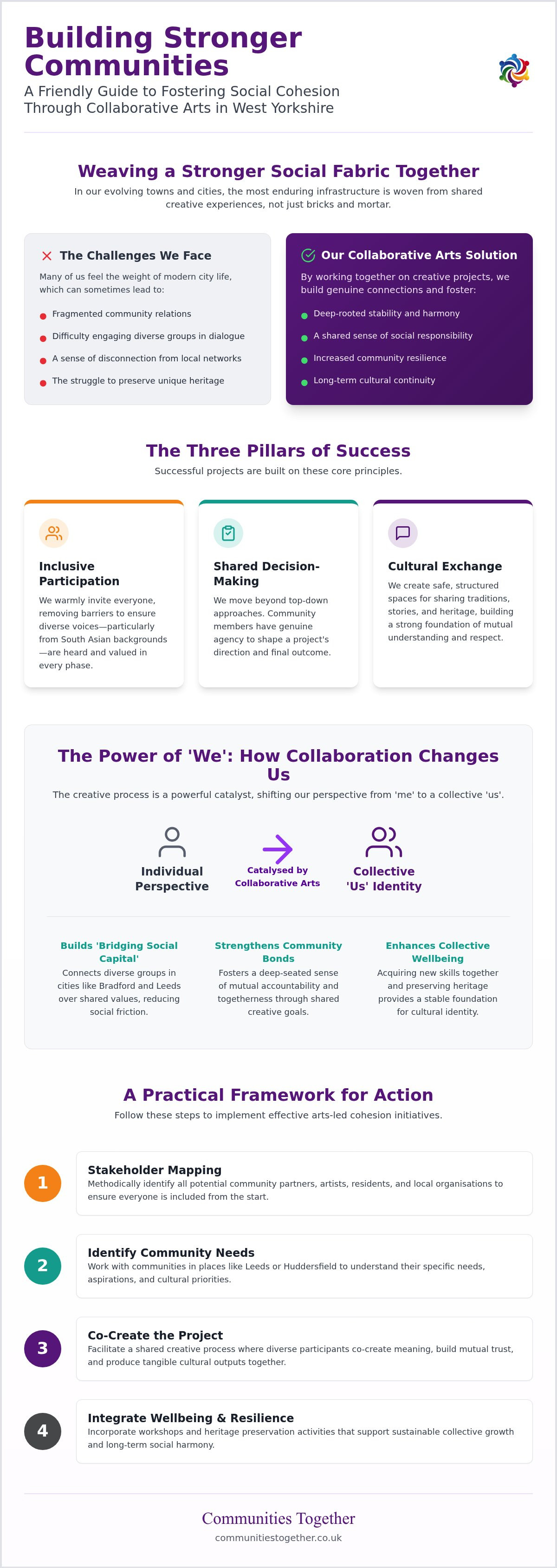
We define collaborative arts as a deliberate, shared creative process that warmly invites diverse stakeholders to engage in the co-creation of meaning, build mutual trust, and produce tangible cultural outputs. Unlike traditional solo artistic pursuits, which often prioritisation the singular vision or individual expression of the artist, these initiatives focus on the collective outcome and the relational bonds formed during the making process. By implementing Community art methodologies, we facilitate an environment where the process of creation is just as significant as the final piece. This approach ensures that every participant, from local residents in Bradford to heritage specialists in Leeds, contributes to a larger narrative of togetherness and social responsibility.
The core components of successful collaborative arts projects for social cohesion include:
Inclusive Participation: Removing barriers to entry so that diverse voices, particularly from South Asian backgrounds, are represented in every phase of the project.
Shared Decision-Making: Transitioning from a top-down approach to one where community members have genuine agency over the project's direction and final output.
Cultural Exchange: Creating safe, structured spaces for the sharing of traditions, stories, and heritage to build a foundation of mutual understanding.
High-quality Community Engagement Programmes treat social cohesion as a measurable result rather than an abstract hope. They use structured interaction to strengthen the social fabric, ensuring that the benefits of artistic collaboration extend far beyond the duration of the workshop itself.
The Social Contract of Community Arts
Establishing a foundation of mutual respect amongst participants is essential for re-weaving the social contract in our urban centres, as it provides a stable platform for individuals to voice their experiences whilst working towards a common purpose. When we commit to shared goals through creative work, we address the fragmentation often found in modern city life by providing a neutral ground for cooperation and long-term harmony. In 2026, social cohesion represents the measurable capacity of a community to maintain its structural integrity and mutual support systems through shared values and collective action.
Why Collaborative Projects Matter Now
As social isolation becomes an increasing challenge for our local infrastructure, the need for structured togetherness has never been more pressing. Collaborative arts projects for social cohesion facilitate meaningful dialogue in instances where traditional communication methods might fail to reach across cultural or generational divides. By focusing on these creative interventions, we actively build community resilience across West Yorkshire, ensuring that our neighbourhoods are prepared to support residents who often feel disconnected from local decision-making or social networks.
The Mechanism of Change: How Artistic Collaboration Strengthens Communities
The creative process acts as a powerful catalyst for social transformation by facilitating a profound psychological shift from an individualistic "me" perspective to a collective "us" identity. When residents in West Yorkshire participate in collaborative arts projects for social cohesion, they find themselves bound by a shared objective that transcends personal differences, fostering a deep-seated sense of mutual accountability and togetherness. This transition is not merely emotional; it's a structural reinforcement of the community's foundation. By working on a common creative output, such as a large-scale textile installation or a heritage digital archive, participants build what sociologists term "bridging social capital." This allows disparate groups in cities like Bradford and Leeds to connect over shared values, reducing social friction and establishing a more resilient social fabric through the deliberate act of making.
Acquiring new skills together—whether in traditional South Asian craft or modern digital storytelling—removes hierarchical barriers and creates a level playing field for collective achievement. We've found that the shared journey of learning reduces the social distance between participants, as the focus shifts from individual backgrounds to the group's progress. This sense of shared continuity is vital for maintaining harmony in rapidly changing urban environments.
Building Capacity and Resilience
We observe that these projects frequently empower individuals to step out of their comfort zones and take on leadership roles within their local areas. By mastering techniques in heritage and cultural preservation, participants gain transferable skills that enhance their personal development, professional literacy, and civic confidence. This methodical approach to growth is detailed further in our Community Capacity Building guide, which explores how we strengthen local infrastructure through targeted interventions. These activities ensure that communities don't just survive challenges but possess the internal strength to thrive and support one another.
Fostering Inclusive Engagement
Reaching groups that are traditionally excluded from mainstream cultural activities requires an earnest commitment to inclusivity and a removal of "academic distance" in social welfare. We prioritise non-clinical interventions because they provide a warm, accessible entry point for community wellbeing without the stigma often associated with formal support services. This methodology is supported by the WHO report on arts and well-being, which confirms that artistic participation significantly improves social health and reduces isolation. By designing collaborative arts projects for social cohesion that are rooted in South Asian heritage, we ensure that every participant feels a sense of ownership and pride. If you're looking to facilitate these connections in your own area, exploring our Community Engagement Programmes is a wonderful way to start.
Evaluating Models of Engagement: Heritage vs. Contemporary Arts
Choosing the right methodology is vital for the success of collaborative arts projects for social cohesion, as different artistic forms serve distinct functions in building community resilience and facilitating long-term harmony. Choice determines impact. Whilst traditional heritage projects provide a stable foundation by rooting participants in their shared history, contemporary arts offer a dynamic platform for addressing modern social challenges and co-creating a modern identity. In diverse urban centres like Halifax and Wakefield, we've found that a balanced approach—one that respects the past whilst actively engaging with the present—is most effective for reducing isolation and strengthening the social fabric of West Yorkshire.
South Asian Arts and Heritage Preservation
Focusing on South Asian heritage preservation allows us to facilitate deep cultural continuity, build educational bridges between generations, and maintain the structural strength of our local community infrastructure. These workshops aren't merely about teaching traditional techniques; they're about providing a space where shared history becomes a tool for mutual understanding and collective endurance. Traditions build bridges. By engaging in these activities, participants develop a stronger sense of belonging that is grounded in a well-defined cultural identity. For those interested in the methodical protection of these traditions, our Cultural Heritage Preservation guide offers a comprehensive overview of how we safeguard our shared history to benefit future generations.
Contemporary Collaboration and Modern Identity
Contemporary artistic forms, including digital media and collaborative performance, provide a vital conduit for younger generations to connect with their heritage whilst expressing their unique modern experiences. These projects are particularly effective at addressing urgent social issues, such as the need to tackle violence against women and girls, by creating safe environments for dialogue, advocacy, and collective action. Progress requires participation. Through modern arts-based learning, individuals achieve significant personal development, acquire transferable technical skills, and build the confidence necessary to act as methodical advocates for change. This approach ensures that our community engagement programmes remain relevant to the evolving needs of the region, facilitating a sense of togetherness that is both rooted in tradition and responsive to the complexities of 2026.
A Framework for Implementing Arts-Led Cohesion Initiatives in West Yorkshire
To implement successful collaborative arts projects for social cohesion, we begin with methodical stakeholder mapping in centres like Huddersfield and Leeds to identify specific local needs and cultural gaps. This initial phase ensures that the design of inclusive workshops prioritises South Asian arts and heritage preservation, providing a relevant and respectful foundation for all participants. We then facilitate the creative process with an emphasis on professional, mission-driven delivery, ensuring that every session is balanced by a clear statement of social impact. We measure our success through specific social cohesion indicators and documented wellbeing improvements, which allow us to provide a comprehensive overview of our progress to partners and governing bodies. Finally, we ensure long-term sustainability through robust partnership and capacity building, allowing the local community infrastructure to maintain these benefits independently for years to come.
Local Partnership and Infrastructure
Building a resilient community requires active collaboration with local councils, charities, and governing bodies to create a stable support system for artistic engagement. By aligning our goals with regional development plans, we ensure that our programmes contribute to the broader structural strength of West Yorkshire. Partnerships ensure longevity. Our Strategic Community Engagement guide offers a detailed framework for creating these vital connections and maintaining a methodical approach to cultural heritage. This collaborative infrastructure provides the foundation upon which we can build more inclusive and harmonious neighbourhoods.
Facilitating Safe and Earnest Spaces
The facilitator acts as an authoritative bridge-builder, managing complex cultural dynamics whilst maintaining a warm and inclusive atmosphere for all involved. It's essential to organise workshops that respect the delicate balance between tradition and progress, ensuring that serious social issues are addressed with the earnestness they deserve. By using collaborative arts projects for social cohesion as a primary tool, we encourage honest dialogue and collective endurance amongst diverse groups. Trust is the foundation. We provide a stable environment where participants can explore their shared identity, ensuring that every creative interaction strengthens the social fabric of our local area and facilitates a sense of lasting togetherness.
Facilitating Collective Growth through Communities Together Programmes
At Communities Together, we deliver bespoke South Asian arts activities designed to foster local togetherness and reduce the pervasive sense of social isolation often experienced in urban centres like Huddersfield, Halifax, and Bradford. Our collaborative arts projects for social cohesion are not merely creative outlets; they are methodical interventions that facilitate structural strength, cultural continuity, and collective endurance within our neighbourhoods. By prioritising the integration of wellbeing and resilience workshops into our broader heritage projects, we ensure that every participant benefits from a holistic approach to community development that values learning, skills, and personal development in equal measure. We act as a professional conduit for growth, ensuring that the social benefits of our work are long-term, measurable, and deeply rooted in the needs of the local area.
The success of our programmes relies on a commitment to accountability and social responsibility, where we move beyond short-term excitement to build a stable foundation for future generations. We understand that strengthening the social fabric requires a deliberate and steady pace, ensuring that every statement of intent is balanced by a statement of impact that resonates with stakeholders and residents alike. Through our work, we aim to:
Facilitate meaningful dialogue between diverse groups to bridge cultural divides and build mutual trust.
Maintain cultural traditions through heritage preservation that honours our shared history whilst embracing progress.
Build community capacity by equipping individuals with the transferable skills and confidence needed to lead local initiatives.
Our Approach to South Asian Heritage
We maintain active heritage and cultural preservation projects across West Yorkshire that expand educational access and encourage wider cultural participation amongst groups that are often under-represented in mainstream arts. These initiatives provide a stable environment for individuals to explore their cultural identity whilst building the resilience necessary to navigate modern social challenges. To understand the deeper psychological benefits of this creative engagement, we invite you to explore our Collaborative Wellbeing workshops guide, which provides a comprehensive overview of how we use non-clinical interventions to improve social health and foster togetherness. This methodical approach ensures that our activities are both absorptive and reassuring, providing a rhythmic pulse of professional promise and social delivery.
Join Our Collaborative Journey
We warmly invite local stakeholders, community members, and governing bodies to engage with our ongoing programmes as we continue our mission of strengthening social cohesion through professional facilitator expertise. Our role as an authoritative bridge-builder allows us to provide a clear path for partnership and community capacity building, ensuring that our collective growth is both sustainable and inclusive for all residents. By working together, we can facilitate a future where cultural continuity, social responsibility, and collective harmony are the hallmarks of our region's success. We remain a reliable and serious partner for any organisation looking to invest in the long-term strength of West Yorkshire's diverse communities.
Building a Resilient Cultural Future in West Yorkshire
The deliberate integration of collaborative arts projects for social cohesion into our local infrastructure provides a stable foundation for community resilience by ensuring that our shared creative processes result in lasting harmony, mutual support, and structural integrity. We've explored how a methodical framework, which encompasses everything from initial stakeholder mapping to the long-term preservation of South Asian heritage, facilitates a profound shift towards collective identity, togetherness, and cultural continuity. By prioritising professional, mission-driven delivery, we can effectively address social isolation and build the internal strength necessary for our neighbourhoods to thrive whilst maintaining our unique cultural threads.
As specialists in South Asian heritage preservation serving Huddersfield, Halifax, Leeds, Bradford, and Wakefield, we're dedicated to acting as an authoritative bridge-builder for social impact. Our methodology ensures that every programme serves as a conduit for personal development, skills acquisition, and community empowerment across the region to ensure collective growth.
We invite you to join us in this earnest commitment to weaving a more inclusive and connected social fabric for all residents. Together, we can facilitate a future defined by collective growth and enduring harmony.
Frequently Asked Questions
How do collaborative arts projects specifically improve social cohesion?
These initiatives facilitate a profound psychological shift from individualistic perspectives to a collective identity by engaging participants in shared creative processes that require mutual trust and shared decision-making. By building bridging social capital, these projects allow disparate groups to connect over shared values and cultural exchange. Implementing collaborative arts projects for social cohesion establishes a stable foundation for long-term harmony, structural integrity, and collective endurance within our local neighbourhoods across West Yorkshire.
What types of arts activities are most effective for diverse communities in West Yorkshire?
Activities that prioritise South Asian arts and heritage preservation, such as traditional textile workshops, digital storytelling, and heritage archiving, prove exceptionally effective in centres like Bradford and Halifax. These programmes facilitate cultural participation by providing a neutral space for education, mutual respect, and the sharing of traditions. By balancing historical preservation with contemporary collaborative media, we ensure that our activities remain relevant, inclusive, and capable of fostering deep-rooted togetherness.
Can heritage projects help reduce social isolation in urban areas like Leeds?
Heritage projects actively reduce social isolation by providing residents with a sense of belonging and a stable platform for meaningful dialogue. In urban centres such as Leeds and Wakefield, these initiatives create opportunities for individuals to re-connect with their shared history whilst building new relational bonds with their neighbours. This methodical approach to cultural continuity helps to re-weave the social fabric, facilitating a reassuring environment where residents feel valued, heard, and socially integrated.
What is the difference between community engagement and collaborative arts?
Community engagement is a broad strategic framework for involving residents in local decision-making, whilst collaborative arts are the specific creative processes used to achieve those inclusive goals. Collaborative arts projects for social cohesion prioritise the co-creation of meaning and collective outcomes over individual expression. Whilst engagement focuses on capacity building and partnership, the artistic element provides a warm, non-clinical entry point that facilitates deeper emotional connections and shared cultural experiences.
How does Communities Together support South Asian heritage in Huddersfield?
Communities Together delivers bespoke South Asian arts and heritage activities in Huddersfield that focus on preserving cultural traditions and expanding educational access. We facilitate workshops that empower residents to document their histories, master traditional crafts, and share their unique stories with the wider community. This methodical support ensures cultural heritage preservation whilst building community capacity, allowing local groups to maintain their structural strength and foster sustainable, collaborative growth for future generations.
Are these arts programmes suitable for all age groups and backgrounds?
Our programmes are designed to be inclusive and accessible to individuals of all age groups and backgrounds, ensuring that every resident can contribute to our collective harmony. We facilitate safe, earnest spaces where younger generations can learn from elders, fostering intergenerational bonds through shared creative work and heritage projects. By removing barriers to entry and avoiding academic distance, we ensure that our community engagement programmes remain warm, welcoming, and effective for everyone.
How do you measure the success of a social cohesion project?
Success is measured through a combination of social cohesion indicators, documented wellbeing improvements, and the measurable growth of local community infrastructure. We evaluate the increase in bridging social capital, the acquisition of new transferable skills, and the sustained participation of diverse stakeholders. This methodical approach to assessment ensures that our mission-driven delivery is balanced by clear evidence of social impact, collective resilience, and the long-term strengthening of the regional social fabric.
What role do wellbeing workshops play in artistic collaboration?
Wellbeing workshops provide a vital non-clinical intervention that supports individual resilience and personal development during the creative process. By integrating these sessions into our broader heritage projects, we address the psychological needs of participants, helping them build the confidence and emotional strength required for meaningful collaboration. This holistic approach facilitates collective growth, ensures social responsibility, and maintains a rhythmic pulse of professional promise and social delivery across our West Yorkshire programmes.


Comments