
Celebrating South Asian heritage in Leeds: local culture, stories and ways to take part
Celebrating South Asian heritage in Leeds can mean more than attending a festival. It can involve listening to local stories, learning about distinct cultural traditions and supporting the people who keep them thriving. If you’re unsure where to find reliable activity listings or how to take part respectfully, you’re not alone. South Asian communities are diverse, and their heritage can’t be captured in a single event or story.
This guide explores ways heritage is shared across Leeds, from arts and cultural activities to museum resources and community-led programmes. You’ll find practical steps for discovering current opportunities, checking details with organisers and participating with care, whether you’re joining an activity or learning about local history. We’ll also look at how organisations such as South Asian Arts-uk, Leeds Museums and Galleries, the Association of Blind Asians Leeds and Communities Together contribute to cultural learning and continuity, and how collaboration can support this work.
Table of Contents
What does celebrating South Asian heritage in Leeds mean?
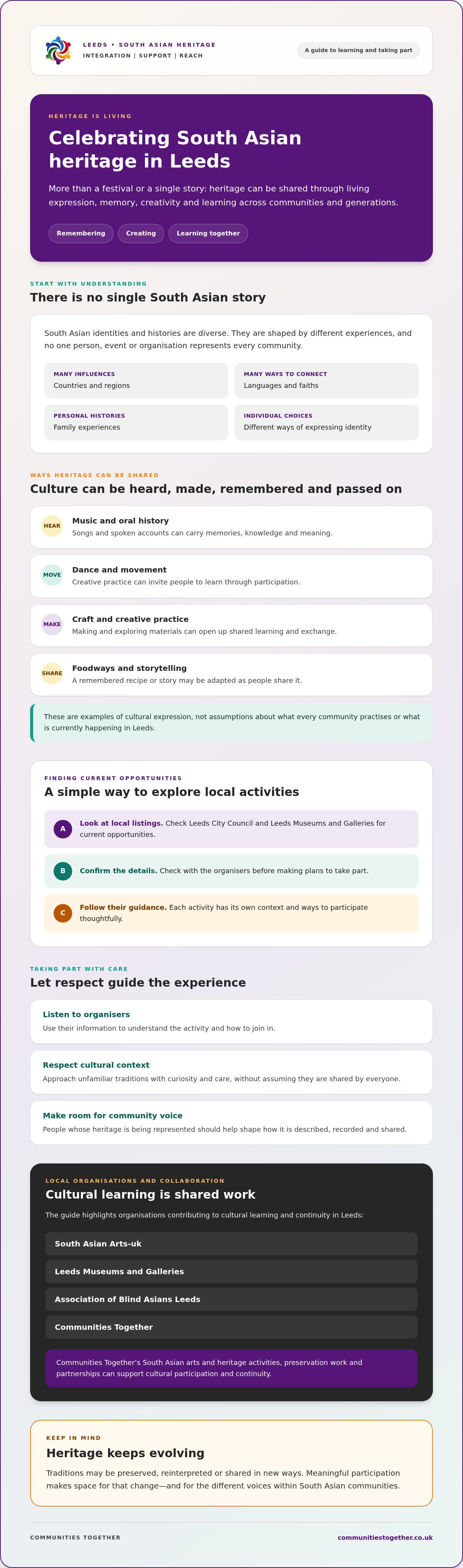
Celebrating South Asian heritage in Leeds means recognising living cultural expression, shared memory and opportunities to learn across communities and generations. It may involve preserving stories and practices, making space for contemporary creativity or building understanding through respectful participation. Heritage isn’t confined to the past, and no single performance or annual occasion can represent it in full.
South Asian identities and histories are diverse, shaped by different countries and regions, languages, faiths, family experiences and personal choices. The demographics of Leeds offer one source for understanding the city’s population, but figures alone can’t capture the variety of individual lives and community histories. Celebrating South Asian heritage in Leeds means making room for that complexity rather than treating it as one uniform tradition.
For one recorded example of a local heritage celebration, watch this video:
Why heritage is living, not only historical
Family memories, language, creative practice and contemporary identity can all contribute to how heritage is carried forward, though their significance differs between people and families. Generations may preserve, reinterpret or share traditions in different ways. Community voice matters: people whose heritage is being represented should help shape how it is described, recorded and shared.
Cultural heritage is not a single event or performance; it is the continuing work of remembering, creating and learning together. Celebrations can take place throughout the year, through everyday cultural life as well as organised activities, rather than only during a named heritage month.
Leeds as a place for shared cultural participation
Leeds offers a local setting for discovering cultural stories, learning from one another and taking part in community-led activity. Approach that participation with curiosity and care, without assuming that one person or organisation speaks for every South Asian community. To explore how this work can be sustained, read more about heritage and cultural preservation, including how collaboration can support cultural learning and continuity.
How South Asian arts and traditions bring Leeds heritage to life
Arts and cultural practices can make heritage tangible, offering ways to learn through participation as well as through books or archives. Music, dance, storytelling, craft, foodways and oral history may each carry memories, skills and meanings. The forms and traditions people value differ across South Asian communities and within them. These are possibilities for cultural expression, not assumptions about what every community practises or what is currently taking place in Leeds.
For people celebrating South Asian heritage in Leeds, creative activity can connect past experience with present-day expression. A song, a remembered recipe or a story might be adapted as it is shared, reflecting the knowledge and perspectives of those involved.
Creative practices as ways of sharing heritage
Participatory arts can invite people to learn by making, listening and exchanging ideas. Depending on the activity and the knowledge-holders involved, this might mean exploring rhythm, movement, materials, a family food tradition or a story. These are examples, not a listing of local programmes. Check current details with organisers before planning to take part.
Community practitioners and cultural knowledge-holders should be recognised as contributors with expertise and agency. They help shape how their work is presented, rather than simply being treated as subjects for others to observe. That shared approach can support meaningful cultural learning and creative exchange.
Cultural participation can preserve knowledge while giving people the freedom to interpret it, adapt it and pass it on in new ways.
Stories, languages and intergenerational knowledge
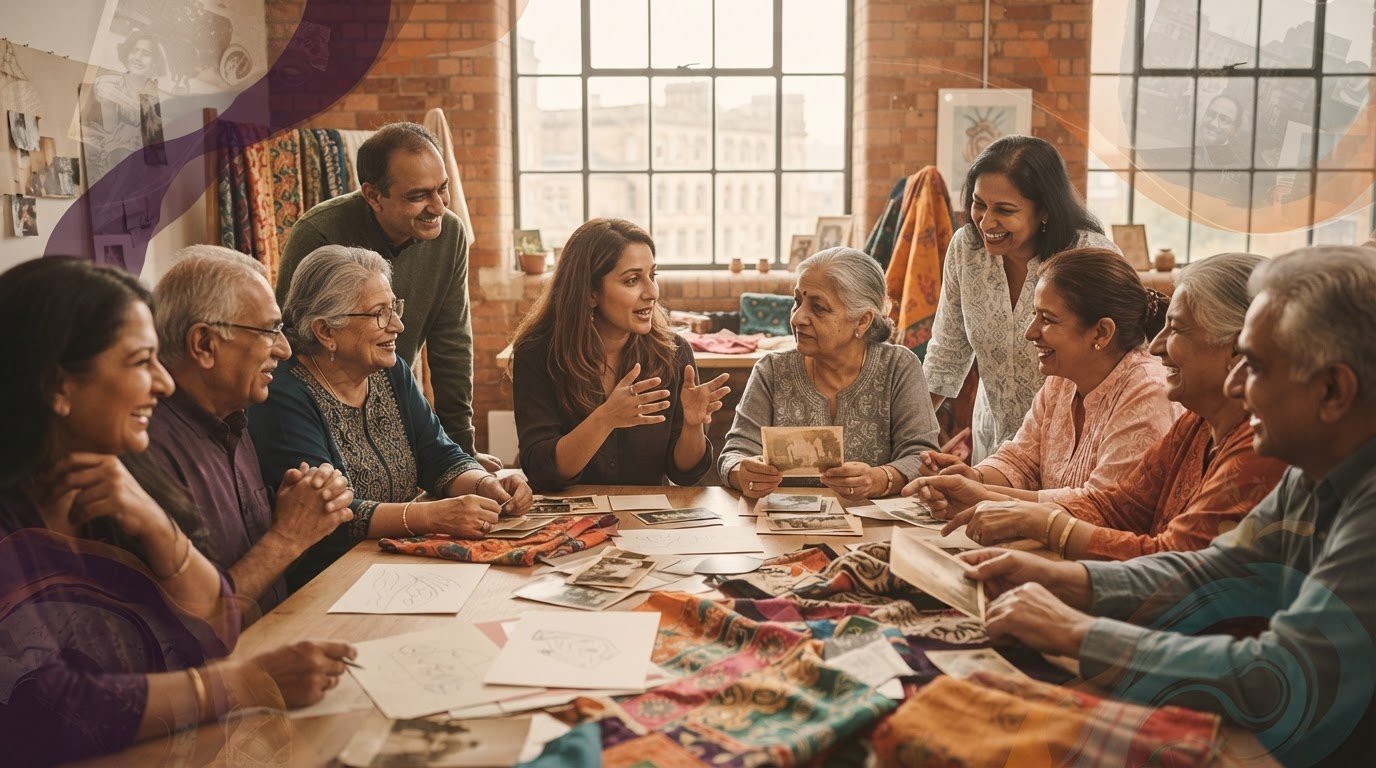
Oral histories and personal accounts can add depth to how people understand heritage in Leeds, bringing individual experiences into conversation with broader histories. A person’s account is theirs to share on their terms. Seek consent before recording or circulating someone’s words, image or cultural knowledge, and respect any limits they set.
Different generations may contribute distinct perspectives. Older participants might choose to share memories or skills, while younger people may bring their own questions, creative approaches and experiences of identity. Neither perspective represents everyone. Making space for both can build a richer exchange, provided participants decide what they wish to contribute and how it is represented.
Community-led South Asian arts and heritage activity can help sustain this exchange through learning, collaboration and cultural preservation. To explore how South Asian heritage activities can support participation and continuity, find out more about Communities Together’s work with local groups.
Where to find South Asian heritage activities and Leeds resources
To find reliable information, start with organisations that share local cultural listings, then confirm details with the people running each activity. For anyone celebrating South Asian heritage in Leeds, Leeds City Council and Leeds Museums and Galleries are useful places to check for current notices, cultural resources and relevant listings. Community organisations may also share opportunities on their own websites, newsletters or social media.
Listings can change, so treat dates and practical details as confirmed only when they appear in a current source or have been checked directly with the organiser. A general suggestion to explore a museum or community programme does not confirm that a particular event is taking place.
A simple process for checking local listings
Use this checklist before making plans:
Start with current information from Leeds City Council, Leeds Museums and Galleries and relevant community organisations.
Check when the information was published or last updated, then follow the organiser’s own channel for changes.
Confirm the date, booking requirements, accessibility arrangements and intended audience directly with the organiser.
If you share a listing, include its source and recheck it close to the activity. Update or remove details that are no longer current.
This helps distinguish confirmed activities from general ideas for exploring heritage, and gives organisers a chance to explain what participation involves. If a detail is unclear, ask the organiser rather than relying on an old listing or an assumption.
Choosing a resource that fits your interests
Start with what you want from the experience. A workshop may offer hands-on participation, a performance invites you to watch and listen, an exhibition can support self-guided discovery, and a learning resource may suit independent study. Before choosing, check who shaped the activity, which perspectives it includes and whether it welcomes the audience or level of participation you have in mind.
Educators should check that material suits their learners and context. If you’re looking for work specifically for schools in Bradford, seek guidance intended for Bradford schools rather than assuming Leeds resources apply. For broader context on local partnership work, explore Communities Together’s community engagement programmes, and check directly whether any current activity fits your interests. Communities Together also works locally in Huddersfield, Halifax and Wakefield.
How to take part respectfully in Leeds heritage celebrations
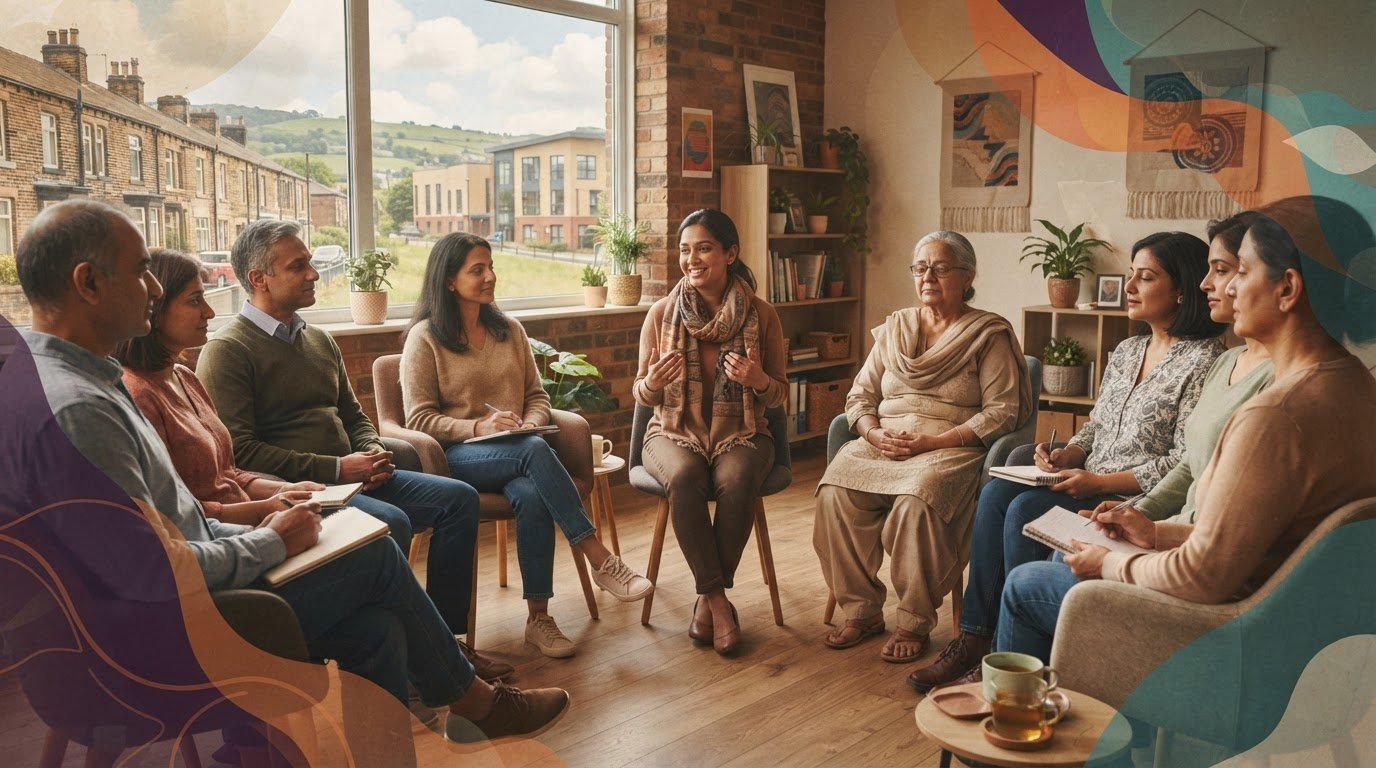
Respectful participation starts with recognising that each activity has its own purpose, context and guidance. Whether you’re attending, teaching or working with a community group, take your lead from the organisers and the people whose heritage is being shared. This helps make celebrating South Asian heritage in Leeds an opportunity for genuine learning and connection, rather than a reason to make assumptions about individuals or communities.
Access is part of making an activity welcoming. Clear information about language, disability access and any costs helps people decide whether it is suitable for them. If these details aren’t provided, contact the organiser to ask what arrangements are available rather than assuming every venue or activity meets everyone’s needs.
For visitors, families and learners
Before attending, read the activity information and check any event-specific guidance. If something isn’t clear, ask the organiser what to expect and how to participate. Be curious, while remembering that no individual is responsible for speaking on behalf of an entire community.
Follow the organiser’s guidance on participation, photography and recording.
Ask permission before photographing people or sharing someone’s personal story, words or cultural knowledge.
Listen to participants and presenters, and avoid treating one experience as representative of everyone.
For schools and community organisers
Build collaboration into planning by involving cultural practitioners and community knowledge-holders in decisions about content, format and representation. Their contribution should help shape the activity, not simply provide an endorsement after plans have been made. This makes it more likely that the result reflects the knowledge and priorities of the people involved.
Consider how information will be shared and how participants can offer feedback. Ask about communication preferences and specific access needs, and explain practical details clearly, including any costs and arrangements participants need to know. Welcoming communication helps people decide whether and how they wish to take part.
Heritage deserves more than a simplified display of costume, food or a one-off themed activity. These may be meaningful elements in context, but they can’t stand in for the depth and variety of living traditions, histories and identities. Community-led representation makes cultural participation more meaningful because people can shape how their heritage is shared, understood and carried forward.
How Communities Together supports heritage participation and next steps
After exploring ways to find activities and take part respectfully, you may want to learn about organisations that support cultural participation locally. Communities Together works with local groups in Leeds, Huddersfield, Halifax, Bradford and Wakefield, delivering South Asian arts and heritage activities, cultural preservation projects and community engagement programmes.
This work offers one route into celebrating South Asian heritage in Leeds through shared learning and collaboration. Activities create opportunities to engage with heritage, while preservation work can help sustain cultural knowledge and continuity. Specific programmes and opportunities may change, so check directly with the organisation for current details rather than assuming an activity is available.
Community-led activity and partnership
Working in partnership can help local groups shape activities around their own knowledge, priorities and interests. Community members and practitioners contribute to decisions about what is shared and how people can take part. South Asian arts and heritage activities support cultural learning, while partnership and community capacity building can help groups develop their role in this work.
These are descriptions of the organisation’s areas of work, not promises of particular programme outcomes. The value of a community-led approach lies in making space for local knowledge and participation, while recognising that each group’s interests and circumstances are distinct. Explore Communities Together’s heritage and cultural preservation work to learn more about its focus.
Ways to explore what happens next
If you’re interested in taking part, start by checking the organisation’s current information and contacting them with a relevant enquiry. Ask whether there are activities that match your interests, how participation works, or whether community groups can discuss working together. Confirm programme details and availability directly before making plans.
Whether you hope to learn, participate or explore a partnership, a conversation can help you understand what is currently relevant. You don’t need a fully formed plan; sharing what interests you can be a useful starting point for finding out about community engagement and heritage activity.
Take your next step towards shared cultural learning
Celebrating South Asian heritage in Leeds means recognising diverse, living traditions and making space for the people and communities who shape how they’re shared. Arts, stories and cultural knowledge create opportunities for learning across generations. Thoughtful participation begins with listening, checking current information and following organisers’ guidance.
Whether you’re exploring an activity as a visitor, educator or community partner, consider who has shaped it and how different people can participate. Communities Together provides South Asian arts and heritage activities, alongside heritage preservation and community partnership work. Contact the organisation to confirm current opportunities and programme details.
Every respectful conversation, shared activity and act of listening can help nurture understanding and cultural continuity. Take the next step at a pace that feels right, and help make Leeds’ heritage conversations welcoming, collaborative and shaped by community voices.
Frequently Asked Questions
What is South Asian heritage celebration, and when do events usually take place?
South Asian heritage celebration is an annual opportunity to recognise and share the histories, cultures and contributions of South Asian communities, with many focal points occurring throughout the summer months. These periods provide a focus for learning and celebration, but heritage activity happens throughout the year too. South Asian communities are diverse, so celebrations may reflect different histories, languages, faiths and lived experiences rather than one shared tradition.
Where can I find South Asian heritage events in Leeds?
Check current listings from Leeds City Council and Leeds Museums and Galleries, alongside announcements from community organisations and cultural groups. Confirm dates, booking details, accessibility and intended audience directly with the organiser, as listings can change. If you’re looking for opportunities in nearby Huddersfield, Halifax, Bradford or Wakefield, check relevant local organisations and civic listings too, rather than assuming a Leeds listing applies elsewhere.
What kinds of South Asian heritage activities can I take part in?
Depending on what local organisers are offering, activities might include music, dance, storytelling, craft, food-related learning, oral history, exhibitions or workshops. These are examples of possible forms, not a promise of current events in Leeds. Check each organiser’s latest information to see what’s available, whether it’s participatory or for audiences, and what the activity involves. Communities Together also delivers South Asian arts and heritage activities. Confirm current details directly with the organisation.
Can people from outside South Asian communities attend heritage events?
Many activities welcome people who want to learn and take part respectfully, but each organiser sets the audience and participation guidance. Read the event information, and contact the organiser if you’re unsure whether it’s open to you or what to expect. Listen to the cultural context being shared, avoid treating one person’s experience as representative of everyone, and ask permission before taking photographs or sharing someone’s story.
How can schools explore South Asian heritage respectfully?
Schools can begin by working with cultural practitioners and community knowledge-holders to shape learning, rather than asking them only to endorse a plan that’s already complete. Use varied, age-appropriate resources, acknowledge the diversity of South Asian histories and identities, and avoid reducing heritage to a one-off themed activity or a few familiar symbols. Check learners’ access needs and invite thoughtful feedback. School-focused resources should be relevant to the school’s own area and context.
How can I support South Asian heritage projects in Leeds?
Support projects by attending suitable activities, sharing verified listings, listening to organisers and recognising the time and expertise of community contributors. Community groups and potential partners can also enquire about collaboration. Communities Together works on South Asian arts and heritage activities, cultural preservation and community partnerships in Leeds, Huddersfield, Halifax, Bradford and Wakefield. Contact the organisation to confirm current opportunities and details.
What does community-led heritage activity mean?
Community-led heritage activity is shaped with the people and groups whose histories, knowledge and cultural practices are being shared. They help guide what is represented, how an activity is delivered and what respectful participation looks like. This approach can create room for different perspectives and support learning, participation and cultural continuity. In Leeds and across West Yorkshire, collaboration with local groups can help ensure heritage activity reflects community priorities rather than relying on assumptions.

Comments