
Bringing Communities Together UK: A Strategic Guide to Social Cohesion in 2026
The 2025/26 Community and Engagement Survey found that 79% of people in England feel their local area is a place where people from different backgrounds get along well, a figure that has fallen by two percentage points since the previous year. That sense of connection matters, but it needs ongoing support. Bringing communities together UK-wide takes more than creating opportunities to meet: it means building trust, recognising cultural identity and helping people shape the places they share.
For local authorities and community groups, fragmented services, social isolation and limited engagement across cultural groups can make this work complex. Practical, collaborative approaches can help people build stronger relationships and lasting local capacity. In West Yorkshire, cultural heritage activities and wellbeing and resilience workshops create opportunities to connect through shared learning, personal development and cultural continuity.
This guide looks at how strategic community engagement, heritage preservation and collaborative workshops can strengthen social cohesion. It also offers practical steps for inclusive participation and sustainable community infrastructure, with a focus on Huddersfield, Halifax, Leeds, Bradford, Wakefield and the wider UK.
Table of Contents
Understanding the Landscape of Community Connection in the UK
The Transformative Power of Cultural Heritage and South Asian Arts
Evaluating Models for Capacity Building and Local Partnerships
Practical Steps for Organising Resilient Neighbourhood Initiatives
Strengthening West Yorkshire: The Communities Together Approach
Understanding the Landscape of Community Connection in the UK
Bringing communities together means creating inclusive opportunities for people to take part, build relationships and shape shared priorities. It strengthens social cohesion across differences in culture, age and experience. It is more than arranging a meeting: trust grows when residents feel heard, their knowledge is valued and they can influence decisions affecting everyday life. The concept of community cohesion in the United Kingdom offers a useful starting point for understanding how connection, belonging and participation relate to one another.
Busy routines, changing communication habits and the availability or accessibility of shared spaces can all affect how easily people meet in person. Digital channels help people find information and stay in touch, but they do not always replace relationships built through regular, welcoming activities. Resilient communities need social infrastructure as well as physical places: trusted networks, inclusive programmes and local groups able to keep building connections over time.
Addressing the Challenge of Modern Social Isolation
Social isolation can become a barrier to participation when people face persistent obstacles to forming supportive relationships or taking part in community life. Fewer connections can also mean fewer routes into shared activities, local knowledge and mutual support.
In West Yorkshire, a top-down project may miss people if its priorities, language, timing or format are decided without meaningful input from the communities it aims to involve. Residents have different experiences and needs, so a general invitation may not address practical or cultural barriers to participation. Co-design helps local authorities and community groups understand what people find relevant. Wellbeing and resilience workshops can provide a supportive setting for learning, reflection and connection.
The Vital Importance of Social Cohesion for Resilience
Social cohesion can help neighbourhoods respond to economic and social pressures. Stronger relationships make it easier to share information, recognise needs and organise practical support. They do not remove hardship, but active community connections can help people work through challenges together rather than face them alone.
Shared activities can also create opportunities for skills and personal development. A workshop, cultural activity or local initiative gives participants a chance to contribute their knowledge, learn from others and practise working together. When local groups have a meaningful role in planning and delivery, these activities can build community capacity: the people, partnerships and skills that help communities guide their own development beyond a short-term project.
For bringing communities together UK-wide, lasting progress depends on connecting participation with durable local relationships and infrastructure. Residents, community groups and local authorities can work collaboratively to develop initiatives that reflect local experience, strengthen shared responsibility and remain valuable beyond their initial activities.
The Transformative Power of Cultural Heritage and South Asian Arts
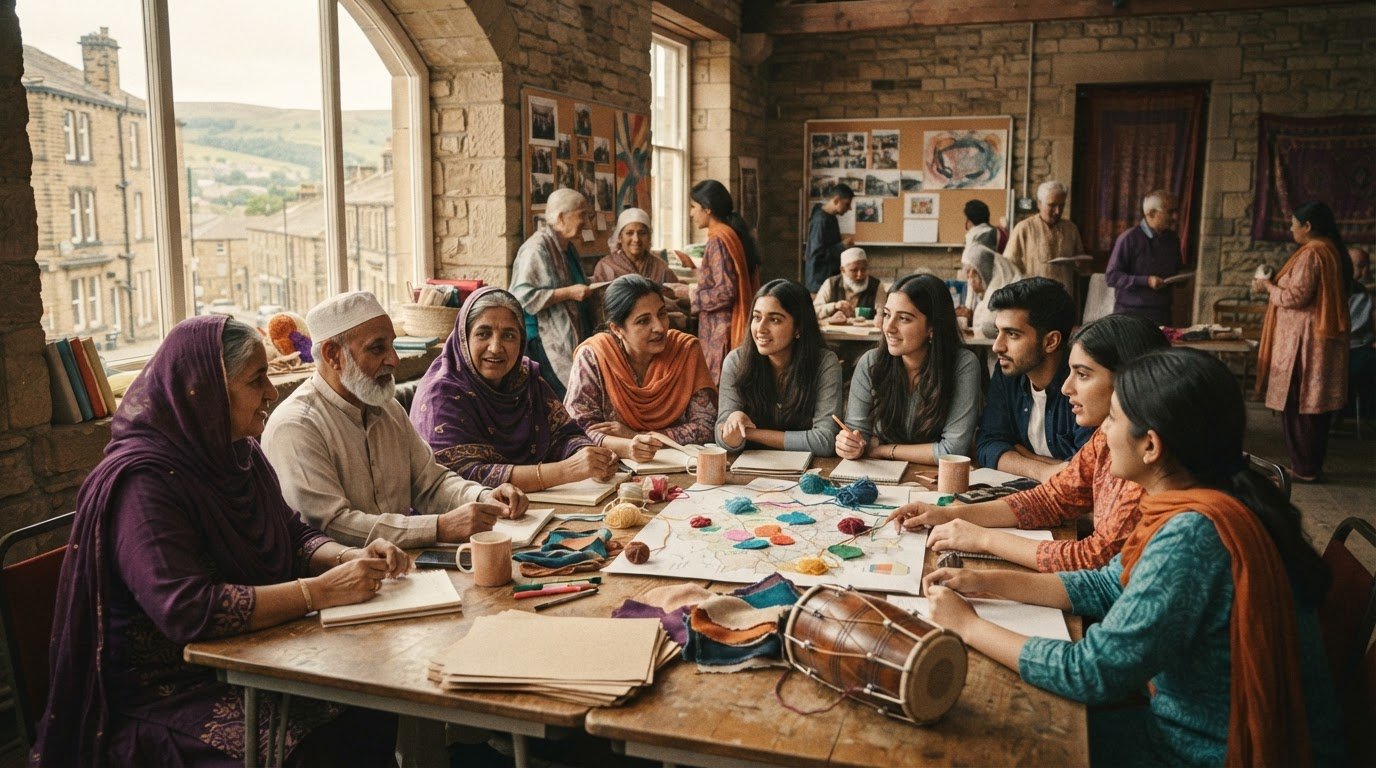
South Asian arts and heritage activities offer a shared focus for people with different backgrounds and experiences. Dance, music, visual arts and storytelling give participants a chance to learn by doing, exchange perspectives and build familiarity through a common activity. With thoughtful facilitation, these activities can support intercultural dialogue while ensuring traditions are represented with care and respect.
Heritage also connects generations. Recording oral histories, documenting traditional crafts and sharing knowledge can help preserve memories and practices that might otherwise receive less attention. The wider neighbourhood benefits too, as people get opportunities to learn about one another’s histories and develop mutual respect. For a broader strategic perspective, explore this guide to cultural heritage preservation.
Preserving Traditions to Build Shared Future Identities
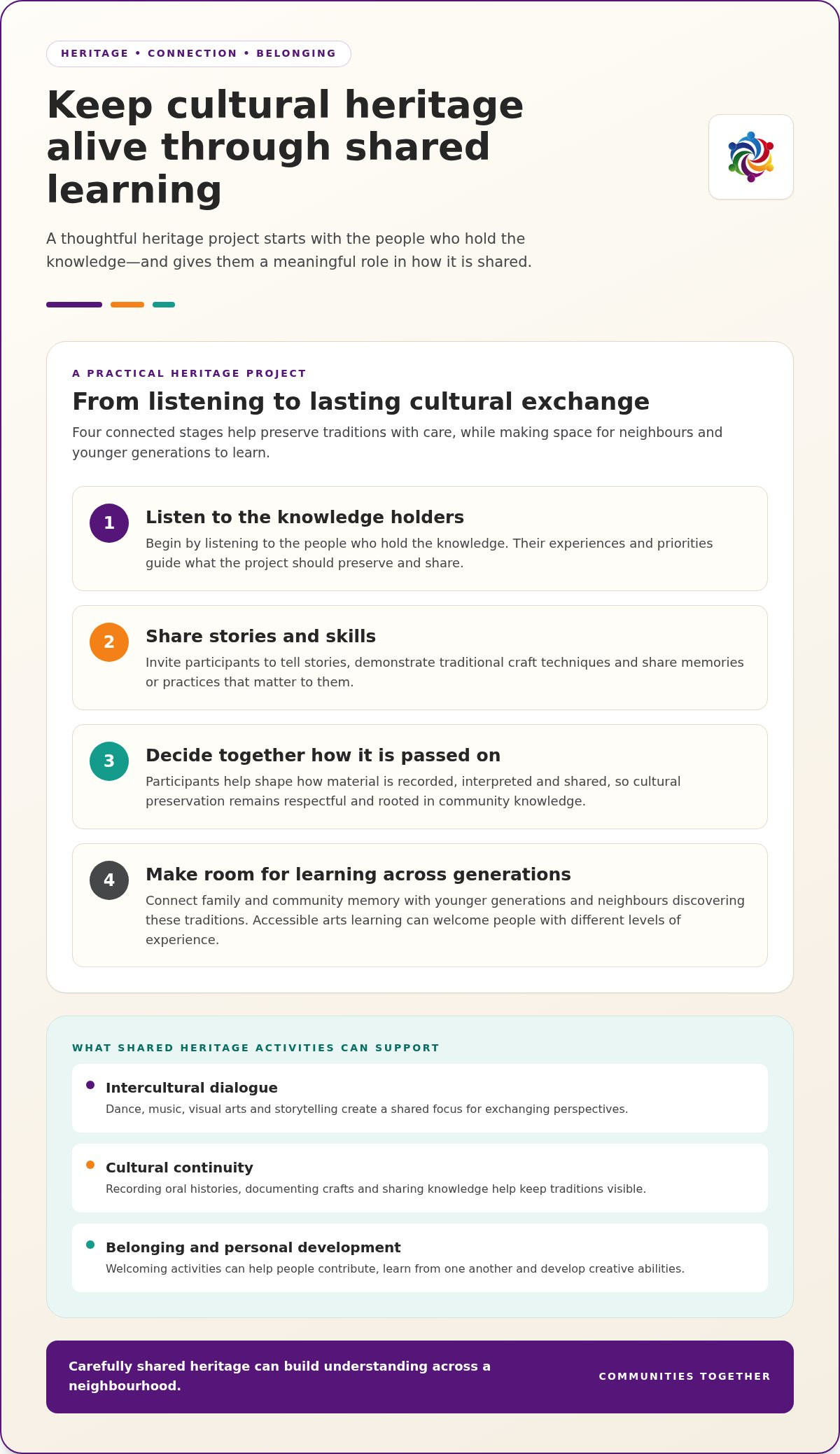
A thoughtful heritage project begins by listening to the people who hold the knowledge. Participants can share stories, demonstrate craft techniques and help decide how material is recorded, interpreted and passed on. This treats cultural preservation as a living process, connecting family and community memory with younger generations and neighbours discovering these traditions.
High-quality arts education supports that exchange by combining accessible participation with context, skilled instruction and opportunities to develop creative abilities. Cultural learning can support heritage continuity and personal development while making room for people to contribute at different levels of experience.
Arts-Based Interventions as a Catalyst for Inclusion
A welcoming arts activity can offer older people and those who experience marginalisation a practical route into regular social participation. A workshop alone cannot be assumed to reduce isolation. Organisers can understand its contribution by tracking attendance and return participation, asking for feedback about connection and belonging, and considering whether participants develop relationships through the activity.
Arts can also help groups approach conversations about identity and belonging with care. A facilitator might begin with a dance, song, image or personal story, then invite participants to reflect on what it means to them. Shared ground rules and the choice of how much to contribute help make room for different views without asking anyone to speak on behalf of an entire culture.
South Asian cultural activities can feature in broader West Yorkshire festivals through collaborative performances, craft demonstrations or storytelling alongside contributions from other communities. These formats support the wider aims of the UK government's social cohesion strategy, which places connection and resilience within a national policy context. Thoughtfully facilitated cultural participation can make bringing communities together UK-wide more inclusive by recognising heritage as a shared resource for learning, dialogue and belonging.
Evaluating Models for Capacity Building and Local Partnerships
Funding can help a community project begin, but a funding-first model may leave a gap when a grant or short-term programme ends. Capacity building takes a longer view. It strengthens local groups’ relationships, skills and shared decision-making so they can shape and manage their own development. Funding still matters, but it is most useful when it supports local capability as well as activities.
Advocacy-led community organising, as associated with Citizens UK, and infrastructure-led capacity building serve different but complementary purposes. Organising can help residents come together around shared concerns and pursue change. Capacity building strengthens the groups, partnerships and processes that sustain participation over time. Bringing communities together UK-wide does not mean choosing one approach over the other: community voice and durable local infrastructure work best when they support each other.
Building partnerships that last
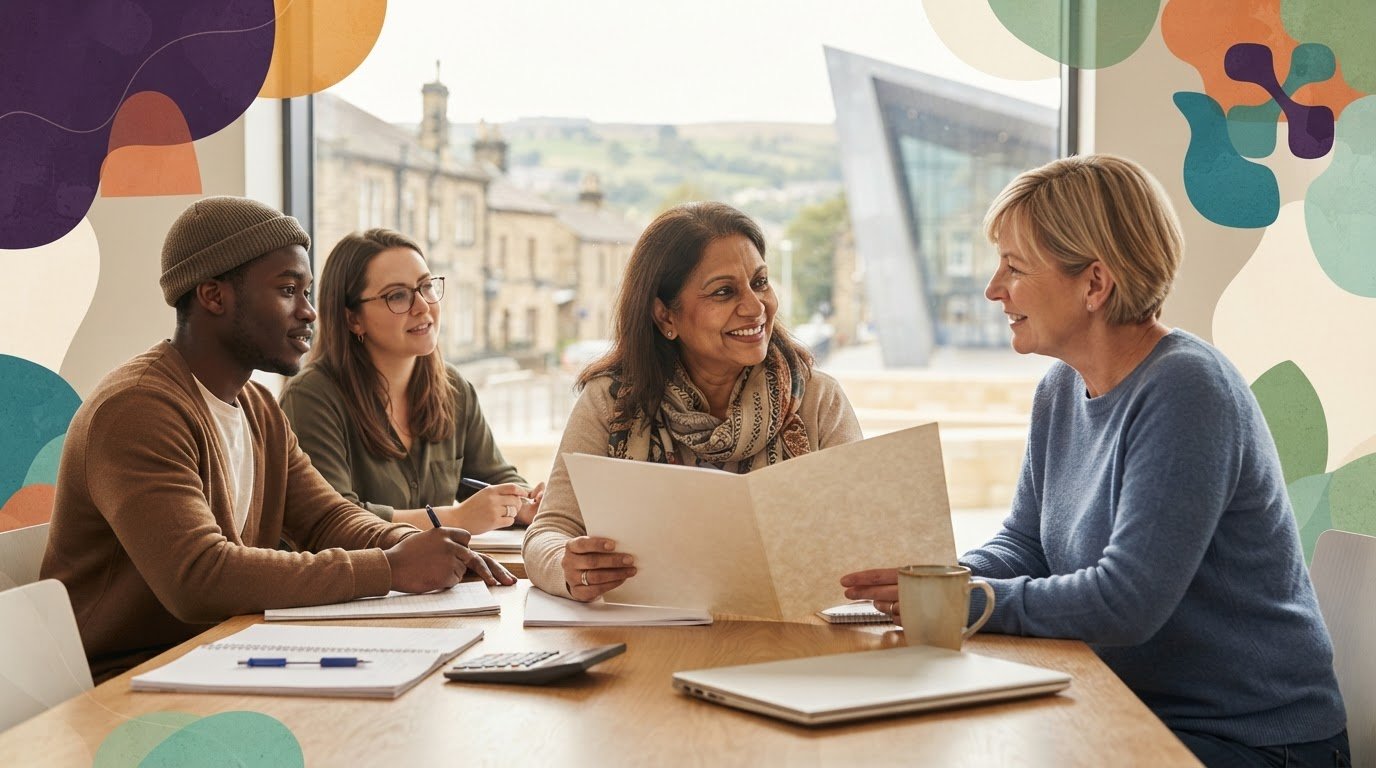
Effective partnerships bring non-profit organisations, schools and local authorities together around shared aims while respecting each partner’s knowledge. Schools may help partners understand local family networks; community organisations can build trust with residents; and local authorities can connect initiatives with wider services and priorities. Community leaders help these relationships work through active listening, clear communication, cultural awareness, conflict resolution and responsibilities that include quieter voices.
Partnerships can help wellbeing and resilience workshops reach people who may not respond to a general invitation. A trusted local group or school can share information through established relationships, while partners consider accessible formats and ask about barriers to participation. Reaching isolated residents takes consistent, respectful engagement, not simply a referral or a single event. The UK Government's Social Cohesion Strategy provides a national policy context; local partnerships turn broad aims into relevant community activity.
Assessing whether engagement is building capacity
Facilitators need to understand participants’ experiences and respect cultural knowledge when planning activities. Communities Together connects community groups and institutional partners through community engagement, heritage activities and capacity building. To review a programme, consider whether it:
Involves residents in setting priorities and shaping activities.
Reaches people across different backgrounds and reflects their feedback.
Builds local skills, leadership and connections between partner organisations.
Has a plan for continuing useful activity beyond its initial funding period.
These indicators help partners look beyond attendance to consider whether residents have greater influence and whether relationships can support future work. Explore community engagement and capacity building to see how this collaborative approach can support local initiatives.
Practical Steps for Organising Resilient Neighbourhood Initiatives
A neighbourhood initiative is more likely to reflect local needs when residents help shape it from the beginning, rather than being invited only after decisions have been made. This five-step framework can help community groups, schools and local authorities plan activities that support connection, wellbeing and ongoing participation.
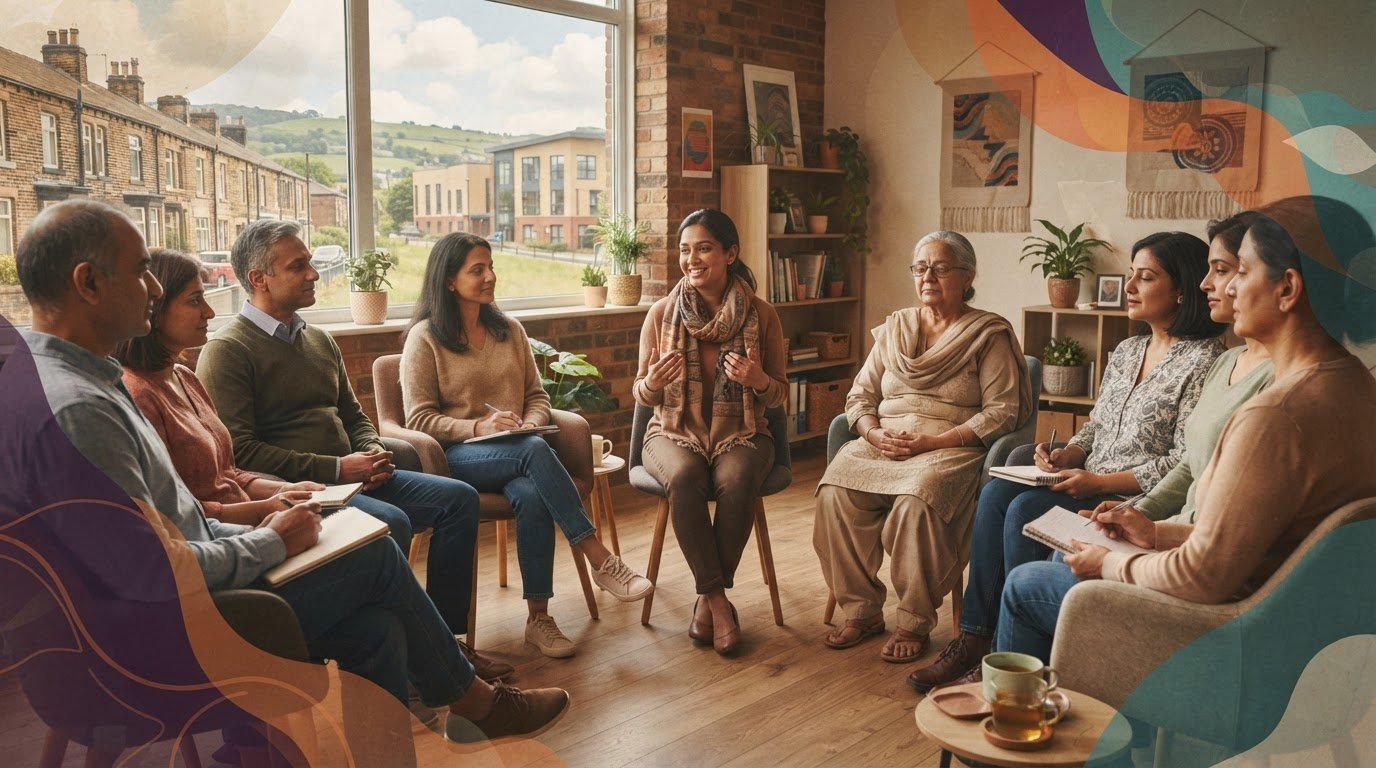
Step 1: Carry out a community needs audit. Listen to residents and local groups to understand where social isolation may be a concern, which cultural perspectives are represented and what could make participation difficult. Use conversations and existing community knowledge to guide the project instead of assuming one approach will suit everyone.
Step 2: Establish a representative steering group. Bring together residents and partners with varied experiences, including people from the communities the initiative aims to reach. In a place such as Leeds or Bradford, consider whether the group reflects local diversity and gives participants a genuine role in setting priorities.
Step 3: Shape a programme around shared learning. Plan activities that combine skills development with cultural participation. For example, a school-based South Asian heritage workshop could introduce young people to traditional arts and cultural stories, then give them opportunities to ask questions, share perspectives and learn together.
Step 4: Integrate wellbeing and resilience into existing gatherings. A short, facilitated activity during a regular community meeting can give participants space to identify personal strengths, practise a skill or explore ways to support one another. Keep participation welcoming and voluntary, and connect the activity to the group’s wider aims.
Step 5: Review, learn and adapt. Invite feedback from participants and partners, consider who took part and whose perspectives may still be missing, then use those insights to refine future sessions. This learning cycle can strengthen local ownership beyond a single event.
Making workshops welcoming and purposeful
A resilience workshop might include a welcome and shared purpose, a practical group activity, time to reflect on what participants have learned, and a closing conversation about using those skills in everyday community life. Learning alongside neighbours helps people become more familiar with one another, build trust gradually and recognise what they can contribute. Wellbeing then becomes part of community participation, rather than an afterthought to planning or campaigning.
Inclusive design means considering cultural representation, accessibility and participant choice throughout planning and delivery. South Asian heritage activities in schools can help younger generations engage with cultural traditions through creative learning, while facilitators encourage respectful discussion and shared discovery.
Strengthening West Yorkshire: The Communities Together Approach
Communities Together strengthens social cohesion through community engagement, South Asian arts and heritage, wellbeing and resilience workshops, and partnership building. Its work connects cultural preservation with personal development, giving residents opportunities to share knowledge, take part in learning and build relationships through meaningful activities. This locally rooted work contributes to bringing communities together UK-wide while recognising that every place has its own histories, priorities and strengths.
In Huddersfield, Halifax, Leeds, Bradford and Wakefield, collaboration with local authorities and community groups helps shape programmes around the people they aim to involve. Effective planning listens to residents and draws on partners’ understanding of local circumstances, rather than assuming one model will suit every neighbourhood. This matters when considering access to activities, intergenerational participation and the cultural experiences people want represented. Strong relationships and local participation are central to this work.
Partnership and community capacity building
Partnerships connect community knowledge with the reach and resources of local organisations. Capacity building helps groups strengthen their skills, relationships and ability to guide future activity. In urban areas such as Leeds and Bradford, inclusive programmes can offer a welcoming route into shared activities for residents with fewer opportunities to connect. Listening to participants and learning how involvement develops over time helps partners understand the value of this work, rather than assuming a single workshop has resolved social isolation.
A collaborative heritage project might bring residents together to explore South Asian traditions, exchange knowledge and consider how to share that heritage with younger generations. Wellbeing and resilience workshops can complement this work with space for learning, reflection and mutual encouragement. Dialogue with participants and partners helps shape activities around local priorities and knowledge.
Learning, skills and cultural preservation
Communities Together’s learning, skills and personal development activities connect cultural participation with practical learning. A heritage activity, for example, can help participants develop communication, collaboration and creative skills while engaging with cultural knowledge. These programmes offer a foundation for residents and partners interested in linking heritage preservation with personal growth. For broader context on strategic engagement, explore Communities Together’s community programmes.
Local groups, schools and public-sector partners can help shape heritage and cultural preservation projects by bringing forward community knowledge, shared priorities and opportunities to learn together.
Build lasting connections through local collaboration
Bringing communities together UK-wide takes more than a one-off event. Inclusive engagement, South Asian arts and heritage, and wellbeing and resilience workshops create opportunities to connect, learn and strengthen local relationships. When residents help shape activities and community groups have the skills and partnerships to carry them forward, social cohesion can become part of a neighbourhood’s lasting infrastructure.
Across West Yorkshire, Communities Together brings South Asian arts and heritage activities together with community capacity building and partnership development. This approach supports local groups and stakeholders working to address isolation and build resilience in Huddersfield, Halifax, Leeds, Bradford and Wakefield.
Explore how collaborative community engagement can support local priorities and create welcoming opportunities for people to learn and participate.
With shared purpose and sustained collaboration, stronger community connections can grow from the ground up.
Frequently Asked Questions
How can I start a community engagement programme in my local area?
Start by listening to residents and local groups to understand their priorities, barriers to participation and existing strengths. Use those conversations to set a clear purpose, invite a diverse group to guide the programme, and agree how you will gather feedback and adapt activities. In Huddersfield, Halifax, Leeds, Bradford or Wakefield, working with trusted community partners can help ensure the programme reflects local experience.
What are the benefits of South Asian heritage projects for diverse schools?
South Asian heritage projects help pupils encounter cultural traditions through creative learning, shared stories and discussion. Activities can encourage curiosity and mutual respect, and make room for different perspectives in the classroom. For example, a school workshop could introduce a traditional art form alongside its cultural context, then invite pupils to reflect on what they have learned and how heritage contributes to the wider community.
Can cultural heritage activities really reduce social isolation?
Cultural heritage activities can give people an accessible way to meet, participate and develop connections, which may help address social isolation. Their contribution depends on whether activities feel welcoming, relevant and accessible to the people they aim to involve. Organisers can review attendance, repeat participation and participant feedback to understand whether relationships are developing. These activities can support community connection, but should not be presented as a guaranteed solution for isolation.
What is the difference between community organising and capacity building?
Community organising brings people together around shared concerns so they can make their voices heard and pursue change. Capacity building strengthens the skills, relationships and structures that help local groups shape and sustain their own development. The approaches can complement one another: organising supports collective action, while capacity building helps communities maintain the partnerships and knowledge needed for ongoing participation and future initiatives.
Are wellbeing and resilience workshops suitable for all age groups?
Wellbeing and resilience workshops can be adapted to different groups, with activities and facilitation suited to participants’ ages, interests and circumstances. A session for young people might centre on shared learning and practical skills, while adults may value reflection and group discussion. Involving participants in shaping the format and creating a welcoming environment helps people contribute at a level that feels comfortable to them.
How do Communities Together support local groups in West Yorkshire?
Communities Together supports local groups through community engagement, partnership and capacity building, South Asian arts and heritage activities, and wellbeing and resilience workshops. Its work focuses on Huddersfield, Halifax, Leeds, Bradford and Wakefield, helping partners connect cultural preservation with learning and personal development. Local groups can use this collaborative approach to strengthen participation, share community knowledge and build relationships that support ongoing work.
What role do arts and heritage play in social cohesion?
Arts and heritage give people ways to share cultural knowledge, learn from one another and take part in a common activity. Creative workshops and heritage traditions can encourage dialogue and help participants recognise both distinct experiences and shared interests. When activities are planned inclusively and facilitated with care, they can contribute to belonging and mutual understanding while supporting cultural continuity across generations.
How can local businesses support community infrastructure building?
Local businesses can contribute by building respectful relationships with community groups, listening to locally identified priorities and exploring practical ways to support shared initiatives. They might share relevant skills, take part in partnership discussions or help connect community organisations with wider local networks. The aim is to strengthen local capacity over time, while ensuring residents remain central to decisions about their neighbourhood.
Comments