
Arts and Heritage Workshop Providers in the UK: A Strategic Guide to Community Impact
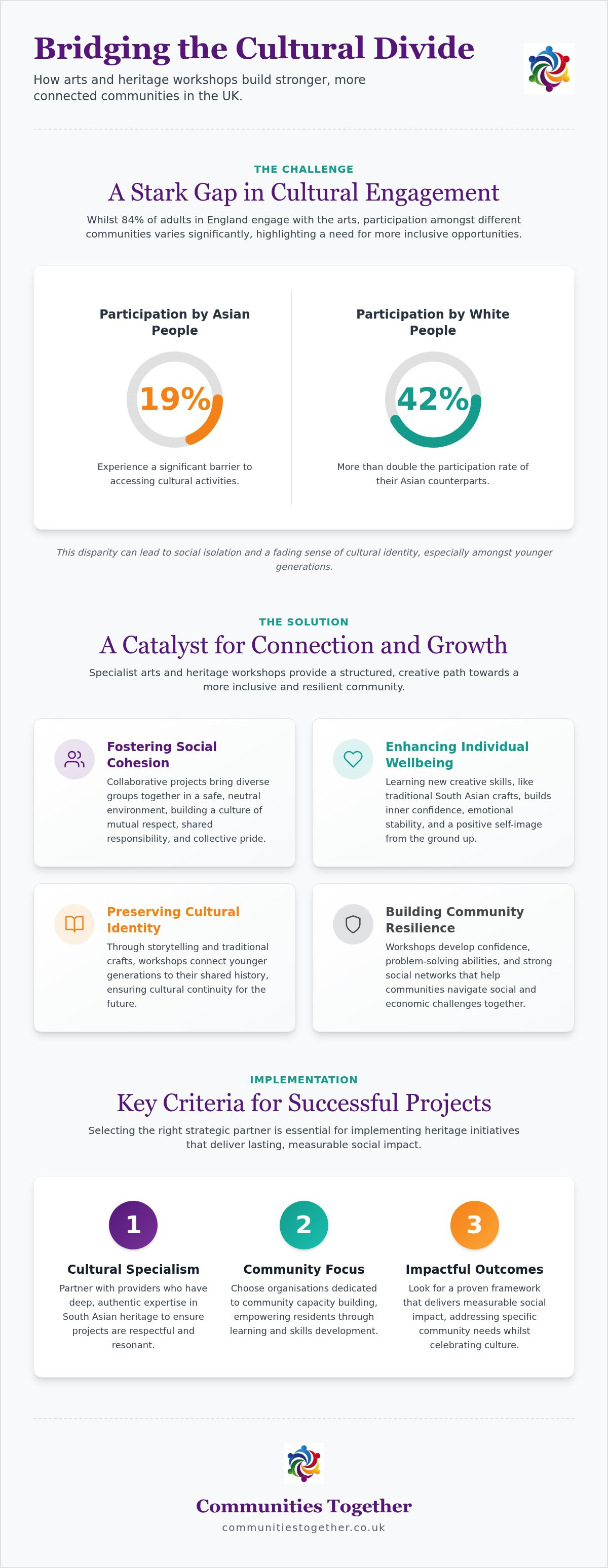
Did you know that whilst 84% of adults in England engaged with the arts in 2026, only 19% of Asian people participated in these cultural activities compared to 42% of their White counterparts? This stark disparity highlights a significant gap in our social infrastructure, especially in urban centres where social isolation and a fading sense of cultural identity amongst younger generations often take root. Many community leaders recognise that the lack of accessible engagement infrastructure isn't just a logistical hurdle but a barrier to collective wellbeing. By partnering with specialist arts and heritage workshop providers UK, you can begin to bridge these divides, ensuring that every member of the community feels seen, heard, and deeply connected to their shared history.
We understand that building a truly inclusive environment requires more than just a single event; it's about facilitating meaningful experiences that foster social cohesion and preserve cultural heritage for the future. In this guide, we'll show you how to select and implement workshops that don't just provide activities but actually build lasting community resilience and improve individual wellbeing. You'll discover how to identify providers who specialise in South Asian heritage and community capacity building to ensure your projects deliver measurable social impact. We'll explore the process of delivering heritage preservation projects that strengthen the social fabric of your district whilst empowering residents through learning, skills, and personal development.
Table of Contents
The Role of Arts and Heritage Workshops in Building Community Resilience
Preserving Cultural Identity through South Asian Arts and Heritage Projects
Evaluating Arts and Heritage Workshop Providers: Key Criteria for Success
Strategic Implementation: From School Projects to Community Wellbeing Initiatives
Strengthening West Yorkshire: Collaborative Partnerships with Communities Together
The Role of Arts and Heritage Workshops in Building Community Resilience
Arts and heritage workshops serve as sophisticated, structured learning opportunities that employ creative expression to explore our shared history, facilitating a profound connection between individuals and their collective past. As dedicated arts and heritage workshop providers UK, we recognise that these programmes act as a vital catalyst for social cohesion by bringing diverse groups together in a safe, neutral environment where dialogue and discovery can flourish. In bustling urban centres like Leeds and Bradford, where the pressures of modern life can lead to significant social isolation, cultural participation offers a reliable pathway toward togetherness and mutual understanding.
By choosing to work with experienced arts and heritage workshop providers UK, organisations can implement initiatives that do more than just teach a craft; they build resilience. This resilience is the capacity for individuals to navigate complex social and economic challenges by drawing upon the confidence, problem-solving abilities, and social networks developed through creative practice. This isn't just about individual strength; it's about the collective endurance of a neighbourhood to maintain its cultural continuity and structural integrity in the face of change, ensuring that no one is left behind whilst we move forward together.
To better understand how these creative sessions come to life, watch this helpful video:
Fostering Social Cohesion Through Collaborative Creativity
The primary mechanism through which these workshops bridge generational and cultural divides is the pursuit of shared goals. When participants collaborate on a heritage project, they aren't just learning a technique; they're actively facilitating a culture of mutual respect, shared responsibility, and collective pride. We've found that when people from different backgrounds work on a single creative outcome, they naturally develop a sense of togetherness that transcends everyday barriers. Social cohesion is the structural strength of a community built through consistent interaction, shared values, and mutual support. By creating inclusive environments, facilitators ensure that every voice is heard, helping to maintain the delicate threads of togetherness that keep our communities vibrant and strong.
Enhancing Individual Wellbeing and Personal Resilience
Our approach emphasises non-clinical interventions that utilise heritage as a powerful tool for personal growth, emotional stability, and the cultivation of a positive self-image. By acquiring new creative skills, such as traditional South Asian crafts, participants build the inner confidence necessary to face life's uncertainties, effectively enhancing community resilience from the ground up. This methodology is deeply integrated into our collaborative wellbeing workshops UK, which focus on the dual benefits of cultural continuity and individual development. These efforts align with the broader objectives of Arts Council England to support projects that contribute to the social welfare and cultural endurance of the nation. By building these skills, we're not just creating art; we're facilitating a sense of agency that helps people feel more in control of their personal narratives and their future.
Preserving Cultural Identity through South Asian Arts and Heritage Projects
Preserving South Asian traditions within the contemporary UK landscape presents a unique set of challenges, but it's also a wonderful opportunity to celebrate our shared identity. Specialist arts and heritage workshop providers UK play a critical role in this journey by facilitating structured environments where traditional crafts, storytelling, and music are not merely observed but actively practiced. These activities ensure cultural continuity by transforming abstract history into tangible, shared experiences that resonate with participants of all ages. Events held during South Asian Heritage Month serve as a vital focal point for community pride, offering a dedicated period to celebrate the rich tapestry of contributions made by the diaspora whilst encouraging deeper engagement with ancestral legacies.
Bridging Generations: Passing Down Heritage and Skills
The preservation of cultural knowledge relies heavily on the strength of intergenerational bonds, where the wisdom of elders is shared with younger participants to prevent the erosion of traditional practices. This process is central to successful community-led heritage projects UK, as it reinforces the social fabric by fostering a sense of belonging and mutual respect between different age groups. When a young person learns the intricate patterns of traditional embroidery or the rhythmic nuances of classical music from an elder, they aren't just acquiring a skill; they're inheriting a legacy that builds collective endurance. You might find that participating in these South Asian heritage activities provides a grounding influence that supports both personal identity and community stability.
Heritage Education for Schools and Diverse Communities
In diverse districts such as Huddersfield and Halifax, tailored heritage workshops offer immense educational value by aligning with National Curriculum goals whilst celebrating the specific cultural diversity of the local student body. Hands-on history allows children in multi-cultural urban settings to engage with the past in a way that feels relevant and personal, moving beyond textbooks to explore the lived realities of their own families and neighbours. These programmes build confidence. They foster curiosity. Most importantly, they create a shared language of respect.
To facilitate this engagement, schools can integrate various South Asian cultural activities, including:
Traditional Crafting: Exploring the techniques of block printing, henna design, or clay pottery to develop fine motor skills and artistic appreciation.
Oral Storytelling: Capturing and sharing family histories to develop literacy, empathy, and a deeper understanding of migration stories.
Musical Heritage: Understanding the origins and instruments of South Asian classical and folk music to explore mathematical rhythms and cultural expression.
Culinary Traditions: Exploring the history of spices and traditional recipes as a form of sensory heritage and social connection.
By embedding these practices into the learning environment, we help children develop a nuanced understanding of their world, fostering an early appreciation for the diverse threads that weave our society together. This collaborative approach ensures that heritage preservation is not a static act of looking backward, but a dynamic process of building a more inclusive future for everyone.
Evaluating Arts and Heritage Workshop Providers: Key Criteria for Success
When you're looking to implement a new cultural programme, it's essential to distinguish between a creative entertainer and a strategic community partner. Whilst an entertainer might provide an enjoyable one-off session, a strategic partner works to understand your specific goals, facilitating meaningful dialogue, preserving sensitive histories, and building a foundation for future growth. Selecting the right arts and heritage workshop providers UK involves assessing their professional accreditation and their commitment to a mission-driven approach that prioritises social responsibility over simple commercial transactions. A principled expert will always seek to align their creative methods with your broader objectives for social welfare and cultural endurance.
Effective providers must possess a nuanced understanding of local social dynamics, particularly in diverse West Yorkshire districts like Huddersfield, Halifax, and Bradford. This local expertise allows them to navigate the complex threads of the social fabric, ensuring that every workshop is inclusive, respectful, and relevant to the lived experiences of the participants. You'll want to partner with facilitators who can demonstrate measurable outcomes, such as improved individual wellbeing, increased community capacity, or the successful delivery of heritage preservation projects that leave a lasting legacy in the area.
Mission-Driven vs. Commercial Workshop Delivery
The distinction between mission-driven non-profits and commercial workshop providers often lies in their long-term accountability to the community. Mission-driven organisations focus on earnest, long-term goals such as social cohesion and cultural continuity, whilst commercial entities may operate on a more transactional basis that prioritises art sales or venue hire. A mission-driven provider views every session as an opportunity for inclusive engagement, facilitating togetherness and maintaining the structural strength of the neighbourhood through purposeful interaction. It's always best to look for providers whose values align with the long-term resilience of the community, as this ensures your investment supports sustainable growth rather than just short-term excitement.
Capacity Building and Partnership Strategies
A high-quality provider offers much more than just a workshop; they offer a collaborative partnership designed to empower your organisation and its residents. This process is known as community capacity building UK, which focuses on strengthening local infrastructure and giving individuals the skills they need to lead their own future projects. By facilitating these deeper connections, arts and heritage workshop providers UK help create a self-sustaining ecosystem of learning and development. We've found that this methodical approach to partnership ensures that the benefits of a project continue to be felt long after the final session has concluded, helping to weave together a stronger, more resilient social fabric for everyone involved.
Strategic Implementation: From School Projects to Community Wellbeing Initiatives
Successful implementation of cultural programmes begins with a methodical assessment of the local landscape to identify specific community needs, such as the prevalence of social isolation, a lack of meaningful cultural representation, or the erosion of traditional skills. Once these requirements are understood, the next phase involves selecting a heritage or arts theme that resonates deeply with the target demographic, ensuring the project feels relevant, grounded, and authentically connected to their lived experience. Partnering with professional arts and heritage workshop providers UK allows organisations to facilitate inclusive engagement whilst simultaneously building community capacity through expert guidance and collaborative planning. Execution should focus on consistent skill acquisition, personal development, and the fostering of social bonds, concluding with a robust measurement of impact through qualitative feedback, participant testimonials, and specific resilience indicators.
Tailoring Workshops for Schools and Educational Access
Adapting heritage projects for schools requires a nuanced understanding of different age groups and learning abilities to ensure that cultural identity programmes effectively build self-esteem and a sense of belonging. By facilitating hands-on sessions that celebrate diversity, schools can help students develop a stronger sense of confidence in their own heritage whilst learning to respect the traditions of others. These initiatives are most effective when they're thoughtfully integrated into a broader skills and personal development UK framework, which links creative expression to measurable growth in communication, problem-solving, and emotional intelligence. This holistic approach ensures that students aren't just learning about the past, but are actively building the tools they need for a successful and harmonious future.
Implementing Wellbeing Programmes for Isolated Communities
Reaching under-served or isolated groups in districts like Wakefield and Bradford requires the creation of safe spaces where non-clinical interventions can foster wellbeing without the pressure of traditional institutional settings. Building trust is a gradual process that relies on a consistent, steady rhythm in programme delivery, ensuring that participants feel secure, valued, and heard throughout their engagement. When working with arts and heritage workshop providers UK, it's vital to ensure that facilitators understand the specific cultural sensitivities of the local area, as this knowledge is fundamental to building trust and ensuring the programme's long-term success. This methodical approach helps to maintain the social fabric by providing reliable opportunities for interaction, facilitating togetherness, and building the collective endurance of the community.
Strengthening West Yorkshire: Collaborative Partnerships with Communities Together
Communities Together stands as a dedicated regional specialist, facilitating South Asian arts, heritage preservation, and wellbeing workshops across the West Yorkshire districts of Huddersfield, Halifax, Leeds, Bradford, and Wakefield. As one of the most mission-driven arts and heritage workshop providers UK, we adopt the role of a "wise facilitator," understanding the complex threads of our local social fabric whilst possessing the professional expertise to weave them together into a stronger whole. Our approach is characterised by a friendly yet earnest commitment to social responsibility, ensuring that every partnership we form serves as a stable foundation for collective growth and long-term community benefit.
We're deeply committed to the dual benefit of cultural preservation and personal development, recognising that a community's strength lies in its ability to honour its past whilst equipping its members for the future. By maintaining a professional and serious focus on measurable social impact, we ensure that our programmes aren't merely temporary activities but are instead essential components of local social infrastructure. We believe in being a reliable, methodical advocate for our residents, providing the quiet confidence and stability necessary to facilitate lasting change in urban centres that face the ongoing challenges of social isolation and cultural loss.
Local Expertise in Huddersfield, Leeds, and Bradford
Deep-seated local knowledge is vital for successful community engagement, as it allows us to navigate the specific cultural nuances and historical contexts that define our diverse neighbourhoods. By acting as an authoritative bridge-builder between various backgrounds, we facilitate meaningful interactions that foster mutual respect, social harmony, and a shared sense of purpose amongst residents. We're proud to serve as a professional conduit for progress in West Yorkshire, helping organisations to implement programmes that are both grounded in tradition and focused on a brighter future. To see how these principles translate into practice, we invite you to visit the Communities Together homepage to explore our local success stories and ongoing initiatives.
Building a Resilient Future Through Inclusive Arts
Partnering for arts and heritage workshops offers more than just creative output; it provides a strategic pathway toward building a resilient future where every individual feels a profound sense of belonging and agency. By prioritising social cohesion, cultural continuity, and collective endurance, we help to maintain the structural strength of our communities, ensuring they can navigate modern challenges with confidence and grace. Our commitment to inclusive arts is rooted in the belief that shared creative expression is a fundamental tool for personal development and social welfare. We're here to support your mission through collaborative growth, facilitating the preservation of our rich South Asian heritage whilst building the capacity of local people to lead, create, and thrive together. Let's work in partnership to facilitate a legacy of stability and togetherness for generations to come.
Building a Legacy of Shared Heritage and Social Harmony
Facilitating cultural projects is a profound method for strengthening the social fabric and ensuring that the rich tapestry of South Asian traditions remains a vibrant part of our collective future. By moving beyond transactional sessions and focusing on strategic partnerships, community leaders can foster lasting resilience and individual wellbeing. It's clear that the most impactful outcomes arise when you collaborate with experienced arts and heritage workshop providers UK who prioritise inclusive engagement and long-term social responsibility.
Communities Together remains dedicated to this mission, offering a professional and earnest approach to heritage preservation across West Yorkshire. Our proven impact in fostering social cohesion in districts like Leeds and Bradford demonstrates the value of a methodical, bridge-building facilitator. We're here to help you navigate the complexities of community engagement whilst building a stable foundation for cultural continuity and mutual respect.
We look forward to building a more connected and resilient future alongside you.
Frequently Asked Questions
What should I look for in an arts and heritage workshop provider?
When evaluating arts and heritage workshop providers UK, you should prioritise organisations that function as strategic community partners rather than mere entertainers. It's essential to seek out facilitators who demonstrate a mission-driven approach, professional accountability, and a deep understanding of local social dynamics. You'll want to ensure they possess a proven track record in delivering measurable social outcomes, such as improved individual wellbeing or the successful preservation of complex cultural histories within diverse neighbourhoods.
How do heritage projects help with social isolation in the UK?
Heritage projects reduce social isolation by facilitating structured, inclusive environments where residents can connect over shared history and collective identity. These programmes act as a vital catalyst for social cohesion, particularly in urban centres where traditional support networks might be fragmented. By participating in collaborative activities, individuals develop a sense of togetherness and mutual respect, which helps to maintain the structural strength of the community and builds lasting resilience against the pressures of isolation.
Can arts workshops be used for professional skills development?
Yes, our arts workshops are specifically designed to support learning, skills, and personal development by providing participants with tangible creative and technical abilities. These structured programmes help individuals build the confidence and problem-solving skills necessary for professional growth whilst enhancing their overall sense of agency. By focusing on skill acquisition within a supportive community context, we facilitate a pathway toward improved economic resilience and personal empowerment for residents across West Yorkshire.
Are these heritage programmes suitable for schools in diverse areas like Bradford?
How do you measure the impact of a community engagement programme?
We measure the impact of a community engagement programme through a combination of qualitative feedback, participant testimonials, and specific resilience indicators. This methodical evaluation process allows us to track improvements in individual wellbeing, social cohesion, and the successful delivery of cultural preservation goals. By focusing on these measurable effects, we ensure that every project provides a stable foundation for collective growth and demonstrates a high degree of accountability to our partners and stakeholders.
What is South Asian arts and heritage preservation?
South Asian arts and heritage preservation involves the active maintenance and celebration of traditional cultural practices, including crafts, storytelling, and music, within a contemporary UK context. This process ensures cultural continuity by transforming ancestral knowledge into shared experiences that resonate with younger generations. By facilitating these activities, arts and heritage workshop providers UK help to prevent the loss of vital cultural knowledge whilst strengthening the social fabric of diverse urban communities.
Do you provide workshops in Halifax and Huddersfield?
Yes, we provide specialised workshops across Halifax, Huddersfield, and the broader West Yorkshire region, including Leeds, Bradford, and Wakefield. Our local expertise allows us to navigate the unique social dynamics of these districts, ensuring that our community engagement programmes are relevant and respectful. We've established ourselves as an authoritative bridge-builder in these areas, facilitating togetherness and maintaining the cultural endurance of the diverse populations that call these vibrant towns home.
How can my organisation partner with Communities Together for a project?
Your organisation can partner with Communities Together by engaging in a collaborative dialogue to align your community goals with our specialist expertise in heritage preservation and wellbeing. We focus on partnership and community capacity building to ensure that every project is a shared success that empowers local people. By working together, we can facilitate meaningful programmes that foster social cohesion, improve individual wellbeing, and build a more resilient future for everyone in West Yorkshire.


Comments