
Positive psychology workshops for Bradford teams
Team wellbeing grows through shared practice, not a single conversation. Positive psychology workshops in Bradford can combine mindfulness with practical reflection, helping colleagues notice stress, recognise their strengths and support one another at work.
It’s understandable to look for approaches that acknowledge workplace pressures and offer practical ways to respond. Mindfulness means paying attention to thoughts, emotions and sensations without reacting straight away. Positive psychology invites teams to reflect on strengths, values and relationships that can contribute to a more supportive working culture.
This article explains how workshops can use mindfulness to help participants notice stress and how positive psychology activities can support team wellbeing and professional practice. It also covers what a session might involve, how to judge whether the approach suits your organisation, and how community-focused wellbeing and resilience work can encourage ongoing support.
Table of Contents
Which organisations and venues in Bradford offer positive psychology workshops?
South Square in Bradford has hosted Mindful May, an annual event centred on wellbeing and mindfulness. Its documented 2024 programme took place on 18 May, from 10:00 to 19:00. The event was held during Mental Health Week, which ran from 13 to 19 May. It was described as free or pay-as-you-feel, with everyone welcome. This provides a local example of public wellbeing activity, rather than evidence of a regular workplace workshop schedule.
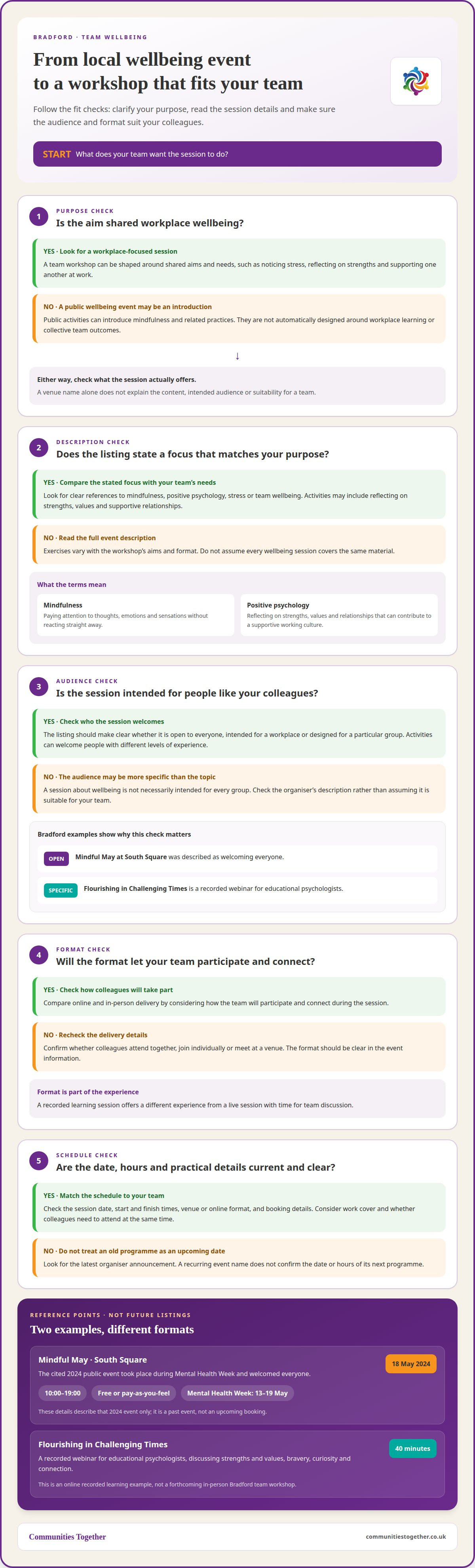
That distinction matters when choosing a session for a Bradford team. A public event can introduce mindfulness and related practices, while a workplace workshop may be shaped around shared priorities. A venue name alone does not tell you the session’s content, intended audience or suitability for a team. Read the event description to see whether its focus is personal participation, professional learning or collective wellbeing.
Workplace activities might include reflecting on strengths, values and supportive relationships. Mindfulness involves noticing thoughts, emotions and sensations without reacting immediately. Together, these approaches can give colleagues a structure for recognising stress and discussing how they support one another. Exercises vary according to the workshop’s aims and format, so look for details in the description rather than assuming every session covers the same material.
When assessing a Bradford listing, look for details that match your team’s needs:
Organiser: note the named organisation responsible for the session.
Venue or format: distinguish a Bradford in-person event from a workplace session or online activity.
Purpose: look for explicit references to mindfulness, positive psychology, stress or team wellbeing.
Audience: establish whether the event is open to everyone or designed for a particular group.
South Square’s Mindful May example shows why dates and descriptions should be read together. The 2024 event welcomed everyone and ran across a full day, but those details describe that event, not every workshop at the venue. A team seeking facilitated work should look for an offer that specifically addresses workplace practice and shared outcomes.
For a Bradford organisation, the most relevant option is one whose organiser, setting and stated aims suit the team’s purpose. Public events such as Mindful May can offer an introduction, while a tailored session can focus more closely on working relationships and team wellbeing. Use the event description to understand what is actually offered, rather than assuming every local wellbeing activity is a workplace workshop.
What dates and times are upcoming positive psychology workshops in Bradford?
The dated Bradford example covered earlier was Mindful May at South Square on 18 May 2024, so it is a past event, not an upcoming booking. Its 10:00 to 19:00 schedule describes that day only. A recurring event name does not establish the date or hours of its next programme, so use a current organiser announcement for future plans.
A team session can be arranged around the organisation’s purpose, participants and preferred format. The listing should give the date, start and finish times, venue or online format, and booking details. With this information, colleagues can plan attendance and work cover without relying on an earlier programme or a general event description.
Use this sequence when reviewing Bradford listings:
Find the latest event notice: identify the organiser and the publication date of its announcement.
Read the full schedule: distinguish the session date from registration deadlines or other programme dates.
Check the hours: note start and finish times, including any separate arrival or break arrangements.
Match the audience: establish whether the session is public, intended for a workplace, or designed for another group.
A useful comparison is the Flourishing in Challenging Times webinar, which lasts 40 minutes and is available as a recording. It discusses strengths and values, bravery, curiosity and connection for educational psychologists. That example offers a defined online learning format, but it is not a forthcoming in-person Bradford workshop. Its recorded format also differs from a live session with time for team discussion.
For a Bradford team, suitable timing depends on the session’s purpose. A brief introduction might fit into a planned team meeting, while reflective activities may need a longer, uninterrupted period. The schedule should explain whether participants attend together, join individually or meet at a venue.
Before setting a team date, decide which work period is least disruptive and whether colleagues need to attend simultaneously. Then compare that timing with the published session hours and format. If no suitable public date aligns, a workplace-focused session can be discussed around the team’s requirements; team wellbeing support can help frame that planning.
Who can attend positive psychology workshops in Bradford, and are they suitable for beginners?
The intended audience varies between Bradford sessions. Mindful May at South Square welcomed everyone, making it a public event rather than a workshop for experienced practitioners. The Flourishing in Challenging Times webinar, by contrast, is for educational psychologists. These examples show why audience matters: an open community event and a profession-specific learning session serve different groups.
A workplace session might bring together colleagues, team leaders and managers to reflect on shared practice. Participants could explore how their strengths contribute to collaboration or how values shape everyday decisions. Examples like these connect positive psychology to people’s roles instead of leaving it as abstract theory. The session’s stated audience and aims should show whether it is intended for a whole team or a particular professional group.
Beginners can join a session that explains ideas in plain language and demonstrates activities before inviting reflection. For example, a facilitator might introduce strengths, offer a short prompt and invite participants to consider how a strength shows up in their work. This gives newcomers a way into the subject without assuming previous study or mindfulness experience. The description should say whether prior knowledge is expected.
Before attending, consider these practical points:
Audience: check whether the event welcomes the public, workplace teams or a named profession.
Starting point: look for introductory explanations and examples if participants are new to the topic.
Participation: find out whether activities involve individual reflection, group discussion or both.
Purpose: choose an event whose focus, such as team practice or personal learning, matches participants’ needs.
The 40-minute Flourishing in Challenging Times recording is a useful example of a defined learning resource, but its audience is educational psychologists. It discusses strengths and values, bravery, curiosity and connection. A team new to positive psychology could use those themes as discussion prompts, while recognising that a recorded webinar is not the same as a facilitated group workshop.
For beginners in Bradford, assess suitability by looking at the intended audience, introductory content and style of participation. A welcoming description alone does not show whether the activities fit your team. Look for information about what participants will do, how ideas are introduced and whether the session focuses on individual learning or collective workplace practice. These details help newcomers approach the subject with a shared understanding and a relevant purpose.
Eligibility depends on the session: some welcome the public, while others are intended for a particular profession or workplace group. Read the description for any assumed prior knowledge and details about participation.
Bradford positive psychology: online or in-person?
Bradford has hosted in-person wellbeing events, and recorded webinars offer online learning. The formats support different kinds of participation and are not interchangeable. South Square’s Mindful May is a local in-person example. The Flourishing in Challenging Times webinar is an online recording for educational psychologists, not a Bradford team workshop.
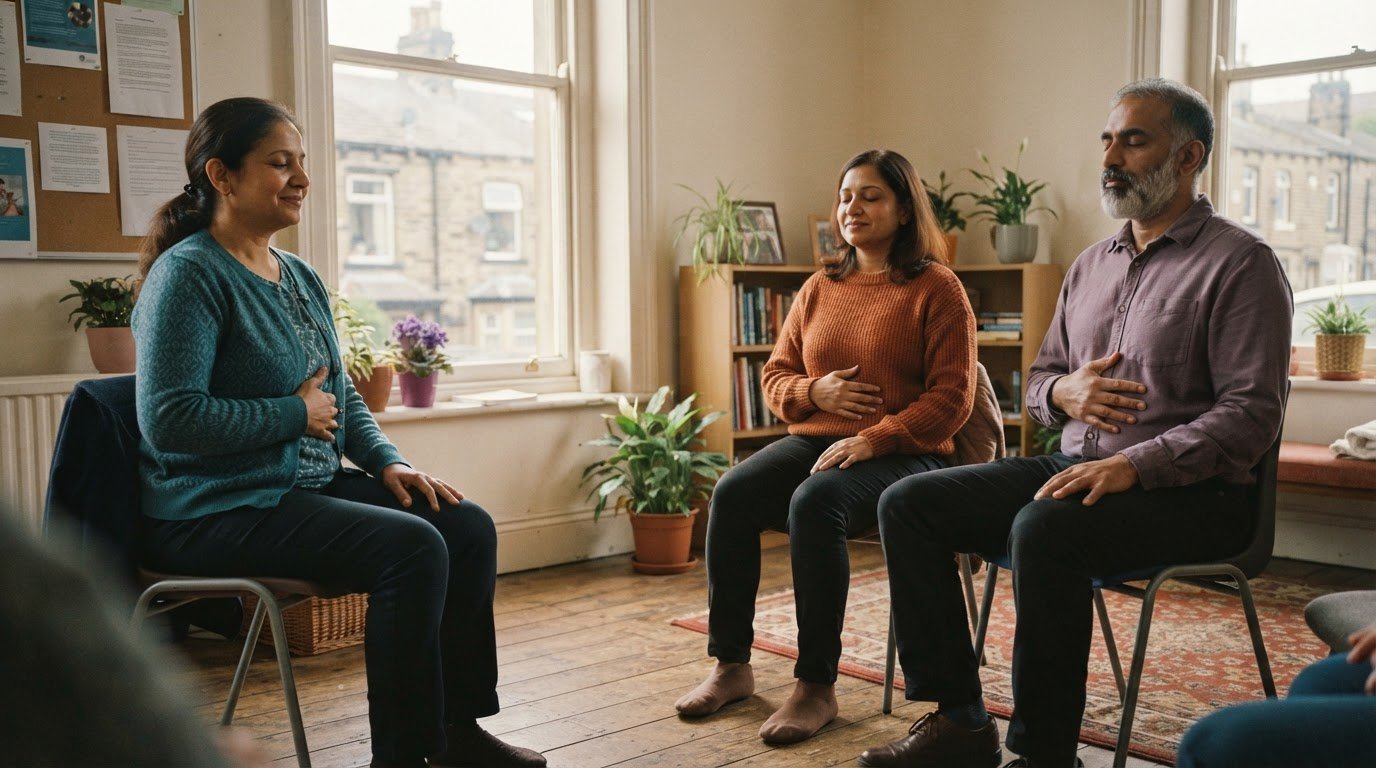
An in-person workshop brings colleagues together for activities, reflection and discussion. A facilitator can guide the group through an exercise and invite participants to connect it with their team’s work. Colleagues might reflect on the strengths they use together or discuss how supportive relationships show up in daily practice. This format may suit teams that value meeting in the same room.
Online delivery can make participation easier when colleagues work across locations or cannot gather at one venue. A recorded session, such as the 40-minute webinar, lets viewers engage with material on strengths and values, bravery, curiosity and connection. However, a recording does not create the same live exchange as a facilitated team discussion. The format should match whether the aim is individual learning or collective reflection.
When deciding between formats, consider these practical factors:
Team location: a single Bradford workplace may make an in-person session straightforward; dispersed colleagues may benefit from online access.
Session purpose: a shared discussion may suit a live group, while introductory material can work as individual viewing.
Participation style: consider whether colleagues need time to speak together or prefer to reflect privately.
Access arrangements: account for travel to a venue or the practicalities of joining online during work.
A hybrid approach can combine shared learning with follow-up reflection when each part has a clear purpose. For example, colleagues could watch an introductory recording individually, then meet to discuss how its themes relate to workplace relationships. This is a possible way to organise learning, not a description of how the Flourishing in Challenging Times webinar is delivered.
For Bradford teams, distinguish between a local in-person event, a live online workshop and a recorded resource. Each allows a different kind of interaction. First decide whether colleagues need guided group discussion, flexible individual access or both. Then choose a format that supports that aim. An online resource is not necessarily a facilitated workshop, and a local event is not necessarily designed for workplace teams.
How to book a positive psychology workshop in Bradford
Start by agreeing what your Bradford team wants from a workshop. A clear purpose helps shape the activities and makes planning more focused. For example, colleagues might want to explore mindfulness, recognise their strengths or build more constructive working relationships. Choose a priority to guide the initial discussion rather than treating every possible outcome as equally important.
When arranging positive psychology workshops in Bradford, give the organiser a brief outline of the group and its context. Include participants’ roles, the work setting and relevant team priorities. Colleagues reflecting on communication may need a different focus from managers considering how they support wellbeing. Keep the outline centred on shared aims, not sensitive personal details.
Before discussing dates, decide which format could work for participants. In-person sessions can suit colleagues who benefit from meeting together, while online delivery may help teams spread across locations. Consider the working day, access to a suitable space or online meeting arrangements, and whether colleagues can attend together. These choices help define the practical format.
Set the aim: identify the main issue, such as stress awareness or strengths in team practice.
Describe the group: share participants’ roles and workplace context, without disclosing private health information.
Outline logistics: state your preferred format, possible dates and any venue considerations.
Discuss the session: explain what you hope participants will explore and how the workshop could address it.
Agree arrangements: confirm the date, timing, format and any preparation before treating the booking as settled.
A request about positive psychology workshops in Bradford could explain that your team wants practical mindfulness activities and a discussion of shared strengths. This gives the organiser a clear starting point without prescribing every activity. If the team’s priorities are still taking shape, describe the questions colleagues want to explore so the discussion can focus on relevant aims.
Once arrangements are agreed, share the essentials with attendees. Explain the session’s purpose, format and timing, and say whether participants should bring anything. A concise message helps colleagues understand why the session is happening and how it relates to their work. Afterwards, consider how the team can carry useful reflections into everyday practice.
Communities Together: Wellbeing and Resilience Workshops
Communities Together offers Wellbeing and Resilience Workshops for teams seeking to strengthen wellbeing through shared learning and reflection. For a Bradford organisation, these workshops can provide a structured setting to explore mindfulness, positive psychology and supportive working relationships.
The workshops focus on resilience and collective wellbeing, not clinical mental health treatment. If your team’s aims also involve wider community participation, Community Engagement Programmes can support collaborative activity. Start by discussing the group’s priorities, the practices it wants to encourage and the outcomes it hopes to work towards.
Contact Communities Together to discuss a wellbeing and resilience workshop for your team.
Build a shared next step for your team
A useful next step is to connect positive psychology workshops in Bradford with a practical aim your team can carry into daily work. Choose a focus that matters to colleagues, such as recognising strengths, making space for reflection or building more supportive relationships. A shared purpose can turn workshop learning into an ongoing conversation rather than a one-off activity.
Communities Together’s Wellbeing and Resilience Workshops offer structured support for teams focused on collective wellbeing. If wider participation is also a goal, Community Engagement Programmes and South Asian Arts and Culture programmes can contribute to community connection. Start by describing what your team hopes to explore and the context in which it works.
A thoughtful start can help your team build practices that support wellbeing, connection and shared learning.
Frequently Asked Questions
What wellbeing workshop options can Bradford teams consider?
Bradford teams can consider public wellbeing events or a team-focused session. The right positive psychology workshop in Bradford depends on whether colleagues want individual learning or shared reflection. For example, a team working across departments might explore how different strengths contribute to a shared project. Communities Together offers Wellbeing and Resilience Workshops that teams can discuss in relation to their priorities and working context.
What topics and activities do Bradford positive psychology workshops cover?
Positive psychology workshops in Bradford can explore strengths, values, mindfulness and connection through activities shaped around participants’ aims. A team might consider how its values influence decisions or use a strengths-based prompt to reflect on collaboration during a project. Other sessions may include discussion of curiosity, bravery or kindness. Activities should support the workshop’s purpose and help participants connect ideas with their experience and team practice.

Comments