
Community Skills Building Programmes UK: A Comprehensive 2026 Guide
- Qaisar Mahmood
- 1 day ago
- 11 min read
If we view local development solely through the lens of economic output, we risk overlooking the very cultural threads that hold our neighbourhoods together. You likely understand that whilst traditional training is vital, a truly resilient community requires more than just a list of vocational qualifications; it needs a foundation of shared identity and mutual support. By engaging with community skills building programmes UK, local leaders can implement structured initiatives that foster individual resilience, preserve precious cultural heritage, and strengthen the social fabric of our diverse towns.
This comprehensive 2026 guide explores how these programmes bridge the gap between fragmented infrastructure and social harmony; we'll examine how integrating South Asian arts and heritage activities into learning frameworks can reduce social isolation, improve individual wellbeing, and create the robust local partnerships necessary for collective growth. Through a focus on culturally sensitive learning and the latest 20% social value weighting in government procurement, we'll show you how to build a future where every resident feels seen, valued, and empowered to contribute to their community's enduring success.
Table of Contents
What are Community Skills Building Programmes in the UK?
In 2026, the definition of community skills building programmes UK has shifted from a narrow focus on immediate employability to a broader, more holistic investment in our shared social infrastructure and collective future. These initiatives represent a deliberate effort to equip local residents with the tools they need to navigate a rapidly changing society, moving beyond the functional basics of digital literacy to prioritise the cultivation of social resilience, emotional intelligence, and communal strength. By viewing learning as a vehicle for togetherness, we can ensure that every individual has the opportunity to contribute to a stable, harmonious, and thriving local environment.
The history and evolution of Community development in the UK demonstrates a long-standing commitment to empowering local voices; however, today's programmes are increasingly facilitated by mission-driven non-profit organisations that specialise in making growth both accessible and inclusive for diverse groups. These facilitators act as authoritative bridge-builders, ensuring that social value is woven into the very fabric of our urban centres whilst providing the professional guidance necessary to maintain long-term stability, foster social cohesion, and protect our shared cultural heritage.
To better understand the methodology behind these initiatives, watch this helpful video regarding asset-based community development:
The Core Pillars of Community Development
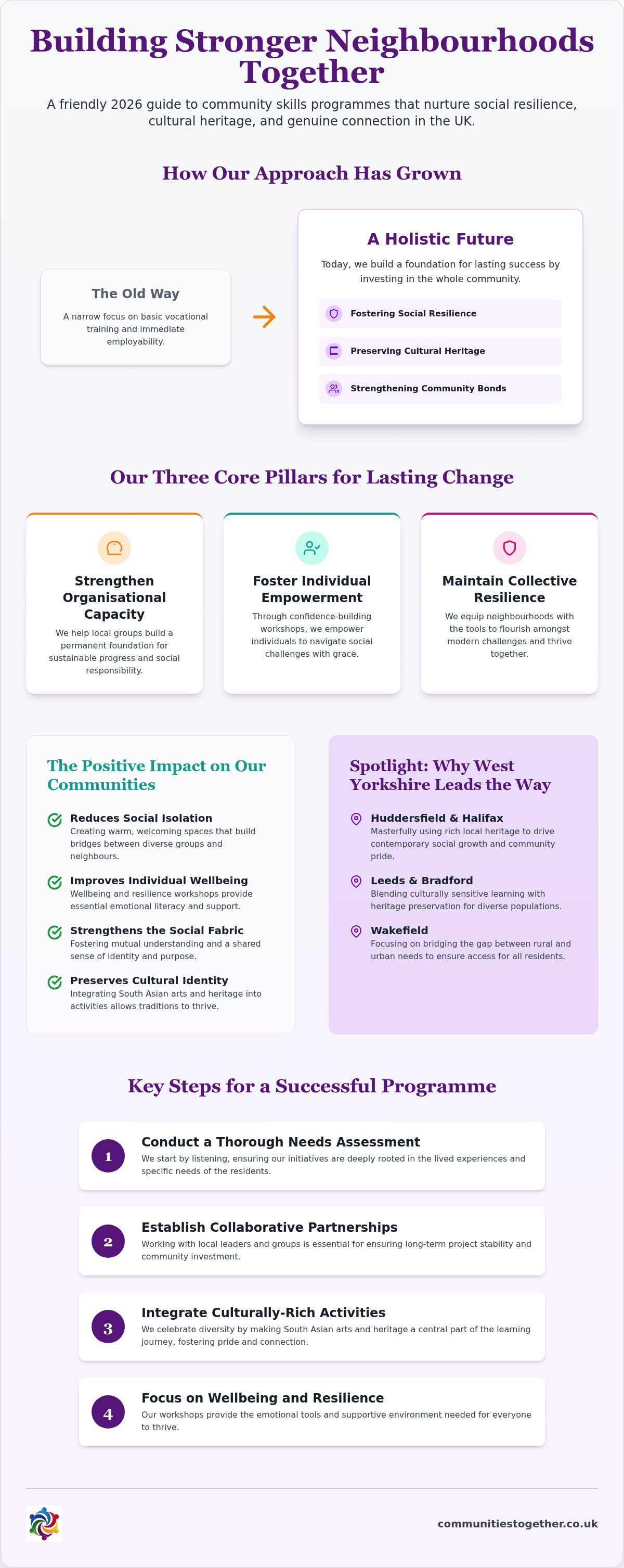
Effective community engagement relies on three fundamental pillars that work in tandem to create lasting change: strengthening the organisational capacity of local groups, fostering individual empowerment through confidence-building workshops, and maintaining a state of collective resilience that allows neighbourhoods to flourish amongst modern challenges. This methodical approach ensures that we aren't just reacting to immediate needs but are instead building a permanent foundation for sustainable progress, cultural continuity, and social responsibility. By focusing on these core areas, we can facilitate a transition from fragmented local infrastructure to a more integrated and supportive social network.
Why West Yorkshire is Leading the Way
West Yorkshire has emerged as a beacon for these initiatives, with towns like Huddersfield and Halifax masterfully utilising their rich local heritage to drive contemporary social growth and community pride. In 2026, the unique demographic landscapes of Leeds and Bradford require a sophisticated blend of culturally sensitive learning and heritage preservation to address the specific needs of their diverse populations. Meanwhile, in Wakefield, the focus remains on bridging the gap between rural and urban requirements, ensuring that every resident, regardless of their location, can access the wellbeing and resilience workshops that are so vital for maintaining a healthy and connected social fabric.
Diverse Types of Skills Building: Beyond the Workplace
Whilst many initiatives focus purely on employability, our approach to community skills building programmes UK recognises that true empowerment stems from a blend of practical, cultural, and emotional literacy. We believe that skills should be defined by their ability to help individuals navigate social complexities, foster mutual understanding, and contribute to the collective endurance of their neighbourhoods. By moving beyond the workplace, we can facilitate growth that's deeply rooted in the lived experiences of our residents, ensuring that learning is a warm and welcoming journey for everyone involved.
This shift towards a more holistic model of development is supported by the UK social cohesion action plan, which highlights how confident and resilient communities are built through shared participation and cultural security. It's about creating a stable foundation where everyone feels they have a stake in the future. This is particularly relevant as the government has increased the social value weighting in procurement to 20% for large contracts as of August 2026, ensuring that public spending delivers tangible local benefits such as training and job creation. If you're interested in how these concepts apply to your area, you can explore our community engagement programmes to see these principles in action.
South Asian Arts and Heritage as a Skillset
Preserving South Asian arts and heritage serves as a powerful catalyst for personal development by providing a structured framework for residents to explore their identity whilst building modern educational access. In Bradford, cultural participation has successfully expanded community capacity by allowing individuals to take ownership of their narratives, develop project management skills, and foster a profound sense of belonging amongst diverse groups. These heritage projects don't just look back at tradition; they use it as a springboard for future leadership, professional growth, and social responsibility. By valuing these unique skillsets, we help build a community that's both proud of its past and prepared for its future.
Wellbeing and Resilience Workshops
Emotional infrastructure is the invisible thread that holds a community together, especially for those who've experienced social isolation or fragmented support systems. Wellbeing and resilience workshops provide non-clinical interventions that improve collective mental health by teaching stress management, fostering peer support, and building the inner strength required to face modern challenges. We've found that these workshops are most effective when they're delivered in a culturally sensitive manner, ensuring that every participant feels safe and respected. For a deeper look at how to facilitate these sessions, our guide on collaborative wellbeing workshops UK offers a comprehensive overview of best practices and impactful strategies.
Measurable Impacts: Reducing Isolation and Building Cohesion
Whilst individual progress is a vital component of community skills building programmes UK, the true measure of success lies in the broader social outcomes they facilitate. By providing a structured environment for collective growth, these initiatives act as a vital bridge between disparate community groups, allowing residents from different backgrounds to find common ground through shared goals and mutual support. This process is essential for reducing the social isolation that often plagues diverse urban centres, as it transforms learning from a solitary pursuit into a collaborative experience that strengthens the social fabric of the entire neighbourhood.
Addressing the question of return on investment requires a shift in perspective from short-term financial gains to long-term social value. When evaluating community skills building programmes UK, local authorities increasingly recognise that investing in these initiatives leads to reduced pressure on public services, as improved individual wellbeing and stronger community bonds contribute to better health outcomes and greater civic participation. The role of adult community education is therefore not just about personal development but is a strategic tool for developing thriving, self-sustaining local communities that can weather future challenges with grace and resilience.
Fostering Social Cohesion Through Shared Learning
Creating safe spaces for dialogue is a cornerstone of our work, particularly through creative workshops that encourage residents to express their unique perspectives whilst listening to others. In Leeds and Wakefield, we've seen how inclusive community programmes can break down barriers and foster a deep sense of togetherness amongst participants who might otherwise never have met. By prioritising social cohesion through arts, we ensure that learning remains a warm and welcoming experience that celebrates our differences whilst building on our shared values.
Strengthening Local Infrastructure
The transition from individual learning to community-led action is facilitated by robust partnership building, which creates a more resilient third sector capable of supporting long-term growth. When local groups collaborate, they pool their assets, share their expertise, and build a stable foundation for future projects. This methodical approach to community capacity building UK ensures that the "bones" of our local organisations are strong enough to support the evolving needs of our residents, ultimately leading to a more empowered and proactive society.
How to Organise a Successful Community Programme
Organising a successful initiative requires a delicate balance between rigorous professional planning and a warm, welcoming atmosphere that encourages residents to step forward with confidence. The first step involves identifying the specific needs and assets of your local neighbourhood, ensuring that you're building upon existing strengths rather than just addressing perceived deficits. Once this foundation is laid, building collaborative partnerships with local stakeholders and residents becomes the priority, as these relationships provide the essential "buy-in" required for long-term sustainability and mutual trust. It's about people.
Designing an inclusive curriculum that respects cultural sensitivities is the next critical phase, as this ensures that learning remains accessible to everyone regardless of their background or previous educational experiences. Securing sustainable funding often involves demonstrating the social value of your project, which is increasingly important given that government contracts now carry a 20% social value weighting as of August 2026. Finally, monitoring the impact of your community skills building programmes UK allows for continuous improvement whilst maintaining a flexible, friendly approach that responds to the evolving needs of the participants.
Engaging Diverse Groups Effectively
Overcoming barriers to participation requires a deep understanding of the practical challenges faced by under-represented residents, such as language differences, restrictive timings, or inaccessible venues. In West Yorkshire, choosing a familiar community centre or a local place of worship can significantly improve attendance and comfort levels for those who might feel hesitant about traditional learning environments. We've found that using South Asian heritage workshops is a particularly effective way to engage multi-generational families, as these activities celebrate shared history whilst providing a natural entry point for modern skill development and social interaction.
Building Sustainable Partnerships
Togetherness is not just a value; it's a core strategy for non-profit success that involves collaborating with schools, local businesses, and faith groups to create a unified support network. By working together, we can ensure that our efforts are complementary rather than competitive, leading to a more efficient use of resources and a broader reach across the community. This collaborative spirit is essential for fostering skills and personal development UK, as it provides residents with a diverse range of opportunities, mentorship pathways, and support systems for growth.
Communities Together: Your Partner for Growth in West Yorkshire
At Communities Together, we act as a dedicated and mission-driven facilitator, working tirelessly to weave the diverse threads of West Yorkshire’s social fabric into a resilient, harmonious, and supportive whole. Our approach to community skills building programmes UK is defined by a commitment to social responsibility, cultural continuity, and professional accountability, ensuring that every initiative we deliver provides a stable foundation for residents to thrive. We understand that true growth occurs when individuals feel a profound sense of belonging, which is why we specialise in South Asian arts and heritage preservation as a meaningful way to foster shared identity whilst delivering practical personal development.
We facilitate wellbeing and resilience workshops designed to provide residents with the emotional infrastructure needed to navigate life's complexities with grace, confidence, and mutual support. By acting as a methodical advocate for local groups, we offer partnership and community capacity building expertise that empowers smaller organisations to strengthen their own foundations, improve their service delivery, and achieve sustainable social impact. This collaborative spirit ensures that we aren't just providing isolated services but are instead building a permanent platform for collective endurance, individual empowerment, and shared success across our region.
A Friendly Approach to Professional Delivery
We prioritise a warm, inclusive environment for all our participants because we believe that professional delivery should always be matched by a personable and welcoming atmosphere that makes everyone feel at home. Our deep commitment to the social fabric of Huddersfield, Leeds, and Bradford is reflected in our 2026 programmes, which are meticulously designed to be accessible, culturally sensitive, and responsive to the unique needs of our local neighbourhoods. Getting involved with our current initiatives is a straightforward and friendly process, whether you're a resident looking to join a heritage workshop or a local leader seeking a reliable partner to help facilitate positive change in your area.
Creating a Lasting Legacy Together
Joining our network of collaborative community partners means becoming part of a purposeful movement that values tradition and progress in equal measure to create a better future for everyone. We facilitate the transition from individual learning to community-led action by providing the professional literacy, structural support, and expert guidance necessary to create a lasting legacy for future generations. Your journey with us starts with a simple, open conversation about your goals, your neighbourhood’s unique assets, and the ways we can work together to facilitate meaningful growth that lasts. Let's build something wonderful together.
Building a Resilient Future for Our Neighbourhoods
Reflecting on the strategies we've discussed, it's clear that meaningful progress is achieved when we prioritise the human connections that bind our neighbourhoods together. We've explored how moving beyond vocational training to embrace cultural heritage and emotional literacy creates a stable foundation for collective growth and social responsibility. As a specialist in South Asian cultural preservation active across Huddersfield, Halifax, Leeds, Bradford, and Wakefield, our focus remains on facilitating long-term social cohesion and resilience through every workshop and partnership we build.
By investing in community skills building programmes UK, local leaders and residents can work together to ensure that our towns remain vibrant, inclusive, and supportive environments for generations to come. We're here to act as your authoritative bridge-builder, providing the expertise and local knowledge necessary to turn shared aspirations into measurable social impact.
We look forward to embarking on this journey of growth and togetherness with you, ensuring that the unique character of our local areas is preserved whilst we build a stronger future together.
Frequently Asked Questions
What are the main benefits of community skills building programmes UK?
The main benefits of community skills building programmes UK include fostering social cohesion, preserving cultural heritage, and improving individual wellbeing through structured, inclusive learning. These initiatives provide a supportive environment where residents can develop practical skills whilst building the emotional resilience needed to navigate modern social challenges. By investing in these programmes, neighbourhoods create a more integrated social fabric that supports long-term stability, harmony, and collective growth for every participant involved.
How can community programmes help reduce social isolation in urban areas?
Community programmes reduce social isolation by creating safe, welcoming spaces where individuals from diverse backgrounds can connect through shared learning and creative expression. In busy urban centres, these workshops act as a vital bridge between groups who might otherwise remain fragmented or lonely. By focusing on togetherness and mutual support, these initiatives help residents build meaningful relationships that transform solitary lives into part of a supportive, connected local network.
Who can participate in South Asian heritage and arts projects?
Our South Asian heritage and arts projects are open to everyone who's interested in exploring cultural identity, traditional crafts, and creative expression. Whilst these activities are designed to preserve specific cultural traditions, they're inclusive by nature and welcome multi-generational families and residents from all backgrounds. We believe that sharing cultural heritage is a powerful way to foster understanding, build mutual respect, and create a more harmonious community for everyone.
Do I need professional qualifications to lead a community workshop?
You don't always need formal academic qualifications to lead a community workshop, as we highly value lived experience, cultural expertise, and a genuine passion for engagement. Whilst some specialised sessions may require specific certifications, we often look for individuals who can facilitate growth through their unique skills and local connections. We're happy to provide the professional support and capacity building needed to help you share your expertise effectively.
How is the impact of a community resilience programme measured?
The impact of community skills building programmes UK is measured through a combination of participant feedback, social value assessments, and long-term cohesion statistics. We look for tangible improvements in individual wellbeing and the strengthening of local partnerships that lead to lasting change. As of August 2026, many projects also align with the 20% social value weighting in government procurement to demonstrate their broader contribution to society and local job creation.
Are these skills programmes available in Huddersfield and Halifax?
Yes, our community engagement and skills programmes are actively delivered across Huddersfield, Halifax, and the wider West Yorkshire region including Leeds and Bradford. We're deeply committed to supporting residents in these areas through our wellbeing workshops, heritage preservation activities, and partnership initiatives. Our local presence ensures that we understand the specific needs of these towns and can provide tailored support that's both relevant and impactful for every resident.
Can my local group partner with Communities Together for a project?
We're always eager to explore new partnerships with local groups, schools, and faith organisations that share our mission-driven approach to social growth. Collaborative partnership building is at the heart of what we do, as it allows us to pool assets and reach more residents effectively. If your group is interested in co-delivering a project or needs support with capacity building, we'd love to hear from you today.
Is funding available for community-led skills projects in 2026?
Funding for community-led projects remains available in 2026, with grants such as the Family Learning Fund providing between £300 and £1,000 for skills development. Additionally, the City & Guilds Foundation's Local Community Skills Fund has recently awarded grants of up to £10,000 for outreach and employability support. We can help you navigate these opportunities whilst building the collaborative partnerships and social value cases that are often required for successful grant applications.


Comments